Viburnum lantanoides
Credits
Article from Bean's Trees and Shrubs Hardy in the British Isles
Recommended citation
'Viburnum lantanoides' from the website Trees and Shrubs Online (treesandshrubsonline.
Infraspecifics
Other taxa in genus
- Viburnum acerifolium
- Viburnum betulifolium
- Viburnum × bodnantense
- Viburnum buddleifolium
- Viburnum burejaeticum
- Viburnum × burkwoodii
- Viburnum × carlcephalum
- Viburnum carlesii
- Viburnum cassinoides
- Viburnum cotinifolium
- Viburnum cylindricum
- Viburnum davidii
- Viburnum dentatum
- Viburnum dilatatum
- Viburnum erosum
- Viburnum farreri
- Viburnum foetidum
- Viburnum grandiflorum
- Viburnum harryanum
- Viburnum henryi
- Viburnum hupehense
- Viburnum japonicum
- Viburnum kansuense
- Viburnum lantana
- Viburnum lentago
- Viburnum macrocephalum
- Viburnum molle
- Viburnum nudum
- Viburnum odoratissimum
- Viburnum opulus
- Viburnum phlebotrichum
- Viburnum plicatum
- Viburnum propinquum
- Viburnum prunifolium
- Viburnum rhytidophyllum
- Viburnum rigidum
- Viburnum rufidulum
- Viburnum schensianum
- Viburnum setigerum
- Viburnum sieboldii
- Viburnum suspensum
- Viburnum tinus
- Viburnum utile
- Viburnum veitchii
- Viburnum wilsonii
- Viburnum wrightii
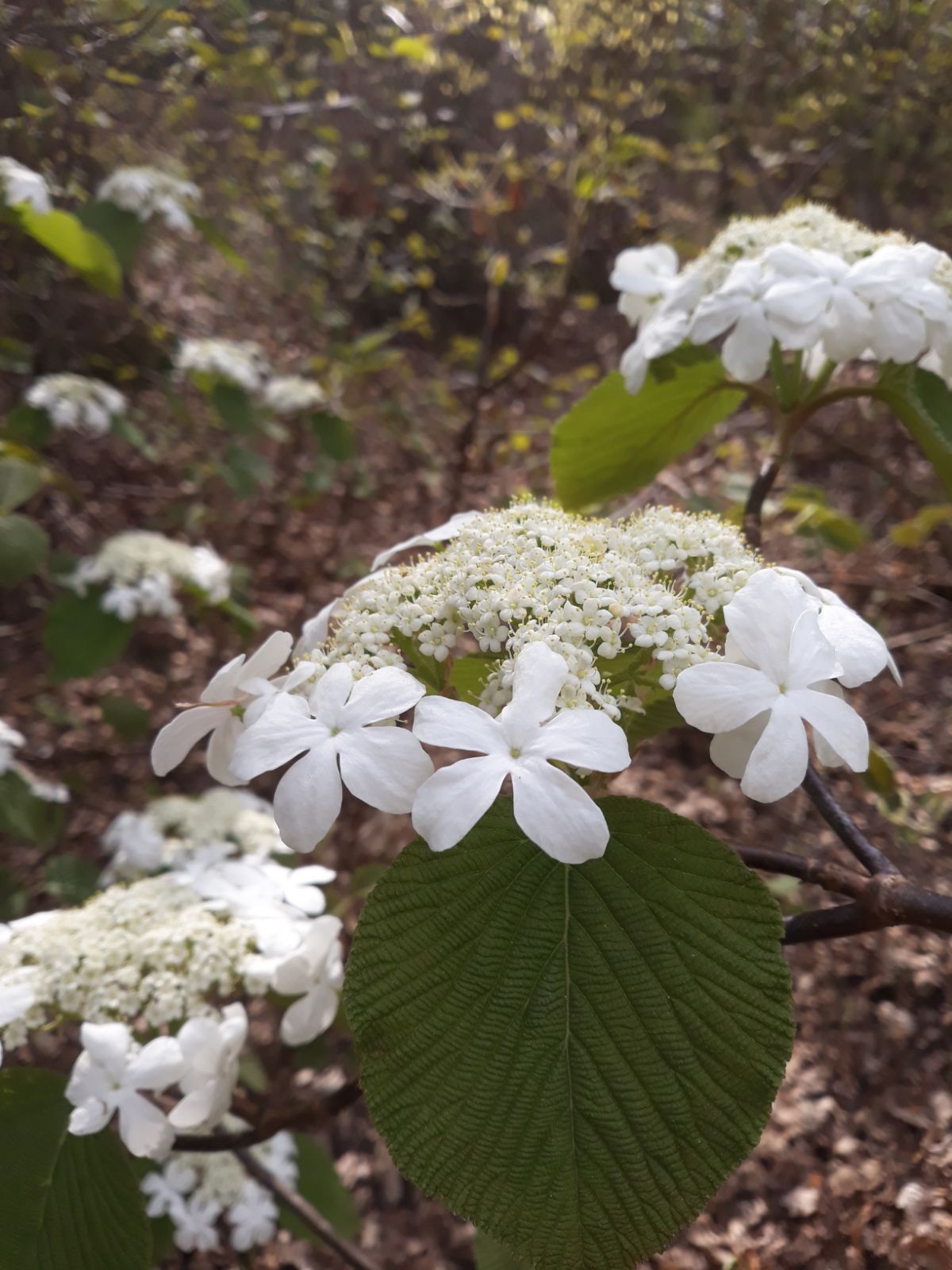
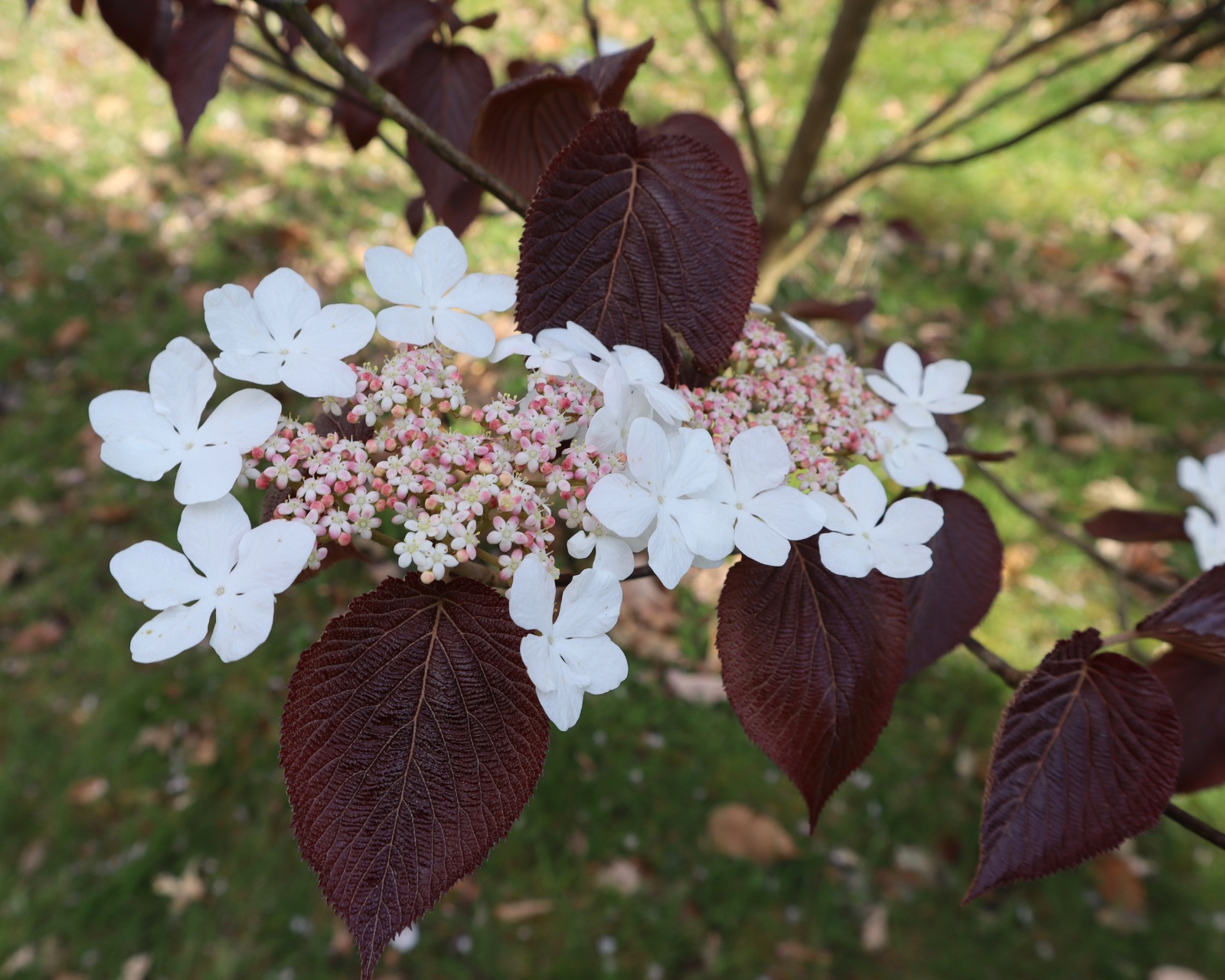
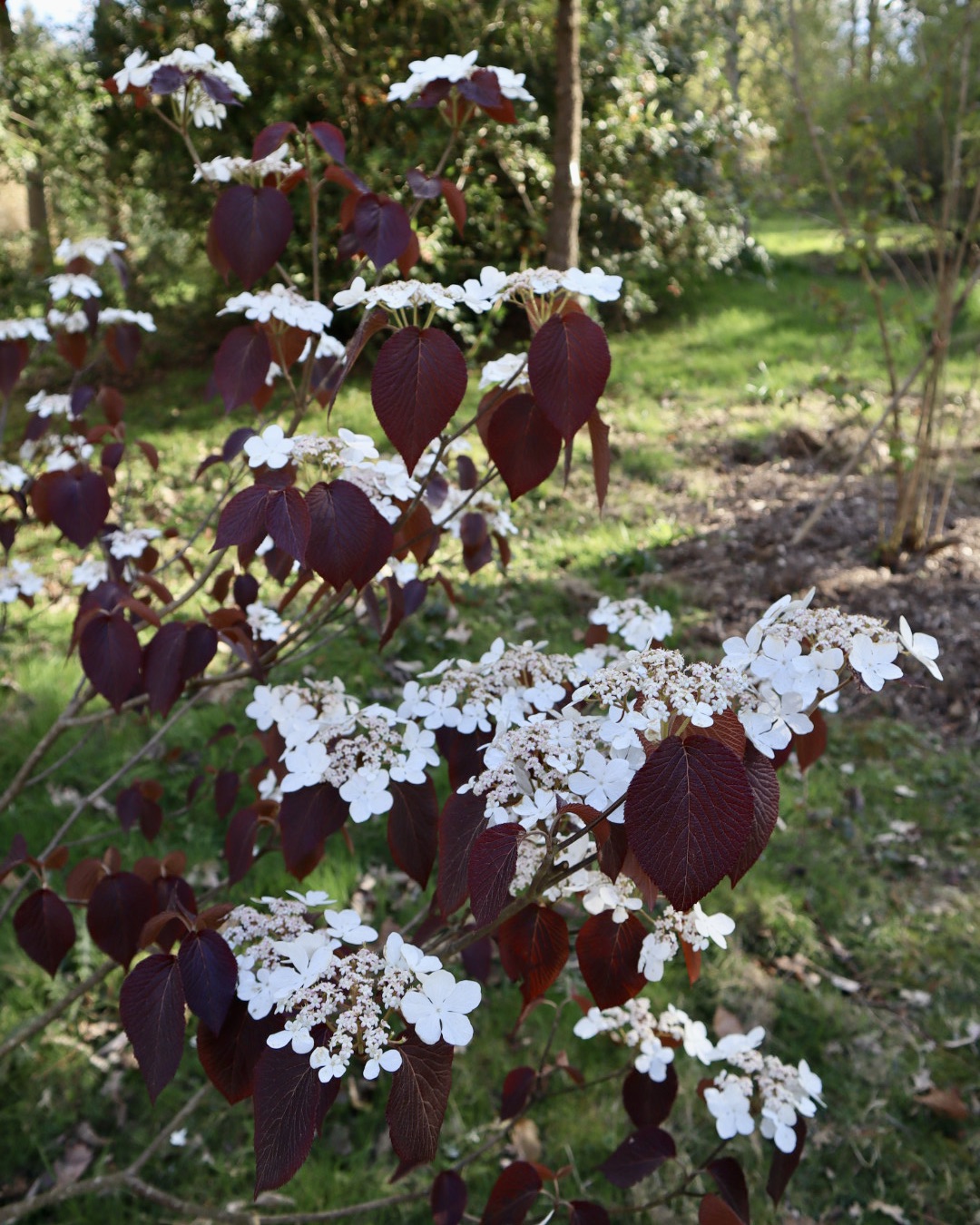
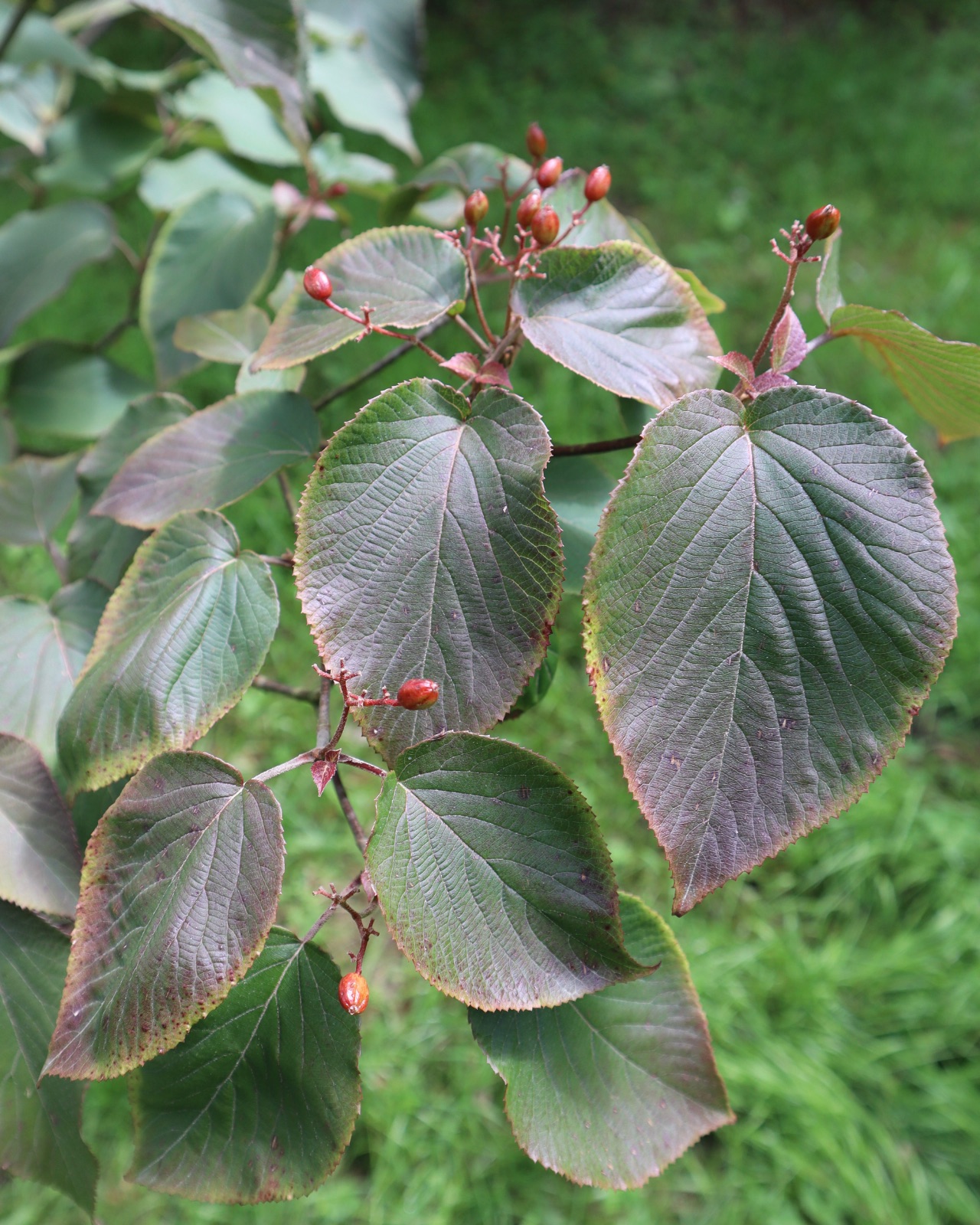
A strong-growing, rather coarse-habited, deciduous shrub, 6 to 10 ft high; the central shoots erect, the lower ones spreading, often prostrate; young bark covered with a thick scurfy down. Leaves in distant pairs, broadly ovate to roundish, the points short and abrupt, the base heart-shaped, margins irregularly toothed, 4 to 8 in. long, nearly as broad, upper surface dark green, at first downy, but becoming glabrous; lower surface with much stellate down on the midrib and veins, especially when young; stalk 1 to 21⁄2 in. long, scurfy downy. Flowers white, produced in stalkless cymes with usually five divisions, and 3 to 5 in. across; marginal flowers sterile, and 3⁄4 to 1 in. across; central ones perfect and much smaller. Fruits red, turning black-purple, 1⁄3 in. long, broadly oval. Bot. Mag., t. 9373.
Native of eastern N. America; introduced in 1820. It is not an easy plant to suit, needing woodland conditions and there only thriving away from the root-run of large trees, as it needs abundant moisture to be seen at its best. It is very distinct in its large leaves, which turn deep claret-red in the autumn, and from our native V. lantana is well distinguished in having large, sterile marginal flowers. The popular name refers to its prostrate lower branches, which often take root and trip up the unwary traveller through its native haunts. The venation of the leaves is handsome; the primary veins branch on the lower side only, and are connected by thin parallel nerves almost at right angles.
Viburnum lantanoides received an Award of Merit in 1952.


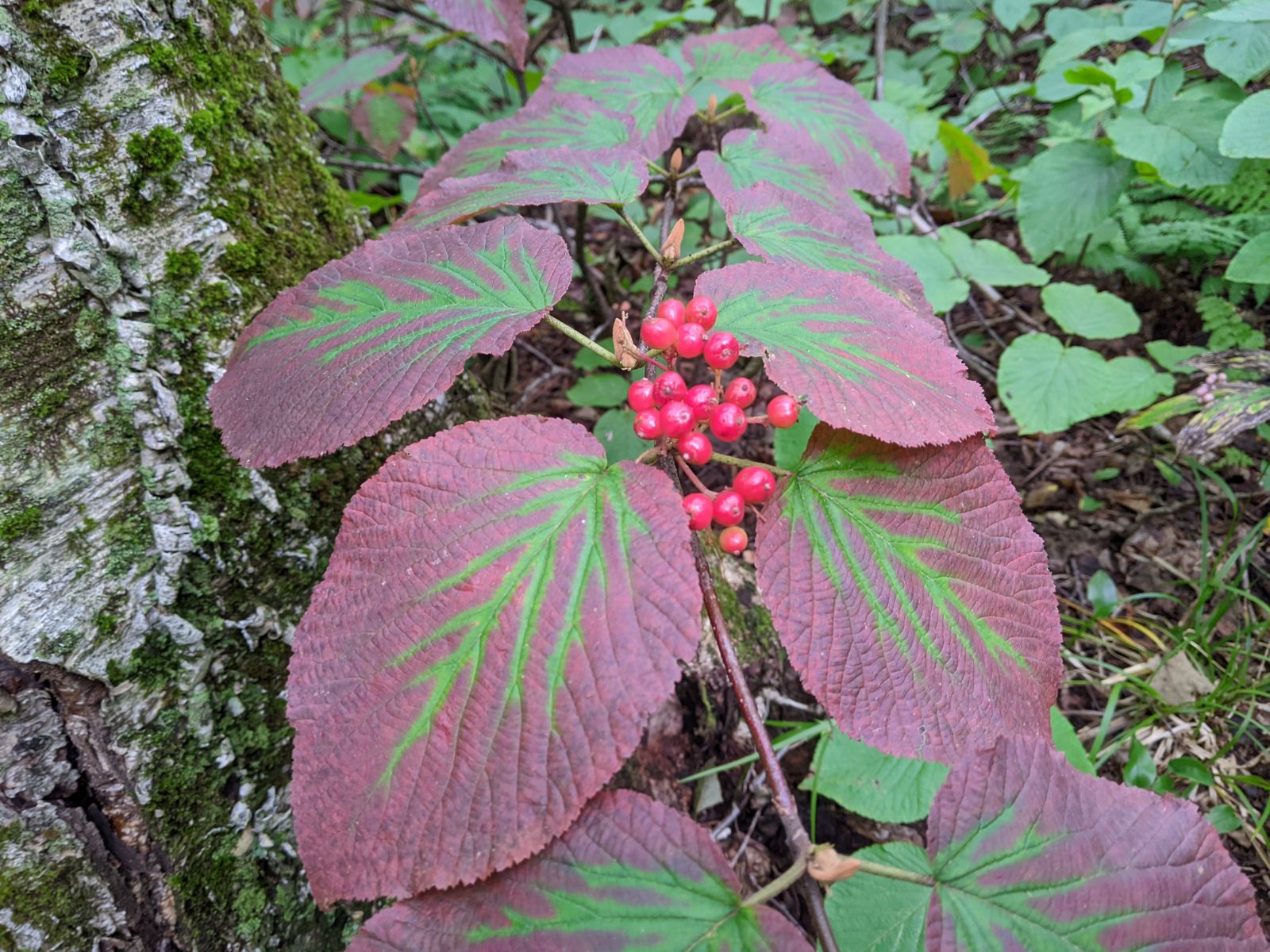
V. furcatum Bl
The Japanese ally of V. lantanoides (also found in Formosa), needing the same conditions. This also has the showy sterile marginal flowers, but its stems are more uniformly erect. It differs also in the shorter stamens, which are only half the length of the corolla, and in the shape of the furrow in the seed. The foliage turns brilliant scarlet to reddish purple in autumn. It is a bush 12 ft or more high in the wild. Introduced in 1892.


V. sympodiale Graebn
This is closely allied to both the preceding, especially to V. furcatum, but differs in having stipules on the leaf-stalks, and in its smaller, ovate, more finely toothed leaves. It was collected in Central China by Wilson in 1900, and may be in cultivation. Another member of the group, rare in cultivation, is V. nervosum D. Don (1825), which name has priority over V. cordifolium Wall. ex DC. (1830). The species is in cultivation at Wakehurst Place, Sussex, from Schilling 1107, collected in Nepal.It is a native of the eastern Himalaya, northern Burma and S.W. China. It differs from the preceding in having no sterile flowers in the inflorescence.