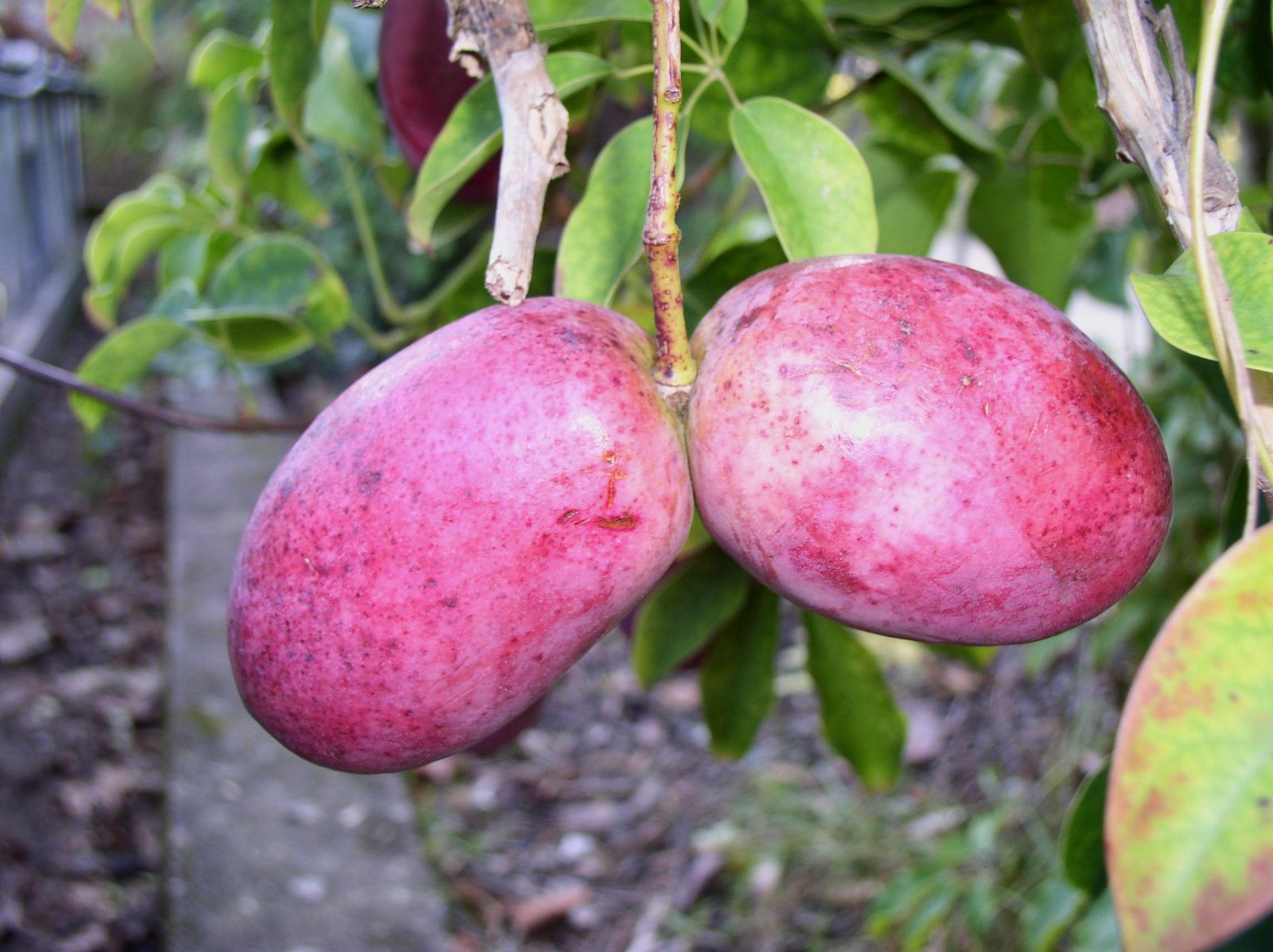
Stauntonia hexaphylla
Credits
Article from Bean's Trees and Shrubs Hardy in the British Isles
Recommended citation
'Stauntonia hexaphylla' from the website Trees and Shrubs Online (treesandshrubsonline.
Genus
Synonyms
- Rajania hexaphylla Thunb.
Other taxa in genus
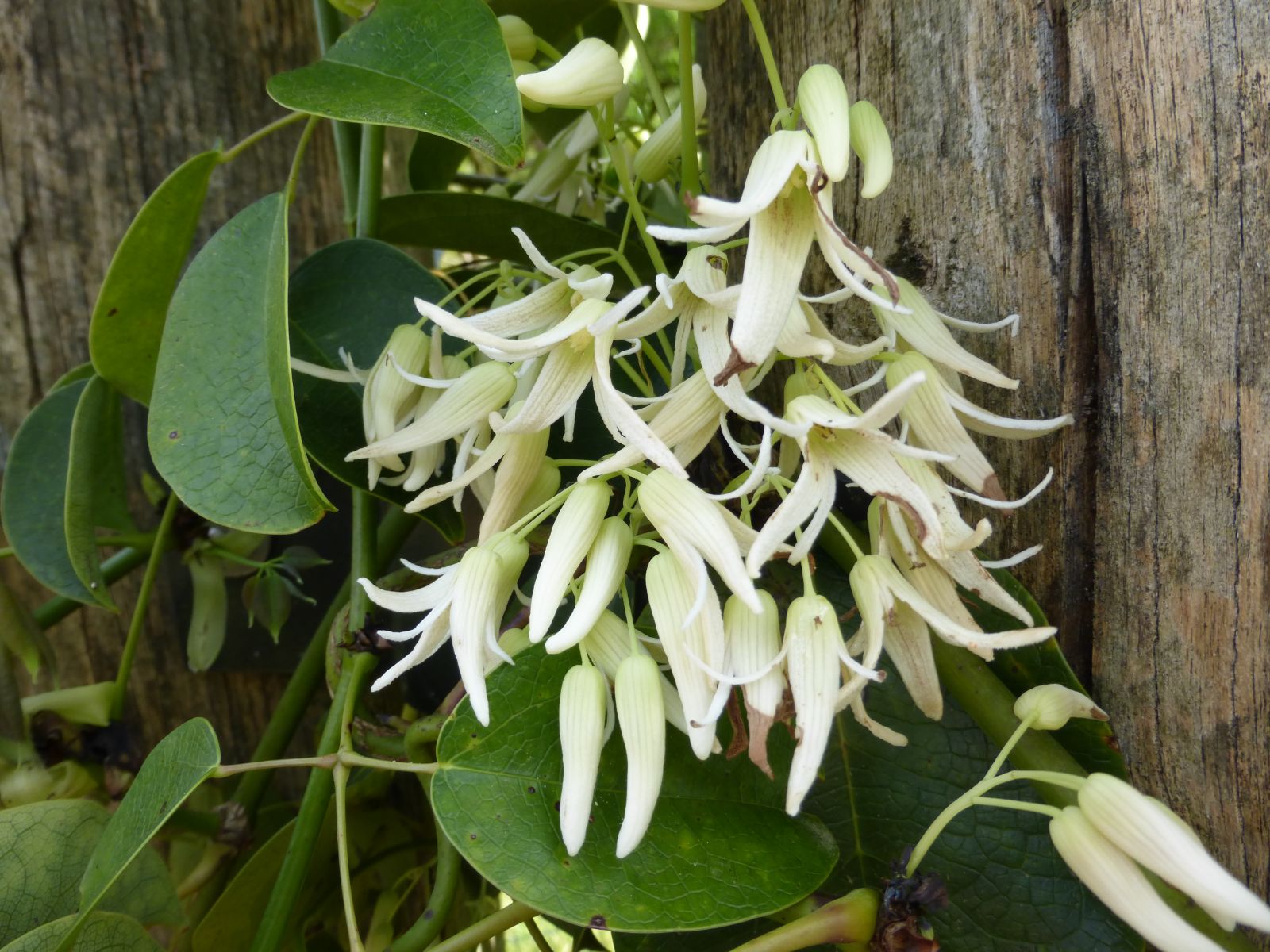
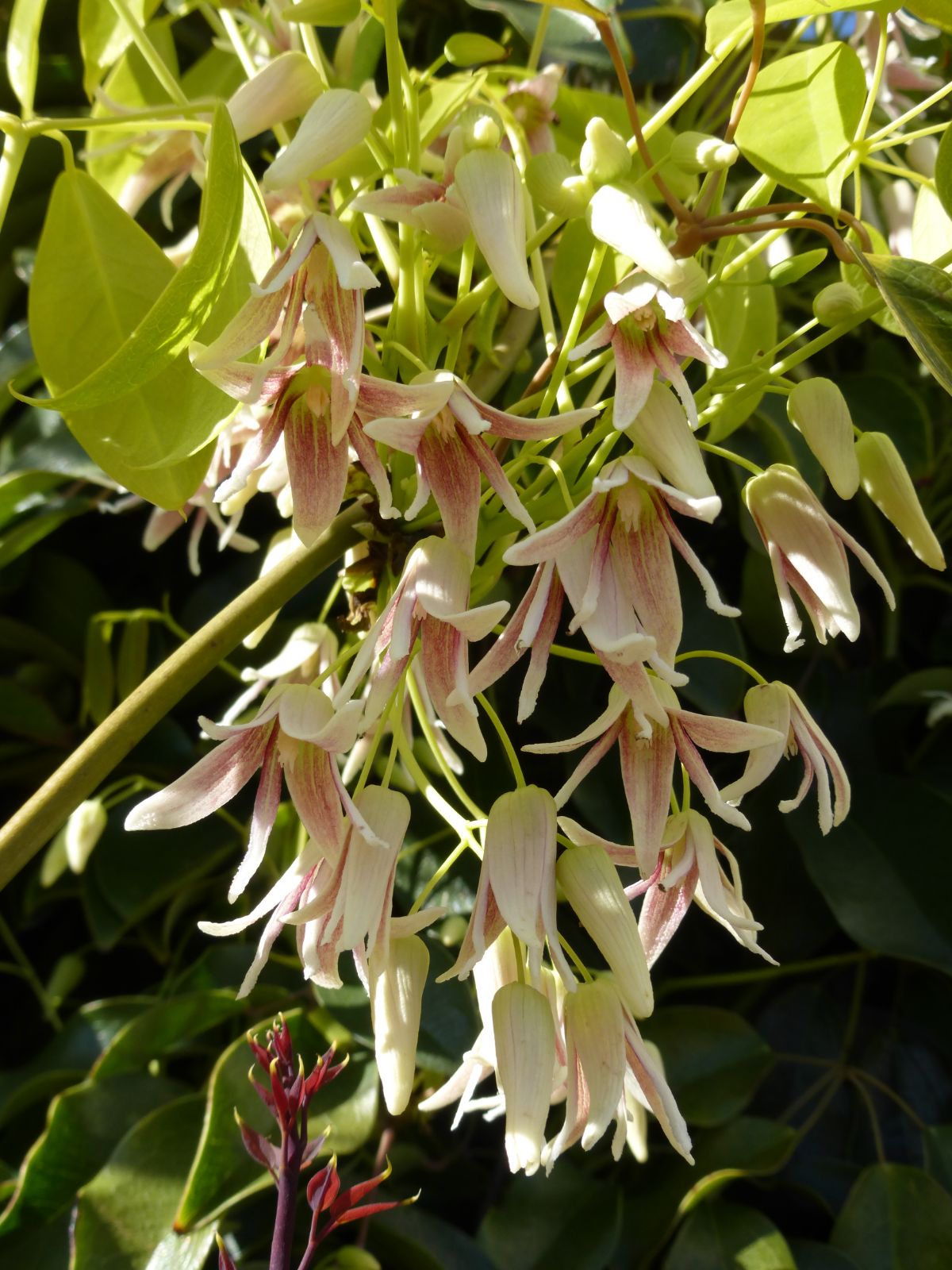
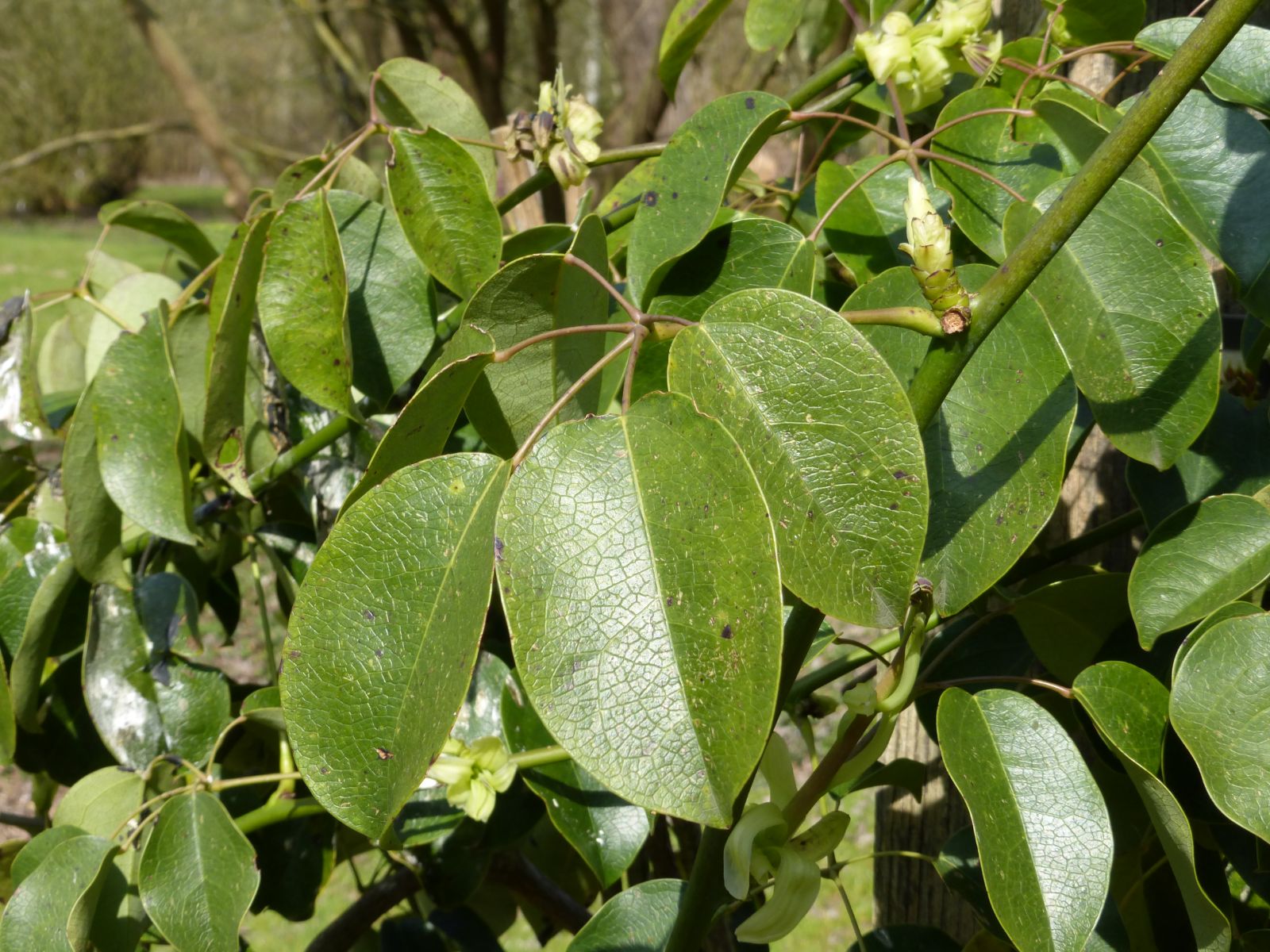
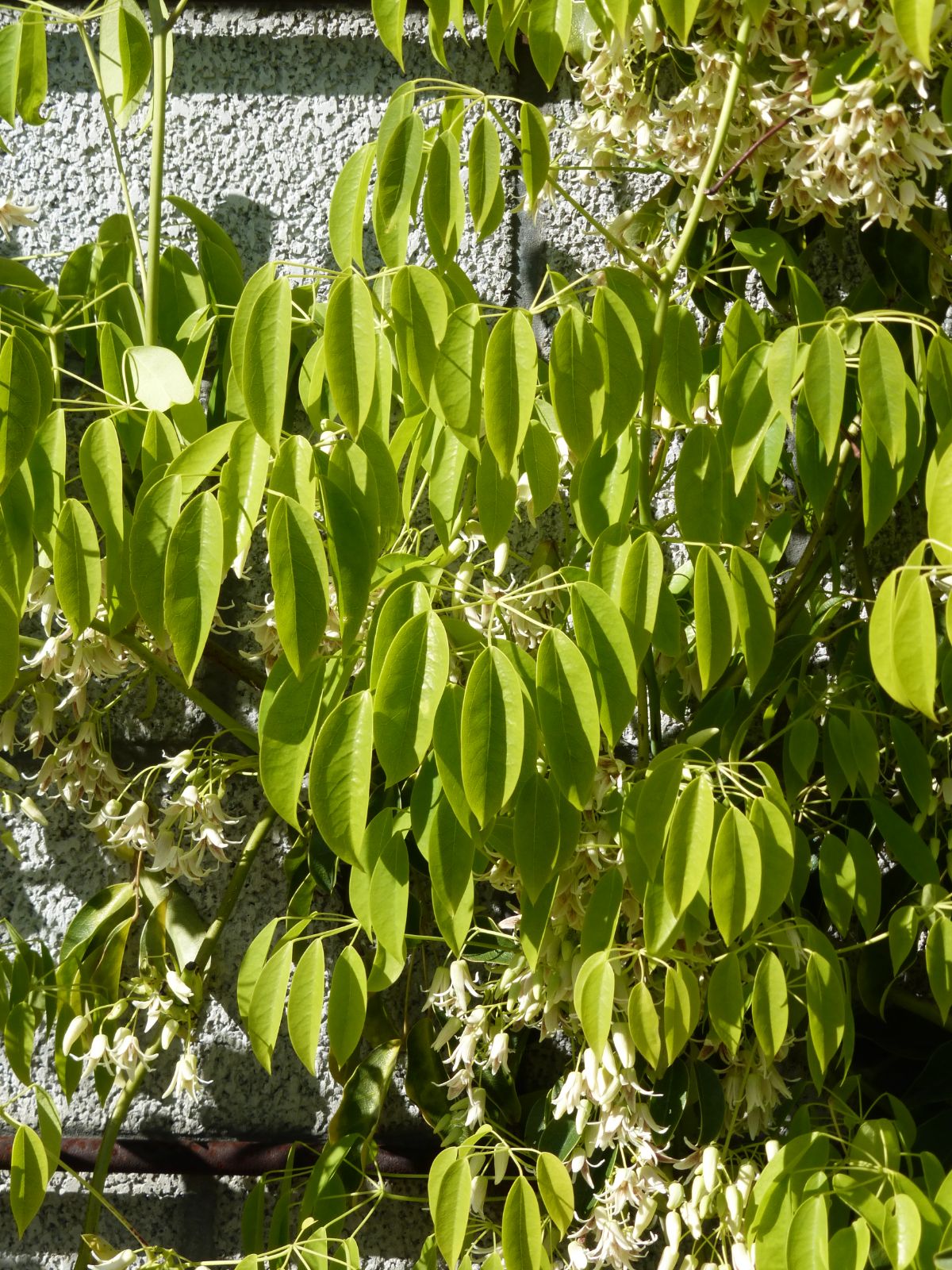
An evergreen climbing shrub, whose main stem is sometimes 4 or 5 in. thick near the base. Leaves long-stalked, compound, consisting of three to seven leaflets radiating from a common centre. Leaflets ovate to elliptical, acutely pointed, the side ones usually oblique, of leathery texture, glabrous, 2 to 5 in. long; stalks 1 to 2 in. long. Flowers fragrant, unisexual, produced three to seven together in a raceme, white tinged with violet, 3⁄4 in. across; they have six fleshy sepals, but no petals; the males with six stamens, the females with three ovaries. Fruits of the size of a walnut, purple, sweet and watery, eaten by the Japanese.
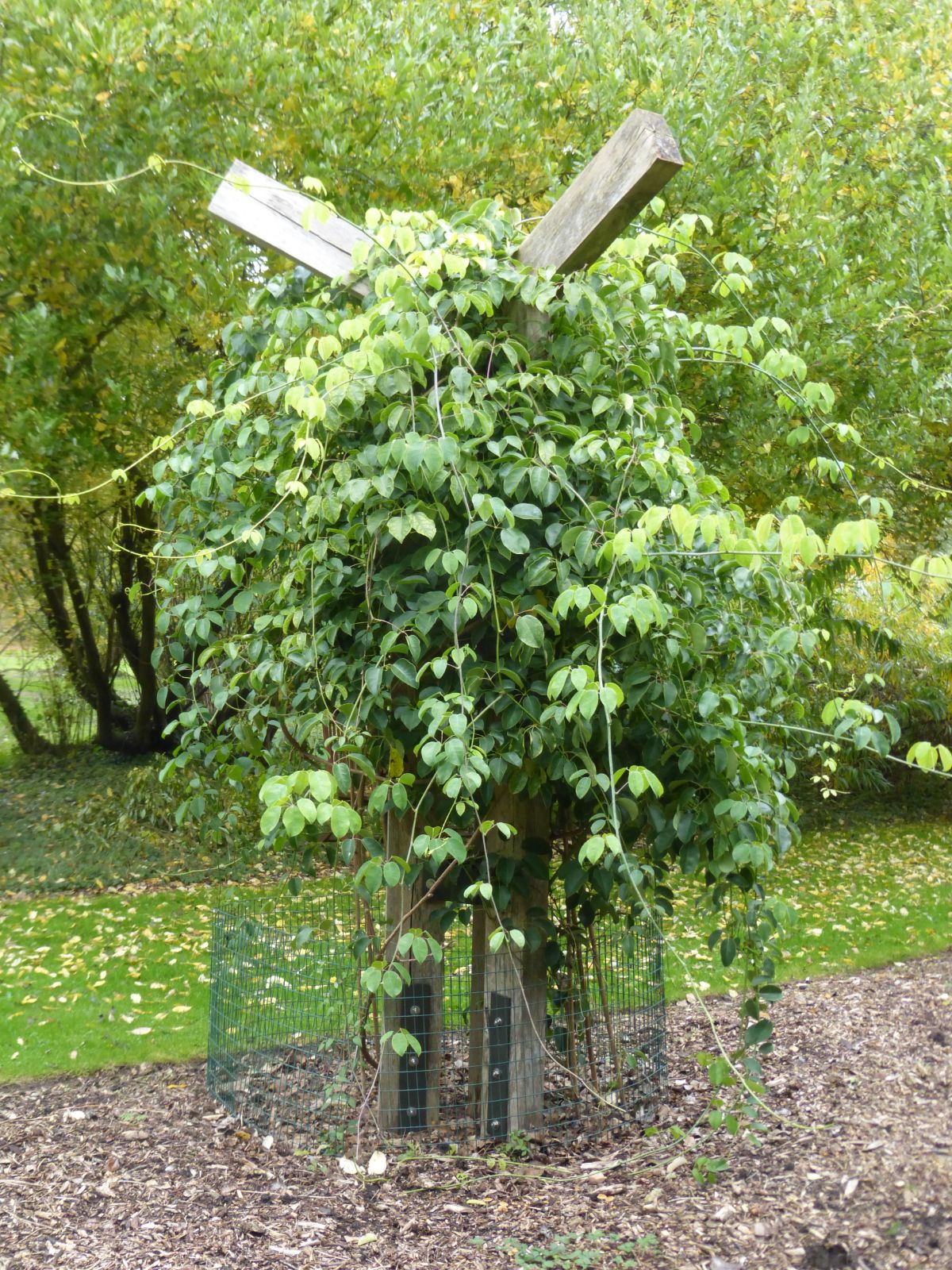
Native of S. Korea, Japan and the Ryukyus; introduced in 1874. In foliage it is one of the most handsome of climbers, hardy on a south or west wall, but growing most luxuriantly in the milder parts. Fruits have been borne by female plants in the absence of a male, which suggests that this species is not completely dioecious. It received an Award of Merit when exhibited in flower from Wakehurst Place, Sussex, in 1960.