Sambucus
Credits
Article from Bean's Trees and Shrubs Hardy in the British Isles
Recommended citation
'Sambucus' from the website Trees and Shrubs Online (treesandshrubsonline.
Family
- Adoxaceae
Common Names
- Elder
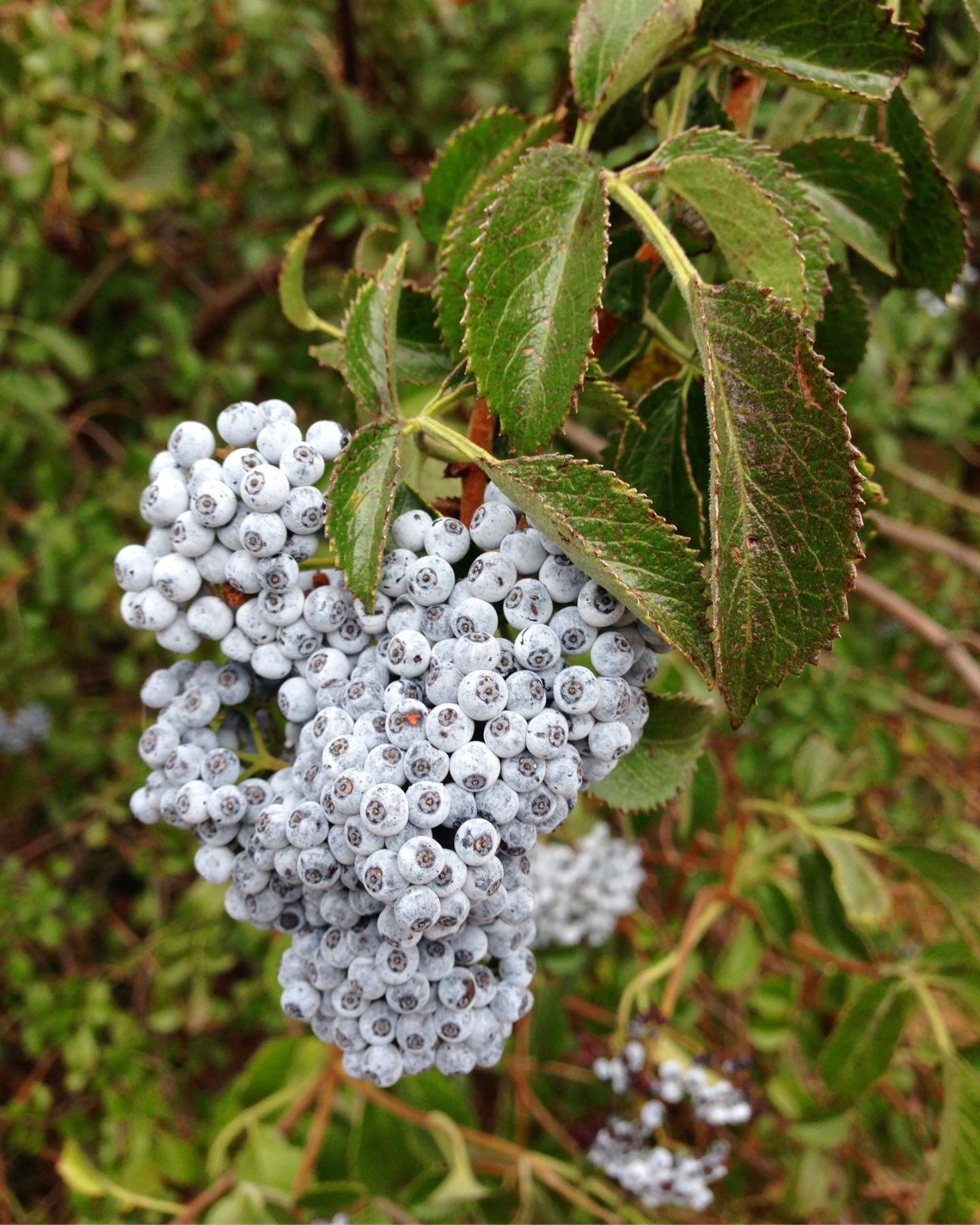
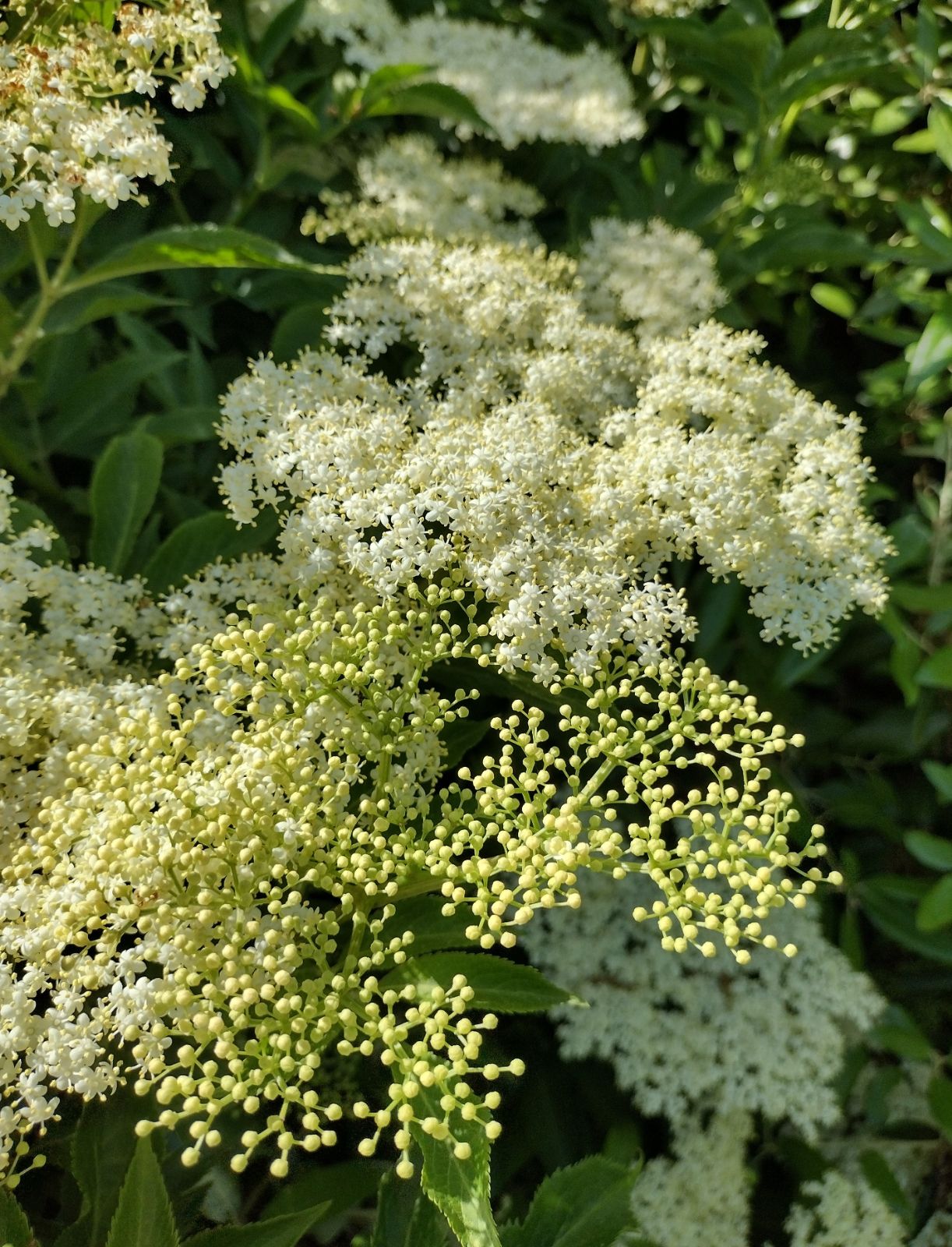
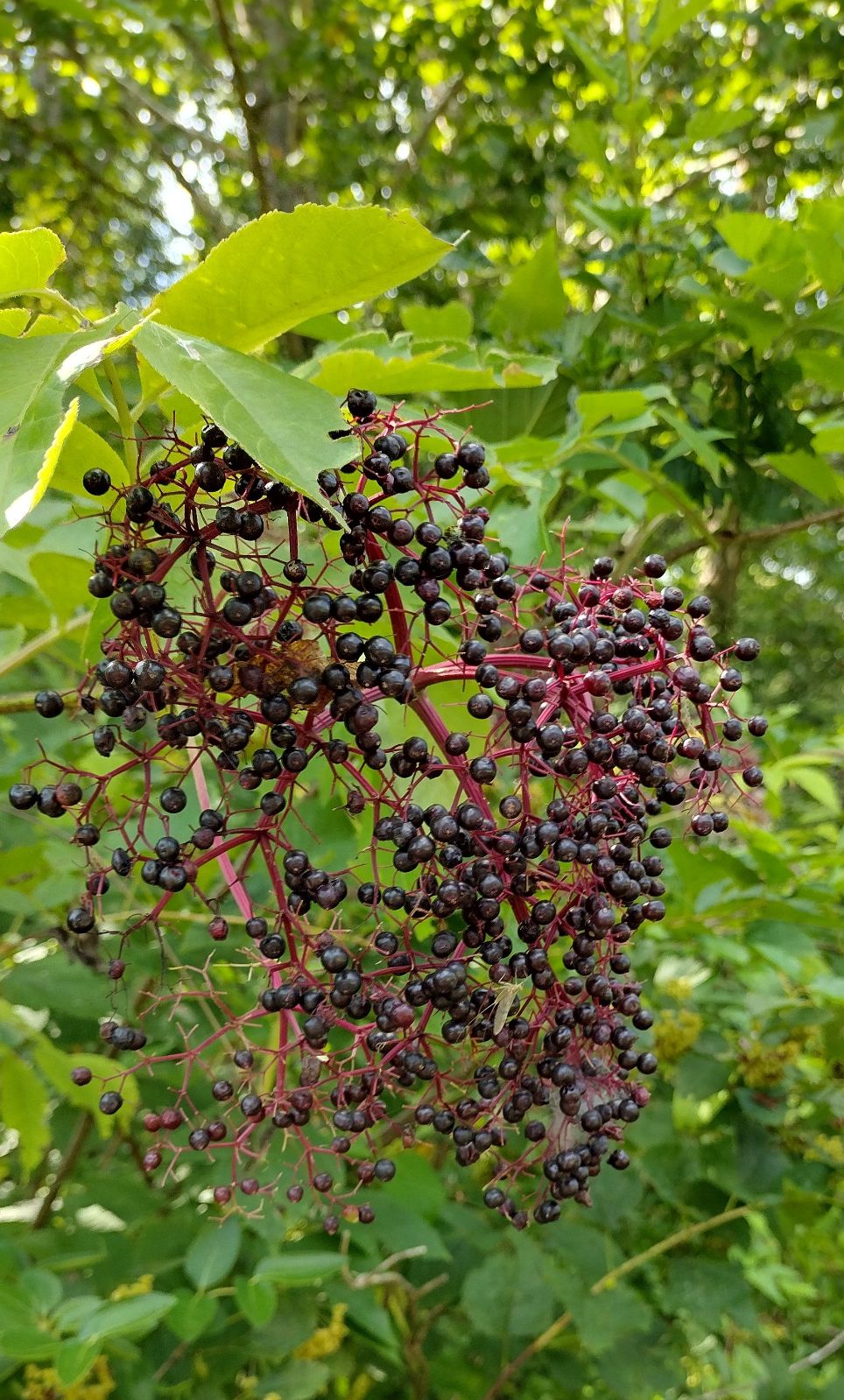
About forty species of elder are known, which are widely spread over the temperate and subtropical parts of the globe. Of these about nine shrubby ones are hardy in Britain. From the remainder of the hardy shrubs of the Caprifoliaceae, the elders are at once distinguished by their pinnate leaves, which always have an odd number (three to eleven) of toothed leaflets. There are, however, other differences of a technical character, considered by some botanists to be weighty enough for Sambucus to be given the rank of a monotypic family, the Sambucaceae. The flowers are borne in umbel-like inflorescences (sect. Sambucus) or in panicles (sect. Botryosambucus); to the latter section belong S. melanocarpa, S. pubens and S. racemosa. The flowers are very uniform in size and hue, being from 1⁄8 to 3⁄16 in. across, and of some shade of white. The various parts are normally in fives. Fruits 1⁄4 in. or less in diameter, globose or nearly so, containing three to five one-seeded nutlets. All the cultivated species are deciduous, and have opposite leaves, the young shoots are soft and full of pith, but the wood of the trunk is hard and bony. A few species are herbaceous, of which the best known is S. ebulus L., which is naturalised in Britain but doubtfully a native.
The elders like a good, moist soil, and given this are not hard to accommodate. They can be propagated by cuttings either of leafless wood put in the open ground in early winter, or by half-ripened young wood with a heel in frames. The pruning of the sorts grown for their foliage should be done before growth commences.
From the Supplement (Vol.V)
Although long considered to be part of the Caprifoliaceae (Honeysuckle family), Sambucus is now usually placed in a separate monotypic family – the Sambucaceae – intermediate between the Caprifoliaceae and the Staphyleaceae.