Salix nakamurana
Credits
Article from Bean's Trees and Shrubs Hardy in the British Isles
Recommended citation
'Salix nakamurana' from the website Trees and Shrubs Online (treesandshrubsonline.
Genus
Infraspecifics
Other taxa in genus
- Salix aegyptiaca
- Salix alba
- Salix amygdaloides
- Salix arbuscula
- Salix arbutifolia
- Salix arctica
- Salix aurita
- Salix babylonica
- Salix bockii
- Salix 'Boydii'
- Salix caesia
- Salix candida
- Salix caprea
- Salix cinerea
- Salix cordata
- Salix daphnoides
- Salix discolor
- Salix elaeagnos
- Salix exigua
- Salix fargesii
- Salix fragilis
- Salix glabra
- Salix glaucosericea
- Salix gracilistyla
- Salix hastata
- Salix herbacea
- Salix hookeriana
- Salix humboldtiana
- Salix irrorata
- Salix japonica
- Salix jessoensis
- Salix lanata
- Salix lapponum
- Salix lasiandra
- Salix lindleyana
- Salix lucida
- Salix magnifica
- Salix matsudana
- Salix × meyeriana
- Salix × mollissima
- Salix moupinensis
- Salix myrsinifolia
- Salix myrsinites
- Salix myrtilloides
- Salix nigra
- Salix nigricans
- Salix pentandra
- Salix petiolaris
- Salix phylicifolia
- Salix purpurea
- Salix pyrenaica
- Salix pyrifolia
- Salix repens
- Salix reticulata
- Salix retusa
- Salix rigida
- Salix × rubra
- Salix sachalinensis
- Salix scouleriana
- Salix × sepulcralis
- Salix × sericans
- Salix sericea
- Salix silesiaca
- Salix starkeana
- Salix × subalpina
- Salix triandra
- Salix uva-ursi
- Salix viminalis
- Salix wilhelmsiana
This species is represented in cultivation by:
var. yezoalpina (Koidz.) Kimura
Synonyms
S. yezoalpina Koidz.
S. cyclophylla Seem., not Rydb
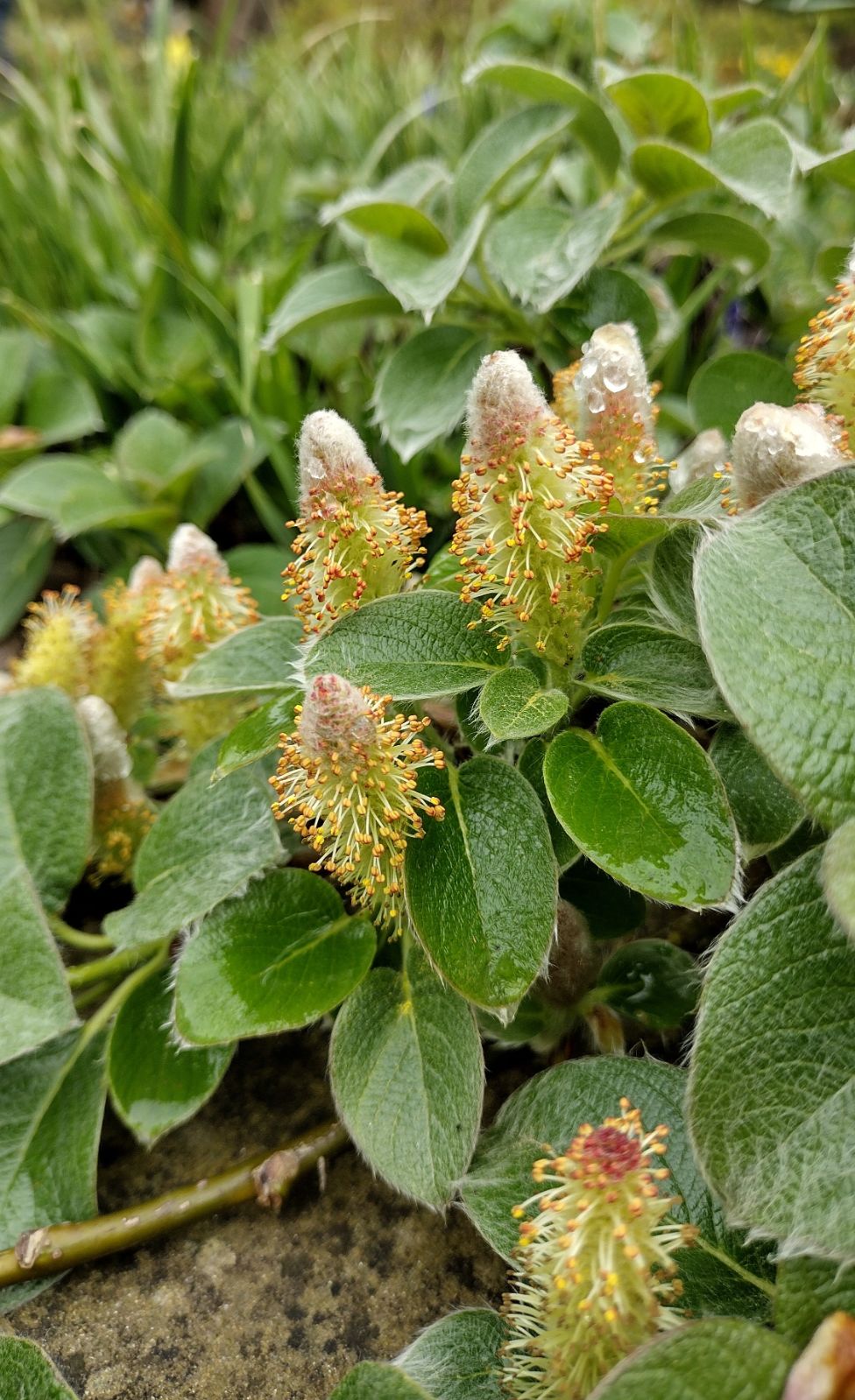
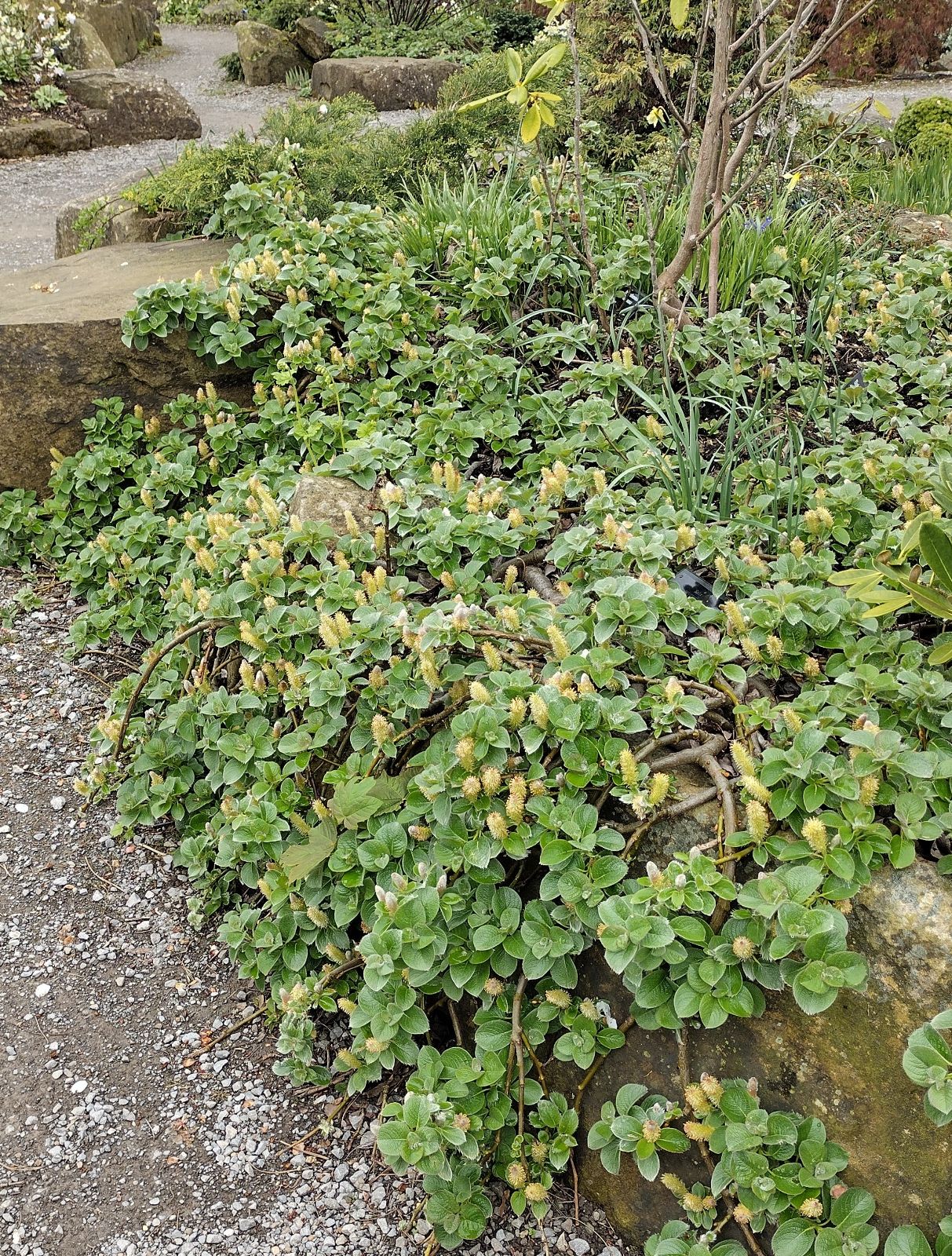
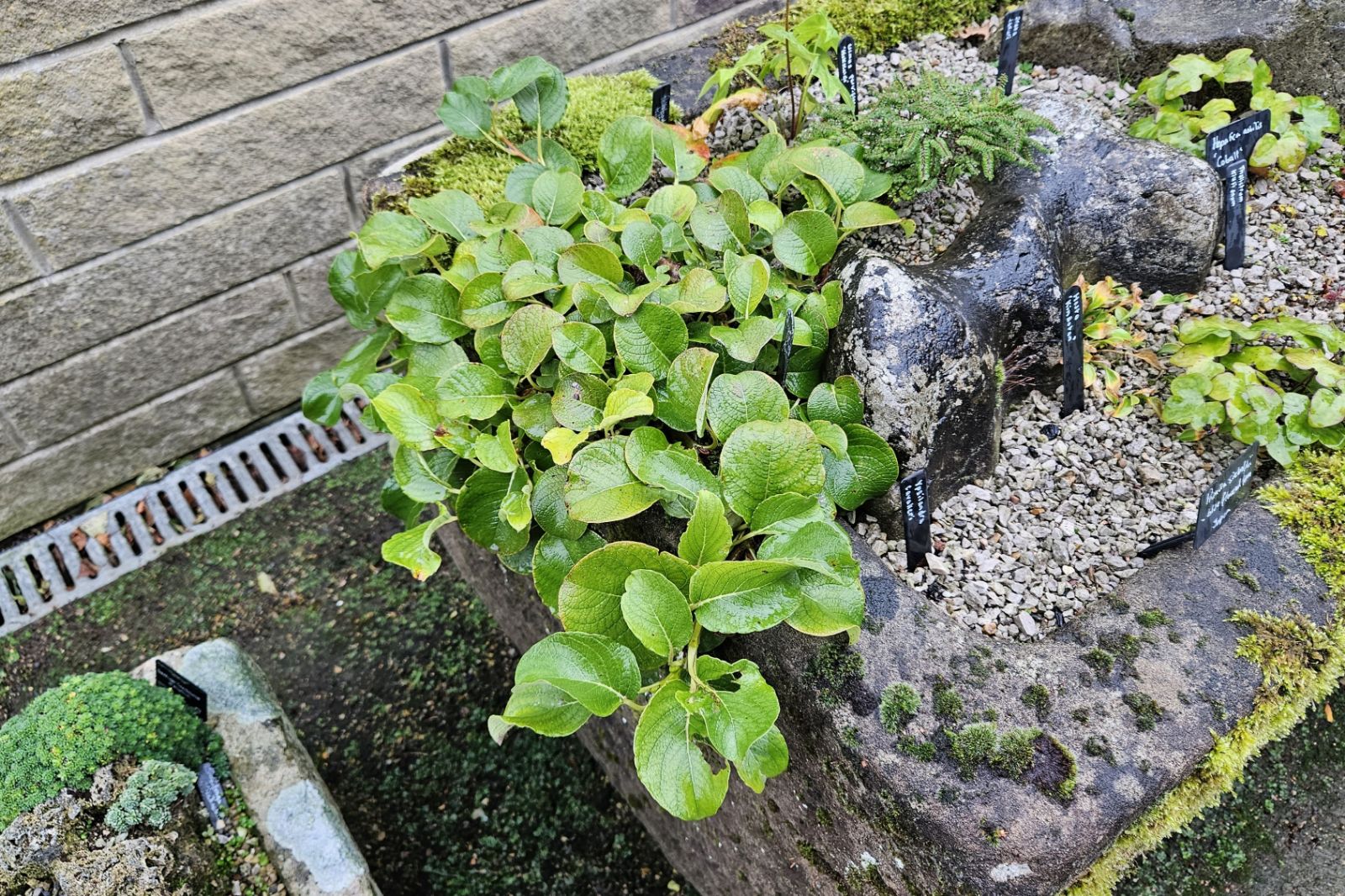
A shrub with prostrate, rooting stems, glabrous and dark purplish brown when mature. Leaves leathery, broadly obovate, broadly oblong-elliptic or almost orbicular, to about 2 in. long, rounded at the apex, broad-cuneate at the base, almost entire, soon glabrous, glossy and reticulate above, the venation slightly raised beneath; petioles to about {5/8} in. long. Catkins many-flowered, erect, borne on leafy laterals, the males about 1 in. long, the females somewhat longer; scales dark, very hairy. Stamens two. Ovary glabrous, almost sessile; style about one-third as long as the ovary; stigmas slender.Native of Japan in the mountains of Hokkaido. Both sexes are in cultivation, the female plants more vigorous and making wide mats.S. nakamurana is closely allied to S. arctica. The typical state of the species occurs in the northern part of the main island of Japan.