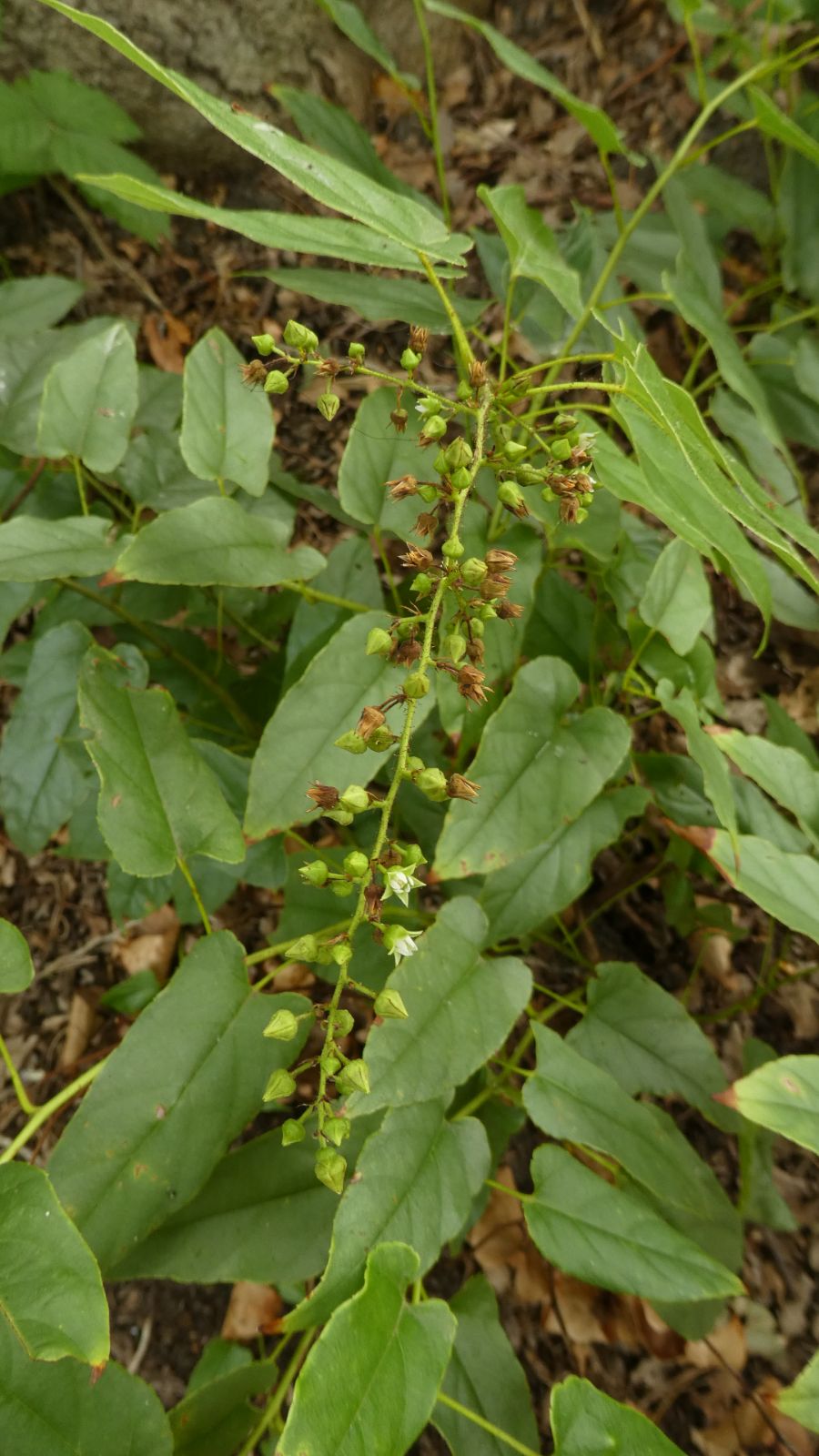
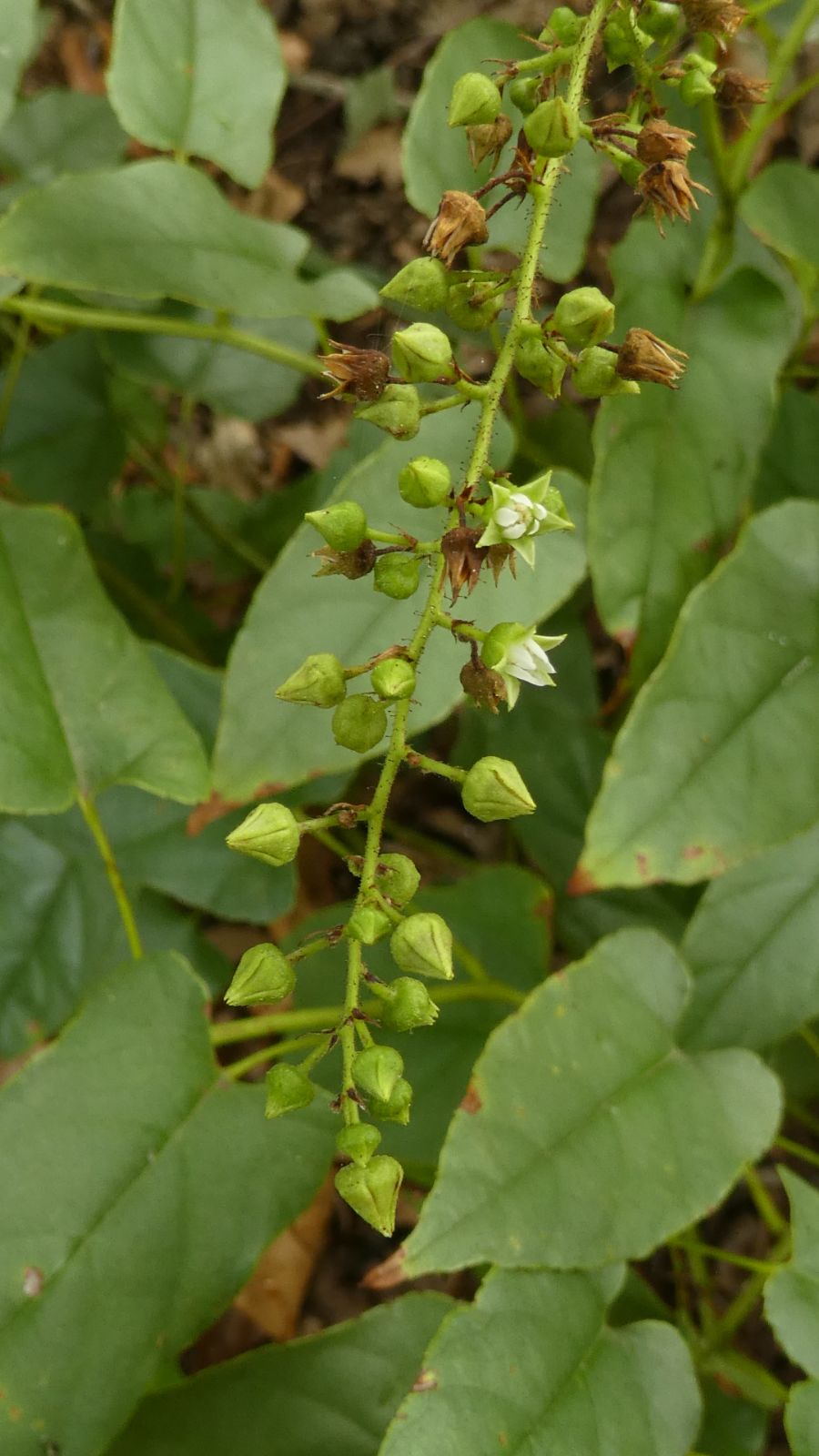
Rubus ichangensis
Credits
Article from Bean's Trees and Shrubs Hardy in the British Isles
Recommended citation
'Rubus ichangensis' from the website Trees and Shrubs Online (treesandshrubsonline.
Genus
Other taxa in genus
- Rubus adenophorus
- Rubus amabilis
- Rubus biflorus
- Rubus caesius
- Rubus calycinoides
- Rubus chroosepalus
- Rubus cissoides
- Rubus cockburnianus
- Rubus corchorifolius
- Rubus coreanus
- Rubus crataegifolius
- Rubus deliciosus
- Rubus flagelliflorus
- Rubus flosculosus
- Rubus henryi
- Rubus hispidus
- Rubus hupehensis
- Rubus idaeus
- Rubus illecebrosus
- Rubus irenaeus
- Rubus koehneanus
- Rubus kuntzeanus
- Rubus laciniatus
- Rubus lambertianus
- Rubus lasiostylus
- Rubus lineatus
- Rubus malifolius
- Rubus mesogaeus
- Rubus nepalensis
- Rubus × nobilis
- Rubus occidentalis
- Rubus odoratus
- Rubus palmatus
- Rubus parkeri
- Rubus parviflorus
- Rubus parvifolius
- Rubus parvus
- Rubus pedunculosus
- Rubus phoenicolasius
- Rubus playfairianus
- Rubus setchuenensis
- Rubus spectabilis
- Rubus subornatus
- Rubus thibetanus
- Rubus trianthus
- Rubus tricolor
- Rubus trifidus
- Rubus ulmifolius
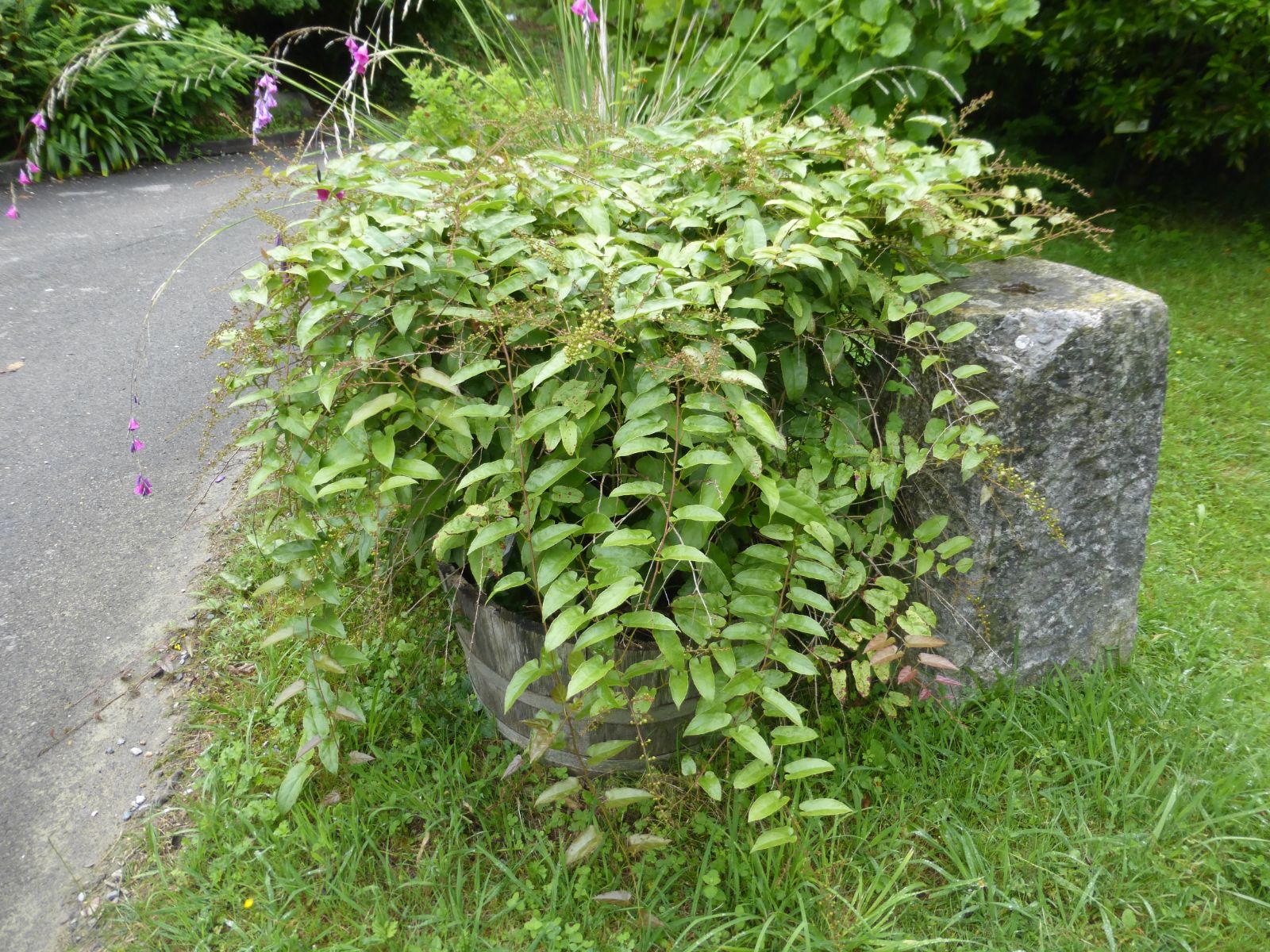
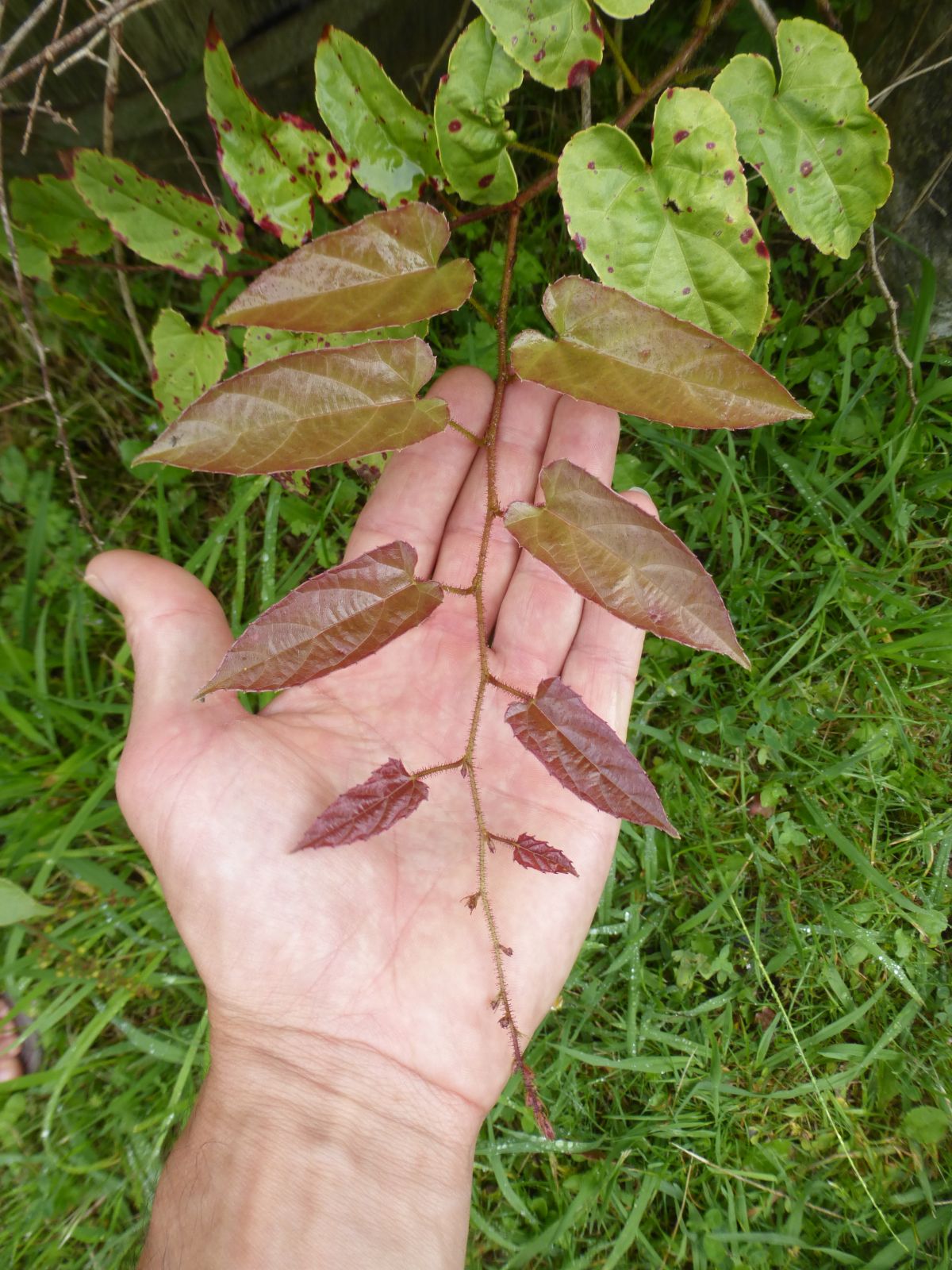
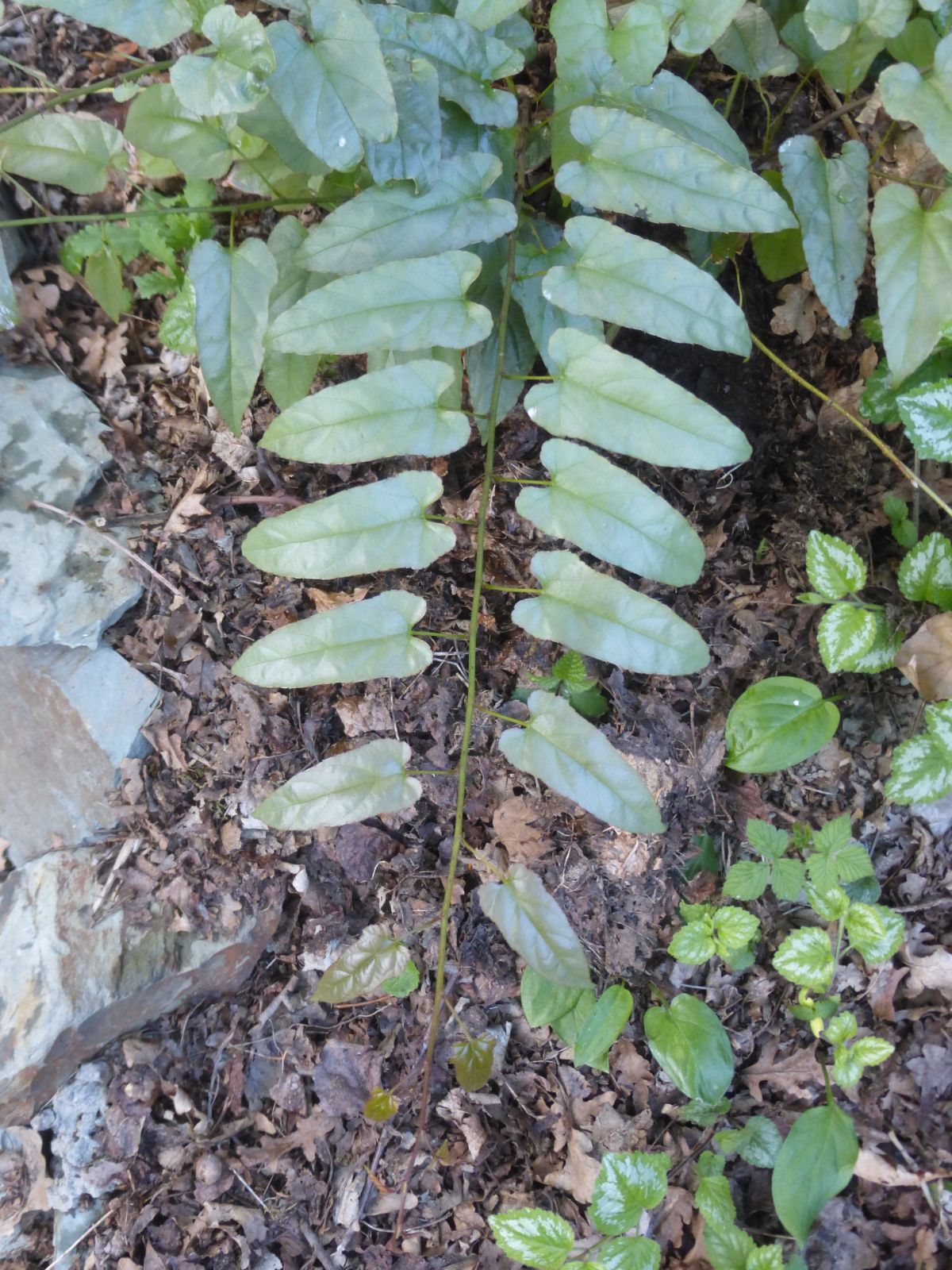
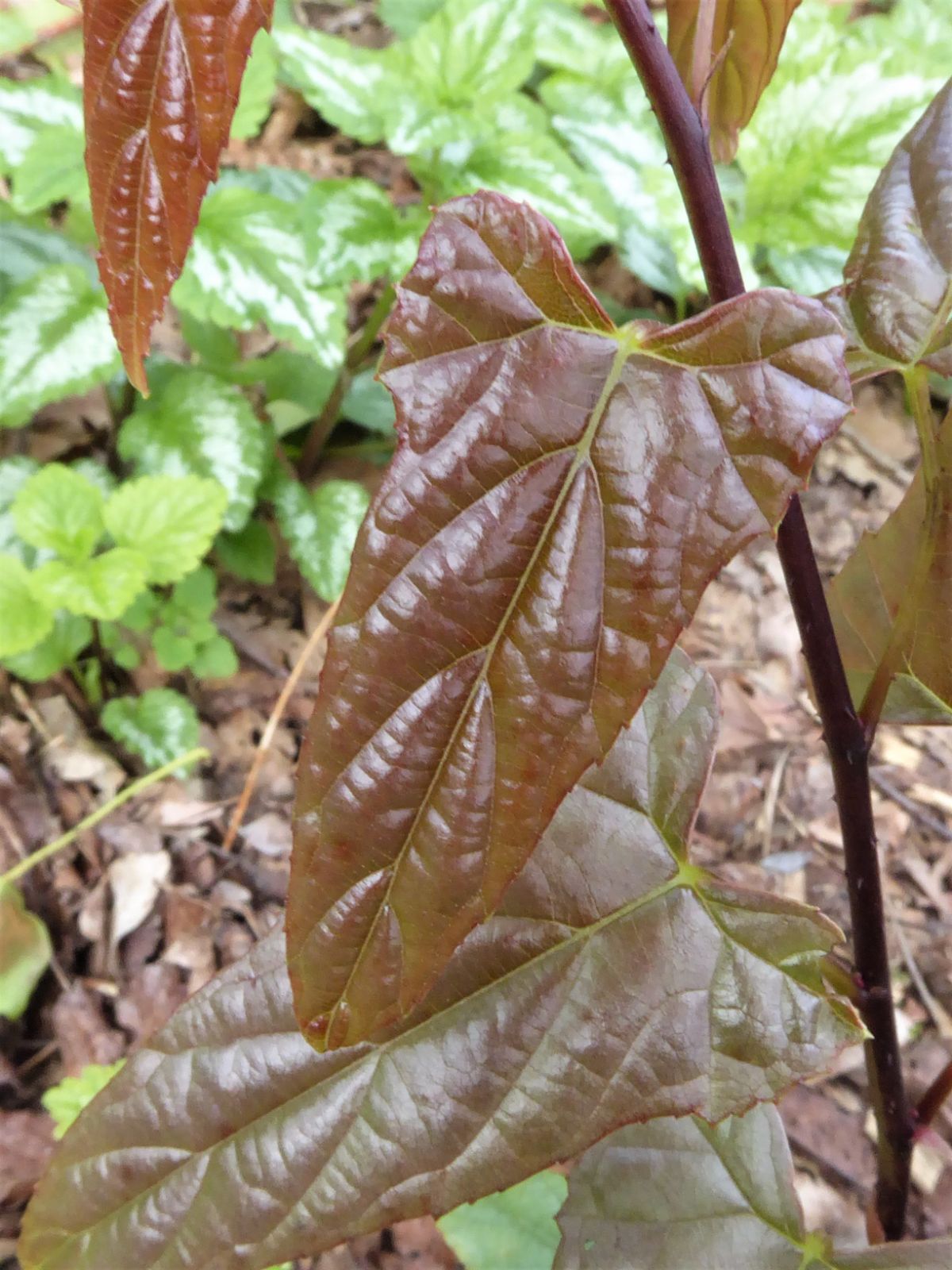
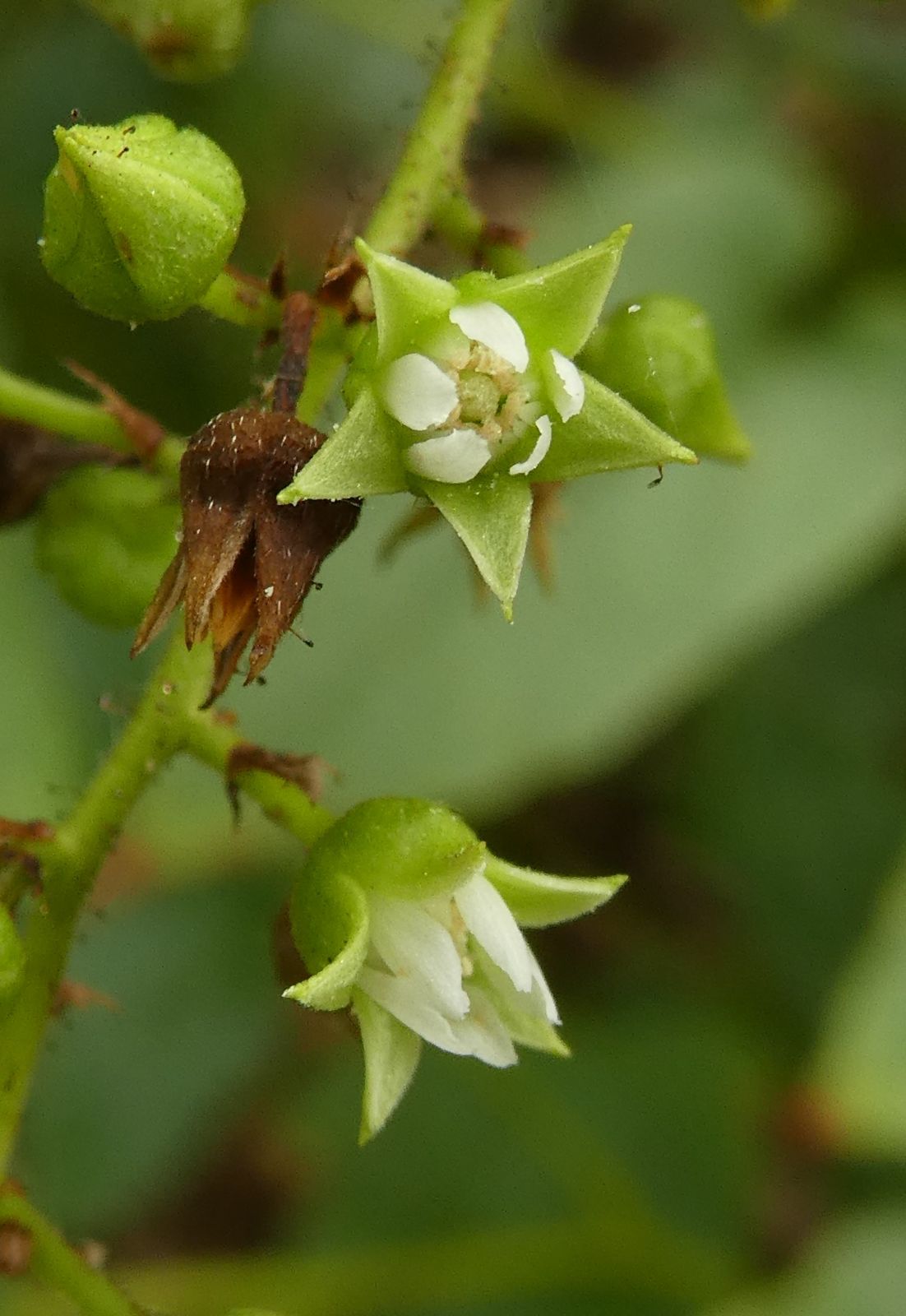
A deciduous shrub, with long, slender stems armed with small hooked spines, and furnished with numerous dark, glandular bristles. Leaves narrowly ovatecordate (often with angular lobes towards the base), the sinus open and rounded, 31⁄2 to 7 in. long, 1 to 21⁄2 in. wide, glabrous on both surfaces, margins sparsely toothed. Flowers white, 1⁄4 in. wide, produced in an elongated terminal panicle, supplemented below by short racemes in the axils of the uppermost leaves, the whole measuring 8 to 12 in. or even more in length; flower-stalks glandular-hairy, sepals erect, enclosing the small white petals. Fruits bright red, small, but of good flavour.
Native of Central and W. China; discovered by Henry, and introduced in 1900 by Wilson. He stated that it is one of the finest of Chinese Rubi in regard to its fruits – panicles of which he had often found over 2 ft in length.