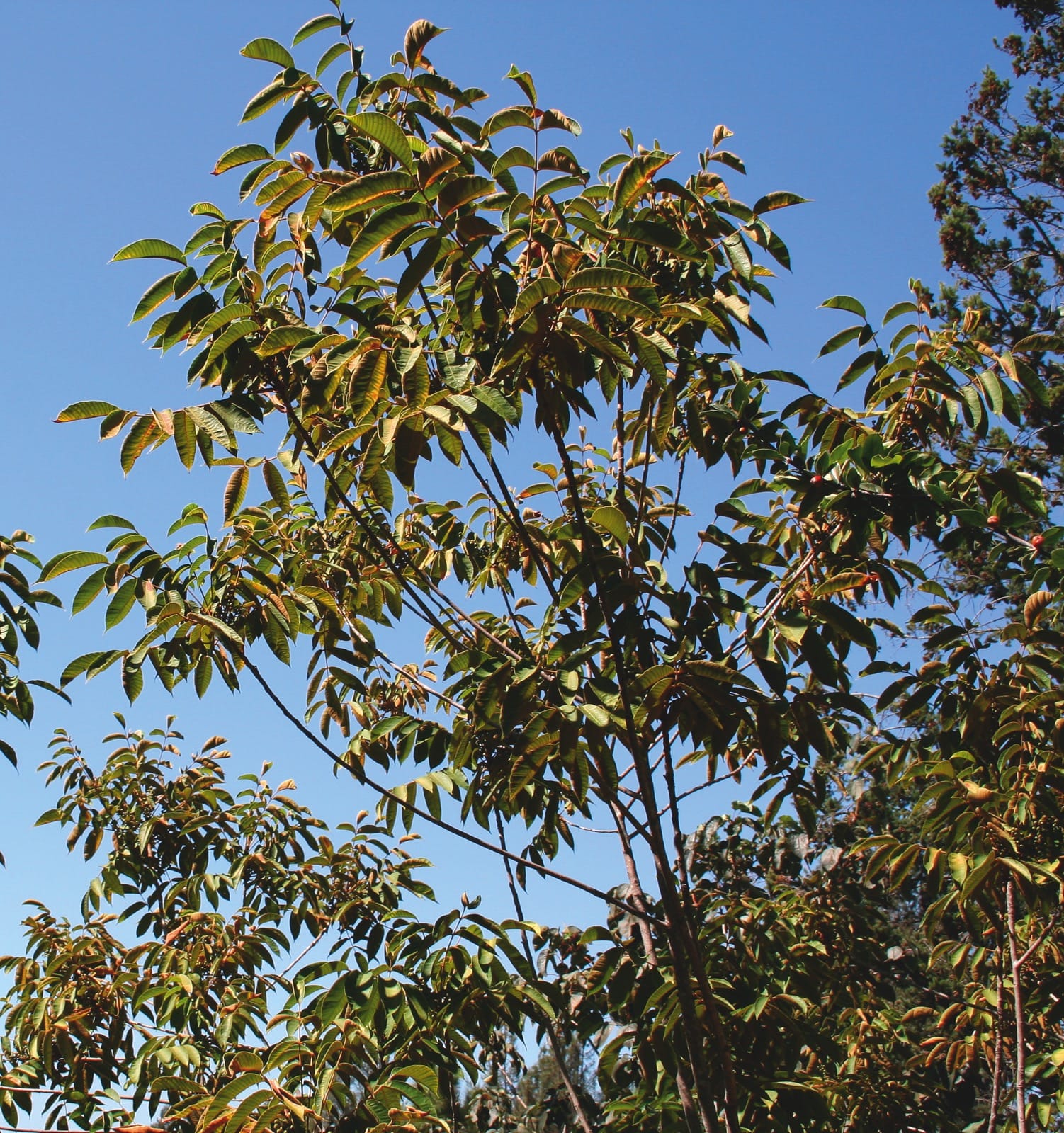
Rhus
Credits
Article from Bean's Trees and Shrubs Hardy in the British Isles
Article from New Trees by John Grimshaw & Ross Bayton
Recommended citation
'Rhus' from the website Trees and Shrubs Online (treesandshrubsonline.
Family
- Anacardiaceae
Common Names
- Sumacs
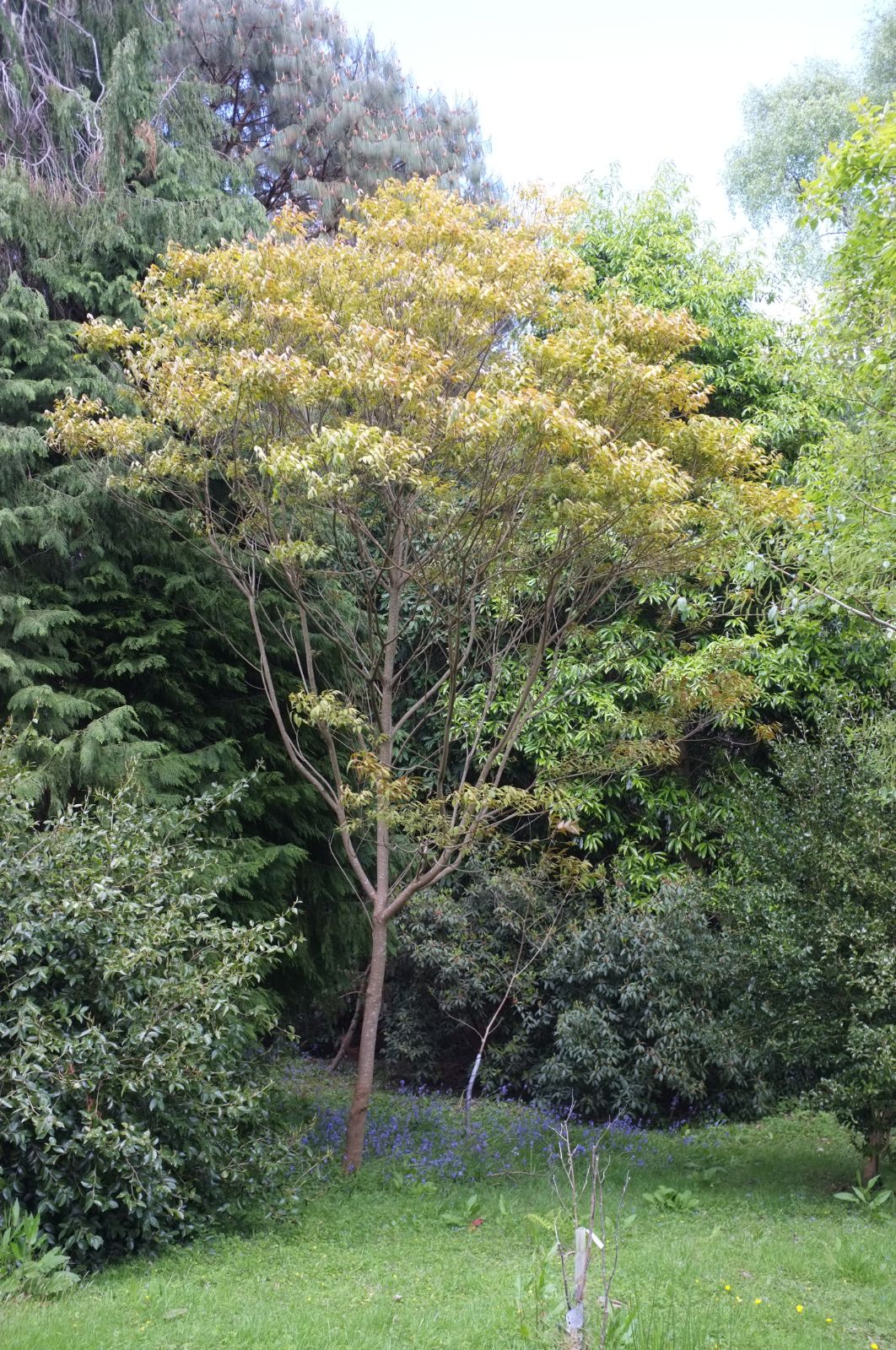
The taxonomy of the genus Rhus is in disarray. At least seven segregate genera have been described, from the well-known and long-accepted Cotinus Mill. (Smoke-bush), to the less frequently adopted Toxicodendron Mill. (Poison-ivy). If accepted, these would reduce the number of species from about 200 (by which count Rhus is the largest genus in the Anacardiaceae) to just 35. However, allocation of species of Rhus into the segregate genera is confused. For example, R. lancea has been placed in both Toxicodendron and Searsia F.A. Barkley. In addition, because many new combinations have not yet been made, many Rhus species do not have valid names in the new, segregate genera (Barkley 1937, 1961, Brizicky 1963, Barkley 1965, Miller et al. 2001). Considering, then, the uncertainty as to the generic limits of Rhus, the following account utilises a broad concept of the genus.
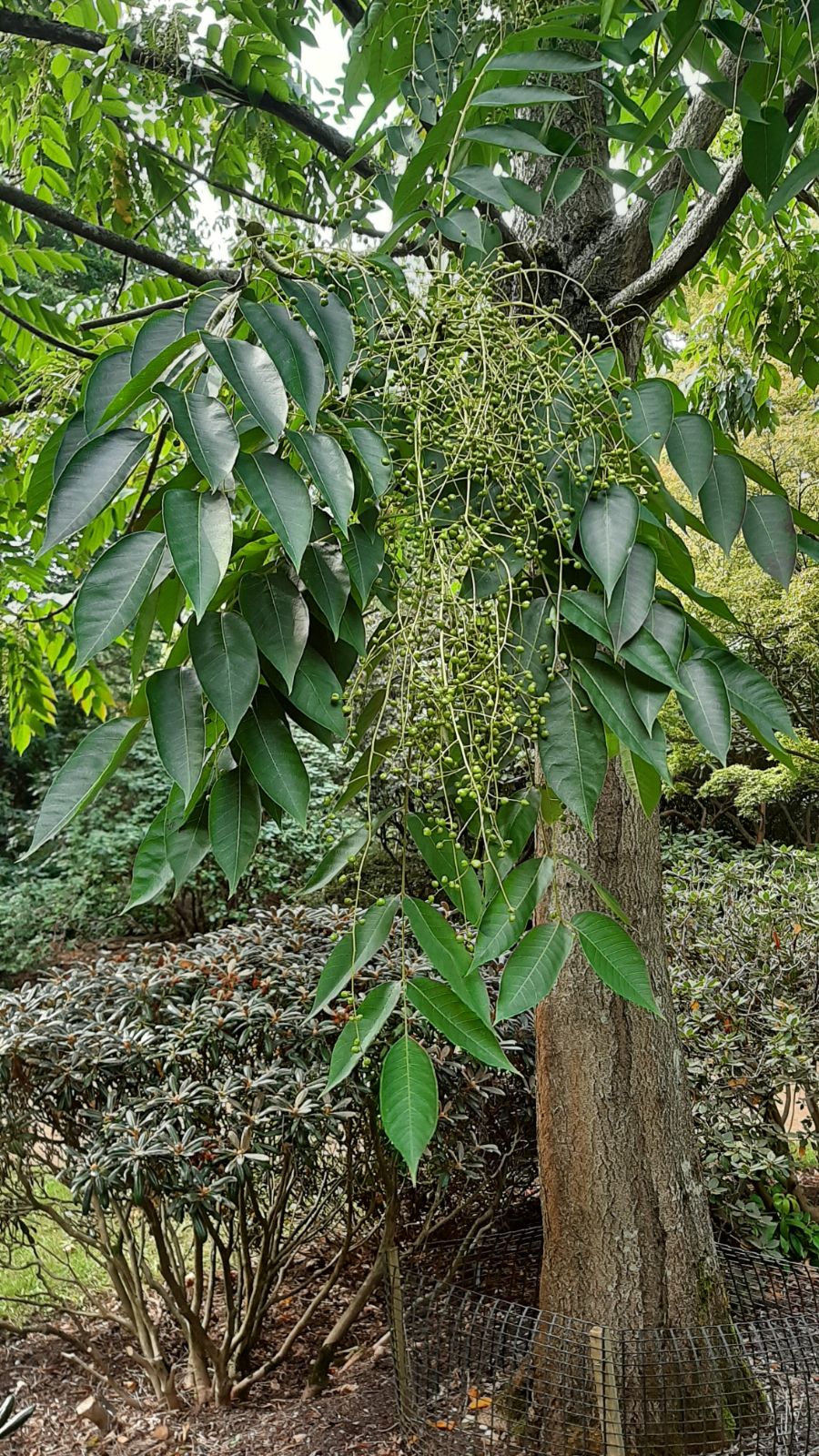
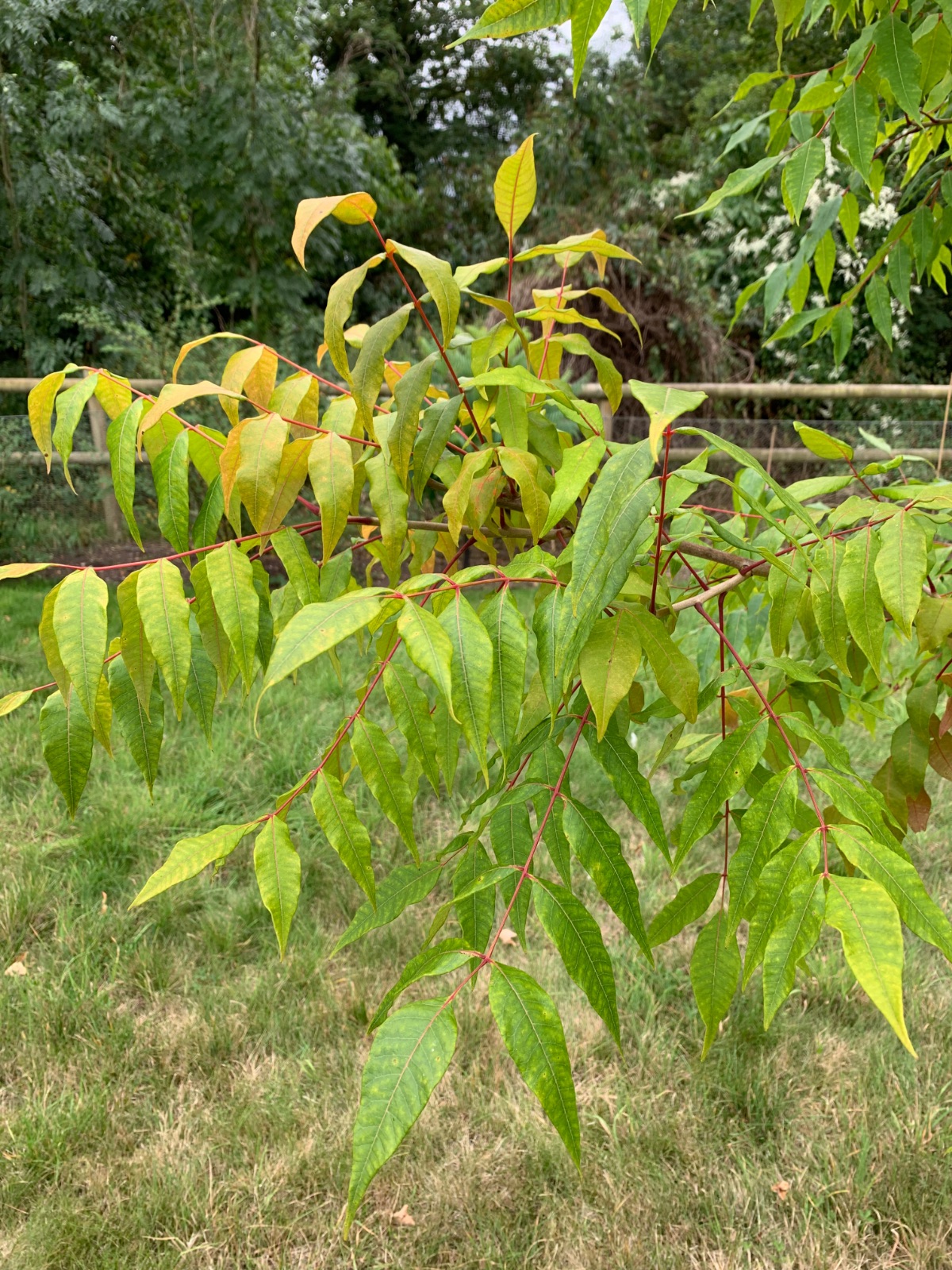
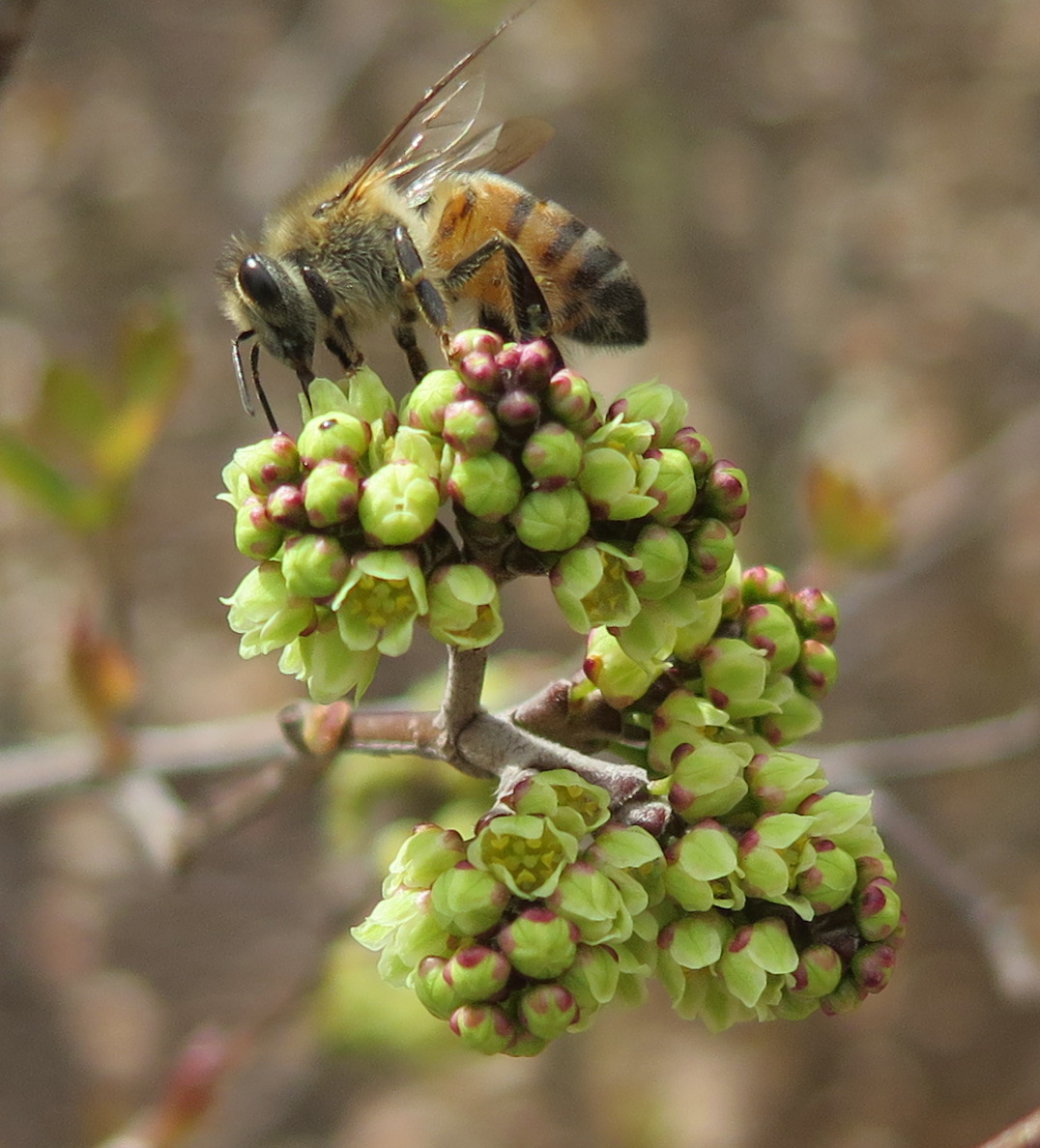
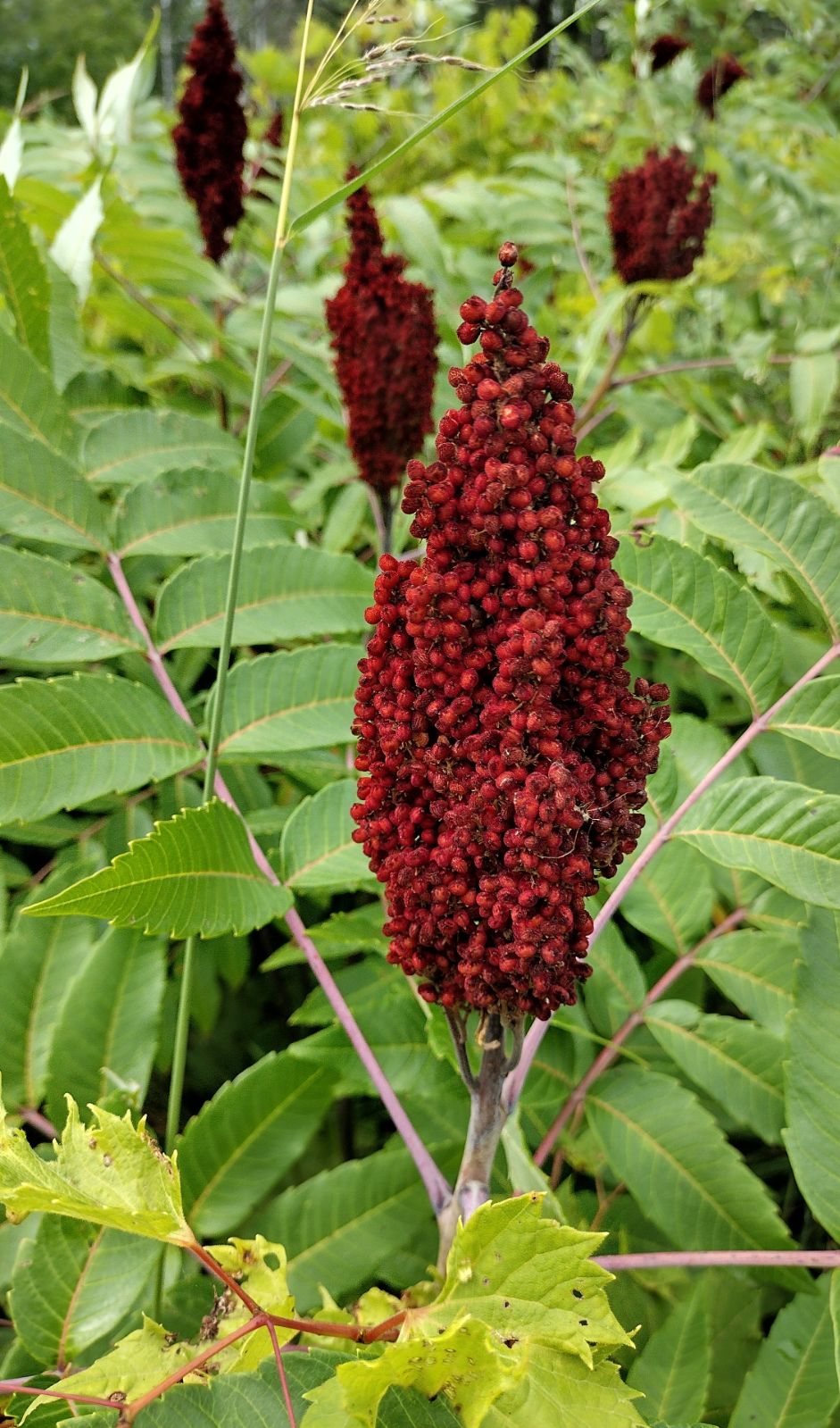
Rhus species are small to medium-sized, deciduous or evergreen trees, shrubs or climbers, with sap that may be poisonous (Toxicodendron) or not (Rhus). The branches are either numerous and slender, or of limited number, in which case they are thick, often pubescent and reminiscent of deer antlers. Winter buds are naked. The leaves are alternate, simple, trifoliate, or imparipinnate and then with a winged or terete rachis. Rhus is dioecious, though occasional bisexual flowers occur in the inflorescences. Inflorescences can be compact, terminal thyrses or lateral or terminal spikes. The individual flowers are unimpressive. The fruit is a red, slightly compressed drupe covered with glandular or mixed simple and glandular hairs, though in Toxicodendron the fruit is greenish white or yellowish white without glandular pubescence (Barkley 1937, Brizicky 1963, Ohwi 1965).
Rhus is probably most familiar to gardeners in the form of the sumacs, R. typhina and its allies, while in the woods of North America the poison-ivies can add an element of hazard to the most innocuous walk, and render the genus notorious. Taken as a whole, however, Rhus provides many useful ornamental trees with bold pinnate leaves, some of which – such as R. chinensis and R. verniciflua – are reasonably well known in cultivation, though others – like R. wallichii, described below – are not. The name Rhus javanica regularly appears in horticulture, but the taxonomy associated with it is extremely confusing. The name was first published by Linnaeus, but his species has since been transferred into the genus Brucea J. Mill. (Simaroubaceae). The same name was also published by Thunberg for a species of Rhus that has now been placed in synonymy with R. chinensis Mill. (Chandra & Mukherjee 2000). The name ‘Rhus japonica’ was never validly published, but appears on some cultivated plants introduced into the United Kingdom that seem also to be referable to R. chinensis. The larger, tree-forming species should be given sites in good soil with plenty of sun, and will do best in areas with hot summers.
Many species of Rhus are shrubby, including a large number of trifoliolate species in Africa, of which R. lancea is one of the largest. Several South African species are in cultivation and commercially available in the United Kingdom, though it is not known how well established they are. These include: R. glauca Thunb., a shrub up to 8 m, whose leaves start out a very glossy green, although the ‘varnish’ causing this dries out to a greyish powdery layer; R. incisa L. f., which is smaller, with pinnatifid leaflets that are white-woolly below; R. krebsiana C. Presl ex Engl., a shrub from the Drakensberg with unexceptional leaves; R. leptodictya Diels, which can reach 8 m, with elongated leaflets that have toothed margins (largely coming from the Highveld, it can withstand considerable frost: Coates Palgrave 1990); and R. magalismontana Sond., with broad leaflets (another shrub from the old Transvaal). All produce small yellowish green flowers in (usually) short panicles.
Another species commercially available at present is R. integrifolia (Nutt.) Brewer & S. Watson, a chaparral shrub from southern California, where it is known as Lemonade Berry as the fruits are said to produce a lemonade-flavoured beverage if steeped in water. Although tolerant of dry conditions, it is frost-tender (Wikipedia 2008a). Rhus integrifolia, other Californian or Mexican species, and the South Africans mentioned above, should be given sunny, well-drained sites in mild areas if they are to have much chance of surviving. Quite different, and coming from damp forests, R. ambigua Lavallée ex Dippel is a climbing species from eastern Asia, that turns brilliant red in autumn (Crûg Farm Plants 2007–2008), but this should be regarded with caution as it appears to be an Asian poison-ivy, as its alternative name Toxicodendron orientale Greene suggests. None of the poison-ivies should be sold without a clear health warning, and care should be taken with any unfamiliar species of Rhus, as they may have inflammatory sap or allergenic pollen. Rhus can be rooted from cuttings, or grown from seed.
Bean’s Trees and Shrubs
Rhus
Sumach
A large genus of shrubs, small trees, or climbers, with ternate or pinnate leaves, found in most temperate regions of the globe, and occasionally in the tropics. About a dozen species are grown in the open air in the British Isles, but several others (such as R. succedanea) can be cultivated in Cornwall and similar places. Individually the flowers of the sumachs are small and of little beauty, being greenish, yellowish, or dull white, but in a few species the panicles are sufficiently large and the flowers white enough to give a pleasing effect. In some species the fruits are handsome, but, on the whole, their value in gardens is in the size and autumn colouring of the foliage. The leading characters of the genus are the alternate leaves and usually dioecious flowers, the five-lobed calyx (which adheres to the fruit), the five petals, the one-celled ovary with three styles, and the usually globose fruit, either glabrous or hairy, containing one bony seed.
The juice of several species, notably R. radicans and R. vernix, is exceedingly acrid and poisonous to many people, but care should be taken in pruning or making cuttings of any of the species. R. vertticiflua yields the famous lacquer of Japan. The leaves of several species have also an economic value either for dyeing or tanning, and the fruits of some, such as R. succedanea and R. verniciflua, give a wax used for candle-making.
The cultivation of all the sumachs is simple. They do not require a very rich soil except when they are grown purely for size of foliage as R. tjphina (q.v.) and R. glabra sometimes are. Where autumn colour is desired, ordinary garden soil without added manure is sufficient. Like many other trees with soft wood and a large pith, they are subject to the attacks of the ‘coral-spot’ fungus (Nectria cinnabarina). Branches so attacked should be cleanly cut off and burnt, the wound coated with tar. Most can be propagated by root-cuttings, and seed is often available.