Quercus nigra

Sponsor
Kindly sponsored by
The Trees and Shrubs Online Oak Consortium
Credits
Article from Bean's Trees and Shrubs Hardy in the British Isles
Recommended citation
'Quercus nigra' from the website Trees and Shrubs Online (treesandshrubsonline.
Other taxa in genus
- Quercus acerifolia
- Quercus acherdophylla
- Quercus acrodonta
- Quercus acuta
- Quercus acutifolia
- Quercus acutissima
- Quercus afares
- Quercus affinis
- Quercus agrifolia
- Quercus alba
- Quercus aliena
- Quercus alnifolia
- Quercus aquifolioides
- Quercus arizonica
- Quercus arkansana
- Quercus aucheri
- Quercus augustini
- Quercus austrina
- Quercus × auzendei
- Quercus baloot
- Quercus bambusifolia
- Quercus baronii
- Quercus bicolor
- Quercus brantii
- Quercus buckleyi
- Quercus canariensis
- Quercus canbyi
- Quercus candicans
- Quercus castanea
- Quercus castaneifolia
- Quercus cerris
- Quercus chenii
- Quercus chrysolepis
- Quercus coccifera
- Quercus cocciferoides
- Quercus coccinea
- Quercus conspersa
- Quercus crassifolia
- Quercus crassipes
- Quercus delavayi
- Quercus dentata
- Quercus deserticola
- Quercus dolicholepis
- Quercus douglasii
- Quercus dumosa
- Quercus durifolia
- Quercus eduardii
- Quercus ellipsoidalis
- Quercus emoryi
- Quercus engelmannii
- Quercus engleriana
- Quercus euboica
- Quercus eugeniifolia
- Quercus fabri
- Quercus faginea
- Quercus falcata
- Quercus floribunda
- Quercus frainetto
- Quercus franchetii
- Quercus fruticosa
- Quercus fusiformis
- Quercus gambelii
- Quercus garryana
- Quercus geminata
- Quercus georgiana
- Quercus germana
- Quercus gilliana
- Quercus gilva
- Quercus glabrescens
- Quercus glauca
- Quercus graciliformis
- Quercus gravesii
- Quercus griffithii
- Quercus grisea
- Quercus guyavifolia
- Quercus hartwissiana
- Quercus hemisphaerica
- Quercus × hispanica
- Quercus hondae
- Quercus hypargyrea
- Quercus hypoleucoides
- Quercus ilex
- Quercus ilicifolia
- Quercus imbricaria
- Quercus incana
- Quercus infectoria
- Quercus insignis
- Quercus ithaburensis
- Quercus kelloggii
- Quercus × kewensis
- Quercus kiukiangensis
- Quercus laceyi
- Quercus laevis
- Quercus lamellosa
- Quercus lanata
- Quercus lancifolia
- Quercus laurifolia
- Quercus laurina
- Quercus × leana
- Quercus leucotrichophora
- Quercus × libanerris
- Quercus libani
- Quercus lobata
- Quercus lobbii
- Quercus lodicosa
- Quercus longinux
- Quercus longispica
- Quercus look
- Quercus × ludoviciana
- Quercus macranthera
- Quercus macrocalyx
- Quercus macrocarpa
- Quercus macrolepis
- Quercus marilandica
- Quercus mexicana
- Quercus michauxii
- Quercus mongolica
- Quercus monimotricha
- Quercus montana
- Quercus morii
- Quercus muehlenbergii
- Quercus myrsinifolia
- Quercus myrtifolia
- Quercus × numidica
- Quercus oblongifolia
- Quercus obtusata
- Quercus oglethorpensis
- Quercus oxyodon
- Quercus pagoda
- Quercus palmeri
- Quercus palustris
- Quercus pannosa
- Quercus parvula
- Quercus petraea
- Quercus phellos
- Quercus phillyreoides
- Quercus planipocula
- Quercus poilanei
- Quercus polymorpha
- Quercus pontica
- Quercus prinoides
- Quercus pubescens
- Quercus pyrenaica
- Quercus rehderiana
- Quercus reticulata
- Quercus robur
- Quercus rotundifolia
- Quercus rubra
- Quercus rugosa
- Quercus rysophylla
- Quercus sadleriana
- Quercus salicina
- Quercus sartorii
- Quercus × schneideri
- Quercus schottkyana
- Quercus semecarpifolia
- Quercus senescens
- Quercus serrata
- Quercus sessilifolia
- Quercus setulosa
- Quercus shumardii
- Quercus sinuata
- Quercus spinosa
- Quercus stellata
- Quercus stenophylloides
- Quercus suber
- Quercus subspathulata
- Quercus tarokoensis
- Quercus tatakaensis
- Quercus texana
- Quercus tomentella
- Quercus trojana
- Quercus tungmaiensis
- Quercus turbinella
- Quercus × turneri
- Quercus undulata
- Quercus utahensis
- Quercus utilis
- Quercus uxoris
- Quercus variabilis
- Quercus velutina
- Quercus virginiana
- Quercus vulcanica
- Quercus warburgii
- Quercus wislizenii
- Quercus xalapensis
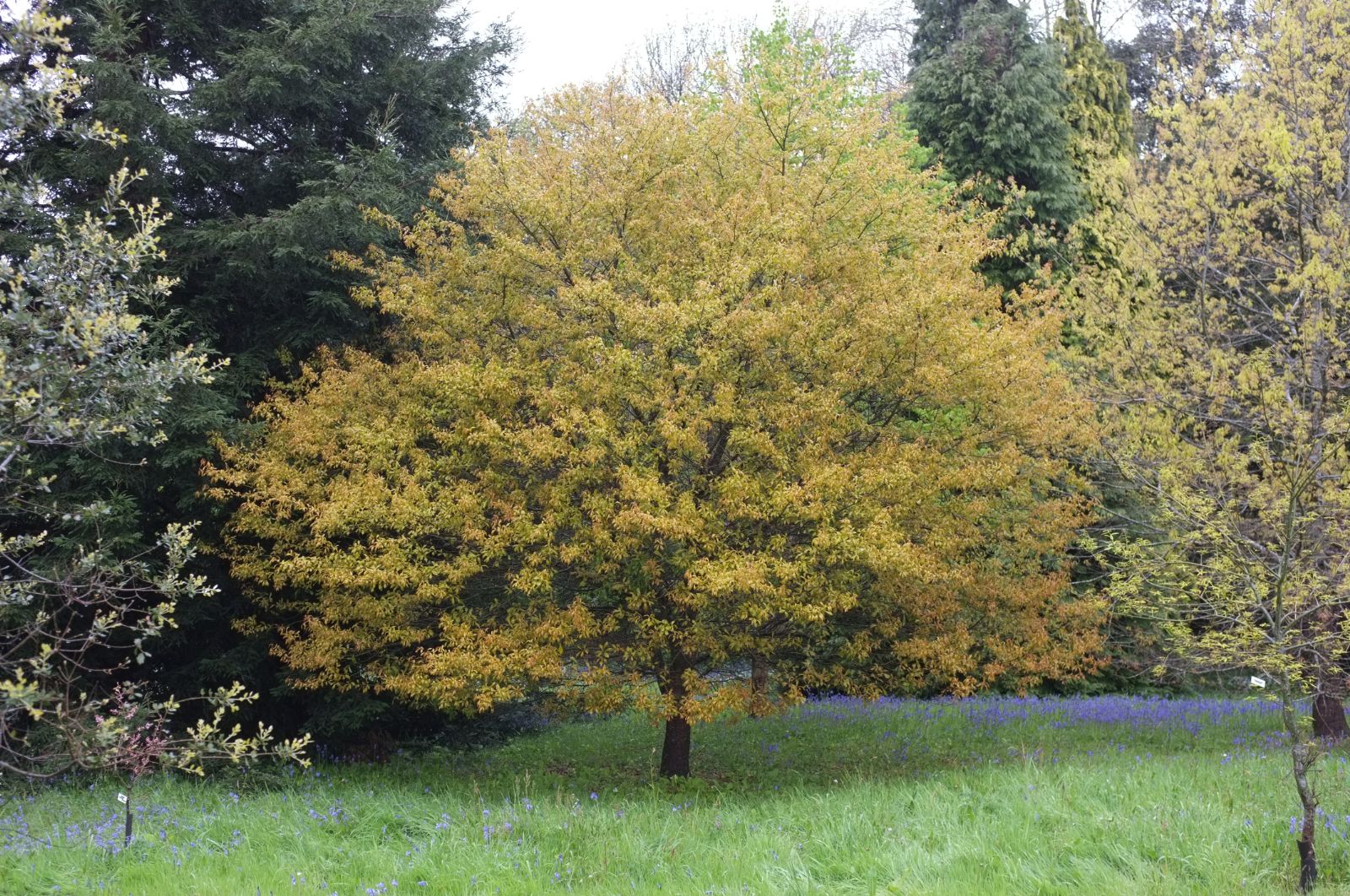
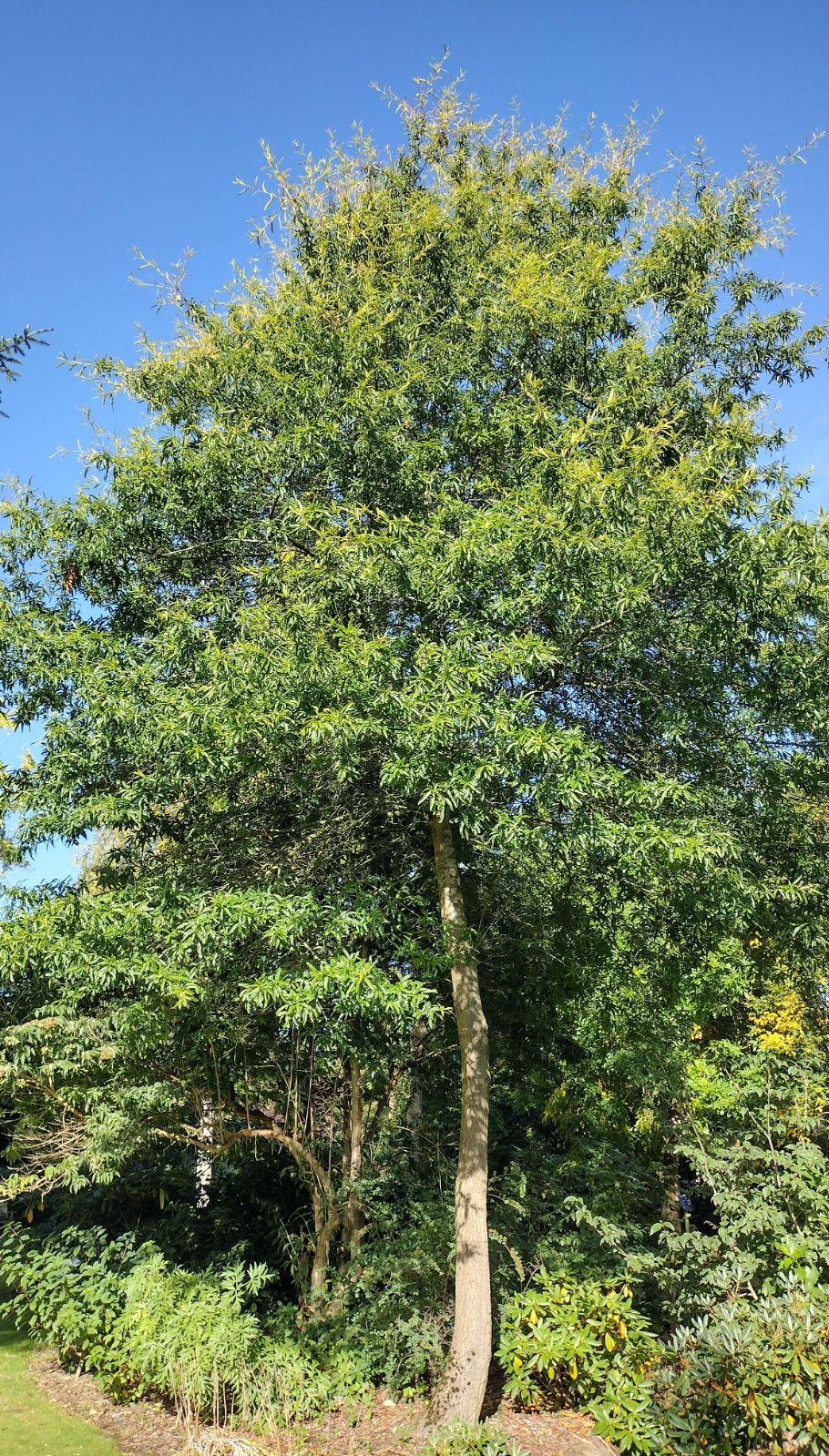
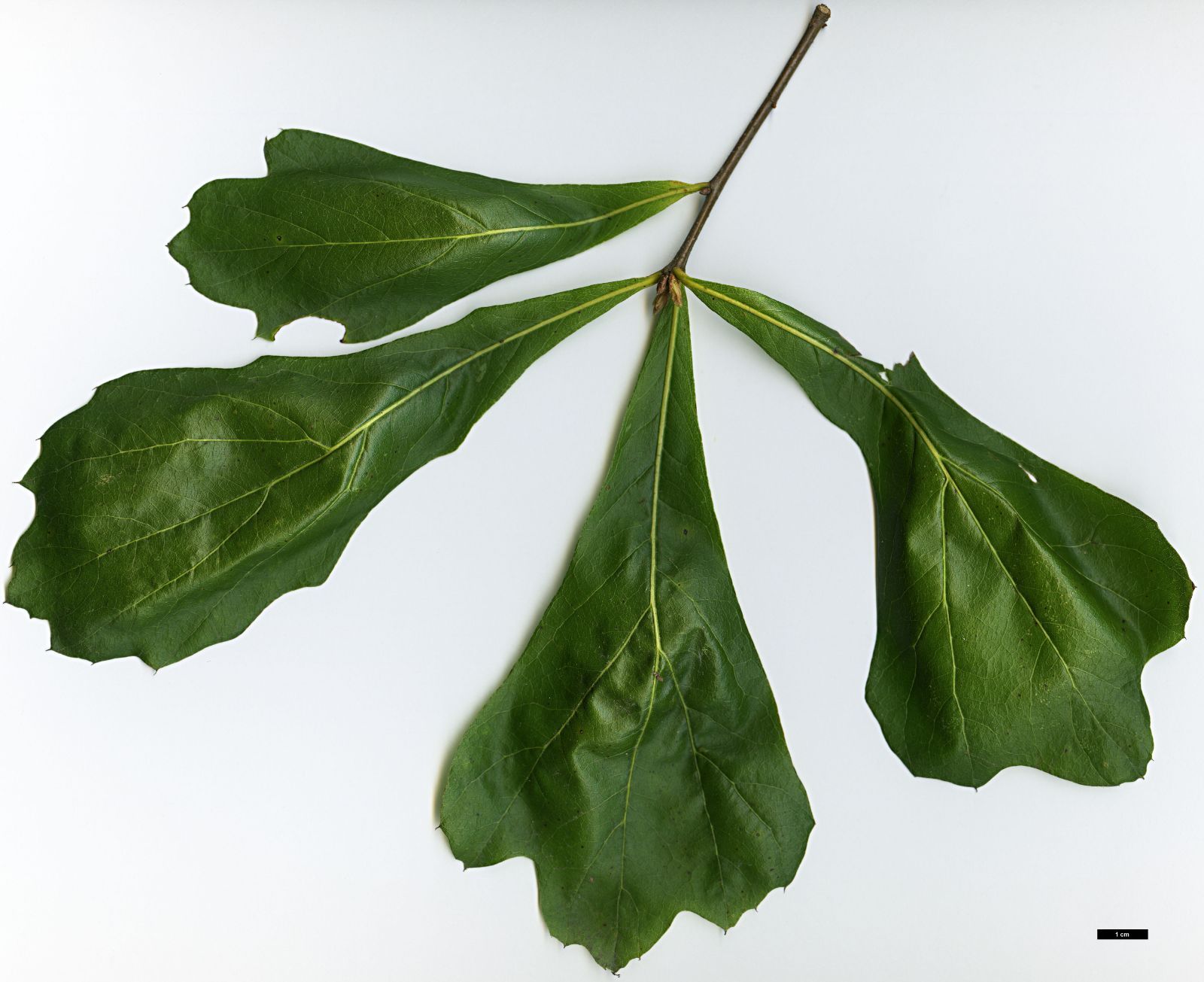
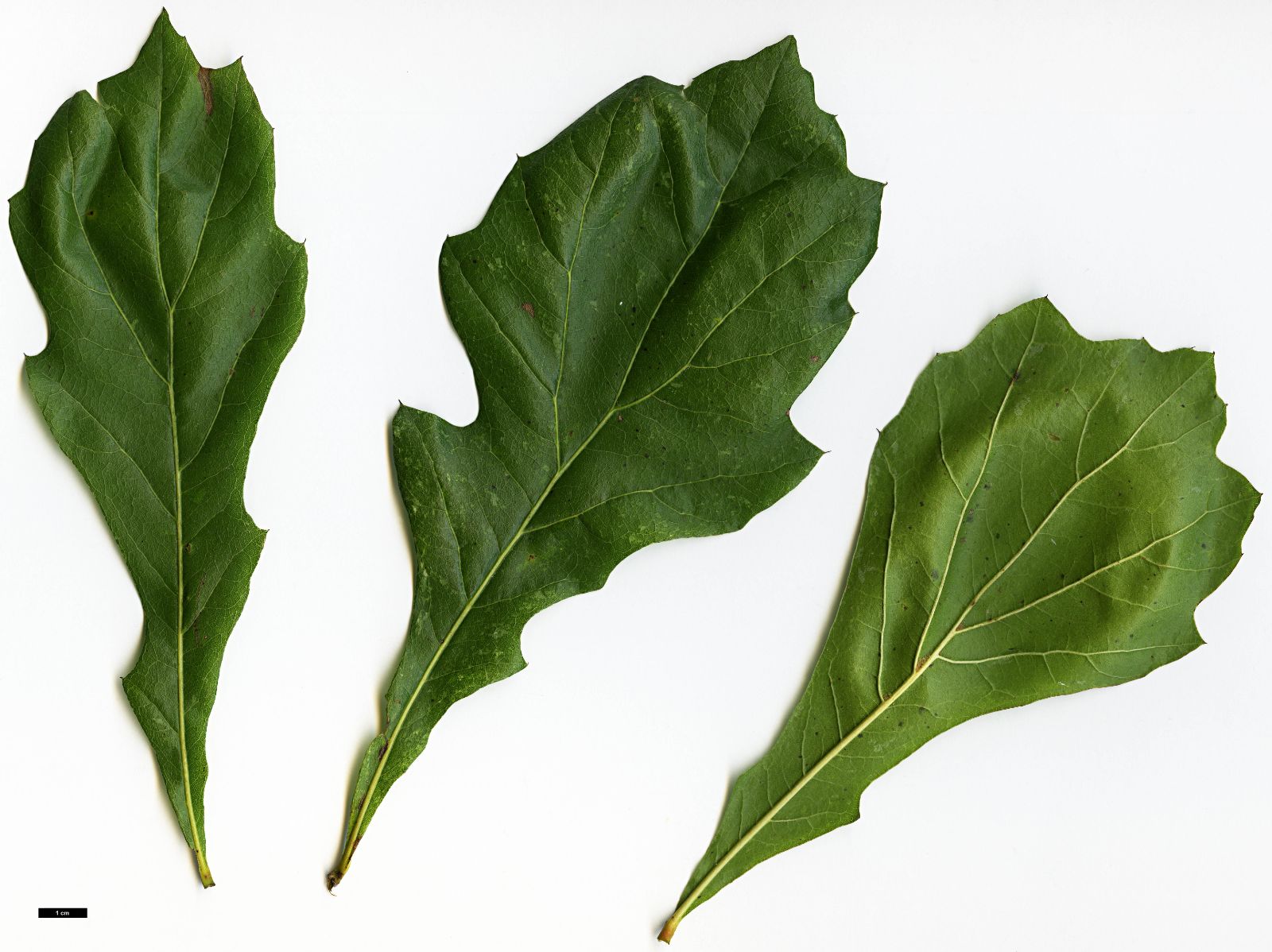
A deciduous tree up to 80 ft high in the wild; young shoots glabrous. Leaves often crowded at the end of short twigs, extremely variable in shape, mostly obovate, tapered at the base and rounded or bluntish at the apex; some, however, are narrow-oblong, like those of Q. phellos, and entire; others have several shallow or deep lobes towards the apex; they vary from 11⁄2 to 4 in. long, and from 1⁄2 to 2 in. wide, and are of a pale green and glabrous on both surfaces except for tufts of down in the vein-axils beneath; stalk 1⁄10 to 1⁄4 in. long. Fruits usually solitary; acorn 1⁄2 in. broad and long, one-third enclosed in a broad, shallow, short-stalked cup with appressed scales.
Native of the southern United States; in cultivation 1723. It retains its leaves quite fresh until about the New Year. Its affinities are with Q. phellos, which, however, never has the broad, obovate or lobed leaves. In the southern United States it is popular as a shade tree for streets, etc. This oak must not be confounded with the ‘Black Jack oak’ – the Q. nigra of Wangenheim – a very different tree. (See Q. marilandica.)
There is a fine specimen of Q. nigra at Kew by the Isleworth Gate measuring 58 × 61⁄4 ft (1968). A tree in the Oak collection, pl. 1874, is 50 × 53⁄4 ft (1972). The only other large specimen recorded grows at Pylewell Park, Hants; it measures 52 × 83⁄4 ft at 51⁄2 ft (1968).
From the Supplement (Vol. V)
specimens: Kew, Isleworth Gate, cut back, 50 × 63⁄4 ft (1978) and, in Oak Collection, pl. 1874, 53 × 6 ft (1986); Windsor Great Park, pl. 1937, 54 × 53⁄4 ft and 50 × 33⁄4 ft (1978).