Poliothyrsis

Sponsor
Kindly sponsored by
William & Griselda Kerr
Credits
Owen Johnson (2022)
Recommended citation
Johnson, O. (2022), 'Poliothyrsis' from the website Trees and Shrubs Online (treesandshrubsonline.
Family
- Salicaceae
Common Names
- Chinese Pearlbloom
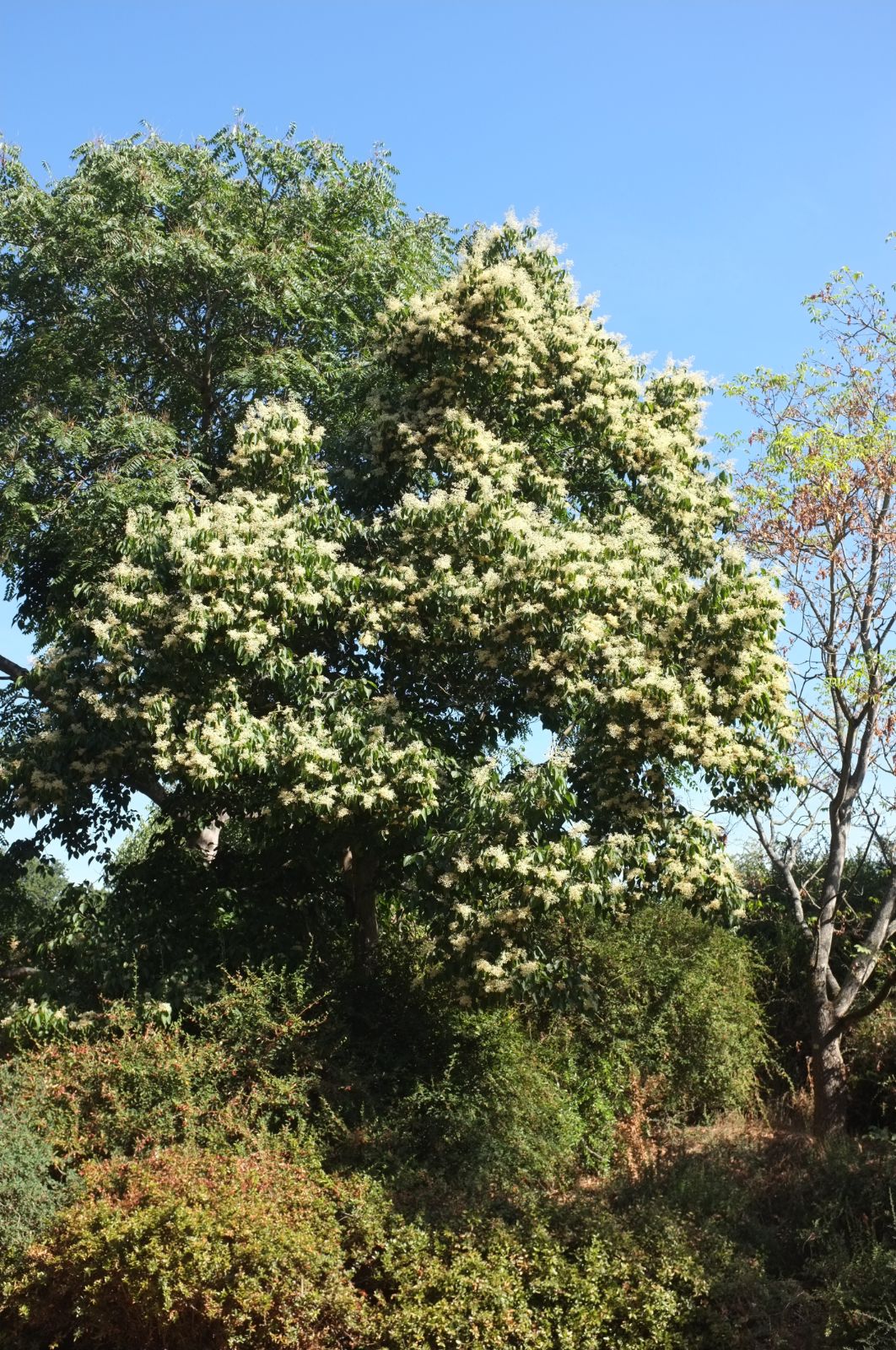
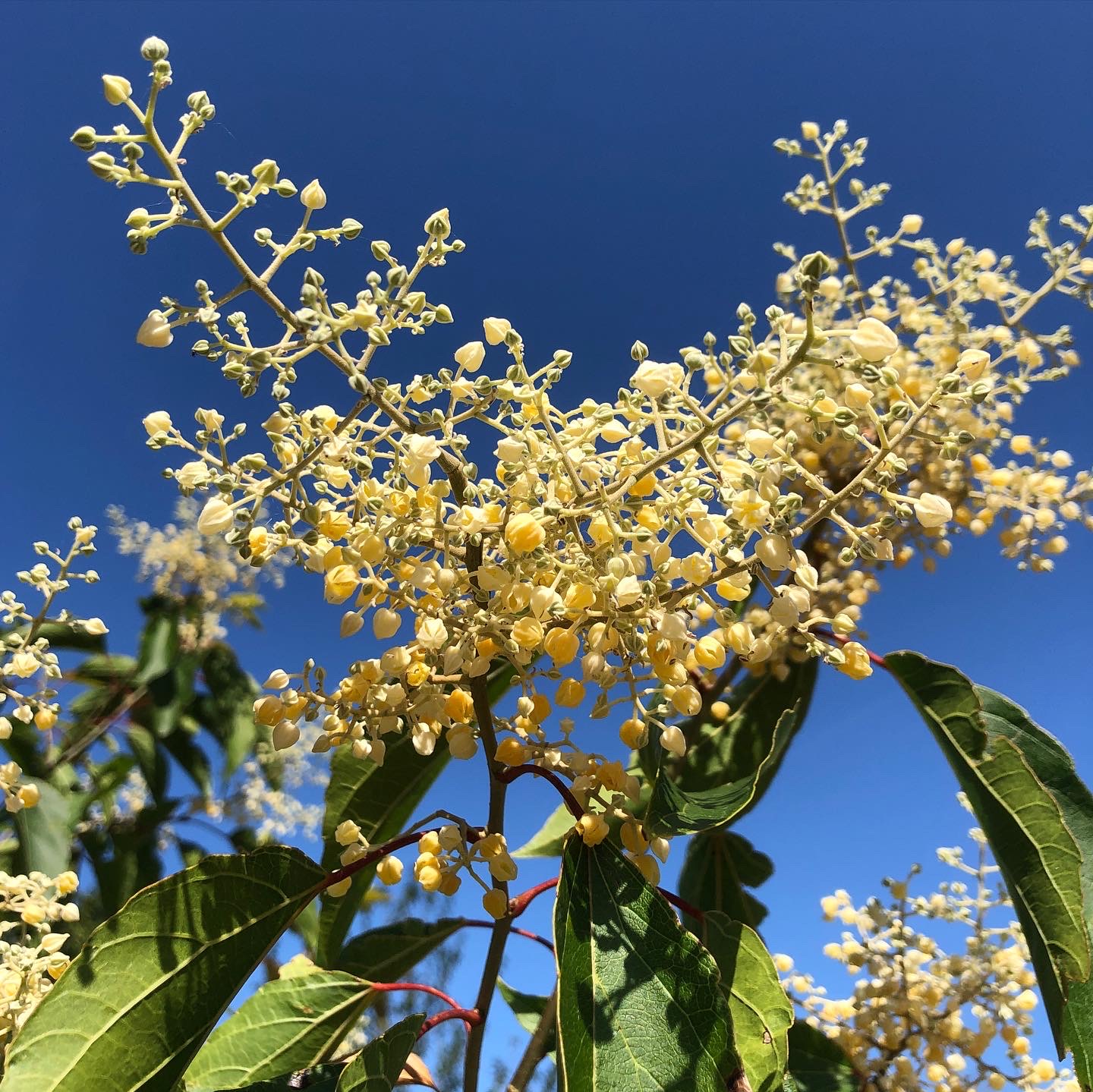
One species of tree; monoecious, deciduous. Leaves alternate, with 3 or 5 veins from the base; margin with glandular teeth; petiole glandular. Flowers unisexual, scented, in terminal or rarely axillary panicles with male flowers in the lower part and females nearer the top. Sepals 5, nearly free; petals absent. Stamens many, shorter than the sepals. Female flowers with many staminodes and 3 styles. Fruit capsule narrowly ovoid, with a thin woody shell; 3 valves usually split from their tip and base and remain attached by woody strips. Seeds many, flat and stacked inside the capsule; seed surrounded by a papery wing more than twice its width. (Flora of China 2022).
The first western botanist to encounter the single known representative of this Chinese genus was Augustine Henry, in Hubei around 1889 (Bean 1976). Daniel Oliver’s Greek name for the genus means ‘grey flowerhead’ and refers to the mealy colour of the woolly panicle as it develops (Cambridge University Botanic Garden 2022). The genus and its single species are sufficiently distinctive not to have become burdened with any synonyms.
Poliothyrsis’ nearest hardy allies are Carrierea and Idesia, whose distribution is also largely Chinese and which also have just one representative in cultivation; they share the broad, elegant leaves which are three- or five-veined from the base, and the large, pubescent panicles of scented, petal-less flowers. Poliothyrsis is the only member of this group whose individual plants carry both male and female flowers, though each bloom is single-sexed and the sexes are segregated within the flowerhead. These trees were conventionally placed in the family Flacourtiaceae, but phylogenetic analysis has helped to show this as an artificial amalgamation of unrelated taxa; Poliothyrsis is now understood to be part of the Willow Family, Salicaceae, and appears quite closely allied to the willows and poplars themselves (Zhang, Zeng & Liu 2021).