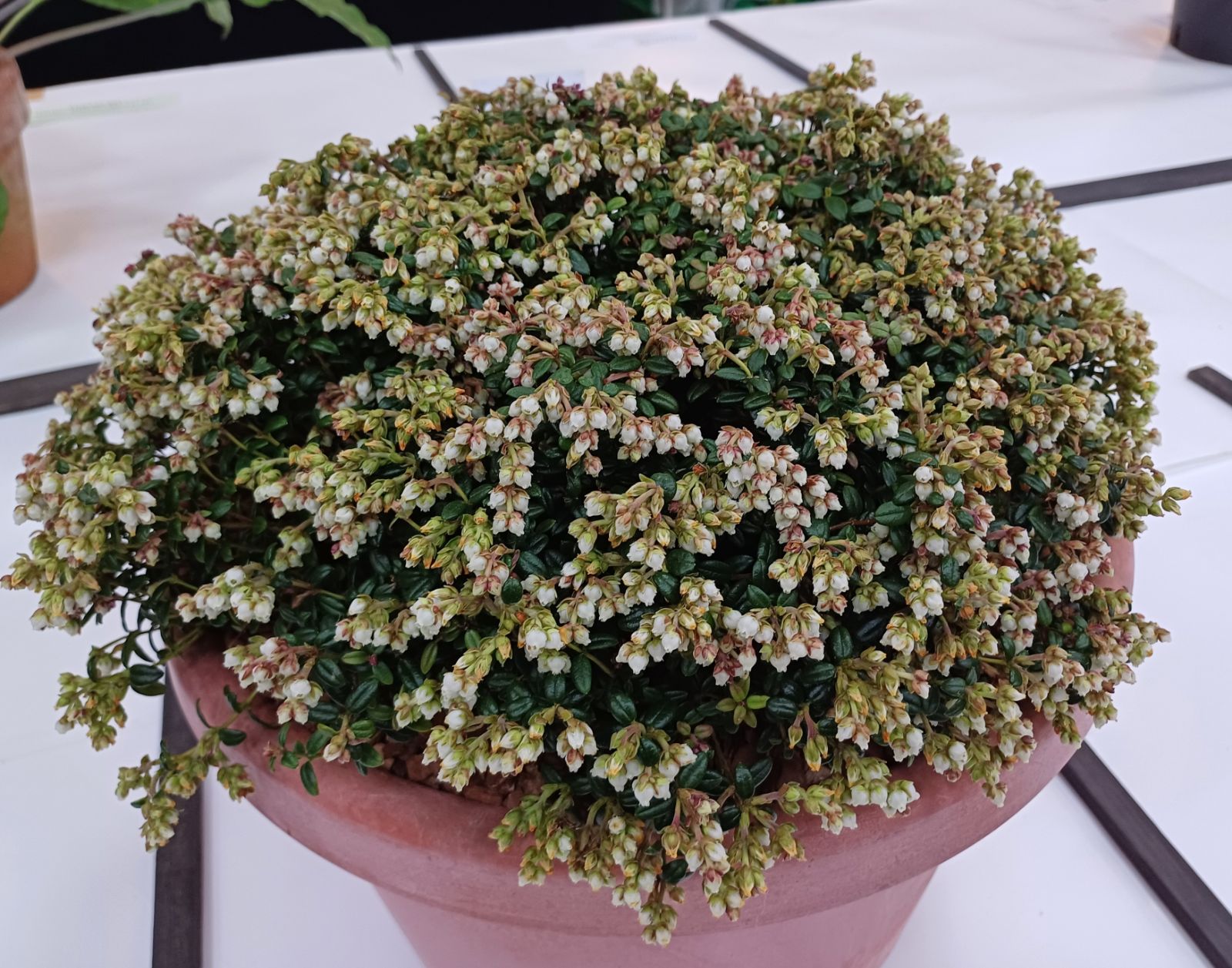
Pieris nana
Credits
Article from Bean's Trees and Shrubs Hardy in the British Isles
Recommended citation
'Pieris nana' from the website Trees and Shrubs Online (treesandshrubsonline.
Genus
Synonyms
- Andromeda nana Maxim.
- Cassiope oxycoccoides A. Gray
- Arcterica oxycoccoides (A. Gr.) Cov.
- Arcterica nana (Maxim.) Makino
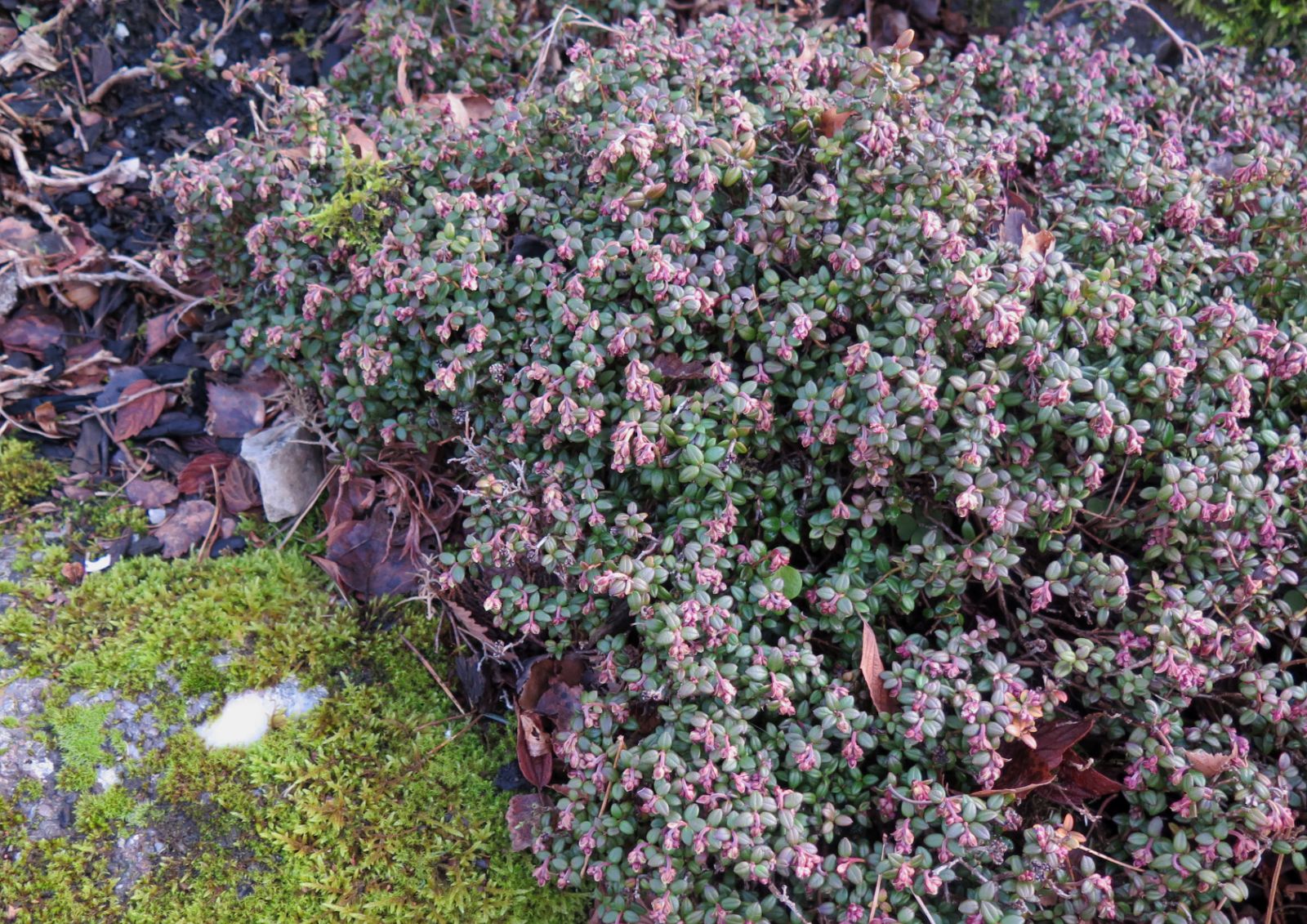
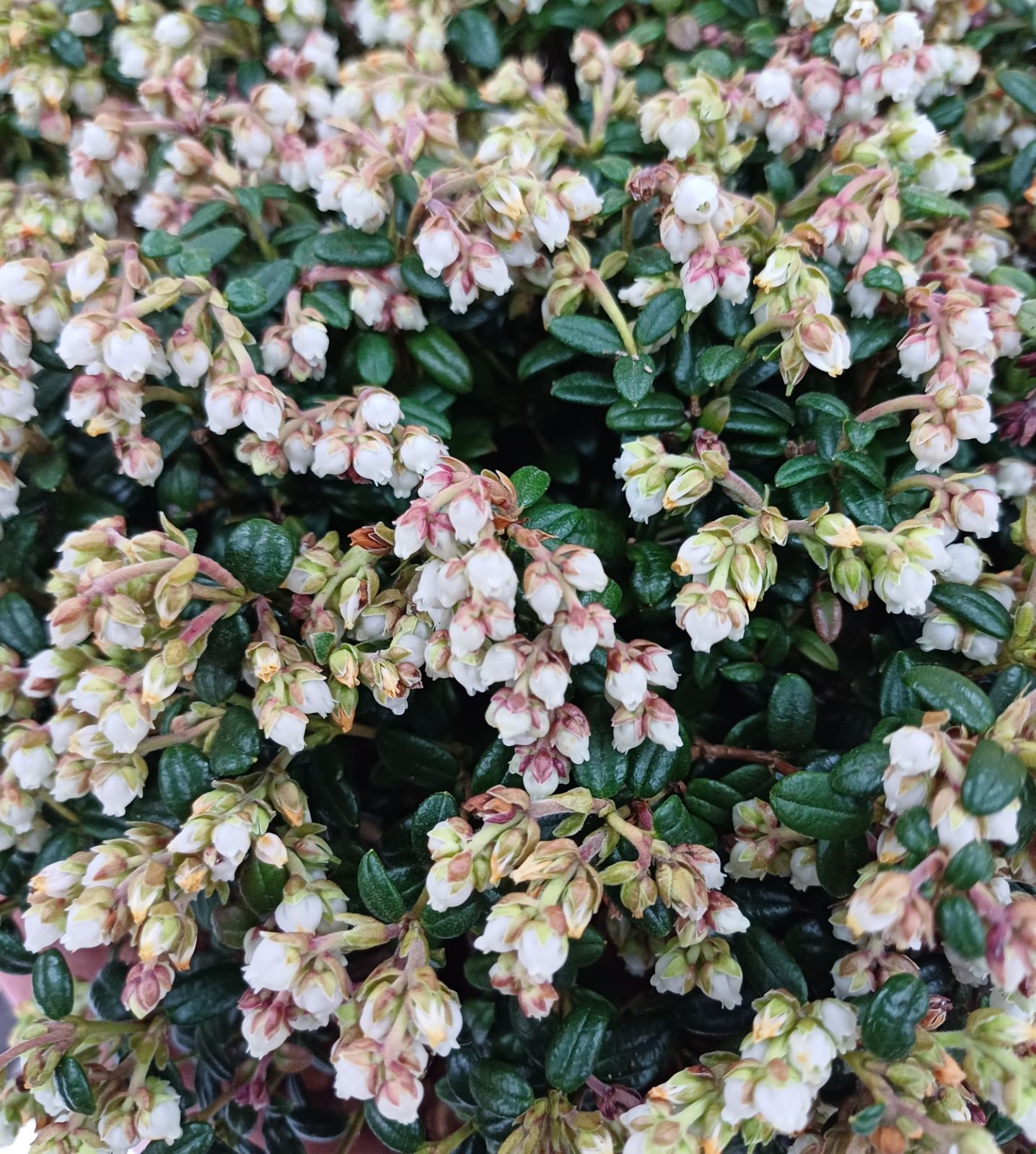
An evergreen shrub of prostrate habit growing only 3 or 4 in. high; young shoots finely downy. Leaves leathery, arranged in whorls of three or occasionally in pairs, oval with recurved margins, 1⁄4 to 3⁄8 in. long, rounded at the base, terminated by a gland at the apex, not toothed, quite glabrous on both surfaces, dark glossy green above; stalk very short. Flowers fragrant, white, roundish urn-shaped, 1⁄16 in. long, contracted at the mouth to five short teeth; they are in terminal clusters or racemes of three or four flowers, and open in late April or May. Sepals ovate, persisting through the fruiting stage; flower-stalks downy, the main-stalk 1⁄4 in. or so long, the individual stalks very short, each bearing one or more bracts.
Native of middle and N. Japan to Kamchatka, also of Bering Island. It is very hardy and flowers freely, but needs a cool position and a moist, peaty soil. It received an Award of Merit when shown by Messrs Reuthe in 1924.
This species is usually placed in Arcterica, a genus created for it by Prof. F. Coville in 1901. It was transferred to Pieris by the Japanese botanist Makino in 1894 but he later came to accept Coville’s view that it represented a distinct genus. It is certainly very distinct in appearance from any other pieris (except perhaps from pygmy forms of P. japonica).
From the Supplement (Vol. V)
This species, generally known in gardens as Arcterica nana, is retained in Pieris by Walter S. Judd in his revision of Pieris, with the rank of a monotypic subgenus.
The clone ‘Red Shank’ received an Award of Merit on 19 February 1974. It is free-flowering, with red calyces.