Picea farreri

Sponsor
Kindly sponsored by
This genus has been sponsored and new text is being prepared.
Credits
Article from Bean's Trees and Shrubs Hardy in the British Isles
Article from New Trees by John Grimshaw & Ross Bayton
Recommended citation
'Picea farreri' from the website Trees and Shrubs Online (treesandshrubsonline.
Genus
Other taxa in genus
- Picea abies
- Picea alcoquiana
- Picea asperata
- Picea brachytyla
- Picea breweriana
- Picea chihuahuana
- Picea crassifolia
- Picea engelmannii
- Picea glauca
- Picea glehnii
- Picea jezoensis
- Picea koraiensis
- Picea koyamae
- Picea likiangensis
- Picea linzhiensis
- Picea × lutzii
- Picea mariana
- Picea martinezii
- Picea maximowiczii
- Picea meyeri
- Picea morrisonicola
- Picea obovata
- Picea omorika
- Picea orientalis
- Picea polita
- Picea pungens
- Picea retroflexa
- Picea rubens
- Picea schrenkiana
- Picea sitchensis
- Picea smithiana
- Picea spinulosa
- Picea wilsonii
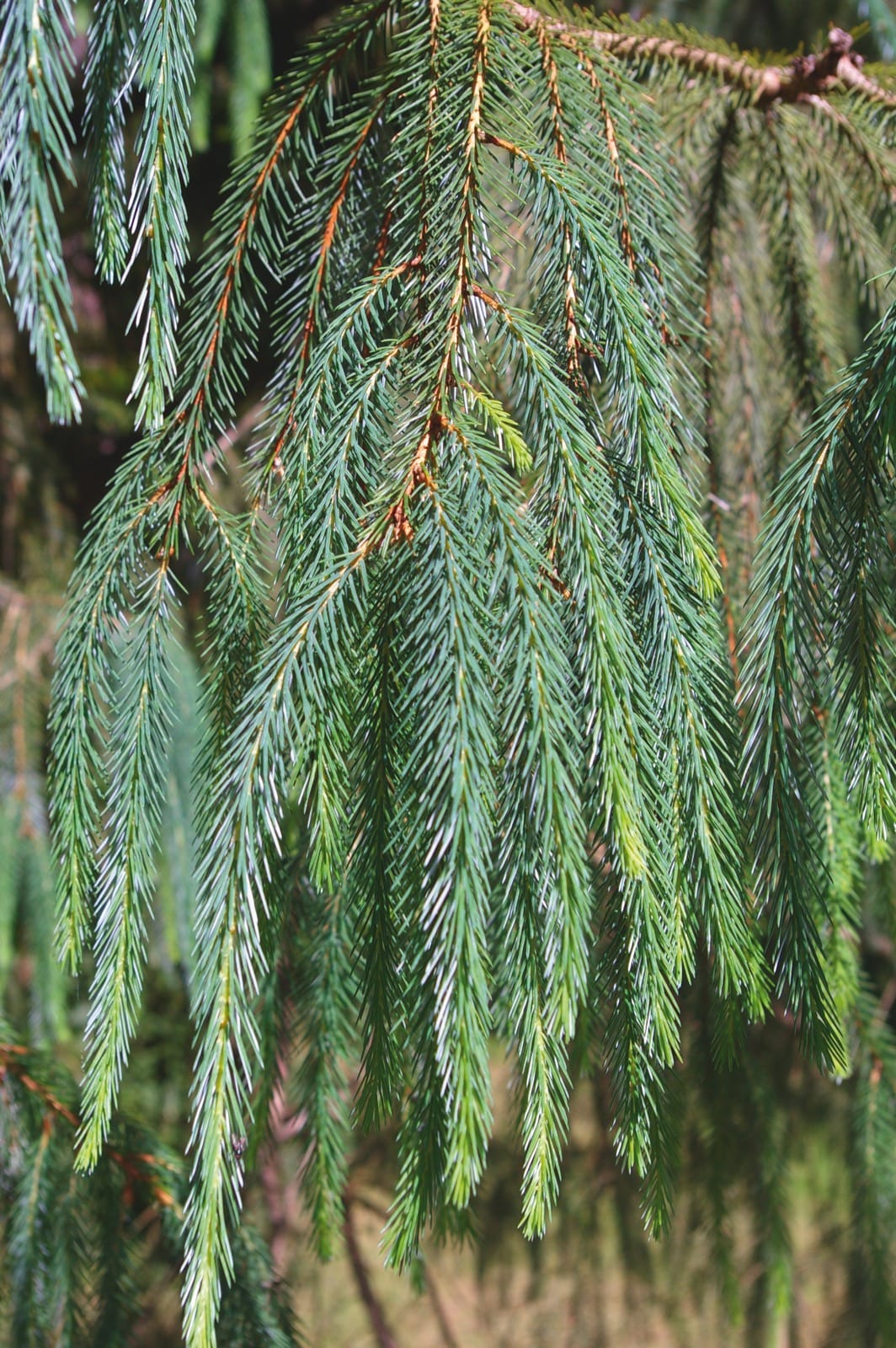
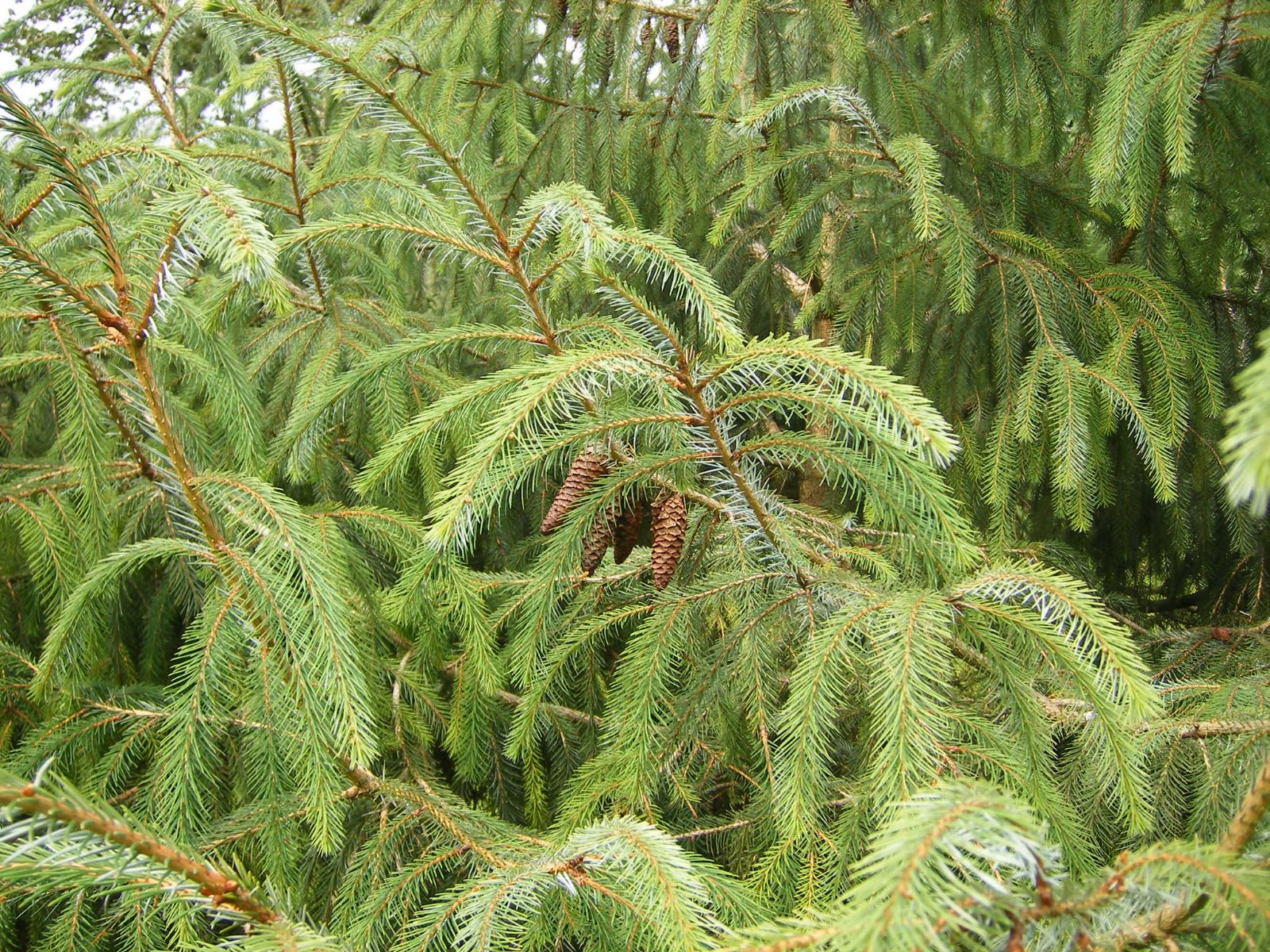
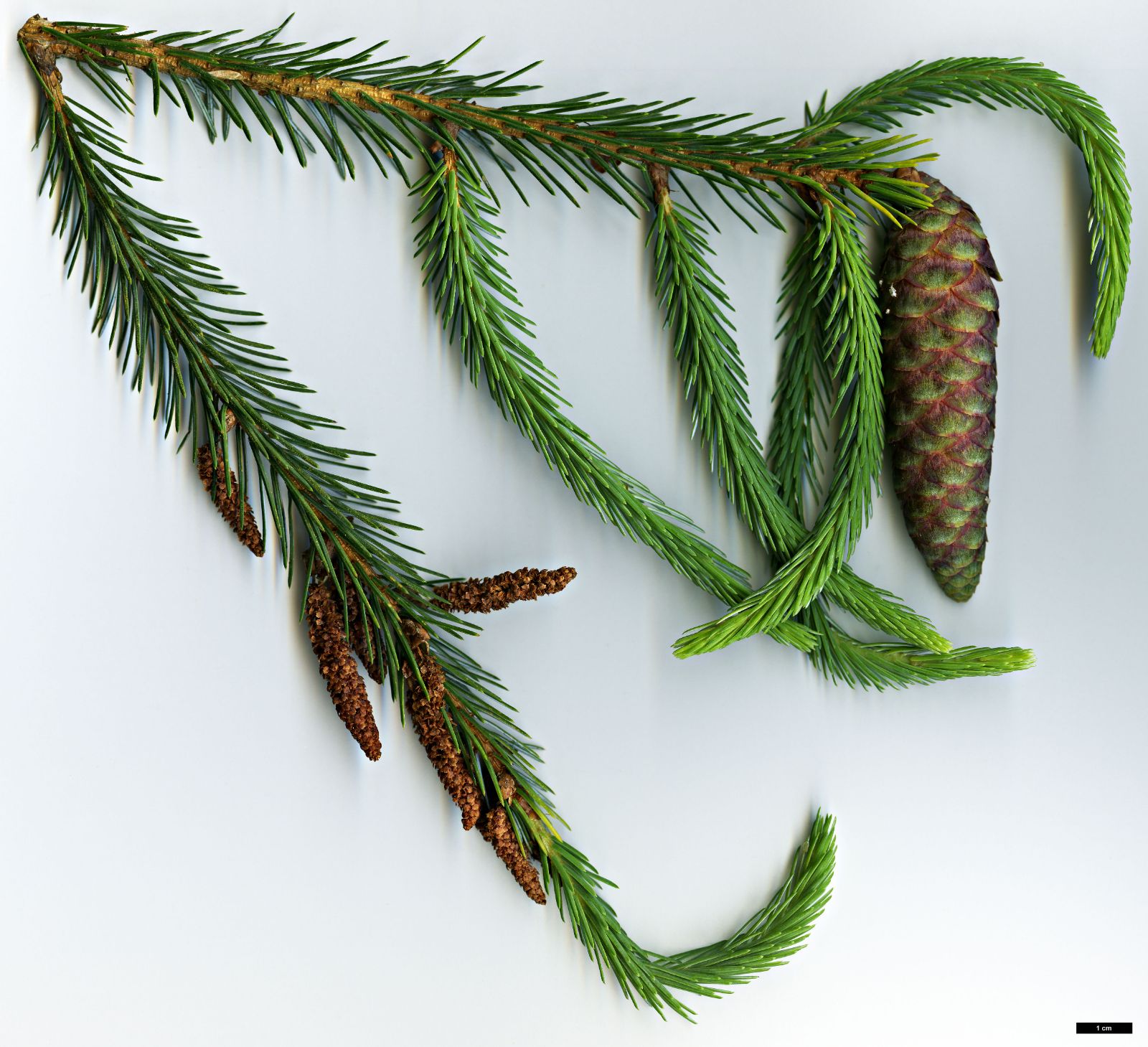
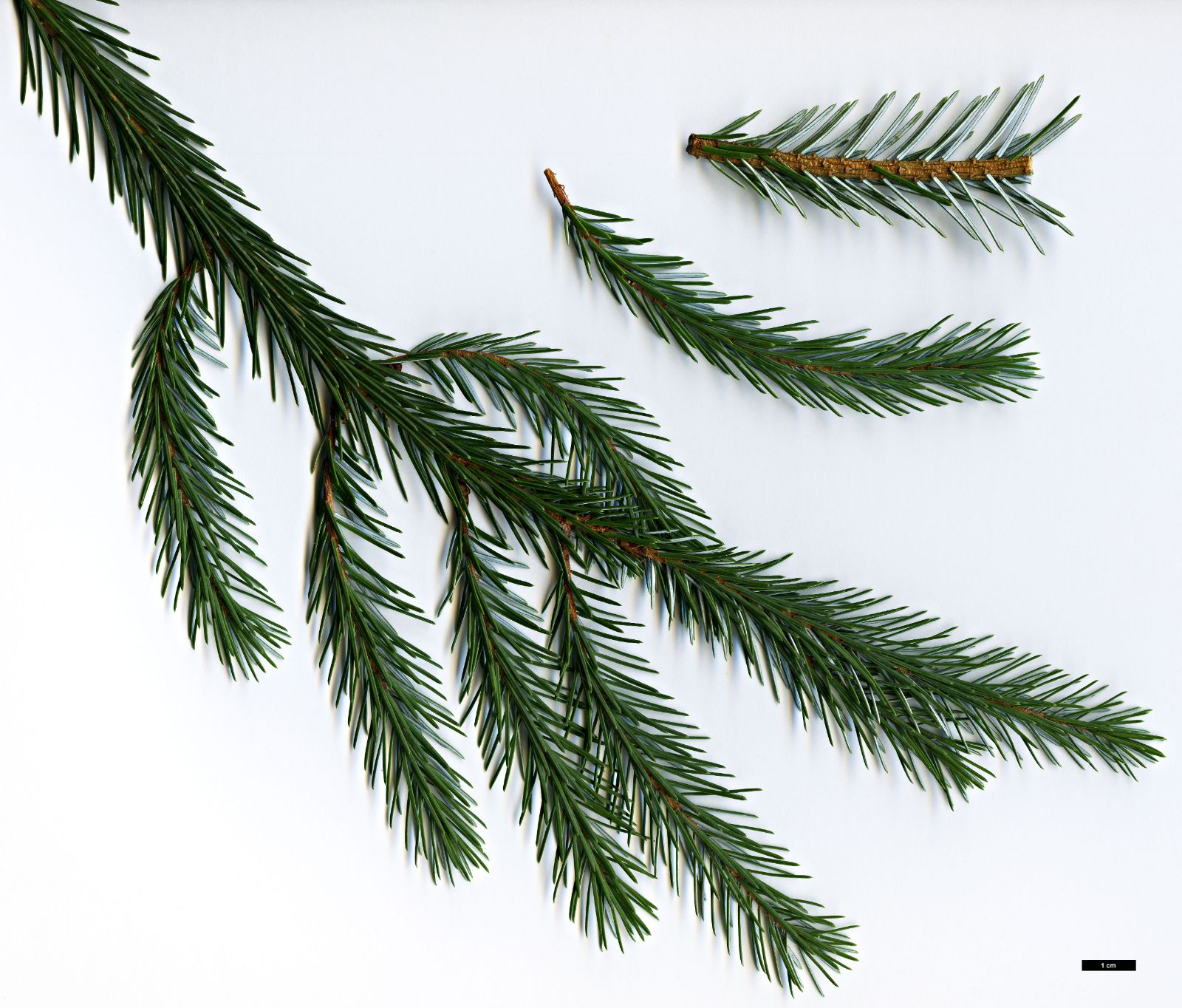
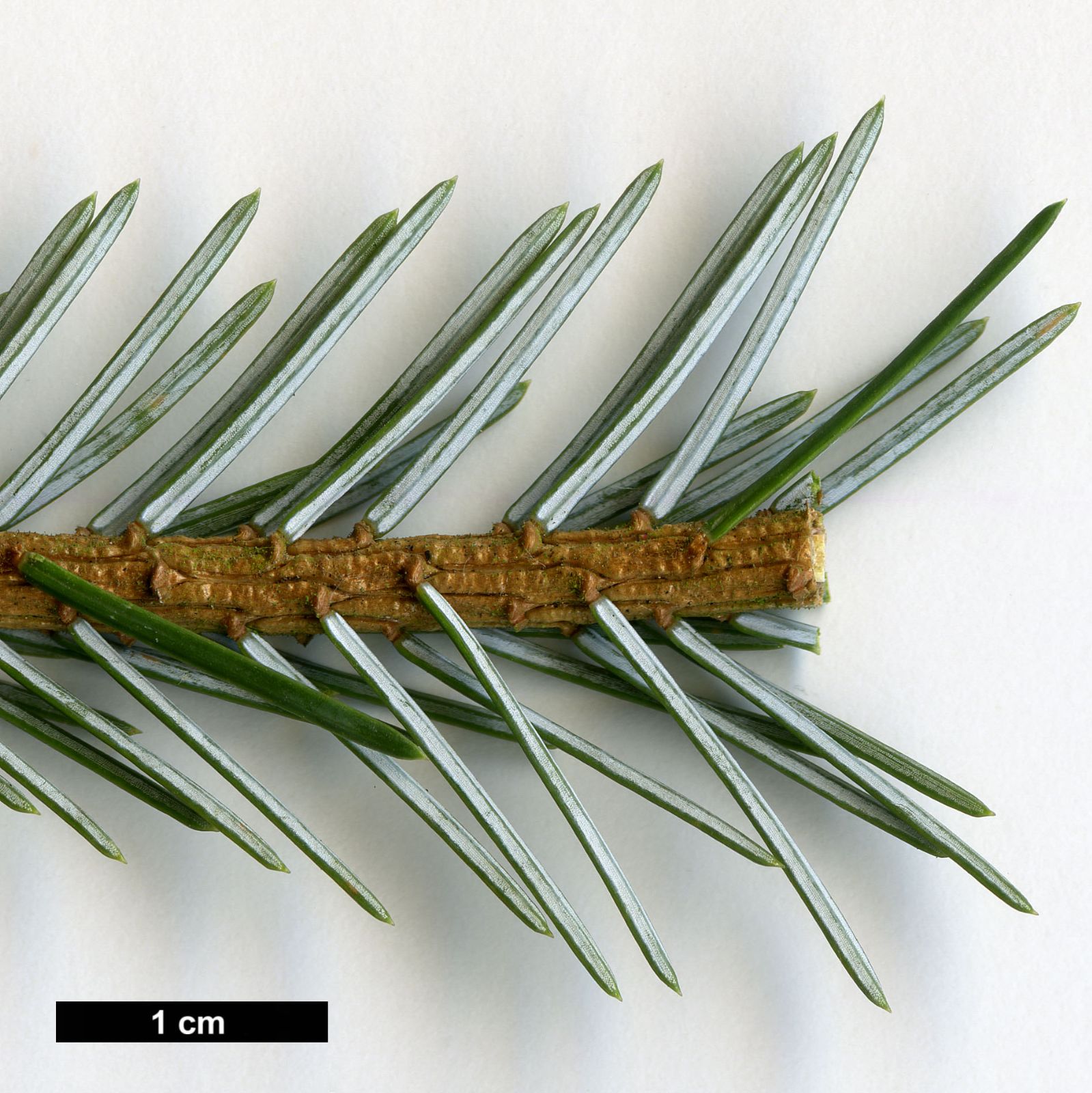
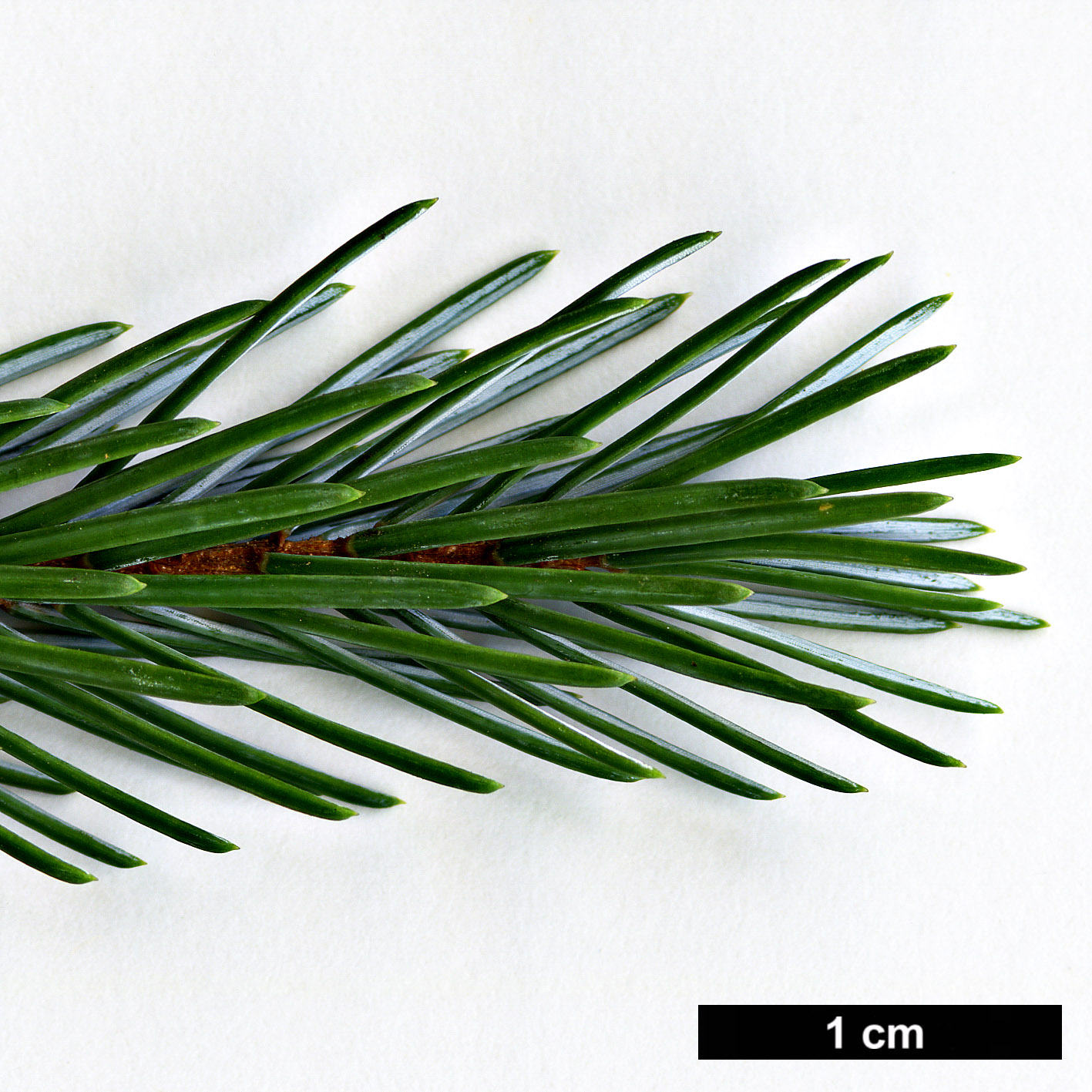
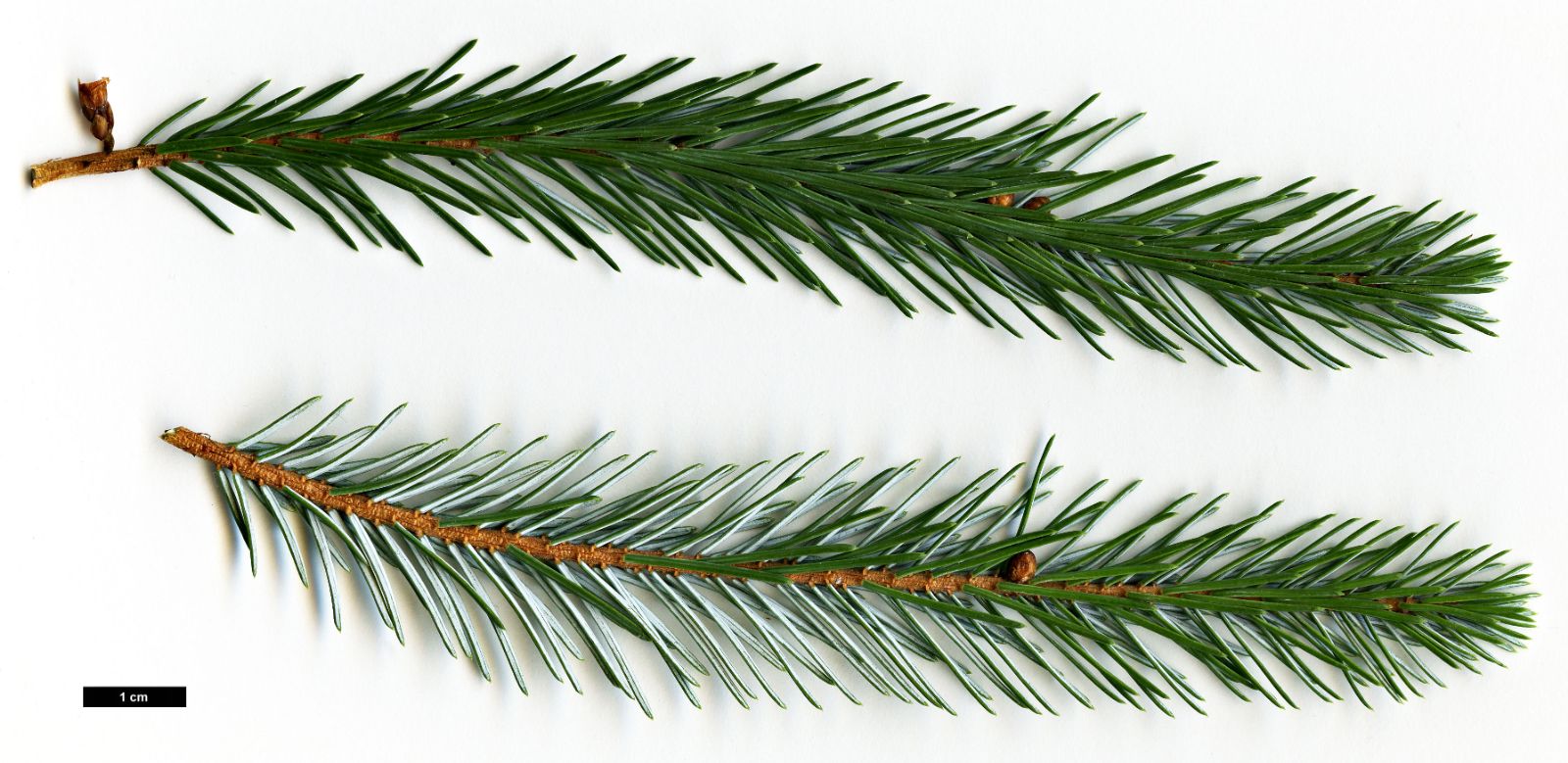
This interesting species was described in 1980 (Notes Roy. Bot. Gard. Edin., Vol. 39, pp. 129–36). It is intermediate between P. spinulosa and P. brachytyla, approaching the former in its open crown and pendulous ultimate branches, but with shorter, broader and more flattened leaves, snowy white beneath; it also differs from that species in its darker, scarcely glossy shoots and its almost sessile leaf-cushions (pulvini), which in P. spinulosa are long and narrow. From P. brachytyla it differs in habit, the more radial arrangement of the longer and narrower leaves, which are also more parallel-sided and less pungent.
P. farreri was discovered by Reginald Farrer in the Feng-shui-ling valley of upper Burma near the frontier with Yunnan, and was described from a tree at Exbury, Hants, raised from the seeds he sent (Farrer 1435) and from specimens collected by C. W. D. Kermode in the type-locality. Geographically it lies nearer to P. brachytyla, which occurs in Yunnan, and is remote from P. spinulosa, which so far as is known does not extend as far east as Burma.
The tree of P. farreri at Exbury was planted in 1921, and is about 60 ft high and 5 ft in girth. A coning branch is figured in Quarterly Journal of Forestry, Vol. 79, p. 13 (1979).
From New Trees
Picea farreri C.N. Page & Rushforth
Farrer’s Spruce
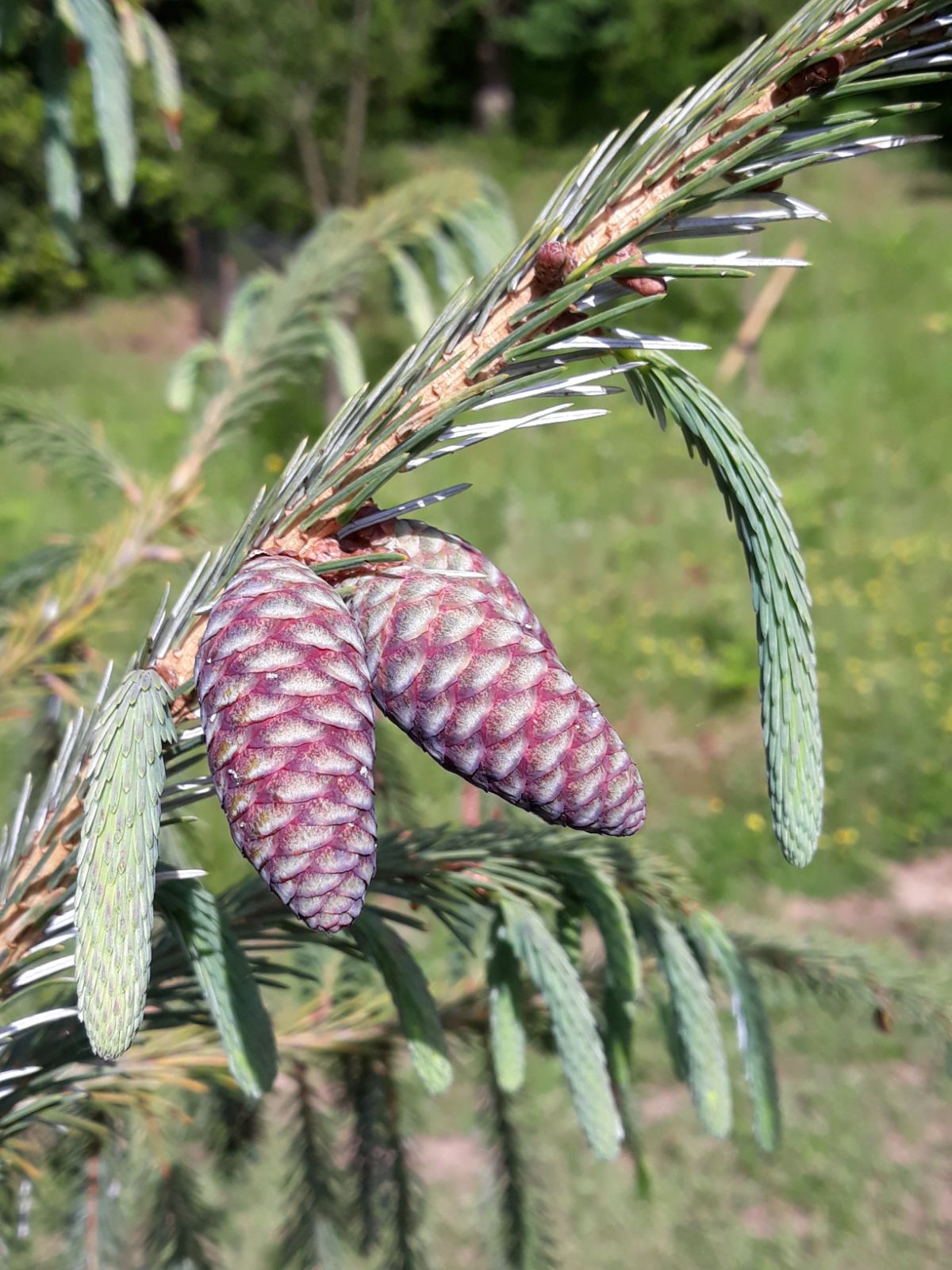
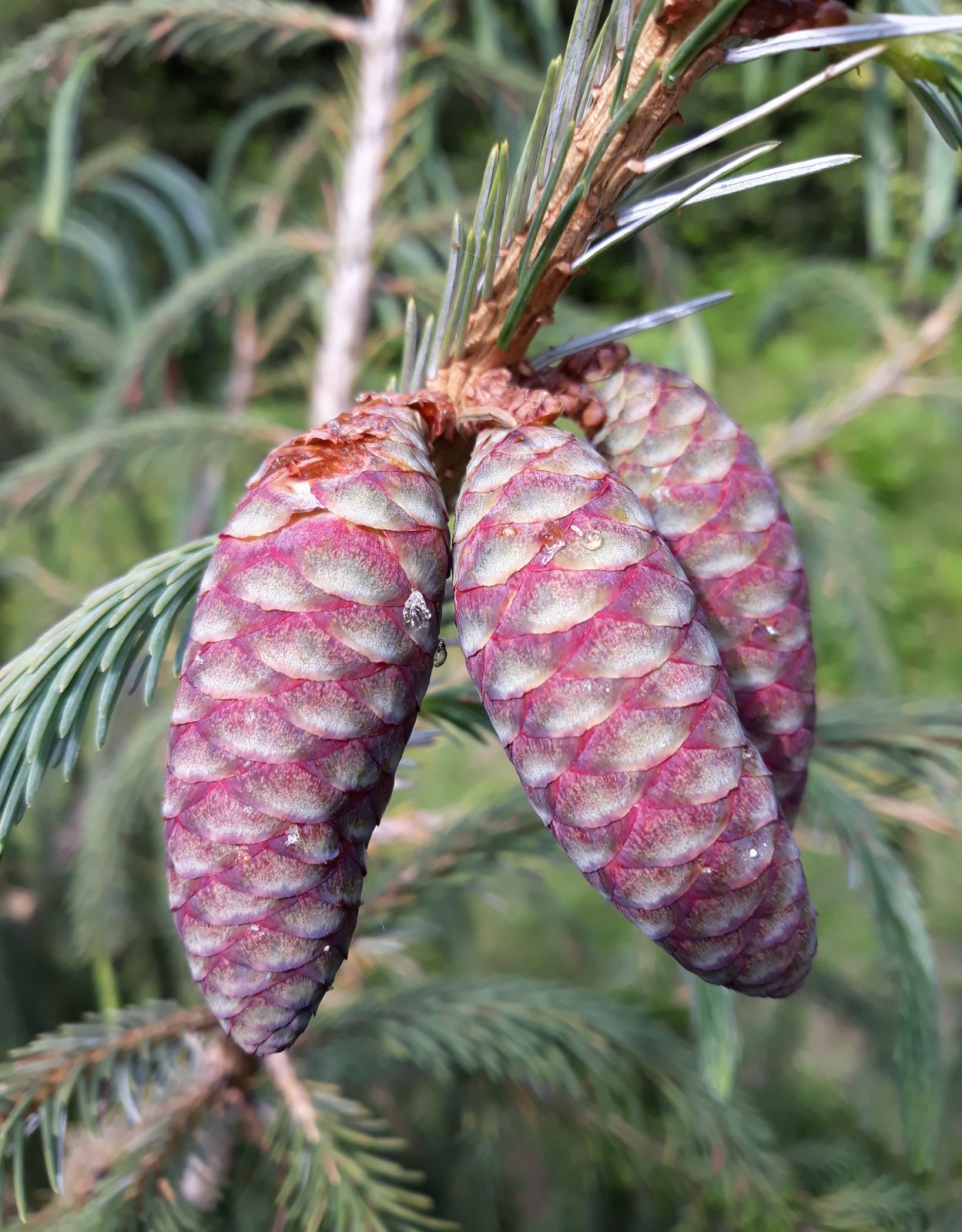
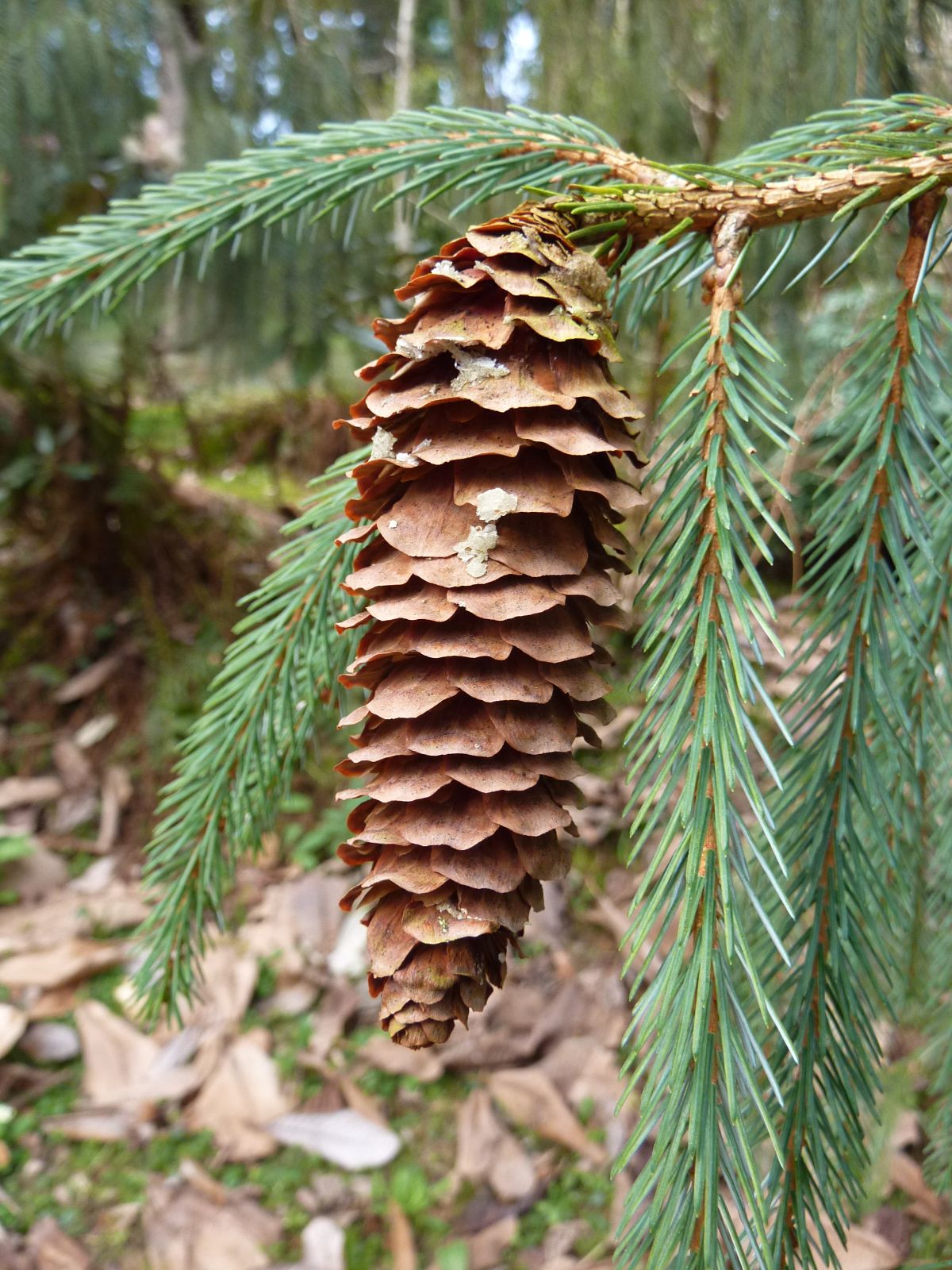
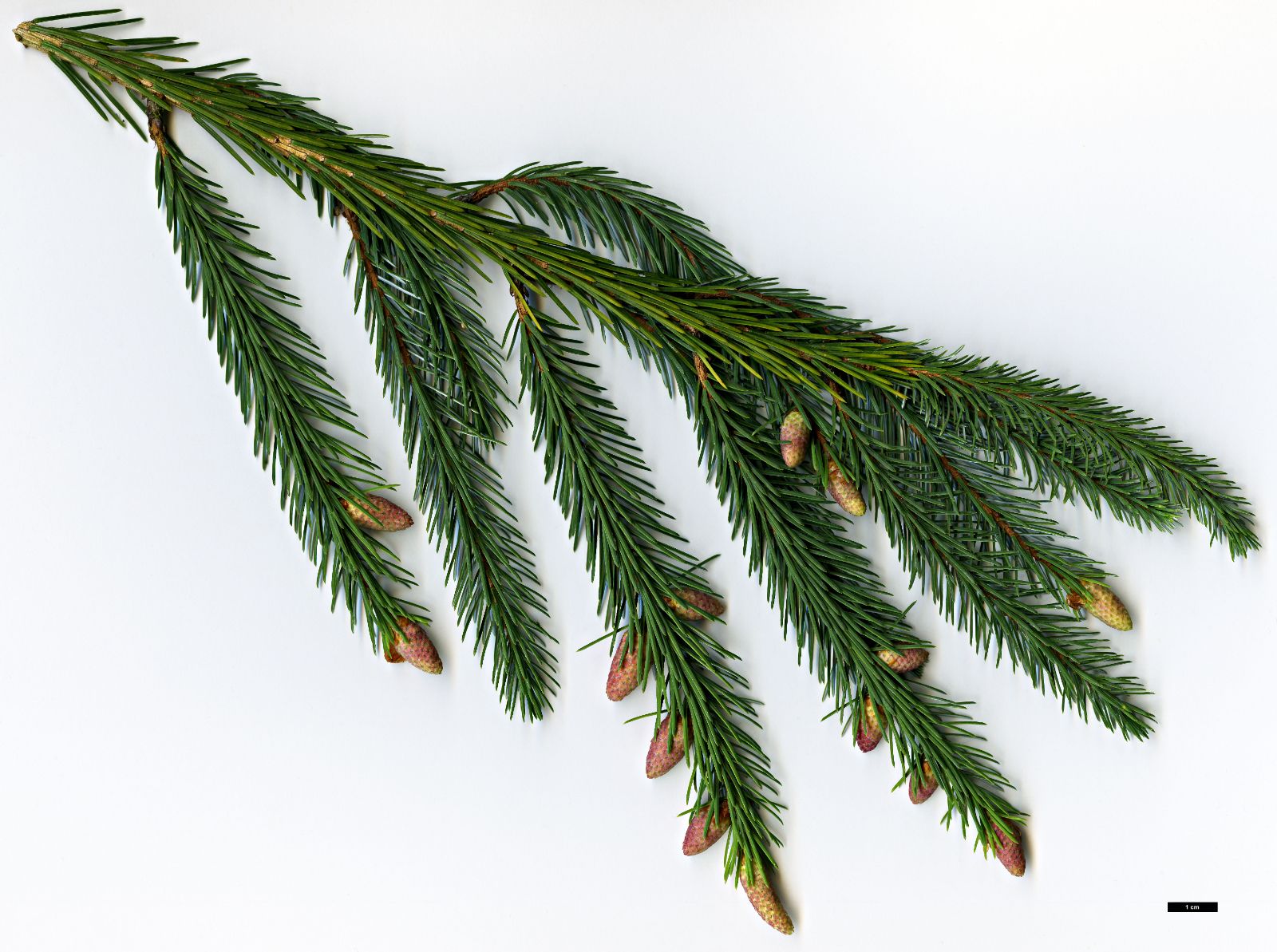
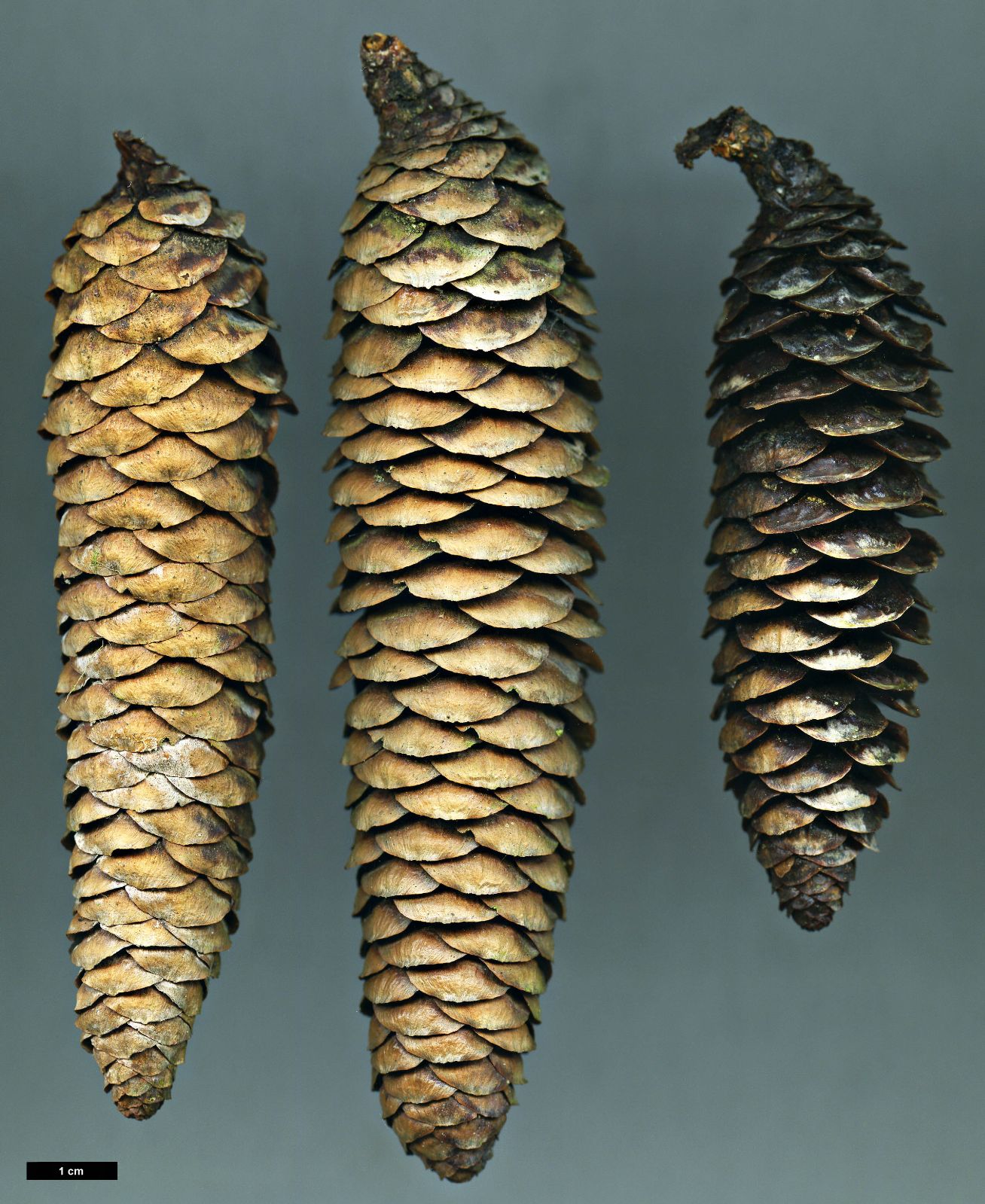
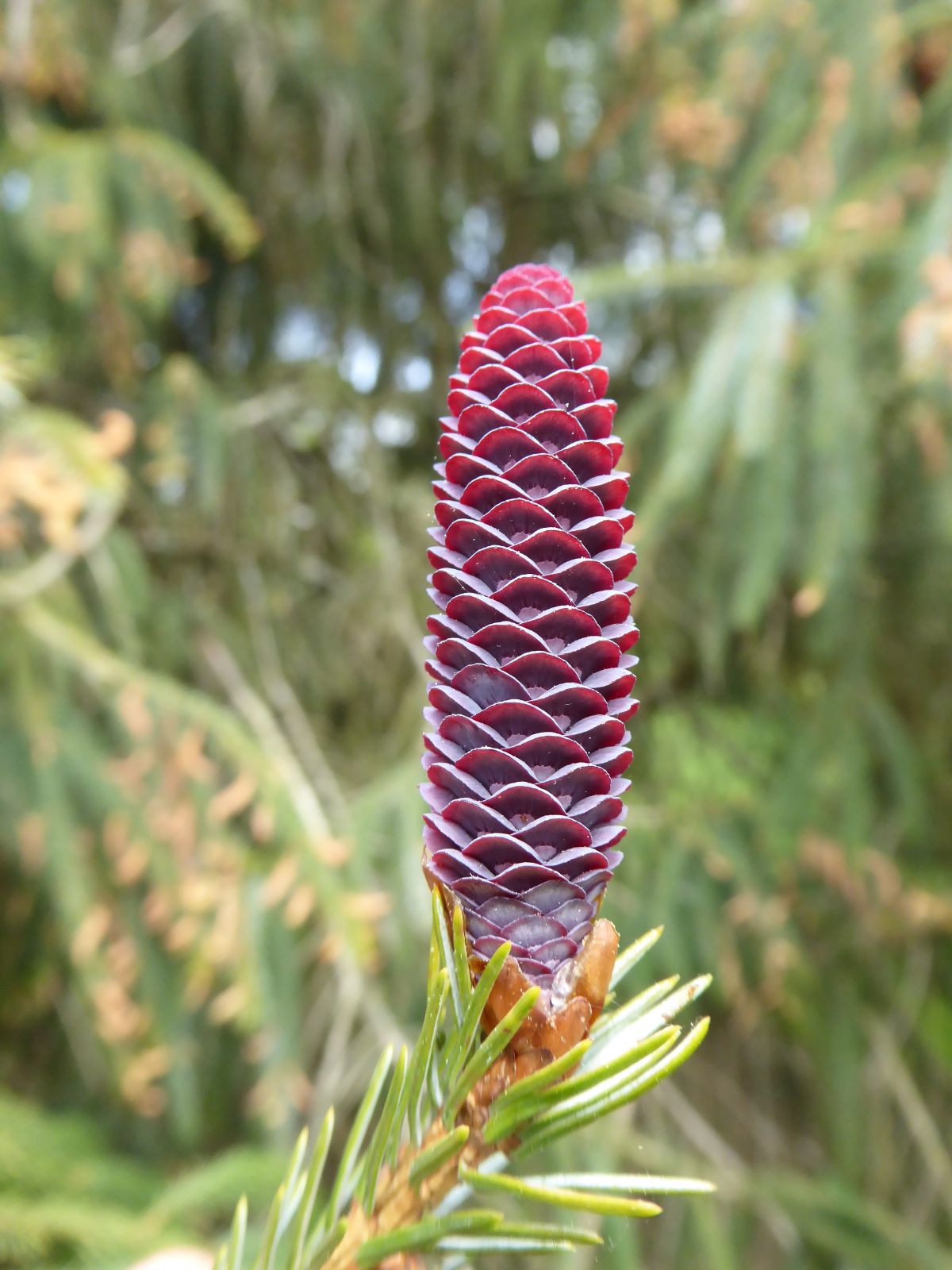
Tree to 35 m, 0.6–0.7 m dbh. Bark orange-brown, becoming grey-brown, rough and scaly in older trees. Crown broadly conical, irregular and very open. Branchlets slender, drooping or pendulous, pale orange-yellow or olive-brown, sparsely pubescent to glabrous, pulvini poorly developed; vegetative buds slightly resinous. Leaves spreading forwards, green-glaucous, flat in cross-section, (1.5–)1.8–2.3(–2.5) × 0.1–0.11 cm, apex acute, slightly pungent. Male strobili 1.5–2.5 cm long, yellowish. Cones terminal, pedunculate, ovoid-oblong or ellipsoidal-cylindrical, (4–)6–12(–14) × 2.5–4.5 cm, green or purplish green, later brown to reddish brown when mature, deciduous. Seed scales obovate-oblong, 1.2–2.2 × 0.8–1.5 cm, upper margin irregularly rounded and recurved. Seeds dark brown, ovoid to oblong, 0.4–0.25 cm long, wings shiny, orange-brown, ovate to oblong, 1.3–1.5 × 0.6 cm. Page & Rushforth 1980, Farjon 1990, Fu et al. 1999c. Distribution CHINA: western Yunnan (Salween Valley); MYANMAR: Fen-Shui-Ling Valley. Habitat Limestone mountains between 2400 and 2700 m asl. USDA Hardiness Zone 8. Conservation status Endangered. Illustration Farjon 1990; NT568. Cross-reference S364.
Picea farreri was recognised as a species only in 1980, but commemorates that eccentric plant collector and rock gardener Reginald Farrer, who died a lonely death in 1920 in its homeland of upper Burma. He had made his collection Farrer 1435 there in 1919, and from this grew the tree that formed part of the type specimen for P. farreri. This apparently unique specimen tree grew at Exbury, Hampshire where it was planted in 1921 (Clarke 1988). It had reached 18 m in height and 56 cm dbh, but was left exposed after being damaged in the Great Storm of 1987 and eventually died of drought in 1995 (TROBI). Fortunately, a good number of specimens were propagated from it by Hillier Nurseries in the 1960s (one of these trees is in the Cambridge University Botanic Garden), and later by Keith Rushforth, and were widely distributed to collections throughout the United Kingdom (K. Rushforth, pers. comm. 2007). These form the current stock in cultivation and stand as an excellent example of the sort of conservation action required to preserve rare species in cultivation. Seedlings from the Exbury tree are apparently pure-bred (K. Rushforth, pers. comm. 2007). Picea farreri is a potentially beautiful species, with long pendulous branchlets bearing silvery green needles, though not all the grafted trees have formed elegant specimens. The finest seen in the current research is at Thenford House, where it has made a good straight stem estimated at 10–12 m in 2006, bearing very long branches with healthy growth at their tips. Another good specimen is reported to be growing at Lukesland, Ivybridge, Devon (Henderson 2004), and there is an attractive tree at Tregrehan, of about 6 m in 2008. It seems to enjoy moist, fertile conditions; one on a rather exposed slope at Wakehurst Place is unshapely and not thriving (2.8 m in 2005).