Picea crassifolia

Sponsor
Kindly sponsored by
This genus has been sponsored and new text is being prepared.
Credits
Article from New Trees by John Grimshaw & Ross Bayton
Recommended citation
'Picea crassifolia' from the website Trees and Shrubs Online (treesandshrubsonline.
Genus
Common Names
- Qinghai Spruce
Other taxa in genus
- Picea abies
- Picea alcoquiana
- Picea asperata
- Picea brachytyla
- Picea breweriana
- Picea chihuahuana
- Picea engelmannii
- Picea farreri
- Picea glauca
- Picea glehnii
- Picea jezoensis
- Picea koraiensis
- Picea koyamae
- Picea likiangensis
- Picea linzhiensis
- Picea × lutzii
- Picea mariana
- Picea martinezii
- Picea maximowiczii
- Picea meyeri
- Picea morrisonicola
- Picea obovata
- Picea omorika
- Picea orientalis
- Picea polita
- Picea pungens
- Picea retroflexa
- Picea rubens
- Picea schrenkiana
- Picea sitchensis
- Picea smithiana
- Picea spinulosa
- Picea wilsonii
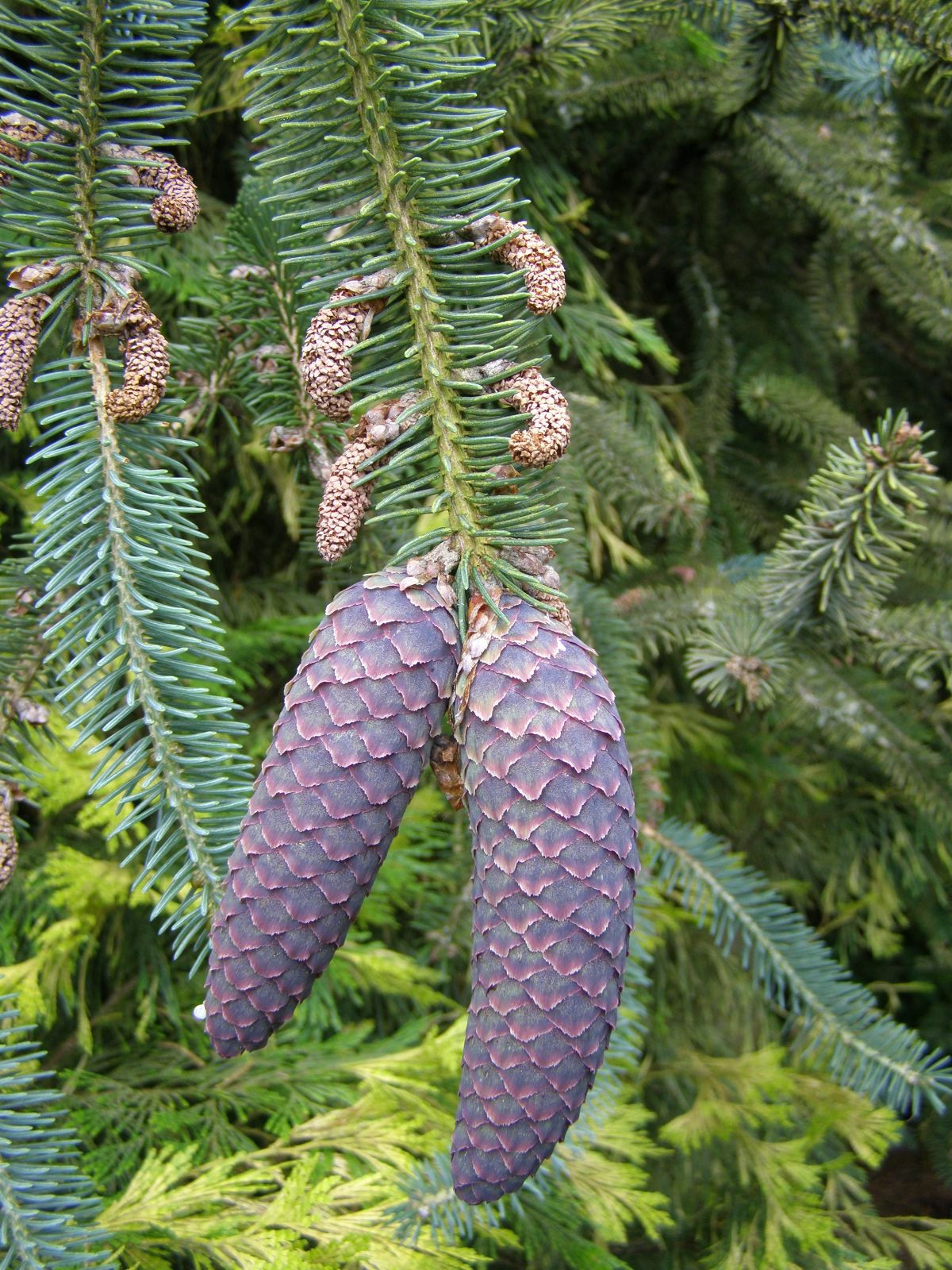
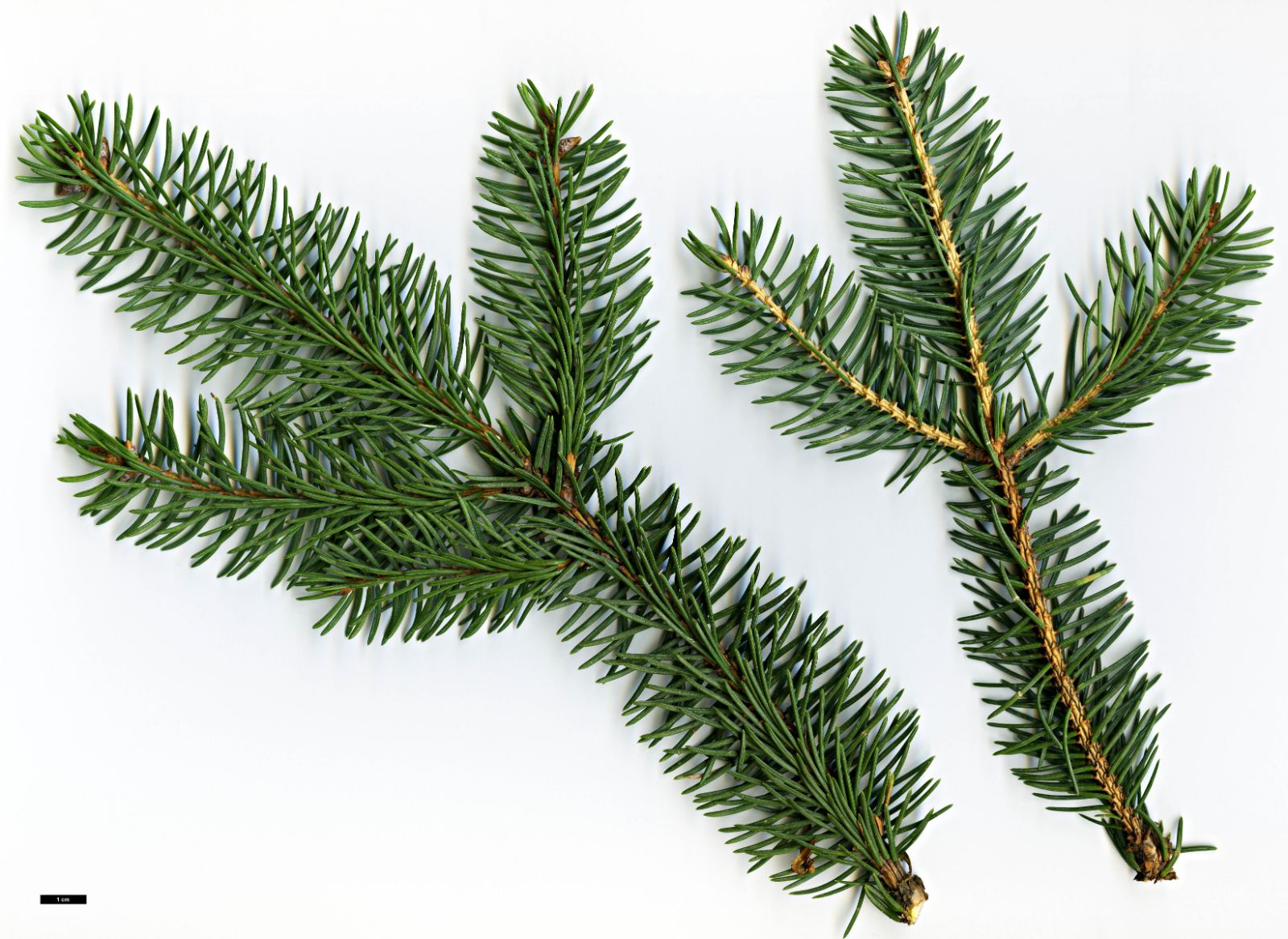
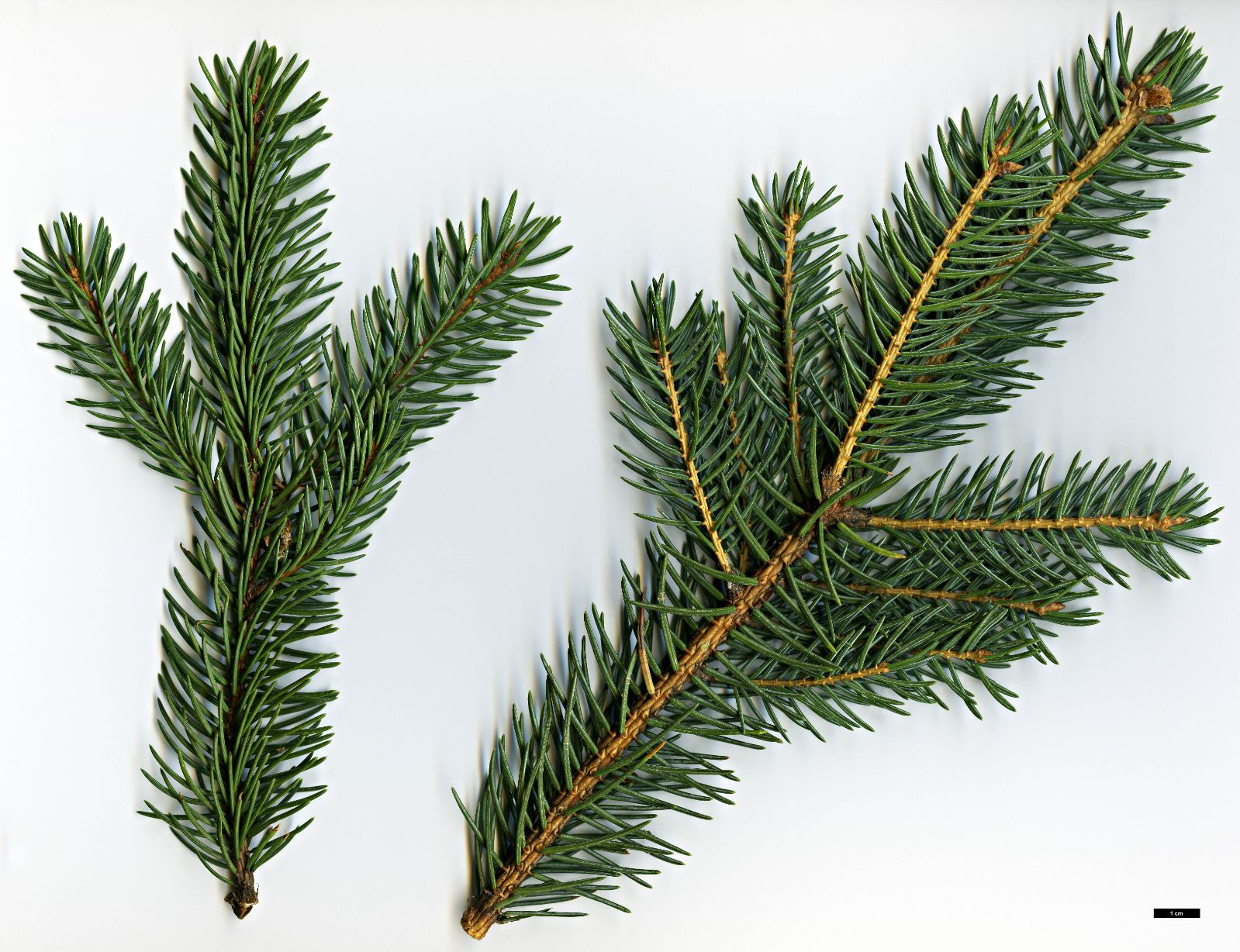
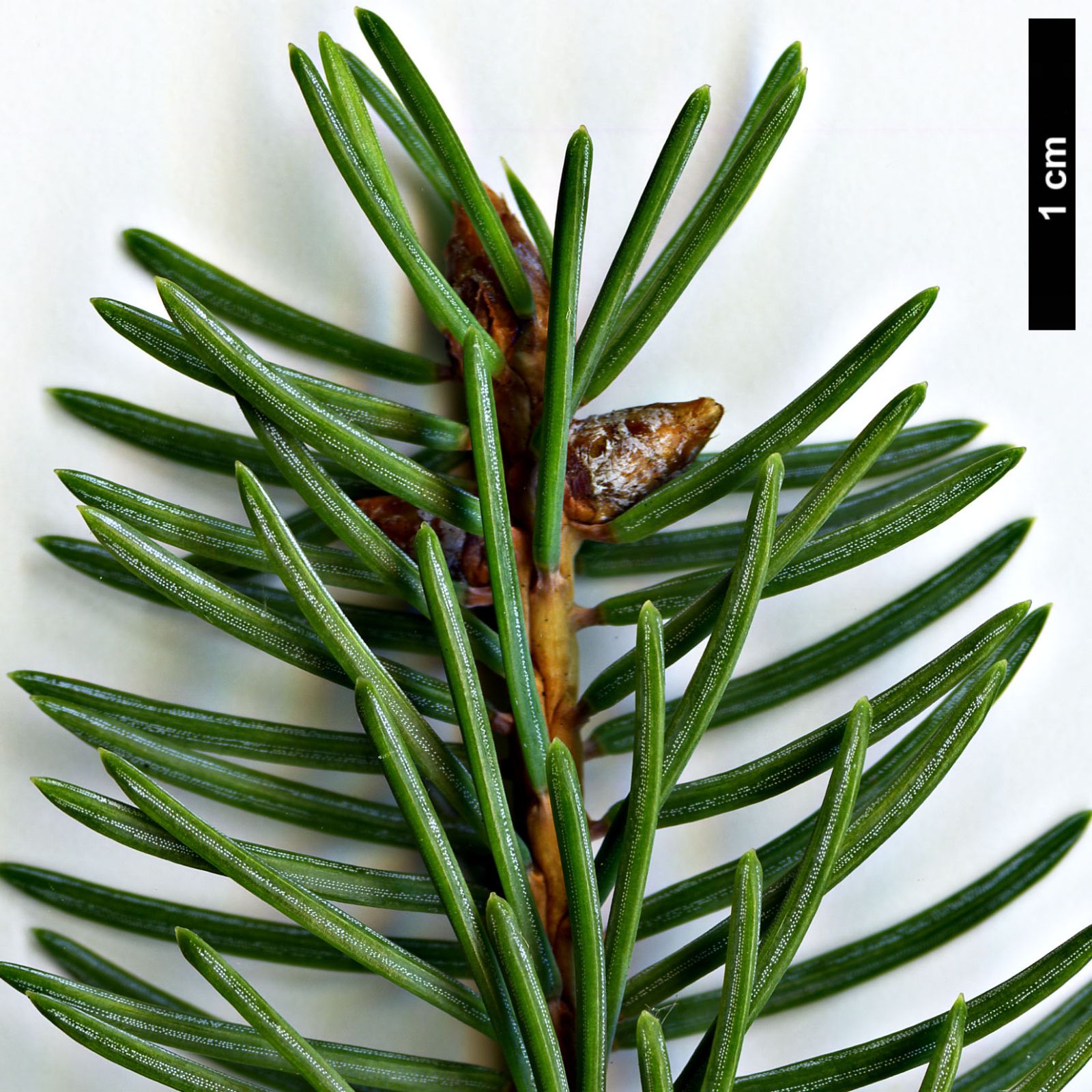
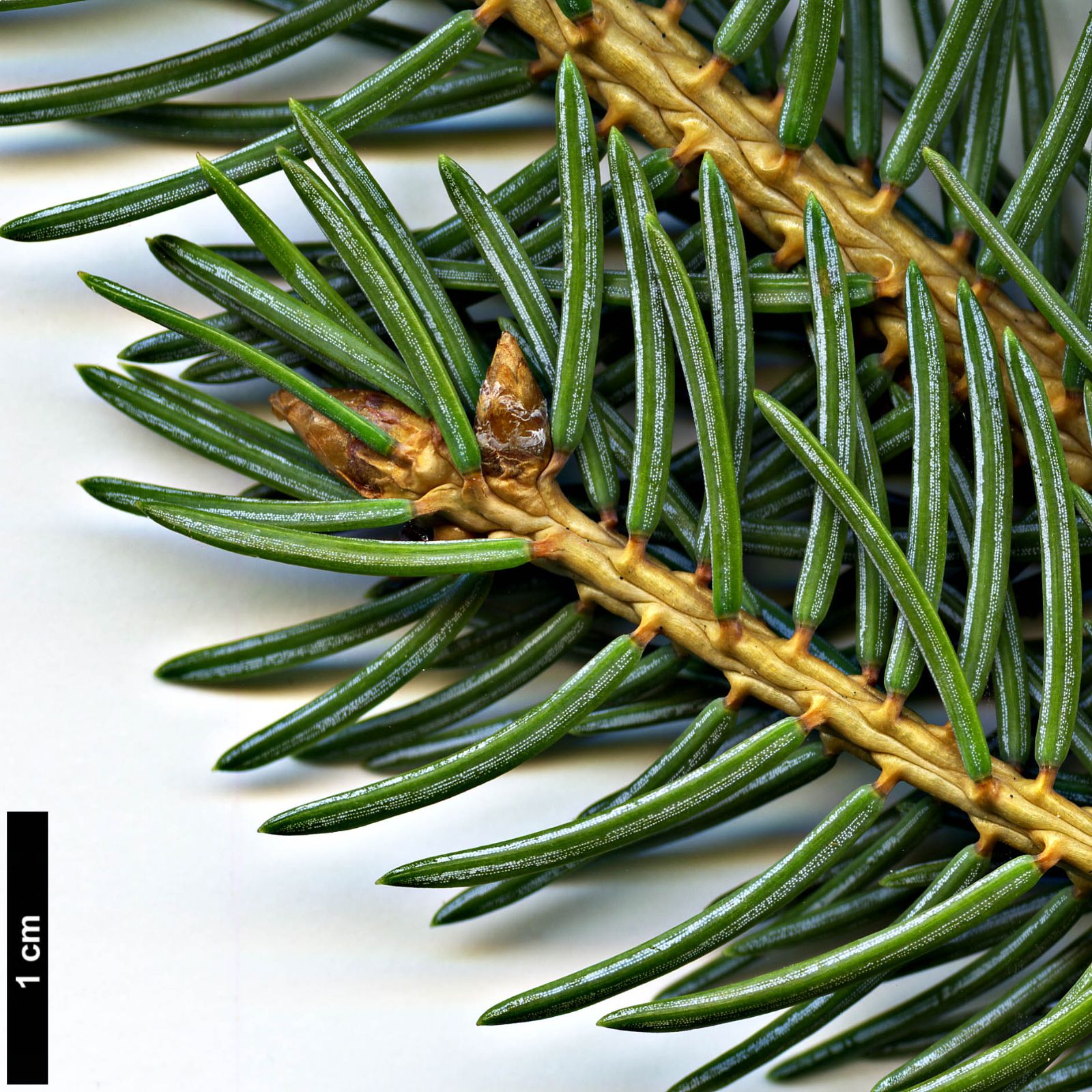
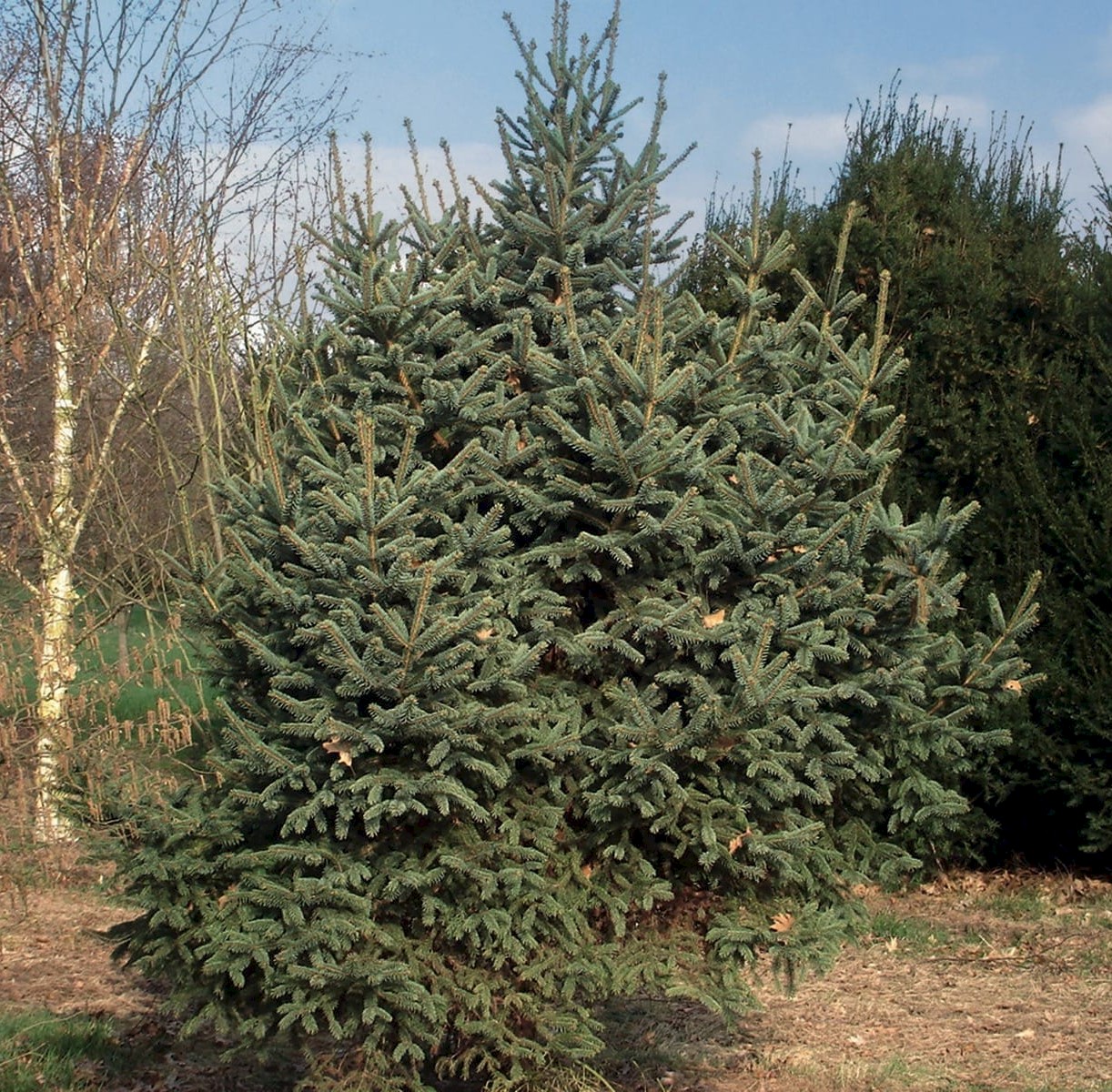
Tree to 25 m, 1–1.2 m dbh. Bark orange-brown, smooth then flaking in young trees, becoming red-brown, rough and scaly in older trees. Crown pyramidal or conical, becoming rather open in mature trees. Branchlets firm, pale orange-yellow to grey, glabrous or with limited pubescence, pulvini well developed; vegetative buds not or slightly resinous. Leaves glossy dark green, upper leaves crowded and directed forwards, lower leaves curved upwards, quadrangular in cross-section, (0.9–)1.2–2.2(–3.5) × 0.15–0.25(–0.3) cm, apex acute-obtuse. Male strobili 1–1.5 cm long, yellowish pink with orange-brown perular scales. Cones terminal, solitary, sessile, ovoid-oblong or cylindrical, (5–)7–11 × 2.5–3.5 cm, initially green to purplish red, later green with purple margins to seed scales. Seed scales obovate-flabellate, 1.5–2 × 1–1.7 cm, margin entire and incurved. Seeds brown, ovoid to oblong, 0.3–0.35 cm long, wings orange-brown, ovate to oblong, 1–1.3 × 0.4–0.5 cm. Farjon 1990, Fu et al. 1999c. Distribution CHINA: Gansu, Nei Mongol, Ningxia, Qinghai. Habitat North-facing slopes of high mountain ranges between 1600 and 3800 m asl. USDA Hardiness Zone 5. Conservation status Lower Risk. Illustration Farjon 1990; NT567. Taxonomic note When grown in Western Europe, P. crassifolia develops longer, flatter leaves than those found in wild material. The species may represent an eastern form of P. schrenkiana (Farjon 1990).
Picea crassifolia is rare in cultivation and omitted from most texts. This may be due to confusion with P. asperata, under which name seed of P. crassifolia collected by Joseph Rock was distributed (Rushforth 1987a). A fine tree at Kew, currently approximately 20 m tall and retaining a good shape, may be from this source. It appears to be growing vigorously still, and is a rich dark green in colour. New shoots were emerging when it was observed towards the end of May 2005 and this late emergence, coupled with its natural tolerance of dry conditions, suggest that it could be a very useful tree for milder, drier parts of our area. More recent plantings are to be found in the Scottish botanical gardens, including a group of trees from a 1980 accession from Qinghai doing well at Dawyck. These have formed broad-based plants, the largest of which was 2.5 m tall in 2006. Their foliage is grey-green.