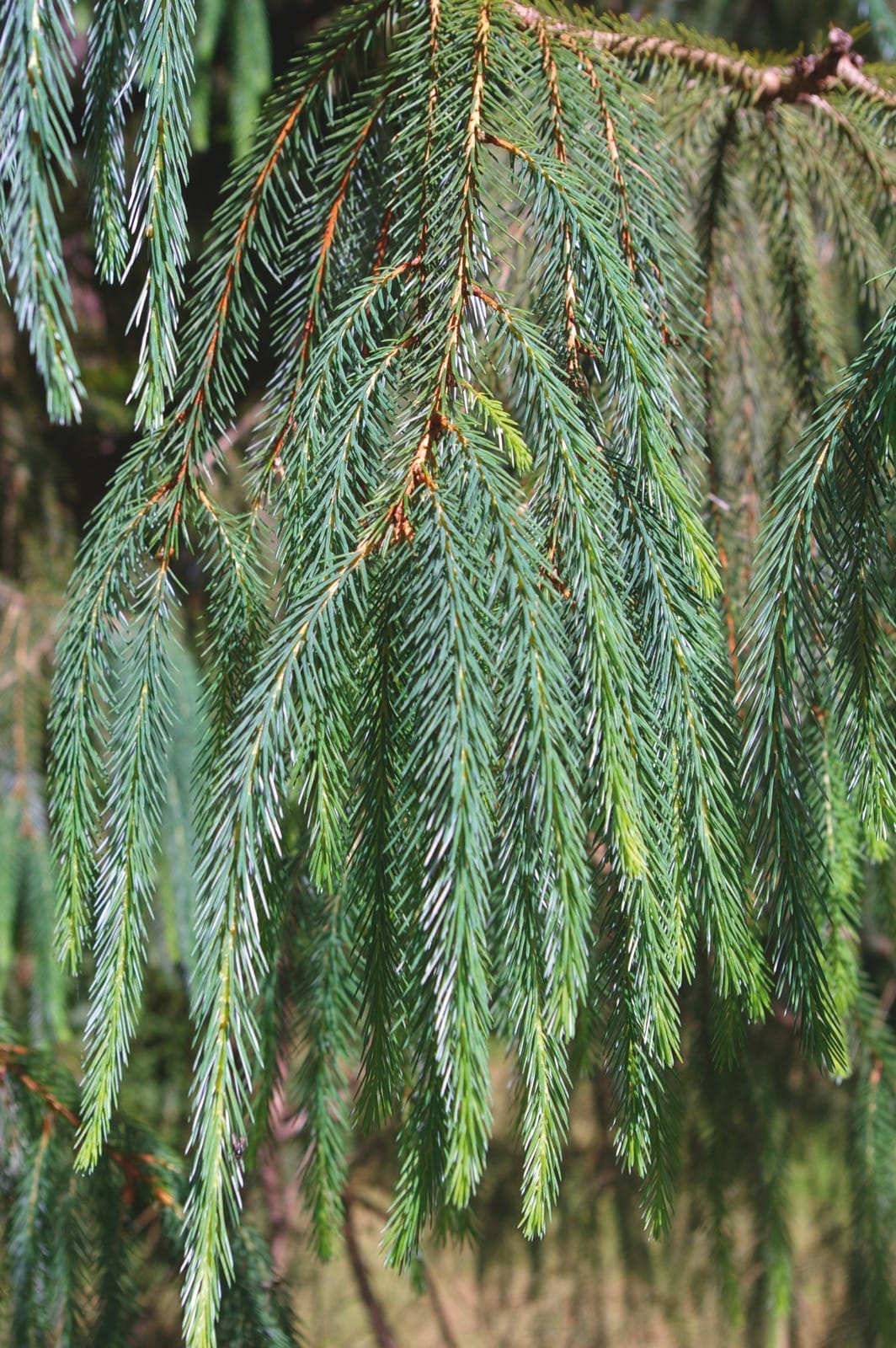
Picea A. Dietr.

TSO logo

Sponsor

Kindly sponsored by
Sir Henry Angest

Credits

Tom Christian (2025)

Recommended citation
Christian, T. (2025), 'Picea' from the website Trees and Shrubs Online (treesandshrubsonline.org/articles/picea/). Accessed 2026-07-12.

Family

  • Pinaceae

Common Names

  • Spruces

Synonyms

  • Veitchia Lindl.

Glossary

taxonomy
Classification usually in a biological sense.
abaxial
(especially of surface of a leaf) Lower; facing away from the axis. (Cf. adaxial.)
adaxial
(especially of surface of a leaf) Upper; facing towards the axis. (Cf. abaxial.)
article
(in Casuarinaceae) Portion of branchlet between each whorl of leaves.
calcifuge
(of a plant) Avoiding soil containing lime (i.e. usually growing on acidic soil).
cone
Term used here primarily to indicate the seed-bearing (female) structure of a conifer (‘conifer’ = ‘cone-producer’); otherwise known as a strobilus. A number of flowering plants produce cone-like seed-bearing structures including Betulaceae and Casuarinaceae.
endemic
(of a plant or an animal) Found in a native state only within a defined region or country.
key
(of fruit) Vernacular English term for winged samaras (as in e.g. Acer Fraxinus Ulmus)
monograph
Taxonomic account of a single genus or family.
morphology
The visible form of an organism.
paraphyletic
(of a taxon usually at generic or family level) With a common ancestor but some of the other descendants of that ancestor are excluded from the taxon for subjective reasons of the taxonomist (n. paraphyly). Such a classification is therefore not ‘natural’. (Cf. monophyly, polyphyly.)
pubescence
Hairiness.
pulvinus
(pl. pulvini) Enlarged portion of petiole or rachis.
seed scale
(in female cones of Pinaceae) Seed-bearing structure. In other conifer families the seed scale and the bract scale are fused together.
subspecies
(subsp.) Taxonomic rank for a group of organisms showing the principal characters of a species but with significant definable morphological differentiation. A subspecies occurs in populations that can occupy a distinct geographical range or habitat.
sympatric
With the same distribution as another taxon (or with overlapping distribution). (Cf. allopatric.)
taxonomy
Classification usually in a biological sense.

References

Credits

Tom Christian (2025)

Recommended citation
Christian, T. (2025), 'Picea' from the website Trees and Shrubs Online (treesandshrubsonline.org/articles/picea/). Accessed 2026-07-12.

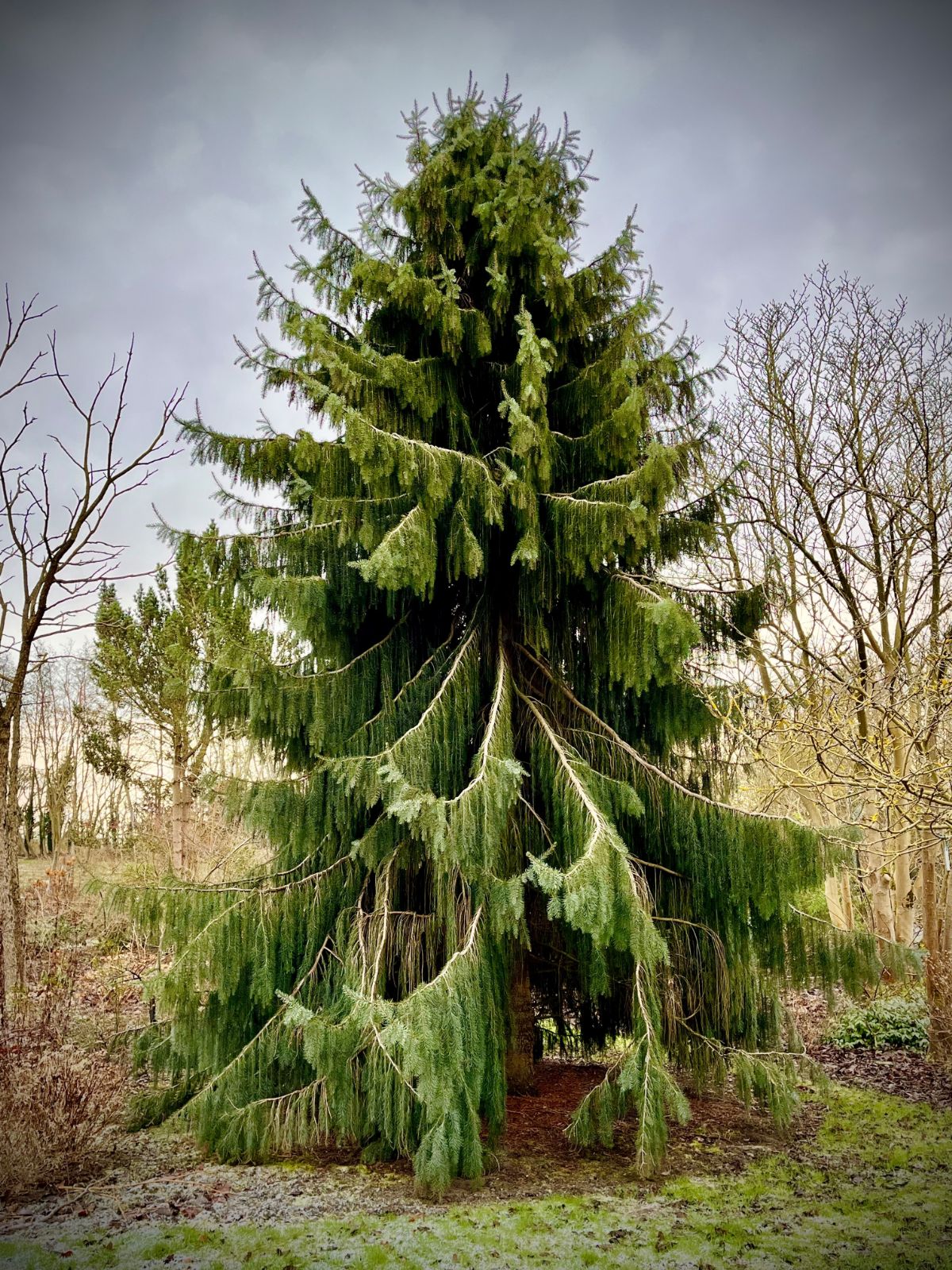
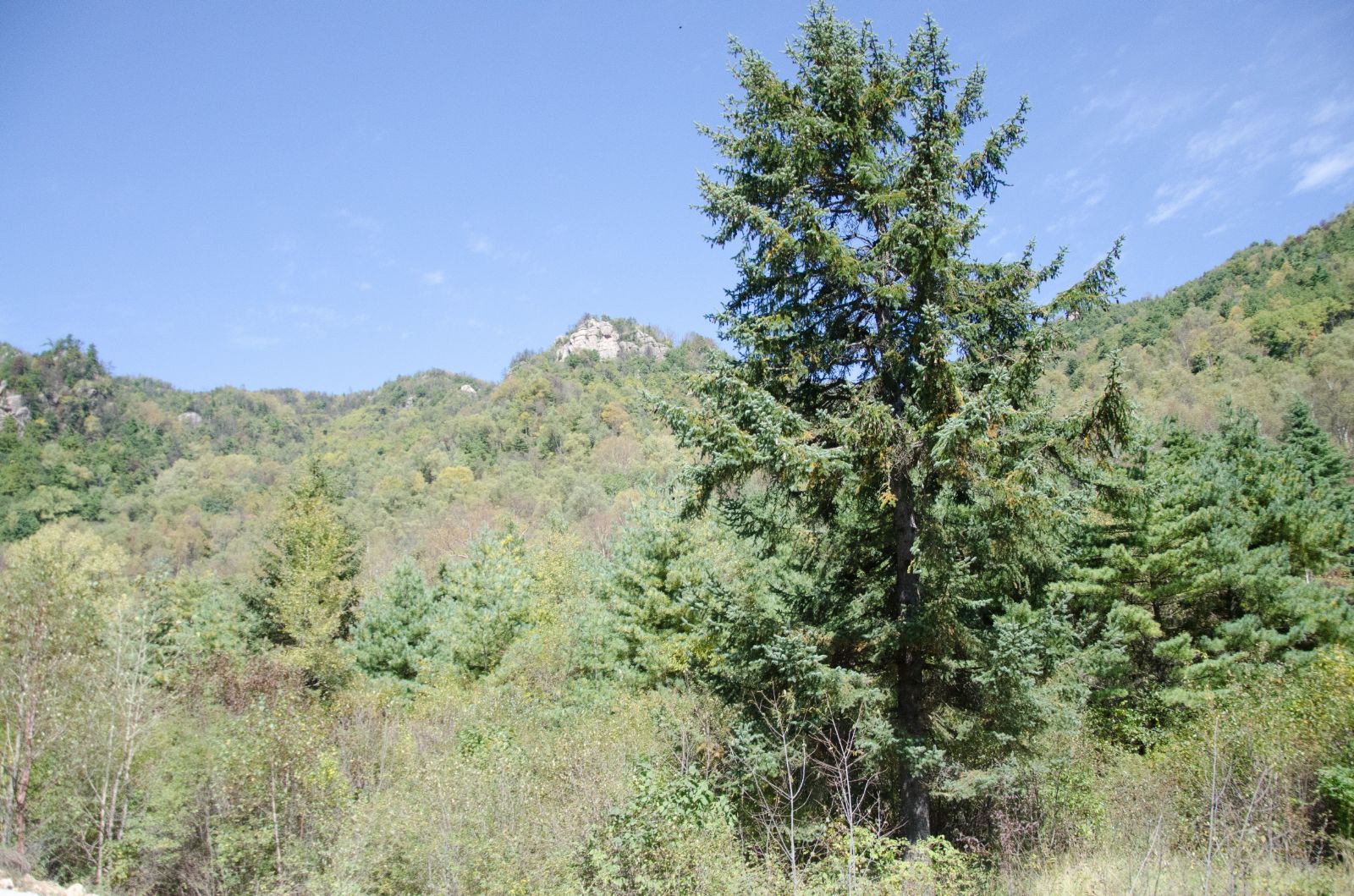
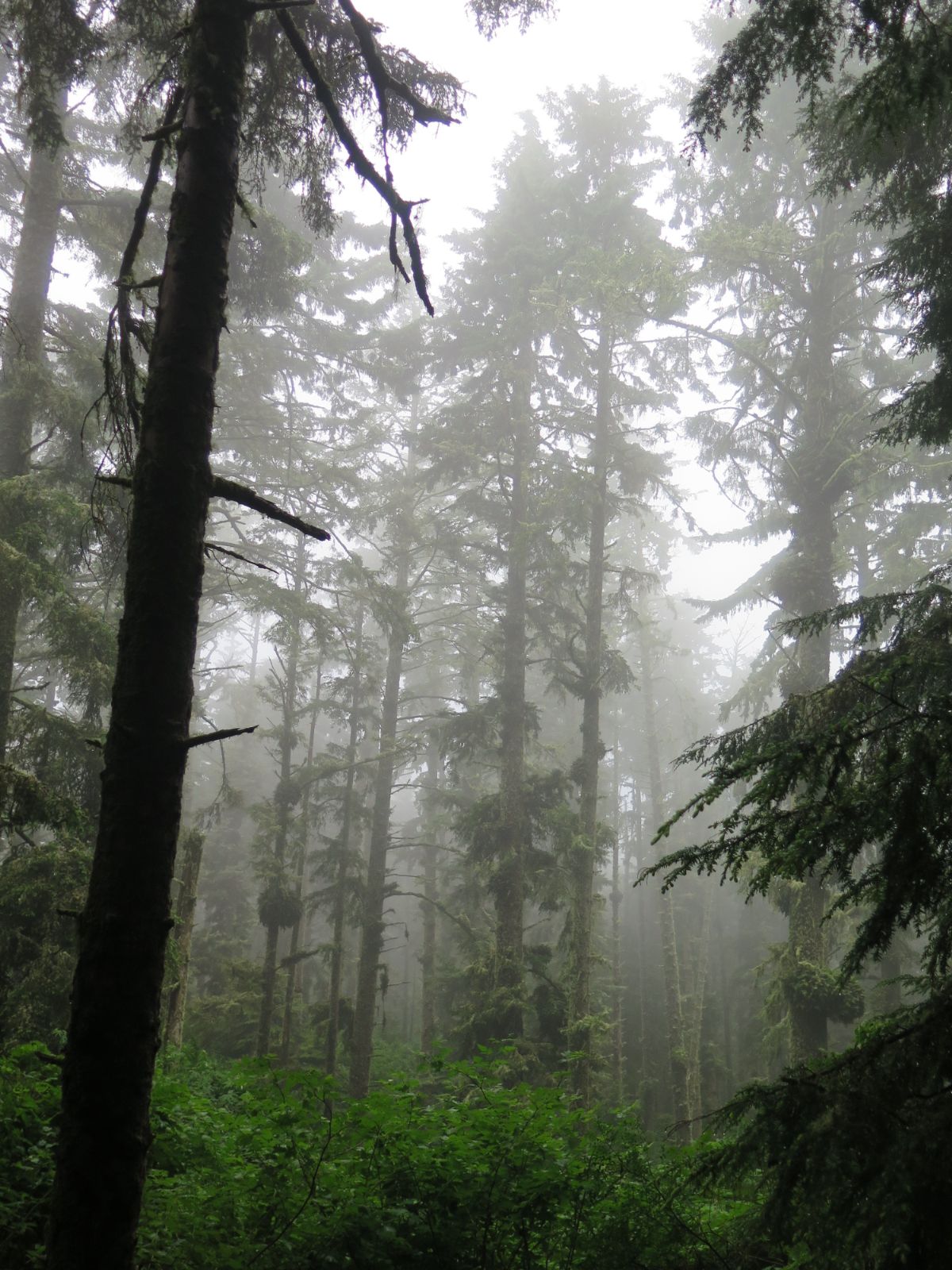
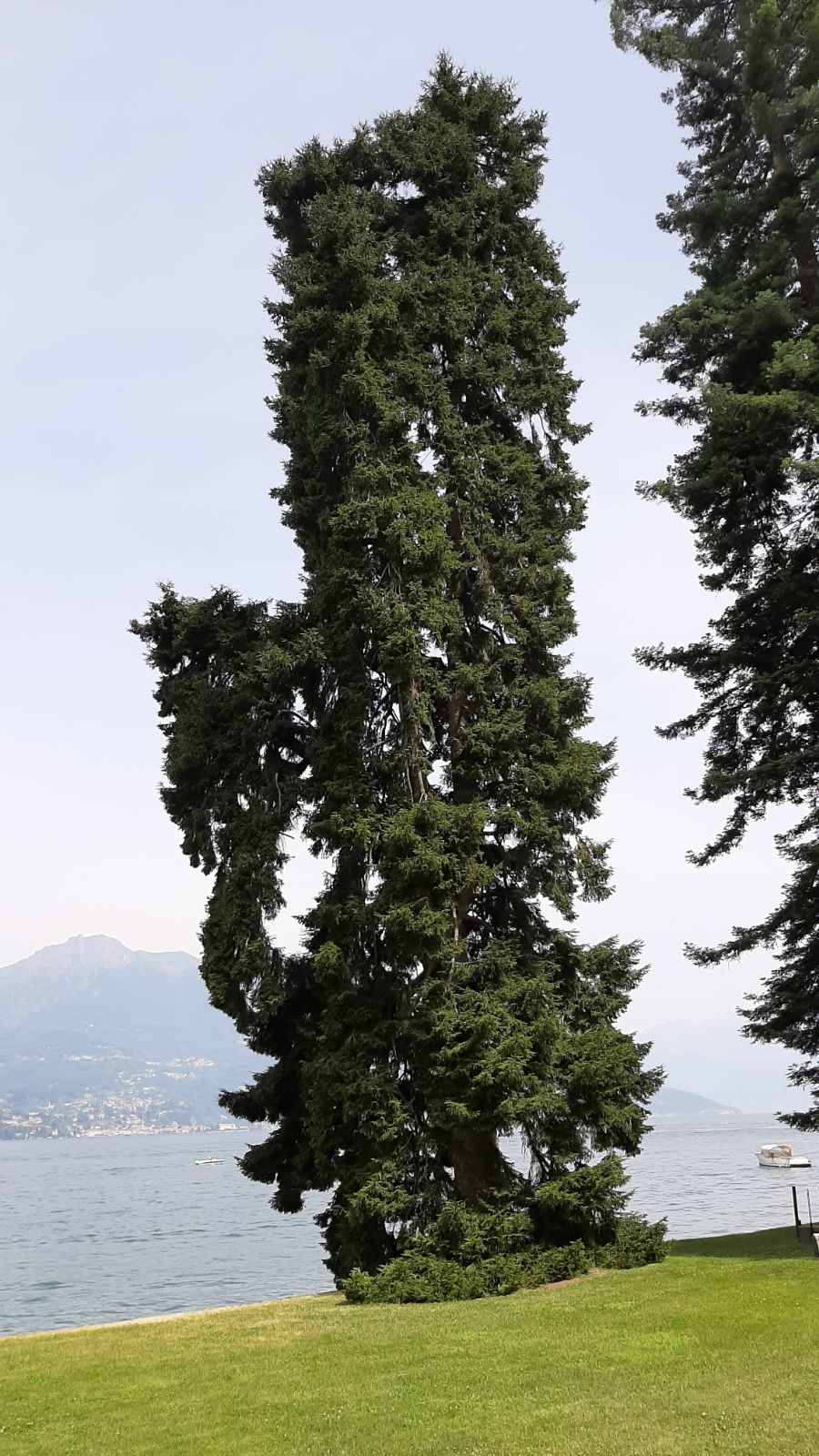
A genus of c. 35 species of monoecious, evergreen, coniferous trees with a straight trunk. Resinous in all parts except old wood and pollen cones. Crowns pyramidal in youth, pyramidal to columnar later, occasionally domed, usually losing their lower branches early; first order branches borne in regular pseudowhorls on the trunk, ascending at first, soon level or bowed. Old branchlets conspicuously rough with woody bases of detached leaves (pulvini). Bark rough even on young trees, often scaly, with age usually dividing into irregular, small plates, shedding in papery flakes. Vegetative buds ovoid or conical, resinous or not resinous, often obscured by subterminal leaves. Leaves needle-like, spirally and usually radially arranged, subtended by persistent pulvini, quadrangular or flattened, stomata on two or four surfaces, apex acute or acuminate, occasionally obtuse on mature growth. Pollen cones small, 1–3.5 cm long, ovoid-oblong, solitary but appearing clustered, borne from axillary buds on the previous year’s shoots, reddish when immature, yellow when ripe; microsporophylls with two pollen sacs. Seed cones subterminal from long shoots, erect at first, soon becoming pendulous, falling intact after seed dispersal. Cone bracts only conspicuous at pollination, not growing with the seed scales (cf. several Abies species). Seed scales spirally arranged on a central rachis, imbricate, persistent, spreading at maturity. Seeds held in a shallow cup covering one half of the seed, with a prominent wing. Seedlings with 4–15 cotyledons. (Farjon 2017; Debreczy & Rácz 2011; Grimshaw & Bayton 2009).

Spruces are readily distinguished from other Pinaceae genera by the combination of leaves with pulvini, pendulous cones with persistent seed scales, and minute bract scales (Rushforth 1977). Hemlock (Tsuga) branchlets also bear pulvini, but their flat leaves and small cones are unlike those of Picea (Warren 1982).

Introduction

Together with the pines (Pinus spp.) and firs (Abies spp.), the spruces count among the most ecologically important of the major conifer genera distributed throughout the northern hemisphere. All three are also of enormous importance in horticulture and forestry. Pinus is a huge genus with over 100 species; Abies has c. 58, and Picea a mere c. 35. They share the characteristic that although some species have immense distributions, the majority occupy rather small, restricted ranges. All contain a proportion of narrow endemics restricted to a single river system or mountain range (Farjon 2017; Grimshaw & Bayton 2009; Debreczy & Rácz 2011; Farjon 1990).

For Pinus at least, this is where the similarities end. Both geographically and ecologically Pinus is a much more widespread genus with highly distinctive morphology, its leaves born in pairs, 3s or 5s, and with centres of diversity in Mexico and Mesoamerica and the Caribbean. Abies and Picea have much more in common with each other than either does with the pines, although they are not particularly closely related (Farjon 2017; Christenhusz et al. 2011). Both are generally restricted to higher places in the temperate zone (the spruces in particular – they enjoy cold); both have centres of diversity in western China; and both may be characterised by bearing single, needle-like leaves (Debreczy & Rácz 2011).

Indeed, such are their superficial similarities that separating firs and spruces tends to feature in any ‘conifers 101’ tutorial, and a summary of the key distinctions is always useful:

Abies (firs)Picea (spruces)
Foliage textureusually softusually prickly
Shoot texturesmooth, fallen leaves leaving a flattened discrough, fallen leaves leaving a woody pulvinus (a peg-like structure)
Seed cone positionerect throughout life cyclebriefly erect at first, then pendulous
Seed cone maturationdisintegrating on treeopening to release seed then falling intact
Species countc. 58c. 35
Spp. in North America1610
Spp. in Europe*84
Spp. in Asia3421
Spp. in China**c. 17c. 12
Spp. endemic in China**c. 13c. 6
Spp. in Japan55
Spp. endemic in Japan44
* west of the Urals/Caspian
** these figures will be the most variable according to species concept

Besides these differences there are ecological ones, too. The most obvious factor affecting distribution is the significantly reduced heat tolerance of Picea. In Europe Picea is absent from the mountains around the Mediterranean basin (except the Alps), where several relict Abies species occur even as far south as north Africa. This scenario is repeated throughout the northern hemisphere, with Abies extending much further south, to 15°N in Central America (A. guatemalensis) and to 22°N in south Asia (A. fansipanensis), whereas Picea only reaches c. 28°N in Mexico (P. mexicana) and c. 23°N in Asia (P. morrisonicola). In northern boreal regions Picea extends further north than Abies, reaching the tree line in Eurasia and North America (Debreczy & Rácz 2011).

Molecular clock analyses suggest Picea differentiated from Pinus during the Jurassic era (c. 145–200 mya) and that all extant species evolved in the middle Oligocene (c. 33.9–24 mya). A North American origin is suspected. Major radiations took place during the Miocene and Pliocene eras (c. 23–2.8 mya). P. breweriana – widely regarded as the most primitive extant species – separated from the rest of the genus at a very early date (see below) (Lockwood et al. 2013; Shao et al. 2019).

Taxonomy and systematics

Despite their reputation many spruces may easily be distinguished by a few morphological characters. The most immediate and obvious division is between those species with ‘flattened’ leaves and those with quadrangular leaves. In the first group, the stomata tend to be restricted to the leaf undersides, giving a sharp contrast in colour between the two surfaces. In the second group stomata are present on all four surfaces, usually evenly distributed across them or, in a few taxa, much stronger on the lower surfaces than the upper ones. Academic texts usually refer to the abaxial and adaxial leaf surfaces (respectively facing away from and facing toward the stem) but it will suffice here to use the more familiar terms lower and upper surfaces throughout.

Other useful vegetative characters include details of the shoot (colour, pubescence, surface texture, pulvini arrangement and shape) and bark. When present, seed cone characters can help to confirm the identification of several rarer taxa; characters include shape and size, shape of the exposed part of the seed scale, and the texture of the exposed seed scale margin (Debreczy & Rácz 2011; Rushforth 1987; Mitchell 1972). The bracts, which can be diagnostic in Abies, are reduced to insignificance in Picea.

It is according to such morphological characters that most classifications of the genus have been based. Albert Dietrich established the genus in 1824; the three major classifications between then and 1982 came from Willkomm (in 1887), Mayr (in 1890) and Liu (in 1982), each based almost entirely on vegetative characters, ignoring the characters of the seed cones (Farjon 1990). In 1989 Schmidt proposed a new classification based primarily on seed cone characters, with vegetative characters in a secondary position. In his monograph of Pinaceae Farjon (1990) adopted Schmidt’s classification with minor amendments; at the time only a single study had investigated a broad range of species using emerging molecular techniques.

In recent years there have been many molecular phylogenetic studies, some concentrating on a particular species complex to better understand species delimitation (e.g. Lyu et al. 2020; Liu et al. 2024), others sampling as widely as possible in an attempt to establish a definitive phylogeny (e.g. Ran, Wei & Wang 2006; Lockwood et al. 2013; Sullivan et al. 2017; Feng et al. 2018; Shao et al. 2019). Although several pertinent questions remain unanswered by these studies, we are edging closer to a meaningful position, and elucidating some long-standing mysteries along the way.

Of the major, genus-wide studies, three (Ran, Wei & Wang 2006; Lockwood et al. 2013; Shao et al. 2019) are of particular note for their breadth of sampling, the use of quite different techniques, and for establishing a broad consensus that the genus comprises three major clades: one predominantly made up of North American taxa (except Picea breweriana); one predominantly made up of quadrangular-leaved Asian taxa (P. asperata and its relatives) together with several Japanese species and the Eurasian P. abies and P. obovata; the last clade contains the remaining Asian species that are neither quadrangular-leaved nor Japanese.

In several instances molecular investigations have backed up the inferences of morphology-based taxonomy. For example: Picea breweriana is placed in an outgroup by nearly all studies, and molecular clock analyses demonstrate a very early separation from the rest of the genus (Lockwood et al. 2013); P. abies and P. obovata are very closely related and share a significant area of overlap from the western Ural Mountains to northern Finland (viz. P. × fennica). Nevertheless, there remains sufficient disparity in the placement of certain species to prevent a definitive phylogeny from being available at present. The positions of four species – P. glehnii, P. jezoensis, P. omorika and P. orientalis – are particularly problematic.

Of arguably more practical application than a full phylogeny are the results of more focussed studies with regard to particularly difficult species complexes.

In some instances molecular investigations appear to vindicate a view – long held in some quarters – that in certain areas of this genus there are more names than entities. For example, the quadrangular-leaved spruces of western and northern China (to which have been applied names including P. asperata (and several varieties thereof), P. aurantiaca, P. crassifolia, P. meyeri and P. retroflexa) cluster together very clearly in a subclade that also includes P. koraiensis from northeast Asia, but probably do not represent more than three entities (P. asperata, P. crassifolia, P. meyeri). Furthermore, the exact relationships of these three and of P. koraiensis vary so much between different studies that to recognise any infraspecific taxa in this complex seems highly unhelpful, so we do not (this topic is discussed in detail in the article ‘Picea asperata aggregate’). We also adopt the much-simplified concepts of Rushforth (2008) with respect to the P. likiangensis complex, and of Farjon (2017) with respect to P. jezoensis.

Conversely, some recent studies have yielded surprising results. Traditional concepts of Picea brachytyla (China) and P. engelmannii (North America) have been demonstrated to be paraphyletic with respect to their infraspecific taxa (Lyu et al. 2020; Feng et al. 2018; Ru et al. 2016; Lockwood et al. 2013). These results have necessitated a different treatment here to those of other major works; in the North American example this is a small matter of recognising P. mexicana at species rank, but the situation with P. brachytyla is far more complex and further research is needed. Less surprising, in that multiple studies have pointed to it for years now, is that the European P. abies is also paraphyletic, with two distinct lineages dividing along broadly northern / southern lines (Sullivan et al. 2017; Lockwood et al. 2013; Tollefsrud et al. 2008). This problem is unique in its magnitude and, as yet, no workable taxonomic solutions have been proposed (Farjon 2017; POWO 2024).

In total this account recognises 35 species, 3 subspecies and (somewhat doubtfully) 2 varieties. We also treat several nothospecies; natural hybrids are common where species overlap but only a few have ever been formally described. Hybrids between species that do not occur together in the wild, but which are grown together in cultivation, are not uncommon; a few have been named, but the majority have not.

Horticulture

Spruces are common in cultivation throughout our study area; they become infrequent only on its warmest fringes. All prefer cool, moist sites, but will tolerate warmer, drier positions so long as the soil at the root remains cool and moist (Grimshaw & Bayton 2009). As a rule, spruces can tolerate more soil moisture than most other Pinaceae genera (e.g. Abies, Larix, Pinus) and particularly in the wild, where most species are sympatric or nearly so with an Abies, the spruces tend to favour the wetter sites and the firs the drier (Debreczy & Rácz 2011). A good, deep, acid soil that does not dry out is best (good drainage is important) but several species will grow perfectly well in rather shallow, poor soils (Bean 1976). Picea abies, P. omorika, P. orientalis, P. pungens, and both the P. asperata and P. likiangensis species groups, for example, have grown well in collections over shallow chalk in southern England provided the ground does not dry out (pers. obs.). Only a few species are truly calcifuge, including P. engelmanii and P. rubens.

There are particularly good Picea collections in Europe, at the Royal Botanic Gardens Edinburgh and Kew, at Bedgebury, Westonbirt, and the Yorkshire Arboretum in the UK, at Gothenburg in Sweden and Hørsholm in Denmark. Good collections in North America may be found at the Arnold, Morris and Morton arboreta. Many other institutions throughout our area have good representatvie collections. Unfortunately, a mere handful of species have come to dominate the cultivated population outside specialist collections, albeit for different reasons.

In their typical forms European Picea abies and North American P. sitchensis are probably the most frequently planted spruces in, ironically, North America and the UK and Ireland respectively, with huge importance in forestry. Hundreds of cultivars have been selected from P. abies, some of which have become horticulturally significant plants, but most are of interest only to ardent collectors. P. glauca and P. pungens, both North American natives, are popular ornamentals in continental climate zones, particularly in the guise of their many cultivars. The smaller P. glauca selections include some of the most popular domestic garden conifers in modern commerce, while P. pungens has produced some of the best blues the genus has to offer (and is one of the best spruces for general planting in a summer-dry climate) (Dirr 2009; Bean 1976).

Forming a second tier, at least in terms of their horticultural significance and popularity, are the widespread North American species Picea engelmannii and P. mariana, the Caucasian P. orientalis, and the European endemic P. omorika. P. breweriana probably belongs here, too.

All the rest are comparatively rare in cultivation, and beyond their native ranges are common only in specialist collections or other landscapes with a history of experimental and imaginative planting. This is a great pity for here we find some of the aristocrats of the genus: Picea smithiana from the western Himalaya is a far more elegant tree than the more commonly planted P. breweriana, with which it is often compared; at the other end of the Himalayan chain we find P. farreri, an enigmatic and beautiful conifer; further north are taxa such as P. likiangensis subsp. balfouriana and P. purpurea, with brilliantly coloured young seed cones; in Sichuan is P. brachytyla with strikingly two tone leaves, rich green above and shining white beneath, a beautiful foliage effect when grown well. None of these spruces are commonly planted now, indeed they are hardly ever offered for sale.

This is indicative of a long, slow decline in the popularity of spruces (save for those few top tier species discussed above) that has been ongoing for some time (Grimshaw & Bayton 2009). Few modern gardens are large enough to accommodate them in their natural state, but even where space is plentiful there is a general disinterest, and it is hard to be sure whether a lack of demand or a lack of supply marks the start of this decline spiral. Pests and diseases are many and plentiful (Grimshaw & Bayton 2009; Dirr 2009) and no doubt this has dampened enthusiasm, too.

This has especially been the case in commercial forestry situations (nearly all species produce valuable, versatile timber) but in recent years spruces have become increasingly embattled in horticulture. Aphids, especially adelgids, can be very damaging in nursery situations (pers. obs.), but also to mature trees of certain species. Bad infestations of Green Spruce Aphid (Elatobium abietinum) have been known to kill mature Picea sitchensis in Britain (pers. obs.); this aphid is native to Europe, including Britain and Ireland, but is now established in North America, Australia, New Zealand and Chile (Forest Research 2020). In North America, Eastern Spruce Gall Adelgid (Adelges abietis) can be similarly damaging on P. abies (Bayer, Brazee & Simisky 2020). Bad aphid infestations can render mature trees so ugly few owners and managers have the patience to wait for recovery even when it is possible, and badly damaged trees are often felled.

In North America various other insect larvae attack either foliage or wood, with mites, aphids and bagworms being the most notable enemies. Spider mites in particular can be a problem, especially on the compact or dwarf cultivars that are so popular in gardens (Grimshaw & Bayton 2009). Two different fungi (Rhizosphaera kalkhoffii and Stigmina lautii) cause defoliation (needle cast) and can be very problematic here, particularly on the horticulturally significant species Picea abies, P. glauca and P. pungens. Rhizosphaera needle cast, as it is known, is by far the more aggressive. The University of Massachusetts Amherst Extension Landscape, Nursery and Urban Forestry Program offers an excellent, in-depth discussion of these and other problems in the North American context, where the rollcall of possible conditions also includes cankers, rusts and scale (Bayer, Brazee & Simisky 2020).

In recent years the Great Spruce-bark Beetle (Dendroctonus micans) has become a significant problem in northern Europe, affecting pines as well as spruces in Scandinavia. The tell tale signs include sap oozing from entry holes on the trunk and sporadic dieback in the crown (Forest Research 2025). It is rapidly spreading in the UK (where it is a notifiable pest – sightings and suspected outbreaks can be reported via the TreeAlert Pest Reporting Tool) having reached the Yorkshire Arboretum in the north of England and Dawyck Botanic Garden in southern Scotland, wreaking havoc in these sites which have hitherto been known for their fine spruce collections. Biological control using the beetle Rhizophagus grandis, which preys on Dendroctonus, has had some success, but timely intervention is critical, and spruces vary in their resilience to this pest. The situation at Dawyck is particularly heartbreaking, where irreplaceable century-old specimens, many among the finest examples of their type in cultivation, are succumbing (Royal Botanic Garden Edinburgh 2023); the fine, early plantings of Picea breweriana have been observed to go from showing no symptoms whatever to standing dead in as little as eight months (G. Stewart & T. Gifford, pers. comms. 2024). Another bark beetle, Ips typographus, commonly the Eight-toothed- or European Spruce-bark beetle, is indigenous across large parts of Europe (though not the UK or Ireland) and Asia, including the entire natural distribution of P. abies, but as climate change disrupts ecosystems, often stressing trees, populations of this insect can boom, leading to disproportionate damage and death in spruce populations (Gilles et al. 2024; Forest Research 2025).

On a global scale, Picea is particularly vulnerable to climate change. To date, numerous studies have investigated the likely responses of individual species (typically widely distributed and of economic significance, or narrow endemics of particular conservation concern) to different climate change scenarios. Nearly all such studies suggest range contractions are likely (e.g. Bradshaw et al. 2000; Xu, Zhao & Feng 2009; Caudullo, Tinner & de Rigo 2016; Xue et al. 2024). The potential impacts on commercial forestry, particularly where spruces are grown beyond their native ranges, are also preoccupying the timber industry (e.g. Stokes, Jinks & Kerr 2023). As this article was being prepared for publication on Trees and Shrubs Online a new article was published (online only until October 2025) that examines the potential changes to suitable areas for nearly all species in the genus. In this study Yuan et al. (2025) demonstrate that the total area deemed ‘highly suitable’ for Picea might decline globally by 11–20% depending on the climate change scenario that is modelled. Widespread species, which are typically distributed in the northern north hemisphere, might exhibit some ‘minimal’ range expansion in their northern areas but significant contraction near their southern limits. Species with rather narrow distributions, typically found further south and at high altitude, will likely undergo rapid fragmentation. The study also found that precipitation had a more significant impact on Picea distribution than previously recognised (Yuan et al. 2025).

Cultivars

There is a long and proud tradition of selecting conifer cultivars in horticulture. Cultivar selection began almost as soon as species were first introduced to cultivation in the 19th century, but since the mid-20th century in particular huge numbers of new conifer cultivars have been selected and named. An increasing proportion of modern cultivars are the result of breeding, but a great many are still derived from mutations, spotted by chance. A bewildering number of conifer cultivars are dwarf forms, which here we take to mean varieties remaining less than 1 m tall and broad after ten years (though many will ultimately grow much larger than this, given time). As Aris Auders and Derek Spicer remarked in their authoritative Encylopaedia of Conifers, most dwarf selections within any given species are very similar; some are only ever collectors’ items, others have ‘a moment’ but are then superseded by improved selections, and only relatively few come to enjoy enduring popularity (Auders & Spicer 2012). Of these dwarfs, an inordinate number have been propagated from witches’ brooms – dense and congested growths in the crown of a tree, often likened to bird nests especially in deciduous species. Conifer cultivars derived from witches’ brooms enjoy a dedicated, almost cult-like following among enthusiasts, who will often name every such sport that they find, regardless of stability, regardless of whether it is represented by more than a single plant, and regardless of the fact there are vast numbers of similar, named clones already in existence that the average gardener would find impossible to distinguish from one another. It is beyond the scope of Trees and Shrubs Online to cover such plants in detail; we present a curated selection that merit mention on the grounds of genuine distinctiveness or horticultural significance. The same is true of the larger-growing cultivars listed at the end of the species accounts.

It should be noted that, as frequently pointed out by Auders and Spicer, many conifer cultivars have latinate names that appear to have been published since 1959, after which the use of Latin in cultivar names has been prohibited by the code of International Code of Nomenclature for Cultivated Plants. As they did, we have felt obliged to accept names in use, though they may technically be illegitimate.

Identification key

1aLeaves similarly coloured on all surfaces2
1bLeaves much whiter or bluer on undersides21
2aLeaves mid- to dark-green, with a few (minute) stomatal lines on all surfaces3 (but see note 1)
2bLeaves glaucous or grey-green, usually with prominent stomatal lines on all surfaces14 (but see note 1)
3aShoots uniformly and consistently pubescent4
3bShoots glabrous or with pubescence thin, scattered or confined to grooves or pulvini8
4aOne year shoot undersides whitish or creamP. obovata
4bOne year shoot undersides buff, yellow, orange- or reddish-brown or pale brown5
5aOne year shoot undersides orange- or reddish-brownP. rubens
5bOne year shoot undersides buff, yellow, or pale brown6
6aLeaves usually dull, scented of balsam or lemon-balm when crushedP. mariana
6bLeaves shining green7
7aPulvini similarly coloured to or else paler than shoot; leaves <1 cm (usually <0.8 cm), soft-texturedP. orientalis
7bPulvini darker than shoot; leaves usually >1 cm, somewhat pricklyP. maximowiczii
8aLeaves typically >2 cm long9
8bLeaves typically <2 cm long11
9aLeaves more or less spreading, sharp to the touch; vegetative buds conical with an acute tipP. martinezii
9bLeaves distinctly forward on shoot, flexible or stiff but not sharp to the touch; vegetative buds typically ovoid or if conical without a sharp tip10
10aShoots more or less spreading, stout (typically 4-5 mm); buds pale brown, not resinous; pulvini stout; leaves 1–2 mm thickP. schrenkiana
10bShoots more or less pendulous, relatively slender (typically 2–3 mm); buds dark reddish-brown, resinous; pulvini slender; leaves to 1 mm thickP. smithiana
11aOne year shoot undersides orange- or reddish-brownP. abies
11bOne year shoot undersides whitish, cream, buff, yellow, or pale brown12
12aLeaves thin and flexible; one year shoot undersides whitish or cream13
12bLeaves rigid and extremely sharp to the touch; one year shoot undersides yellowish or pale brownP. polita 2, 3
13aLeaves at side of shoot depressed below plane of shoot; lateral buds often subtended by a single wide-spreading leafP. morrisonicola
13bLeaves not depressed below plane of shoot; lateral buds not subtended by any wide-spreading leavesP. wilsonii
14aOne year shoots uniformly and consistently pubescentP. likiangensis subsp. likiangensis
14bOne year shoots glabrous or with pubescence thin, scattered or confined to grooves or pulvini15
15aShoots entirely glabrous16
15bShoots with an initial pubescence, weak side shoots usually pubescent throughout first year18
16aLeaves usually <1.5 cm long, weakly prickly to the touch, with a strong aroma of cassis when crushedP. glauca
16bLeaves usually >1.5 cm long, distincly pungent to the touch17
17aLeaves thick and stiff, but with a degree of pliability; pollen cones 2–3 cm long; seed cones usually <10 cm long; commonP. pungens
17bLeaves thick and stiff and not particularly pliable; pollen cones 1–1.5 cm long; seed cones usually >10 cm long; very rareP. chihuahuana
18aLeaves flexible, soft-textured;19
18bLeaves stiff, somewhat to very prickly20
19aLeaves usually grey-green by their second year, when crushed giving an aroma of mentholP. engelmannii
19bLeaves usually remaining strongly glaucous in their second year, odourless when crushedP. mexicana
20aLeaves typically <1.5 cm, those below shoot usually pectinate or upswept; buds often hidden among terminal leaves; pulvini to 1.5 mm longP. koyamae
20bLeaves typically >1.5 cm, a proportion radiating beneath the shoot; buds usually prominent among leaves; pulvini >1.5 mm longP. asperata aggregate
21aShoots uniformly and consistently pubescent22
21bShoots glabrous or with pubescence thin, scattered or confined to grooves or pulvini28
22aBranchlets strongly pendulous even on young trees, slender, pinkish brown; leaves long (2–3.5 cm), curving away from shootP. breweriana
22bBranchlets assurgent, level, or nodding, or if pendulous with leaves mostly <2 cm23
23aTwo year old shoots still densely pubescent; leaves abruptly obtuse at the apex, to 2.2 cmP. omorika
23bTwo year old shoots with diminished pubescence, or if still densely pubescent then with leaves obtuse-acuminate at apex and <1.4 cm24
24aBranchlets drooping or pendulous; leaves glaucous or sea-green above, brilliant white beneath, typically >1.8 cmP. farreri
24bBranchlets assurgent, level or nodding, but never pendulous; leaves dark green above, or if glaucous <1.5 cm25 (but see note 4)
25aBranchlets with gland-tipped hairs (visible with a lens); leaves with stomatal bands on lower surface only, or rarely with one to two incomplete lines of stomata aboveP. linzhiensis
25bBranchlets pubescent but the hairs not gland-tipped; leaves typically with stomatal bands on all surfaces, though less conspicuous above26
26aBranchlets sparsely pubescent; leaves bluish, with stomatal bands prominent on all surfaces; seed cones (7–)10–12(–15) cm longP. likiangensis subsp. likiangensis
26bBranchlets densely pubescent; stomatal bands most prominent on lower leaf surfaces; seed cones 2.5–9(–10) cm long27
27aBranchlets usually stout; leaves bluish green, with two broad bands of stomata on lower side and two narrower bands on upper side; seed cones 4.5–9(–10) cm longP. likiangensis subsp. balfouriana
27bBranchlets usually slender; leaves with a glossy dark green upper surface usually lacking stomatal bands, or with one to two incomplete stomatal lines only; seed cones 2.5–5.5 cm longP. purpurea
28aOne year shoot undersides orange- or reddish-brown29
28bOne year shoot undersides creamy-white, buff, yellowish- or greyish-brown31
29aLeaves flattenedP. jezoensis subsp. hondoensis
29bLeaves quadrangular30
30aShoot typically glabrous or with an initial sparse pubescence; pulvini very small (0.5 mm)P. alcoquiana
30bShoot typically pubescent in grooves and on pulvini; pulvini to 1 mmP. glehnii
31aLeaves stiff, acute to pungent at the apex with a sharp textureP. sitchensis
31bLeaves stiff, obtuse to acute at the apex, occasionally prickly but mostly rather soft32
32aLeaves brilliant shining white beneath, the midrib hidden below the stomata that appears to be in one very wide band covering most of the leaf undersideP. brachytyla
32bLeaves white beneath, but the stomata very clearly divided into two bands by a prominent midribP. spinulosa
Note 1In their natural state different spruces have predominantly green, or else grey-green or glaucous leaves, but exceptions are common both in the wild and in cultivation. Caveat lector
Note 2P. neoveitchii would also key out here but is not believed to be in cultivation beyond a few Chinese botanic gardens; plants in western gardens will be P. polita
Note 3A proportion of green-leaved trees belonging to the P. asperata aggregate will key out here, but the majority will have distinctly grey-green or glaucous leaves (see also 20b and note 1)
Note 4See also the key on the P. likiangensis aggregate page