Please consider supporting TSO in our May Appeal 2026 Donate

Cornus flowers
 

May Appeal 2026

Please help keep TSO growing!

IDS Trees and Shrubs Online has become a fundamental source of reliable information about cultivated woody plants, freely available to everyone, everywhere. We hope you find it useful.

For the first time we are asking our users if you could support us.

If everyone who uses TSO during May 2026 gives just £10, we would cover our costs for a whole year, enabling us to accelerate our work.

Donate

Maddenia hypoleuca Koehne

TSO logo

Sponsor this page

For information about how you could sponsor this page, see How You Can Help

Credits

Article from Bean's Trees and Shrubs Hardy in the British Isles

Recommended citation
'Maddenia hypoleuca' from the website Trees and Shrubs Online (treesandshrubsonline.org/articles/maddenia/maddenia-hypoleuca/). Accessed 2026-05-15.

Family

  • Rosaceae

Genus

Other taxa in genus

Glossary

acuminate
Narrowing gradually to a point.
carpel
Female reproductive organ of a flower. Composed of ovary style and stigma. Typically several carpels are fused together in each flower (syncarpous). The number of them can be of taxonomic significance; it can often be assessed by counting the stigma branches or the chambers in the fruit.
glabrous
Lacking hairs smooth. glabrescent Becoming hairless.
ovate
Egg-shaped; broadest towards the stem.
perfect
(botanical) All parts present and functional. Usually referring to both androecium and gynoecium of a flower.
serrate
With saw-like teeth at edge. serrulate Minutely serrate.
sessile
Lacking a stem or stalk.

References

There are no active references in this article.

Credits

Article from Bean's Trees and Shrubs Hardy in the British Isles

Recommended citation
'Maddenia hypoleuca' from the website Trees and Shrubs Online (treesandshrubsonline.org/articles/maddenia/maddenia-hypoleuca/). Accessed 2026-05-15.

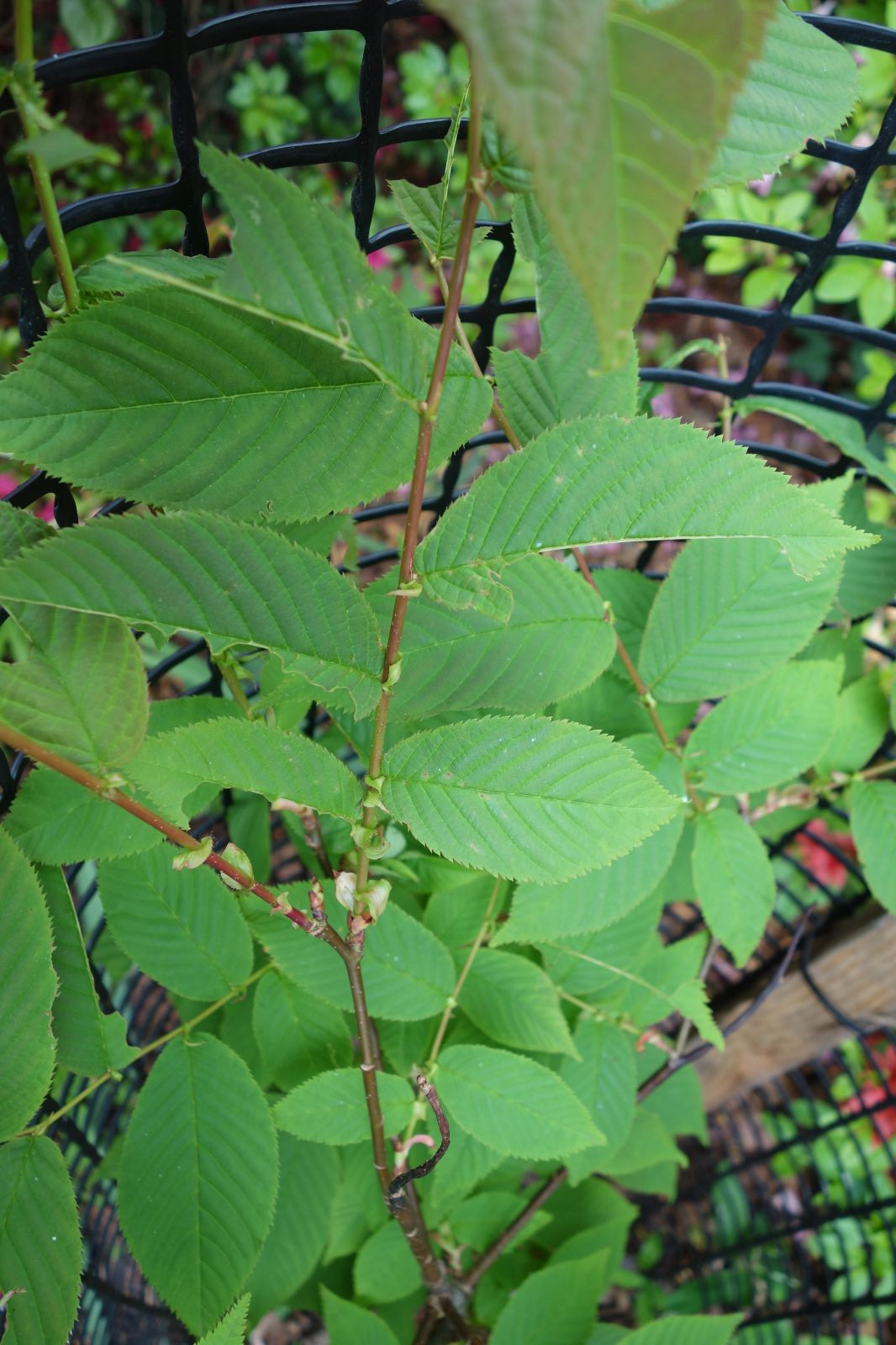
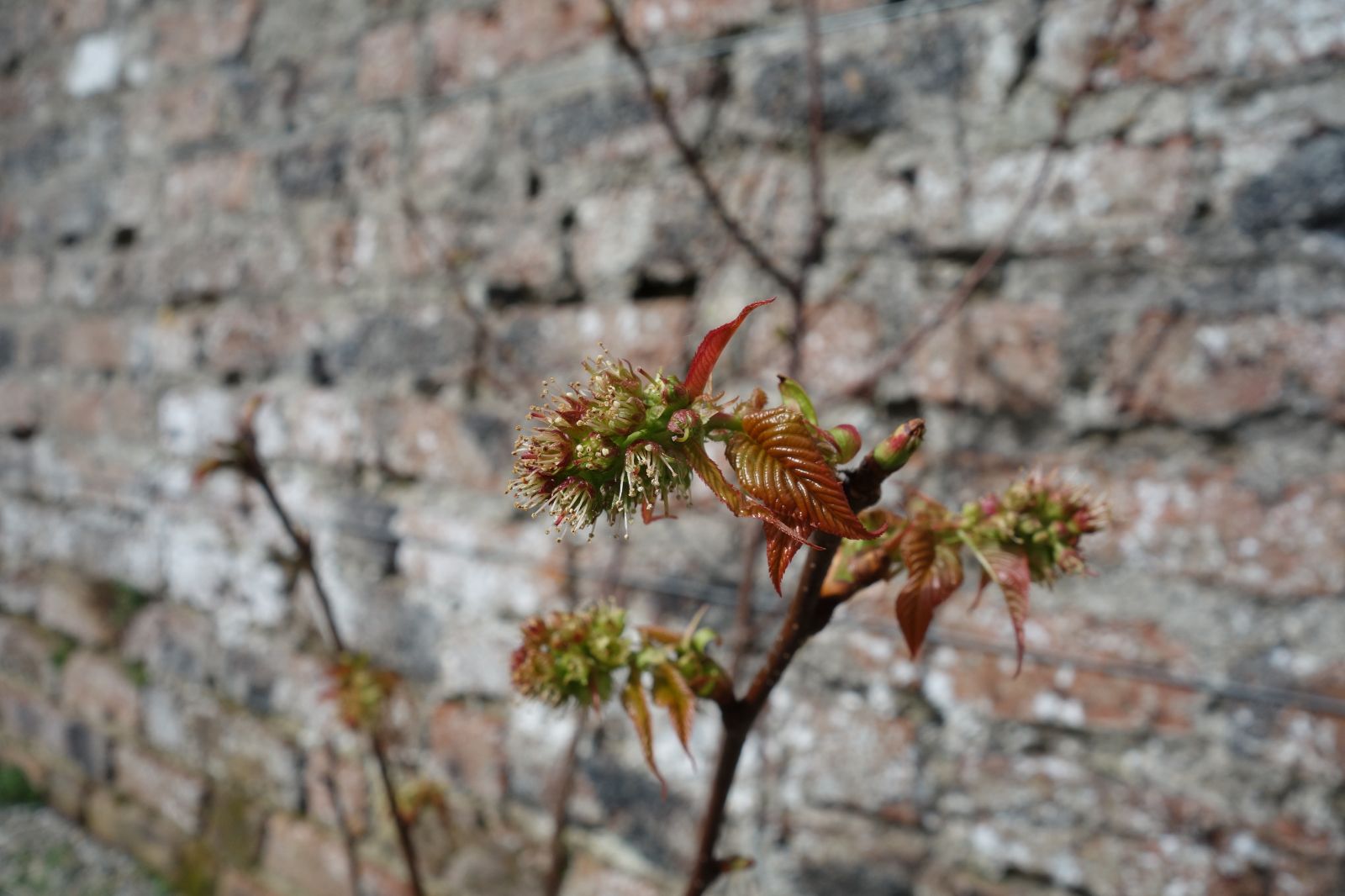
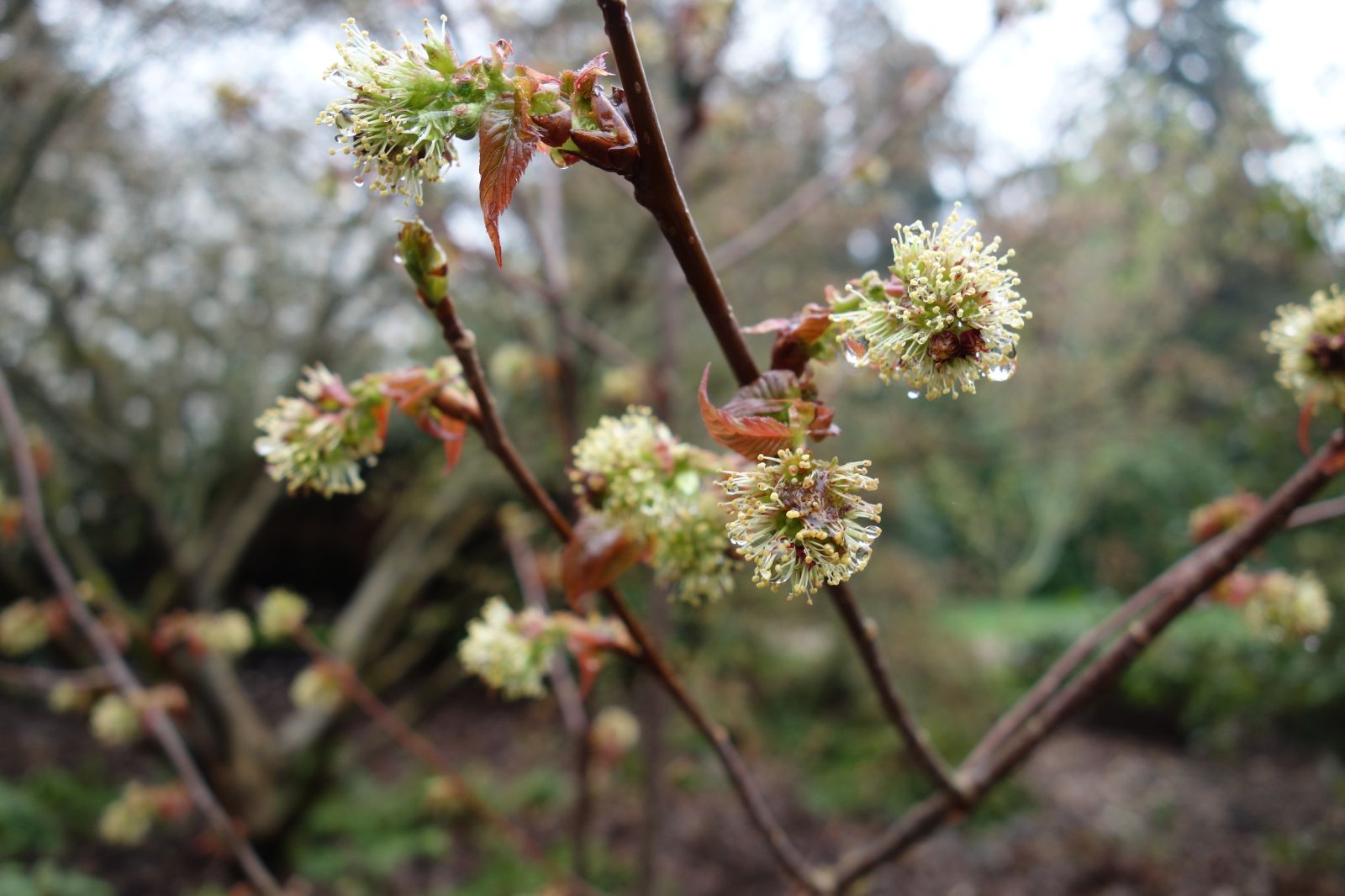
A large shrub or small tree in the wild. Leaves finely double-serrate, oblong or oblong-ovate, acuminate, up to 212 in. long and 58 in. wide on fertile branchlets, much longer on extension growths, almost sessile, glabrous, very white beneath. Flowers greenish, borne with the unfolding leaves, in short downy racemes on leafy peduncles. According to the original description, they are perfect, with only a single carpel, but there is considerable disagreement concerning the distribution of the sexes in this genus (and on whether or not flowers with two carpels produce fertile twin-fruits).

This species was discovered by Wilson in western Hupeh in 1907–8 during his first expedition for the Arnold Arboretum. It is rare in British gardens and would probably not have survived but for its being preserved and propagated by Messrs Hillier. It is in truth of little garden value, the most interesting feature being the white undersurface of the leaves.