Please consider supporting TSO in our May Appeal 2026 Donate

Cornus flowers
 

May Appeal 2026

Please help keep TSO growing!

IDS Trees and Shrubs Online has become a fundamental source of reliable information about cultivated woody plants, freely available to everyone, everywhere. We hope you find it useful.

For the first time we are asking our users if you could support us.

If everyone who uses TSO during May 2026 gives just £10, we would cover our costs for a whole year, enabling us to accelerate our work.

Donate

Illicium floridanum Ellis

TSO logo

Sponsor this page

For information about how you could sponsor this page, see How You Can Help

Credits

Article from Bean's Trees and Shrubs Hardy in the British Isles

Recommended citation
'Illicium floridanum' from the website Trees and Shrubs Online (treesandshrubsonline.org/articles/illicium/illicium-floridanum/). Accessed 2026-05-15.

Family

  • Schisandraceae

Genus

Glossary

entire
With an unbroken margin.
glabrous
Lacking hairs smooth. glabrescent Becoming hairless.

References

There are no active references in this article.

Credits

Article from Bean's Trees and Shrubs Hardy in the British Isles

Recommended citation
'Illicium floridanum' from the website Trees and Shrubs Online (treesandshrubsonline.org/articles/illicium/illicium-floridanum/). Accessed 2026-05-15.

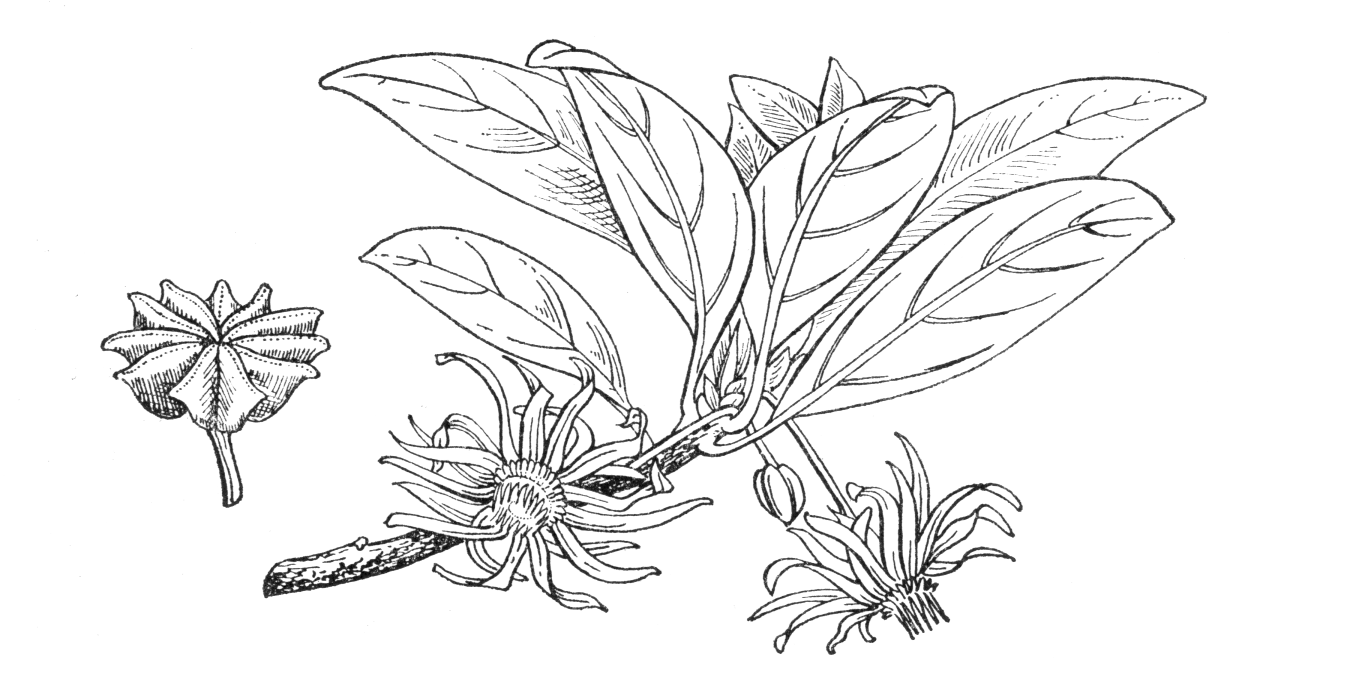
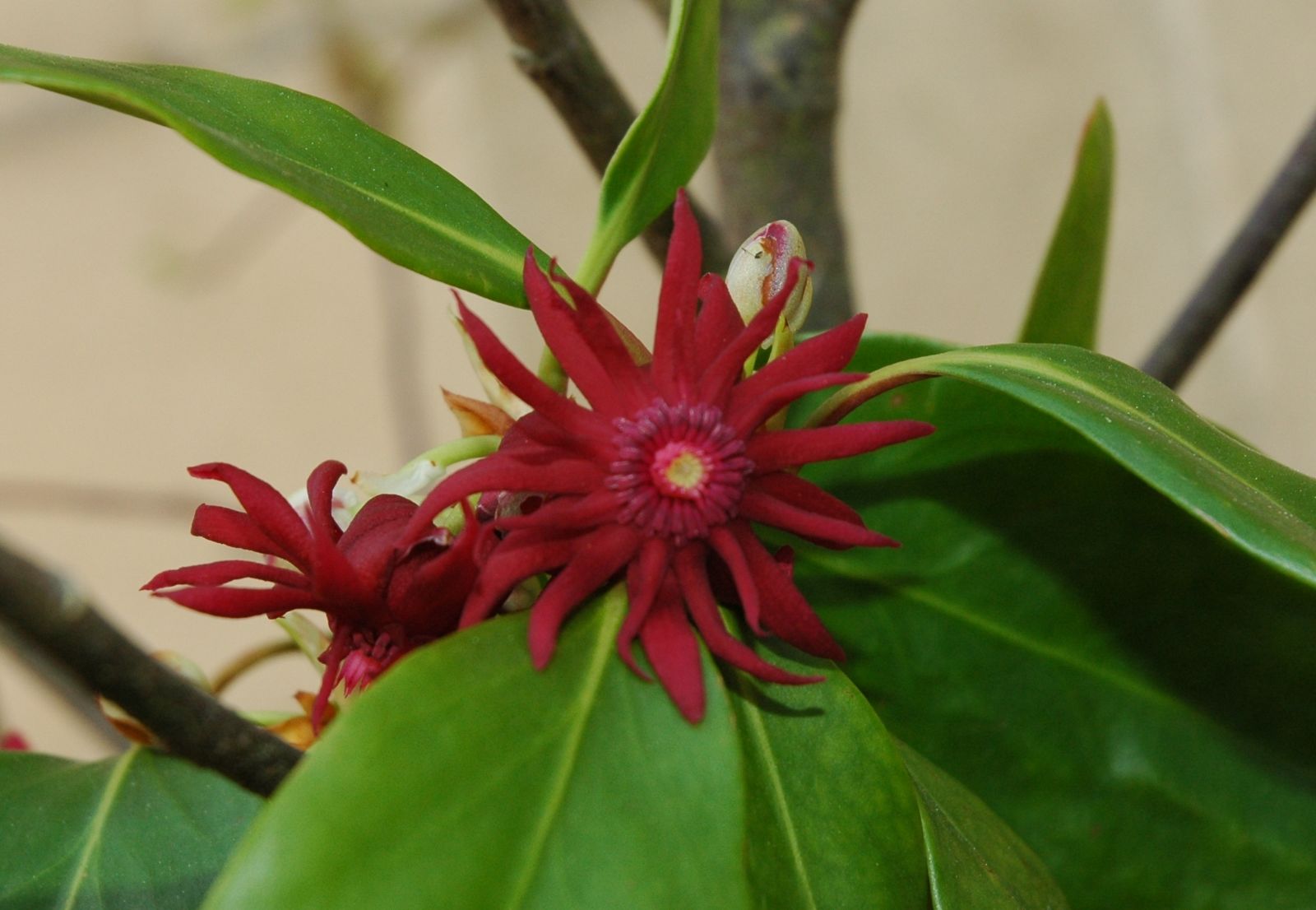
A shrub 6 to 8 ft high, of compact, much-branched habit. Leaves 3 or 4 in. long, lance-shaped to narrowly oval, tapered at both ends, entire, leathery, glabrous. Flowers borne in May and June singly near the end of the shoots each one composed of from twenty to thirty strap-shaped, pointed petals, 34 to 1 in. long, maroon-purple. Fruits a little over 1 in. wide. Bot. Mag., t.439.

Native of the southern United States; first found by Bartram in W. Florida in 1766, and introduced to England five years later. A small specimen lived outside for a long time without protection in the Coombe Wood nursery, Kingston-on-Thames, where it stood on a sunny slope, but as a rule near London it requires the shelter of a wall or some winter covering. It is really best adapted for Cornwall and places with a similar climate. The whole plant is permeated with an agreeable aromatic fragrance.