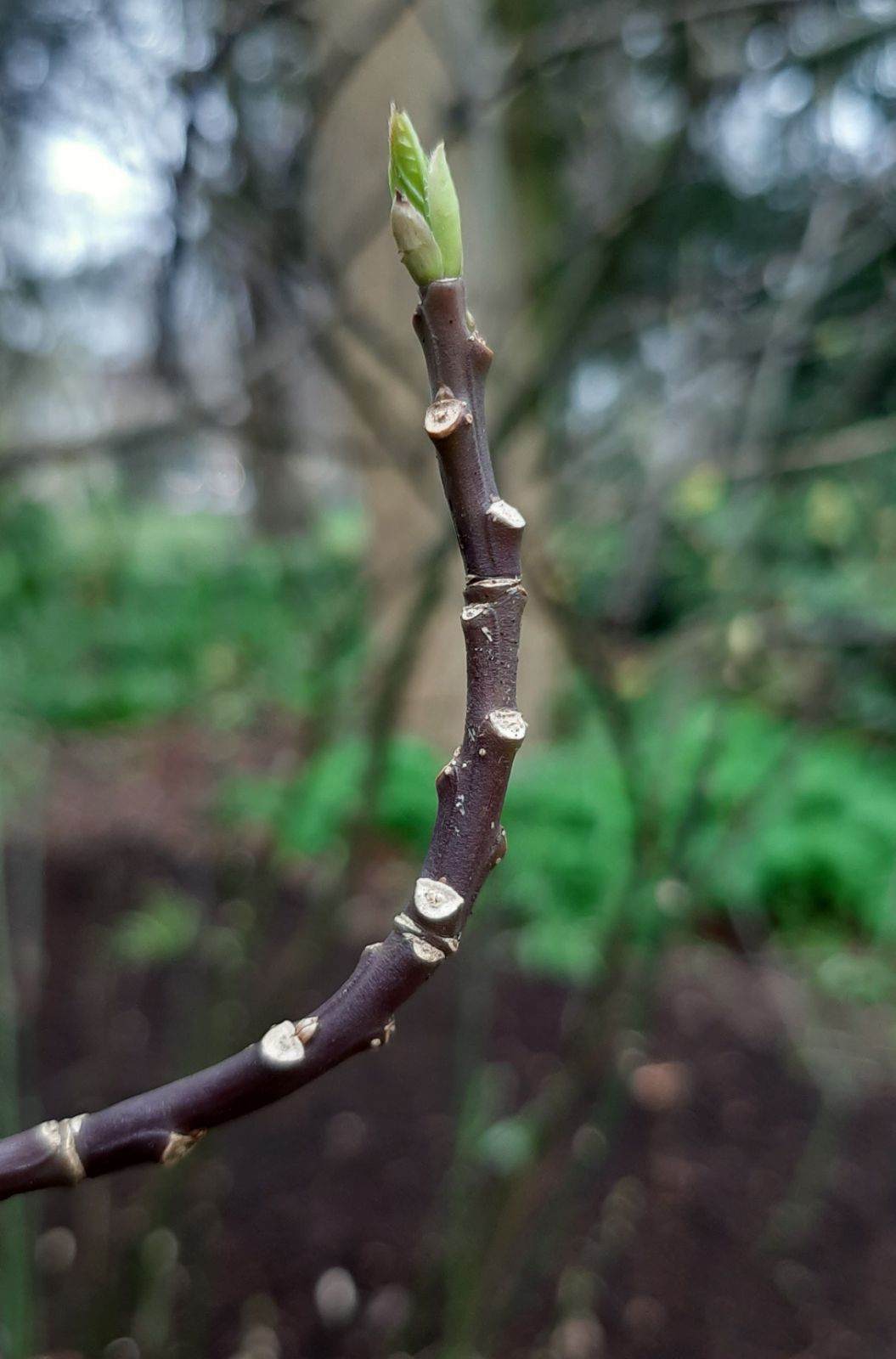
Helwingia japonica
Credits
Article from Bean's Trees and Shrubs Hardy in the British Isles
Recommended citation
'Helwingia japonica' from the website Trees and Shrubs Online (treesandshrubsonline.
Genus
Synonyms
- Osyris japonica Thunb.
Other taxa in genus
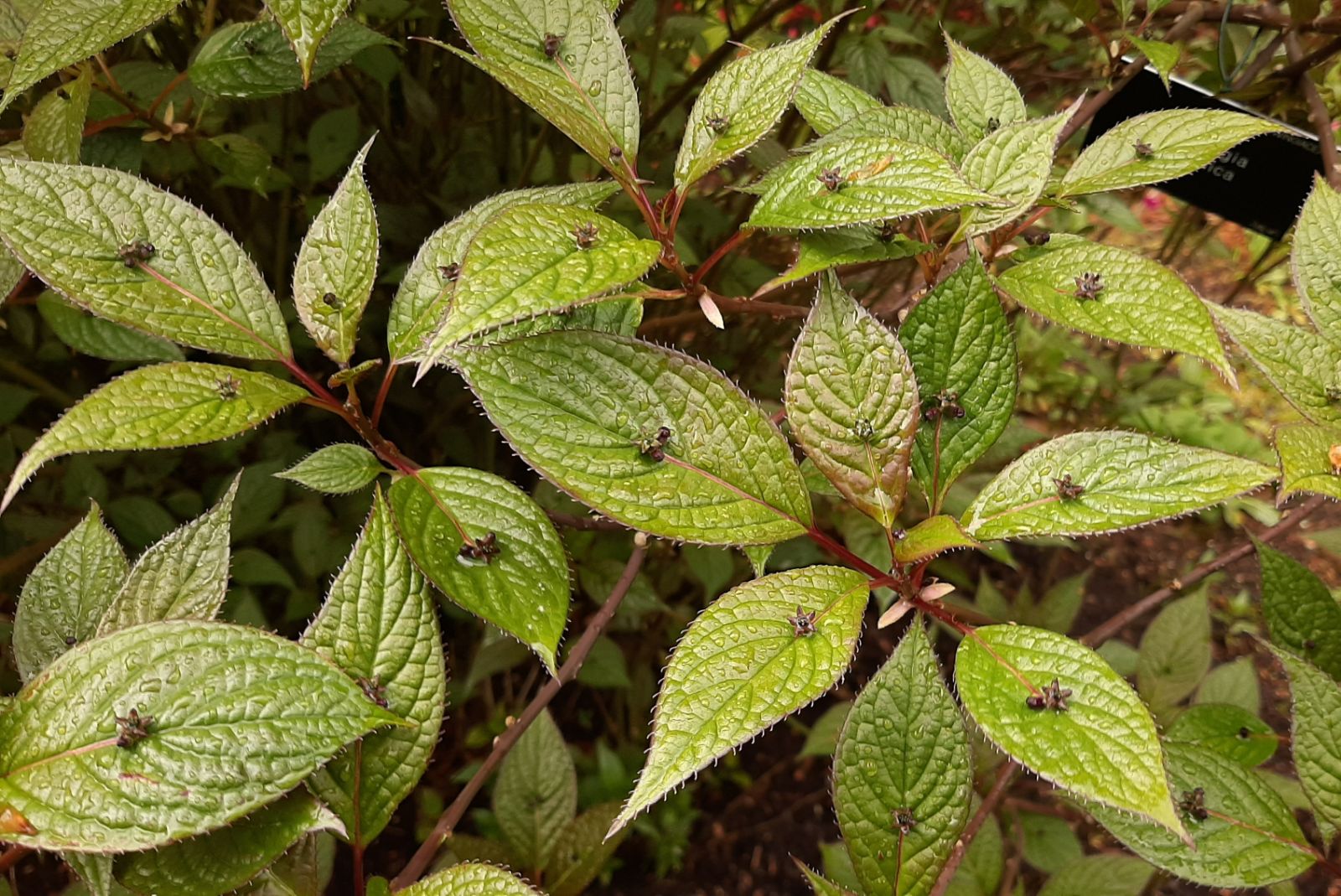
A deciduous dioecious shrub 3 to 5 ft high, with glabrous twigs. Leaves simple, alternate, ovate, tapering at both ends, long-pointed, 11⁄2 to 3 in. long, 1⁄2 to 11⁄4 in. wide, with fine, rather bristle-like teeth on the margins, quite glabrous and bright green on both surfaces; stalk 1⁄2 to 1 in. long; stipules hair-like. Flowers unisexual, very small, pale green or greenish white; females produced singly or in threes on the midrib about the centre of the upper surface of the leaf; males more numerous; they are stalkless, and of no beauty. Fruit a black drupe 1⁄4 in. long, roundish oval.
Native of Japan, S. and W. China, and probably of Formosa; introduced to Europe by Siebold in 1830. It has not the least merit as an ornamental shrub, although the foliage in a milder climate is larger and perhaps more striking than as here described; but it is a plant of singular botanical interest. The morphological explanation of the anomalous position of the flowers in the middle of the leaf (for no true leaf ever produces flowers) is that the flower-stalk in reality originates in the axil of the leaf, but is united from end to end with the stalk and midrib. This shrub is hardy at Kew, and is propagated by cuttings of young wood.