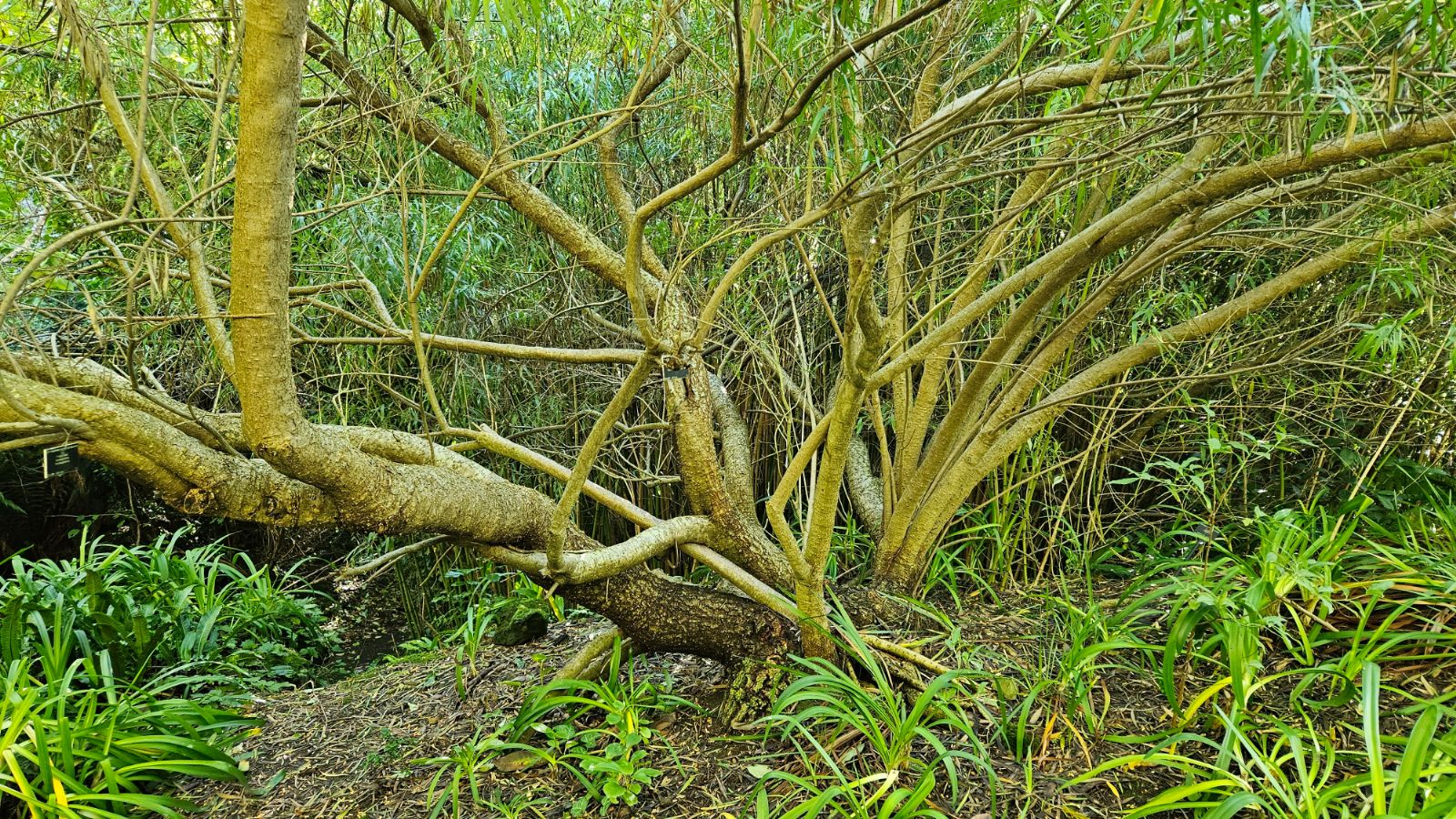
Freylinia lanceolata
Credits
Article from Bean's Trees and Shrubs Hardy in the British Isles
Recommended citation
'Freylinia lanceolata' from the website Trees and Shrubs Online (treesandshrubsonline.
Genus
Synonyms
- Caprarial anceolata L. f.
- F. cestroides Colla
Other taxa in genus
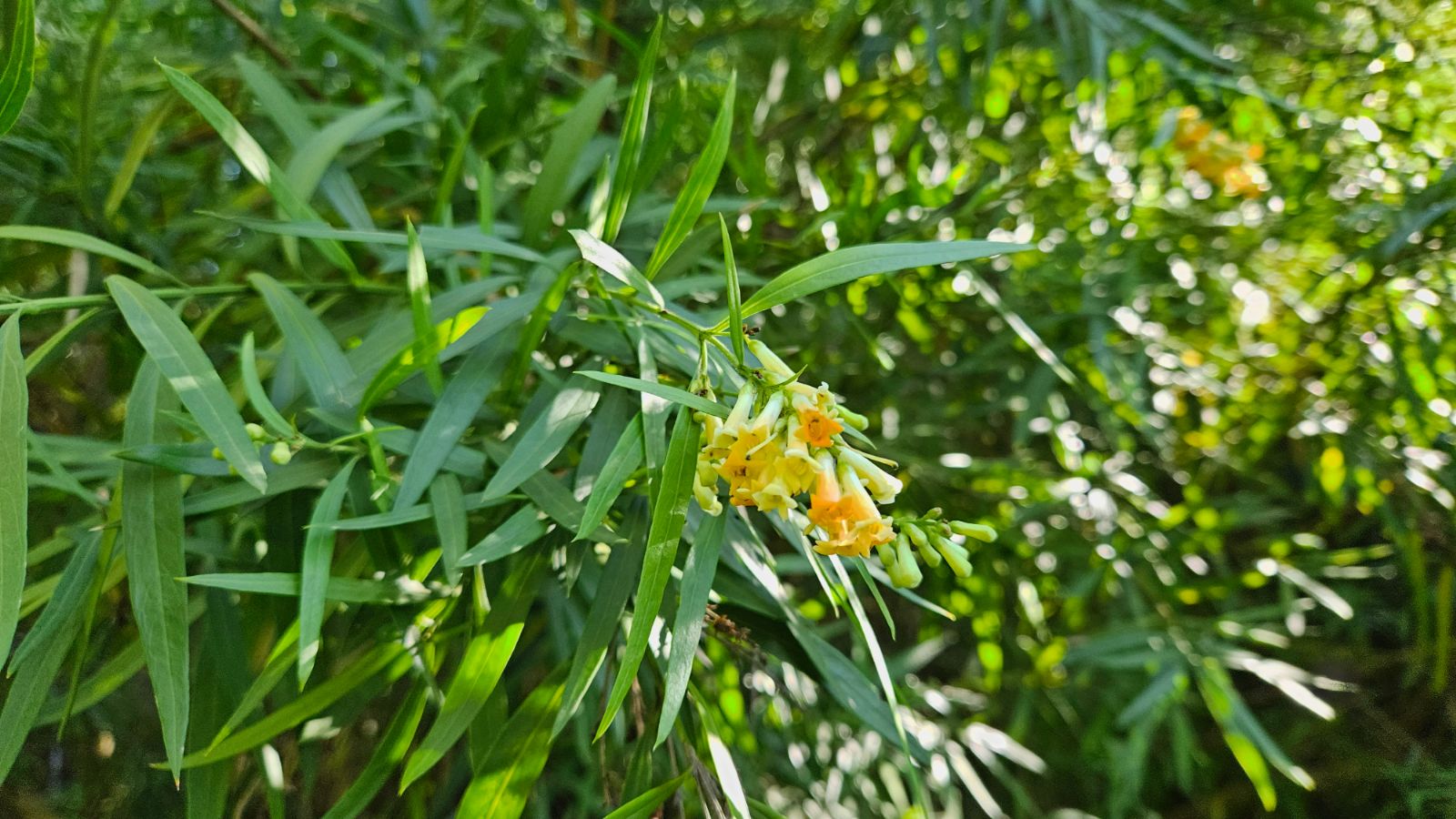
An evergreen shrub of dense, very leafy habit, 12 ft or more high; young shoots slightly hairy, angled. Leaves opposite, linear, tapering towards both ends, slender-pointed, 2 to 5 in. long, 1⁄8 to 3⁄8 in. wide; dark rather bright green on both surfaces, perfectly glabrous, midrib prominent beneath; scarcely stalked. Flowers sweetly scented, produced in a slender terminal panicle 2 to 4 in. long, also from the axils of the terminal leaves, the whole forming at its best a compound pyramidal panicle 10 to 12 in. high. Corolla 1⁄2 in. long, tubular, 1⁄8 to 1⁄4 in. wide, with five small rounded lobes; yellow or creamy-white outside, richer yellow within and hairy in the throat; lobes often tipped with pink. Calyx 1⁄12 in. long, deeply five-lobed. Stamens normally four, occasionally five, included in the corolla, to the inside of which they are attached.
Native of S. Africa; introduced in 1774. Usually grown in greenhouses and too tender for our average climate, this is hardy in the Isle of Wight and in the southern maritime counties. The flowers are richly fragrant and the shrub is elegant in growth. It is evidently a lover of heat and sunshine, which probably explains its flowering after the hot summer of 1921. It blossoms wonderfully in Algiers. The best place for it with us would be against a warm south wall.