Dirca palustris
Credits
Article from Bean's Trees and Shrubs Hardy in the British Isles
Recommended citation
'Dirca palustris' from the website Trees and Shrubs Online (treesandshrubsonline.
Genus
Common Names
- Leatherwood
Other taxa in genus
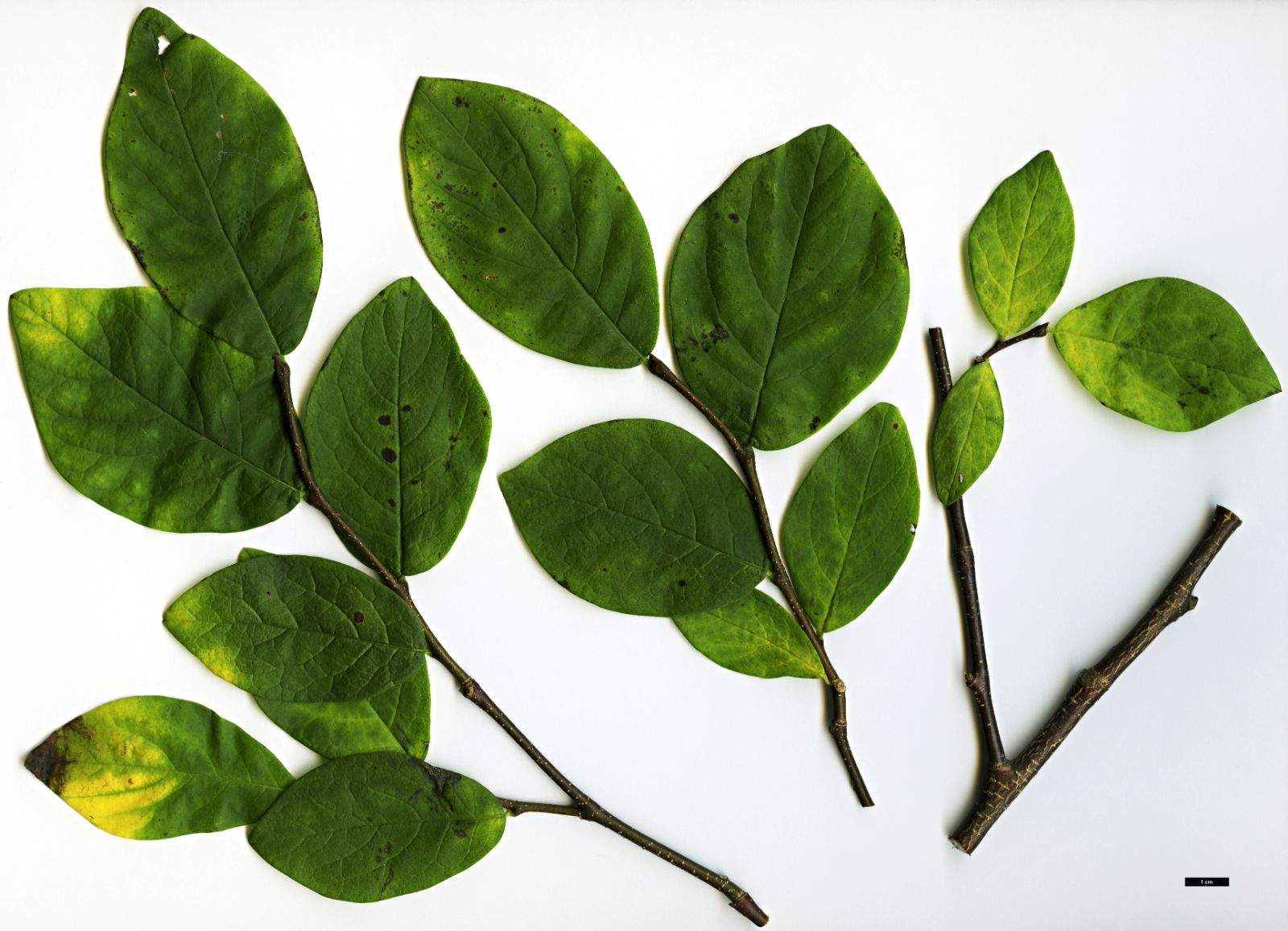
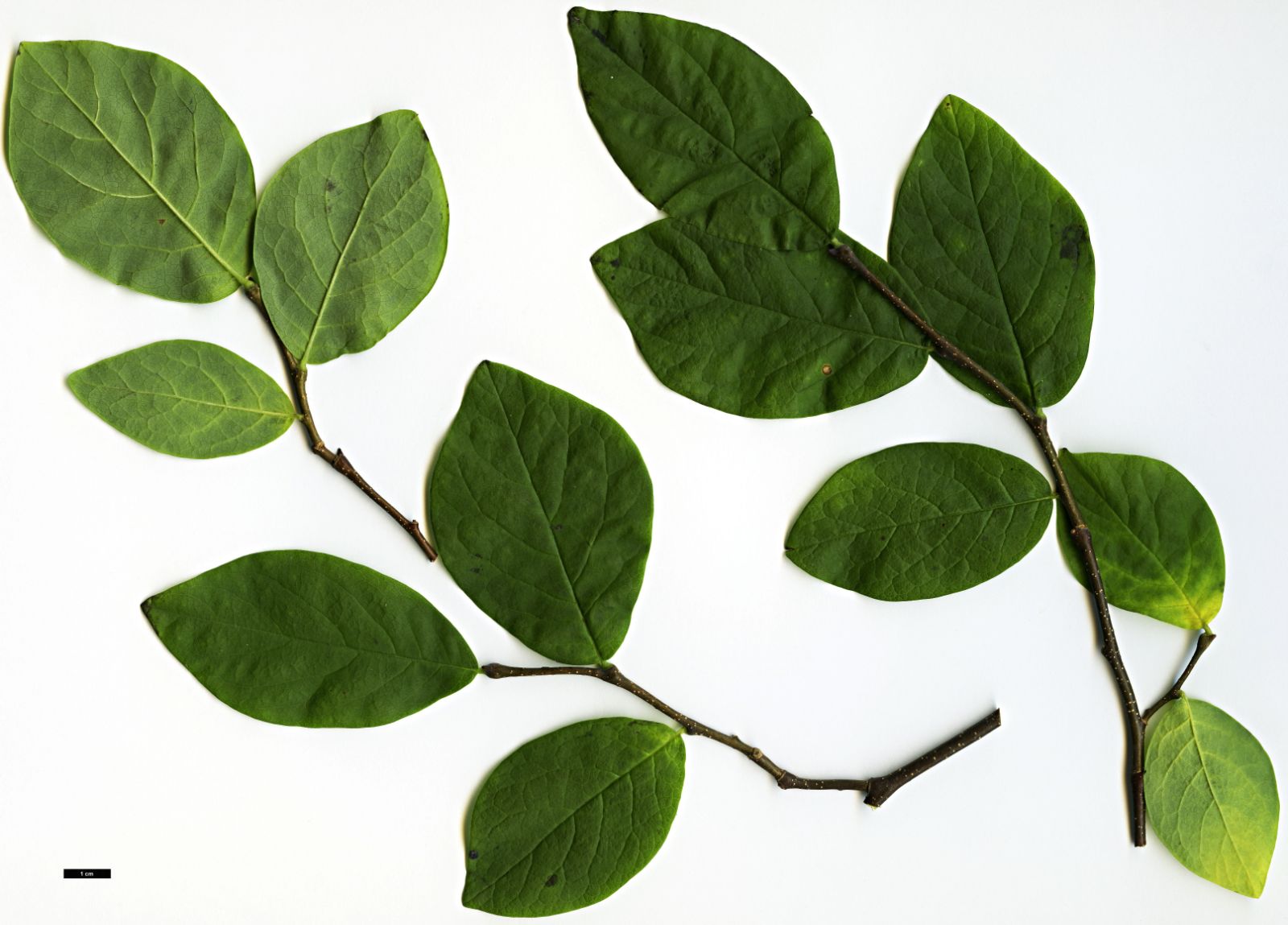
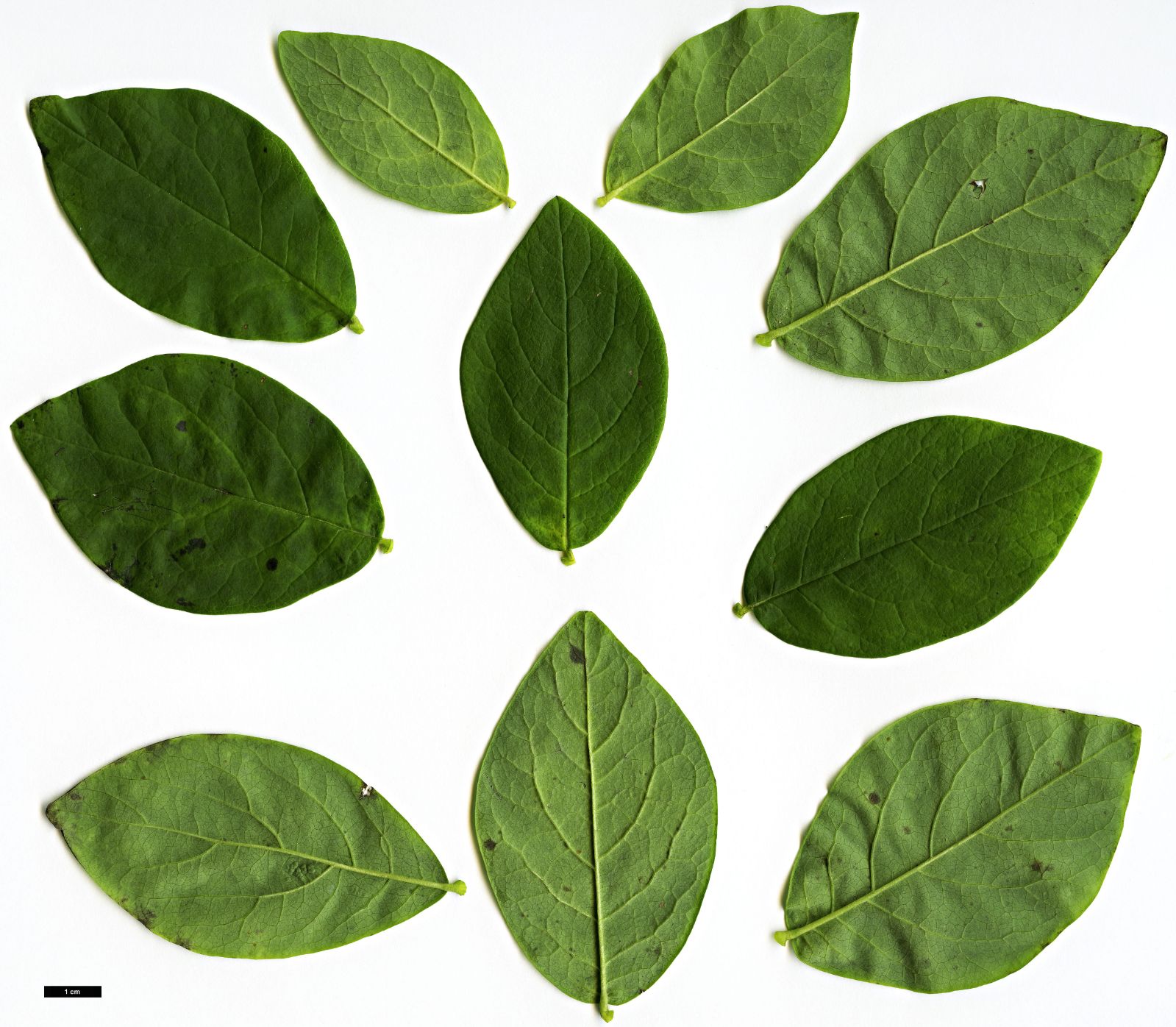
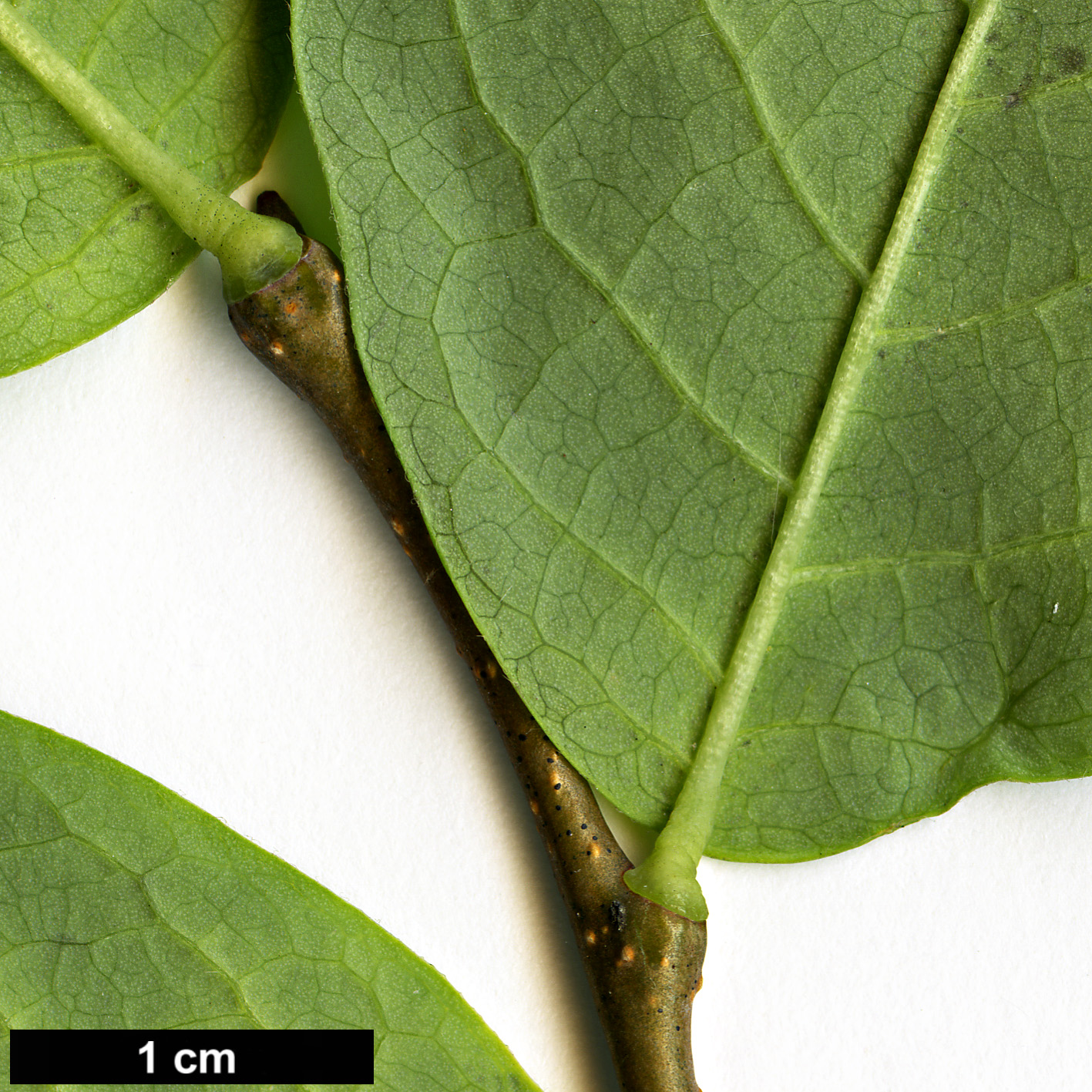
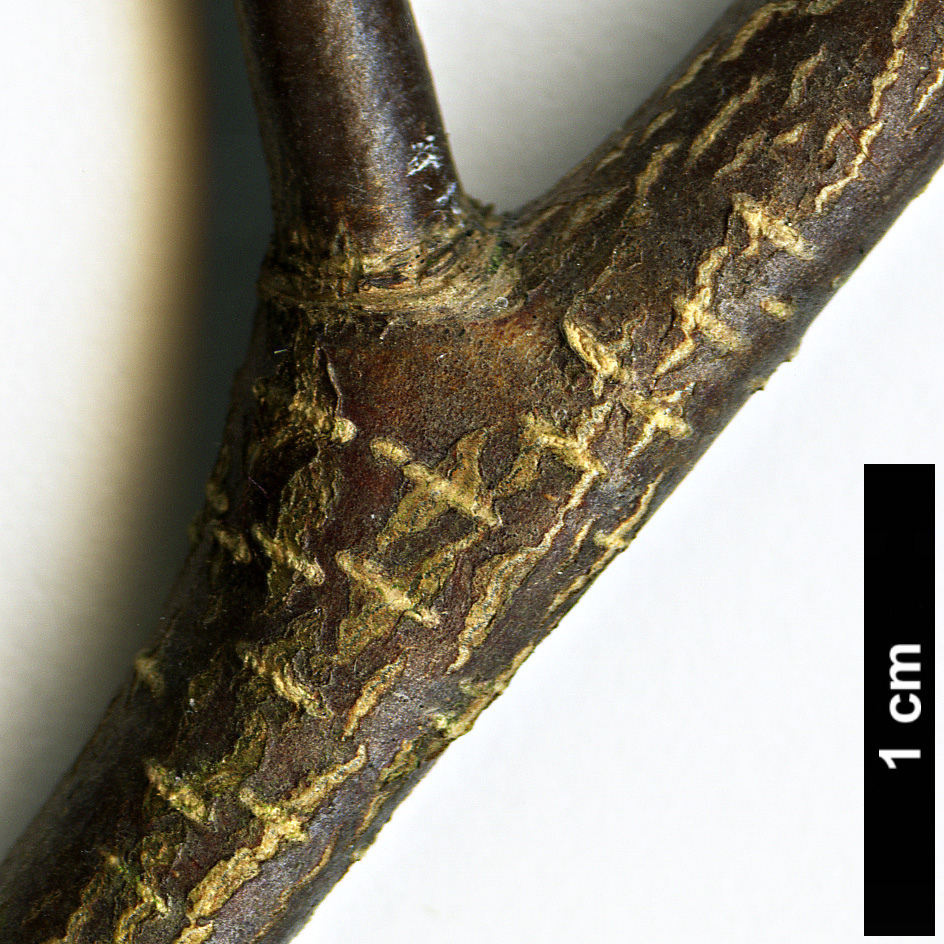
A deciduous shrub 3 to 6 ft high, with flexible, jointed branches, and very tough, glabrous bark; buds downy. Leaves alternate, oval or obovate; 11⁄2 to 3 in. long, about half as wide; tapered at both ends, not toothed, glabrous and pale green above, somewhat glaucous beneath; stalk 1⁄8 in. or less long. Flowers appearing in March at the joints of the naked wood, usually three together on very short stalks. Perianth-tube 1⁄3 in. long, narrowly funnel-shaped, faintly lobed, pale yellow; stamens eight, protruded. Fruit a pale, oval drupe, 1⁄3 in. long, rarely seen in Britain.
Native of eastern N. America; introduced in 1750. This is not a showy plant, and its yellow flowers are often injured by spring frost, but it is an interesting one. It is moisture-loving, and likes a deep soil to which some peat is added. A specimen in the Cambridge Botanic Garden attained a diameter of 9 ft. The remarkable toughness and flexibility of the shoots have been taken advantage of in several ways. In early times Native Americans used the bark for making ropes, and the twigs are still used in rural districts as tying material and for basket-making.