Dichotomanthes tristaniicarpa
Credits
Article from Bean's Trees and Shrubs Hardy in the British Isles
Recommended citation
'Dichotomanthes tristaniicarpa' from the website Trees and Shrubs Online (treesandshrubsonline.
Genus
Other taxa in genus
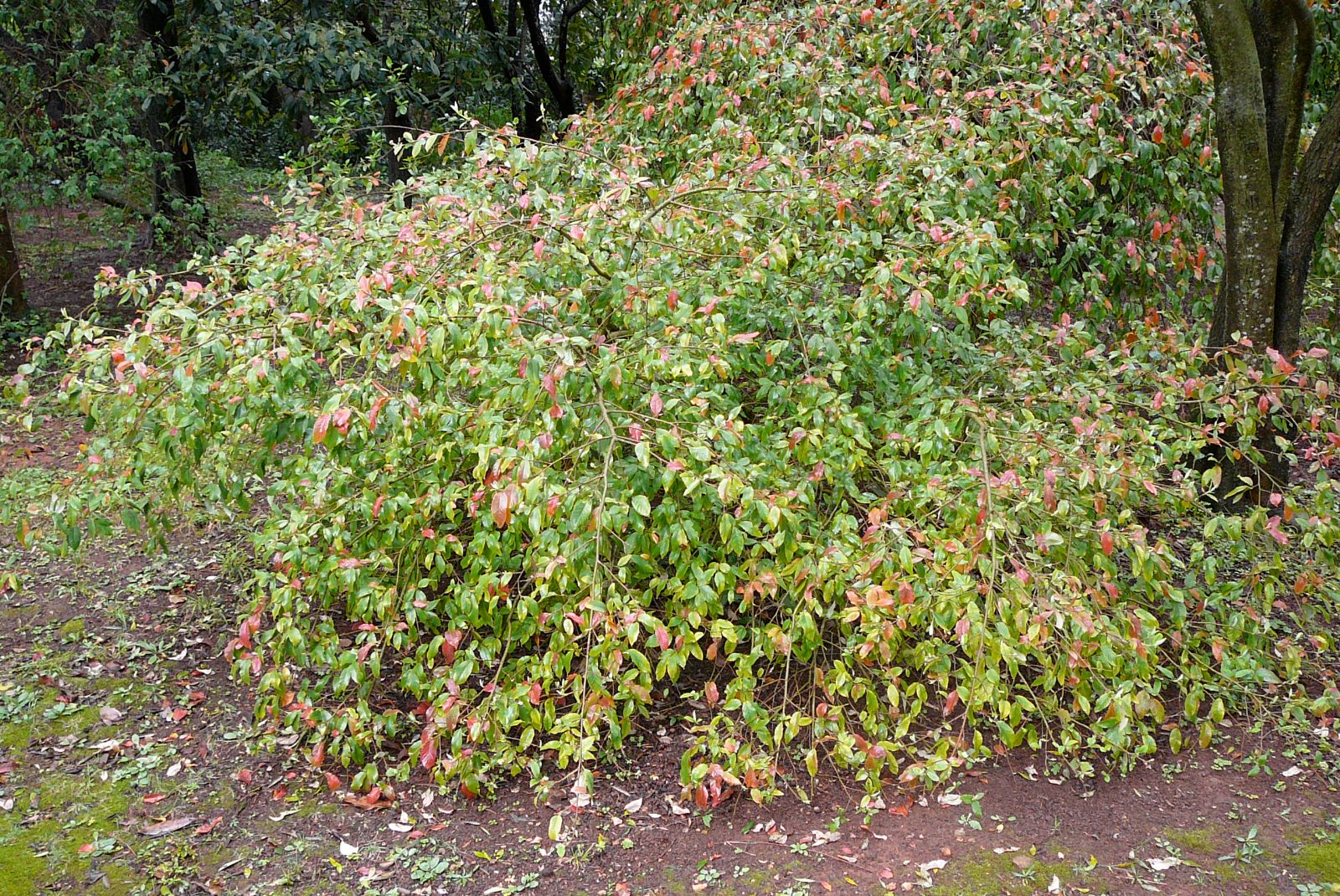
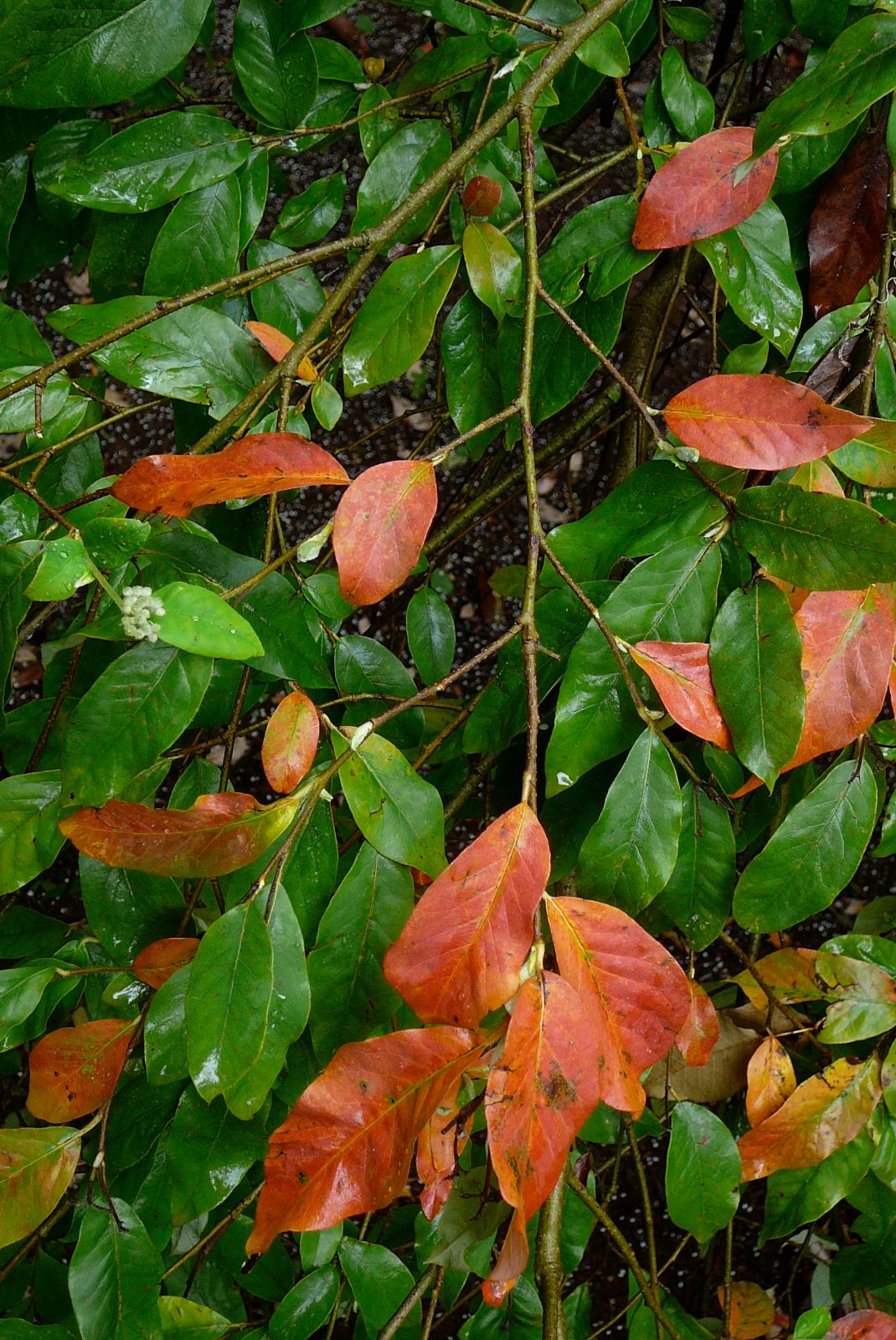
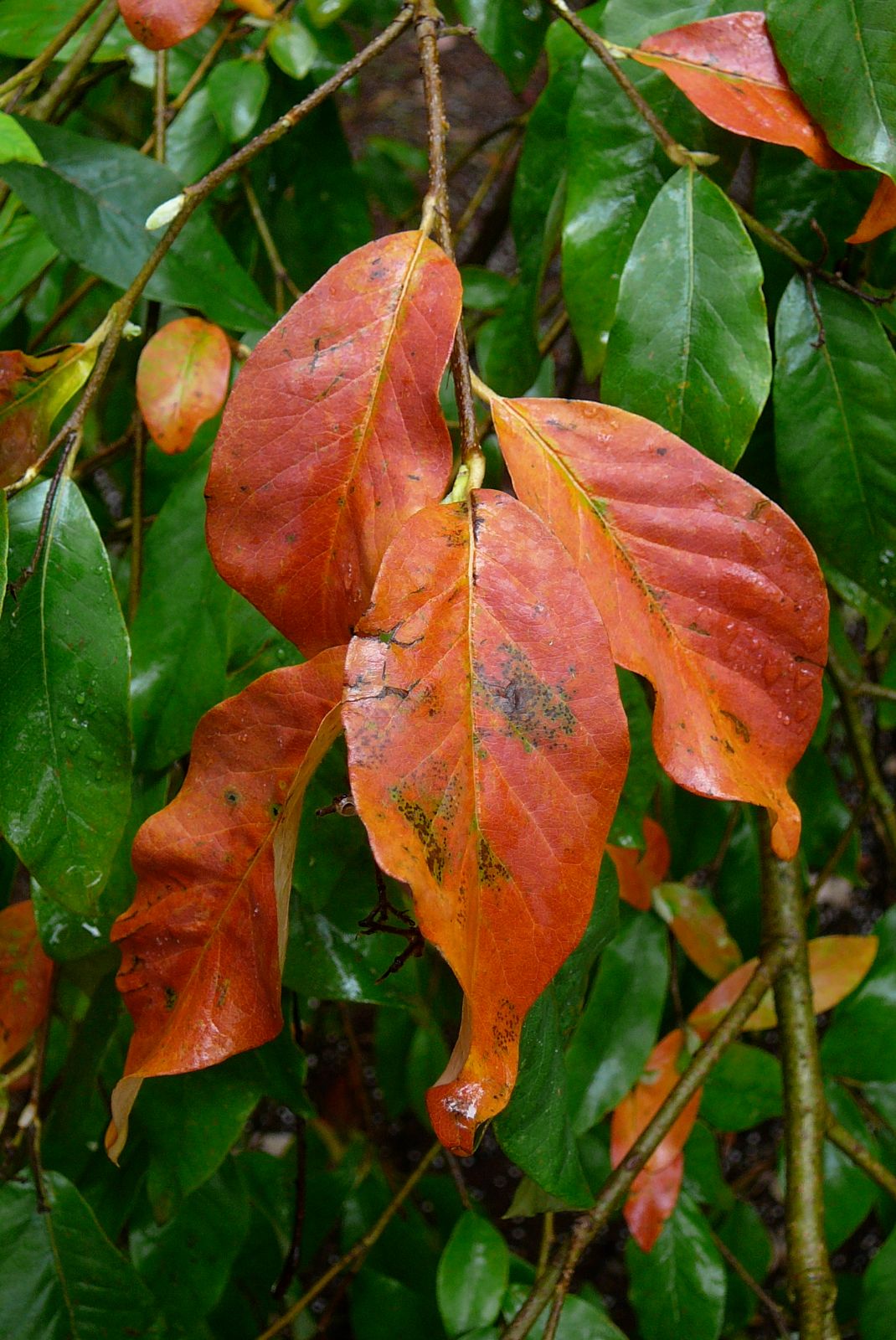
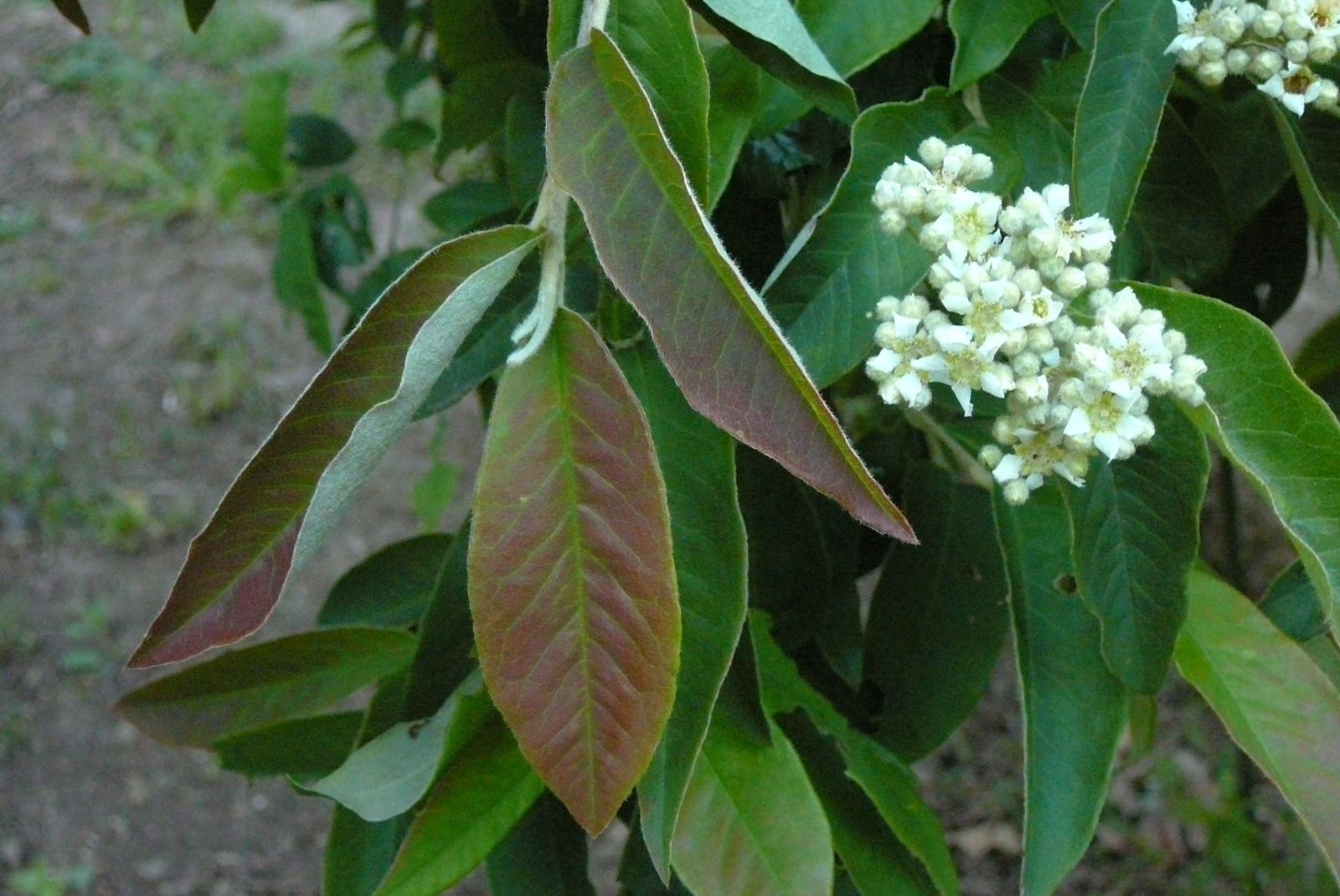
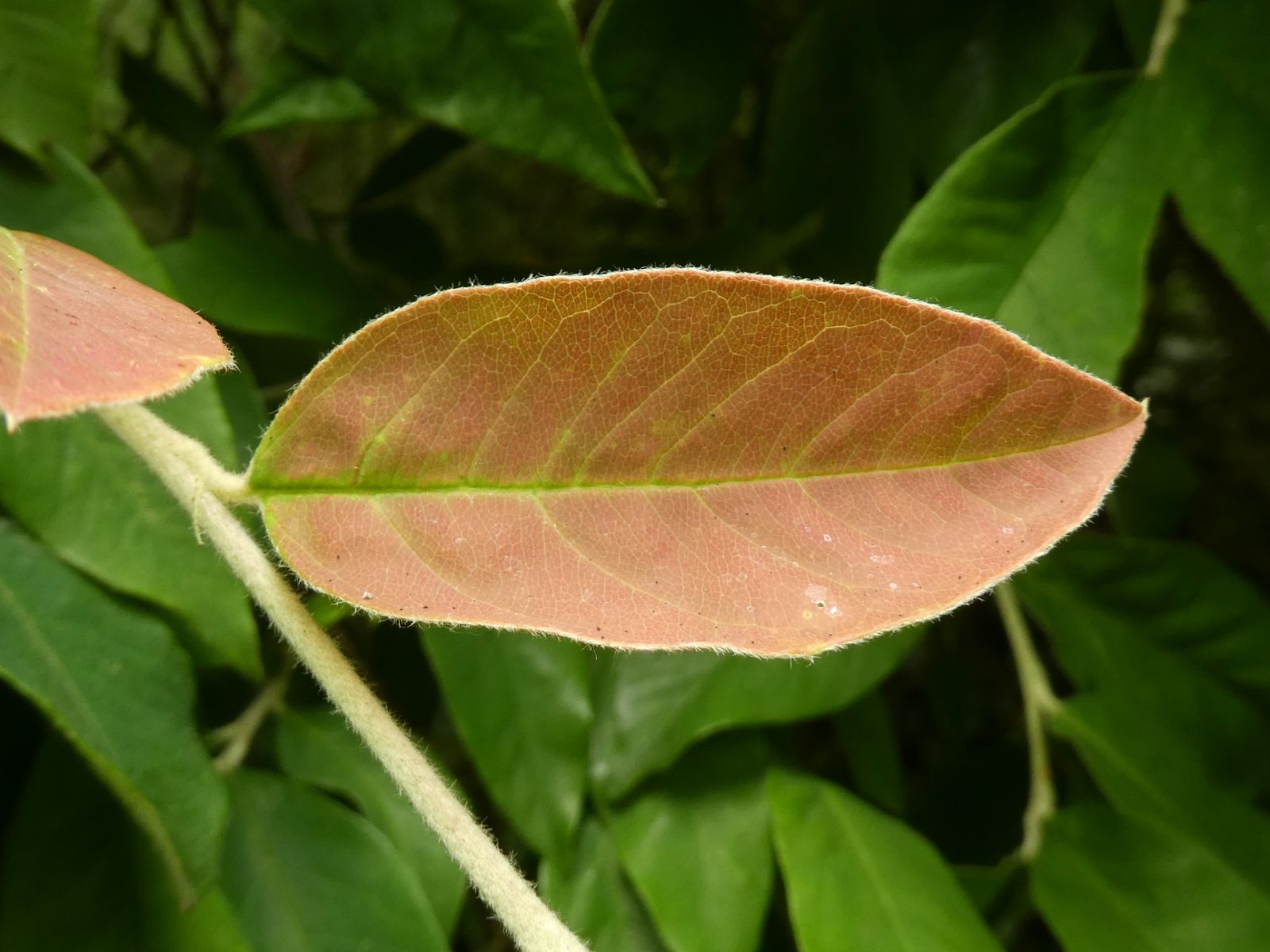
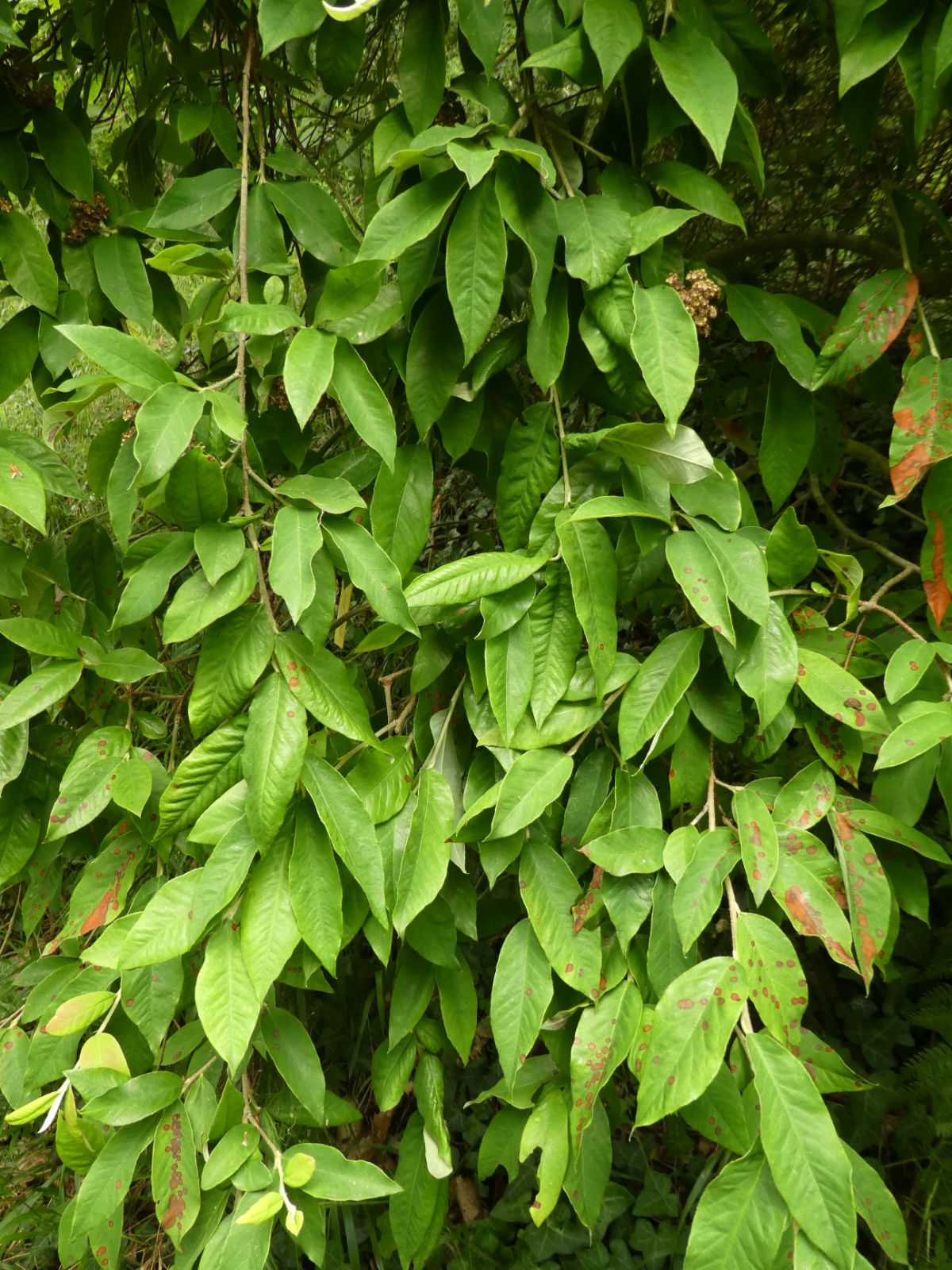
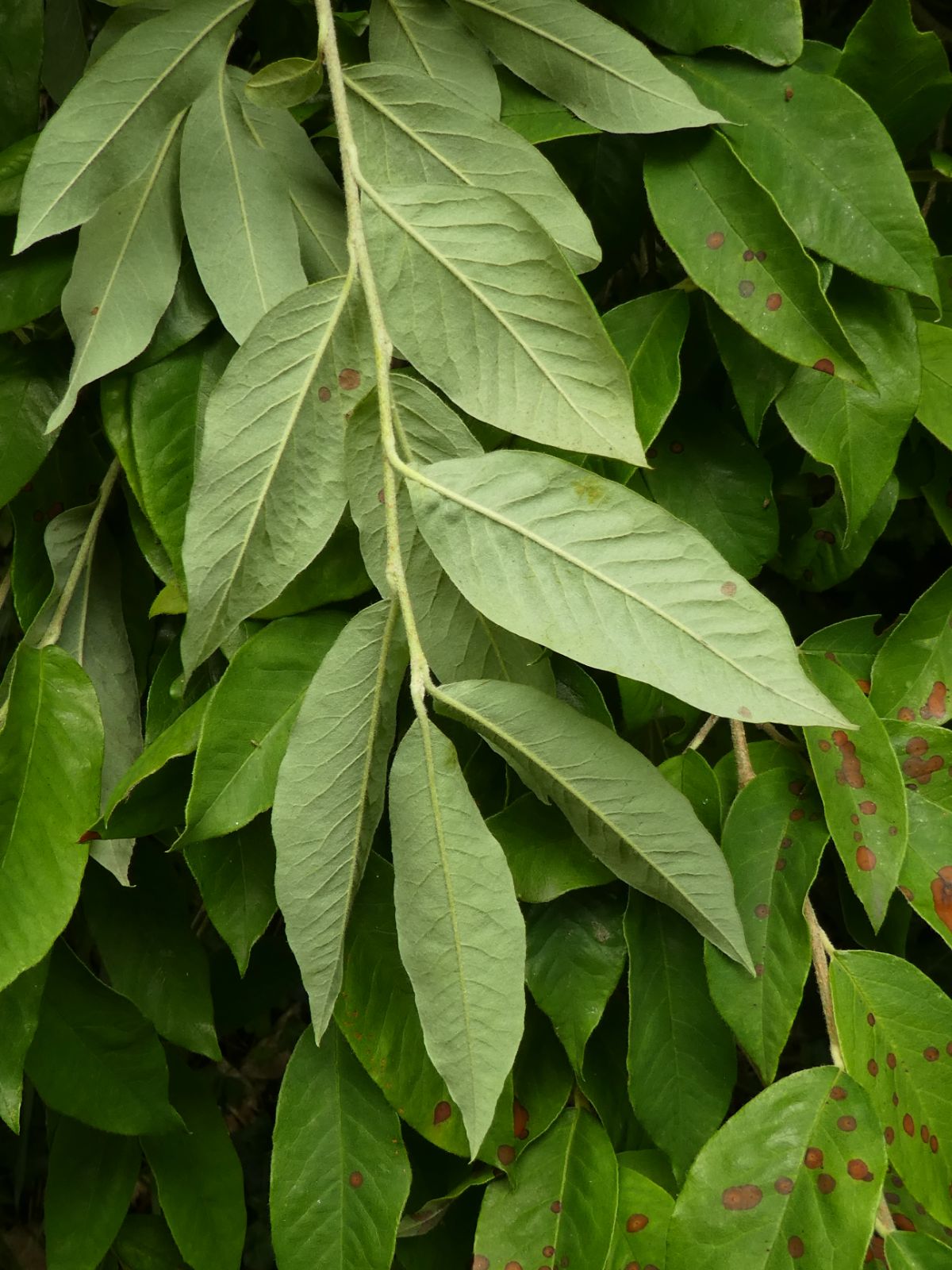
An evergreen tree up to 20 ft high, or a shrub; young shoots densely clothed with white wool. Leaves alternate, oval,pointed, tapered towards the base, entire; 1 to 4 in. long, 1⁄2 to 11⁄4 in. wide; dark slightly lustrous green and glabrous above, clothed with pale silky hairs beneath; stalk 1⁄12 in. long; stipules minute, threadlike, silky, soon falling away. Flowers white, each 1⁄4 in. wide, produced during June in terminal corymbs about 2 in. wide. Petals five, rounded; stamens fifteen to twenty, glabrous; calyx five-lobed, woolly outside. The fruit is really a dry oblong capsule 1⁄4 in. long, but is almost entirely enclosed by the calyx which remains, enlarges, and becomes fleshy.
Native of Yunnan, China, and found there by Henry and other collectors; introduced by Forrest in 1917. In outward appearance it much resembles a cotoneaster and the flowers also strongly suggest that genus. The fruit, however, is very distinct on account of the calyx persisting, enlarging and ultimately covering all except its tip. It does not appear to be very hardy at Kew in the open ground, at least when young, but succeeds quite well on a wall. A specimen in the R.H.S. Garden at Wisley, growing in the open in Seven Acres, was badly cut in the winter of 1962–3, though previously never more than slightly frosted. It has little garden value.