If you find TSO useful, please donate to our May Appeal 2026! Donate

Hydrangea flowers
 

May Appeal 2026

Please help keep TSO growing!

IDS Trees and Shrubs Online depends on generous donations to continue to make reliable information on hardy woody plants freely available to everyone, everywhere.

If you haven’t already, please consider donating to our May Appeal. If everyone who uses TSO during May 2026 gives just £10, we would cover our costs for a whole year, enabling us to accelerate our work!

Donate

Cornus kousa Bürger ex Hance

TSO logo

Sponsor

Kindly sponsored by
Hugh and Judy Johnson

Credits

New article for Trees and Shrubs Online.

Recommended citation
'Cornus kousa' from the website Trees and Shrubs Online (treesandshrubsonline.org/articles/cornus/cornus-kousa/). Accessed 2026-05-18.

Family

  • Cornaceae

Genus

Common Names

  • Japanese Dogwood
  • Korean Dogwood
  • Kousa Dogwood
  • Yama-boshi
  • Szechuan Strawberry

Synonyms

  • Benthamia japonica Siebold & Zucc.
  • Benthamia kousa (Bürger ex Hance) Nakai
  • Benthamidia japonica (Siebold & Zucc.) H.Hara
  • Cynoxylon japonicum (Siebold & Zucc.) Nakai
  • Cynoxylon kousa (Siebold & Zucc.) Nakai (Bürger ex Hance) Nakai
  • Dendrobenthamia japonica (Siebold & Zucc.) Hutch.

Glossary

asl
Above sea-level.
bud
Immature shoot protected by scales that develops into leaves and/or flowers.
clone
Organism arising via vegetative or asexual reproduction.
compound
Made up or consisting of two or more similar parts (e.g. a compound leaf is a leaf with several leaflets).
disjunct
Discontinuous; (of a distribution pattern) the range is split into two or more distinct areas.
entire
With an unbroken margin.
Extinct
IUCN Red List conservation category: ‘there is no reasonable doubt that the last individual [of taxon] has died’.
herbarium
A collection of preserved plant specimens; also the building in which such specimens are housed.
hybrid
Plant originating from the cross-fertilisation of genetically distinct individuals (e.g. two species or two subspecies).
inflorescence
Flower-bearing part of a plant; arrangement of flowers on the floral axis.
interspecific
(of hybrids) Formed by fertilisation between different species.
involucre
A ring of bracts surrounding an inflorescence.
morphology
The visible form of an organism.
obtuse
Blunt.
peduncle
Stalk of inflorescence.
petaloid
Petal-like. May refer to sepals or stamens modified into a petal-like form.
pollination
Act of placing pollen on the stigma. Various agents may initiate pollination including animals and the wind.
simple
(of a leaf) Unlobed or undivided.
subspecies
(subsp.) Taxonomic rank for a group of organisms showing the principal characters of a species but with significant definable morphological differentiation. A subspecies occurs in populations that can occupy a distinct geographical range or habitat.
synonym
(syn.) (botanical) An alternative or former name for a taxon usually considered to be invalid (often given in brackets). Synonyms arise when a taxon has been described more than once (the prior name usually being the one accepted as correct) or if an article of the International Code of Botanical Nomenclature has been contravened requiring the publishing of a new name. Developments in taxonomic thought may be reflected in an increasing list of synonyms as generic or specific concepts change over time.
trichome
Hair-like growth from epidermis. May be glandular.
valvate
(of similar parts of a plant: e.g. petals) Meeting without overlapping; (of dehiscent fruit) opening via valves.

References

Credits

New article for Trees and Shrubs Online.

Recommended citation
'Cornus kousa' from the website Trees and Shrubs Online (treesandshrubsonline.org/articles/cornus/cornus-kousa/). Accessed 2026-05-18.

Deciduous shrub or tree to 15 m. Bark greyish-brown, peeling in large, irregular scales with age, revealing a patchwork of yellows and browns. Branchlets green at first, glabrous or with soft white trichomes, becoming reddish-brown, glabrous, lenticels circular. Leaves 4–11 × 3.6–5 cm, chartaceous (thickly so in subsp. chinensis), narrowly elliptic to broadly ovate, base rounded to acute, upper surface green, sparsely appressed pubescent, lower surface pale green, papillate, pubescent with appressed trichomes, rarely with long, soft white trichomes, with tufts of white or brown, soft, long trichomes in vein axils, 4–5 secondary veins each side of the midvein, margin entire, revolute or undulating, apex acuminate; petiole to 0.5–1 cm long. Reproductive buds mixed, bulbous, enclosed by two valvate pairs of silky scale leaves, the outer pair falling early, the inner pair terminating in a sharp point, enclosing the bud until anthesis. Inflorescence capitate cymose, globose, 20–40-flowered, 0.7–1 cm diameter; bracts petal-like, four, 3–8 cm long, ovate to oblong-ovate, slender-pointed at the apex. Flowers hermaphrodite, peduncle 3.5–7.5 cm, often conspicuously thickened at base, petals greenish or yellow. Fruits compound, globose, fleshy (‘strawberry-like’), 1–1.5 cm diameter, peduncle 6–11 cm, red at maturity, stones ellipsoid. Flowering May to July, fruiting August to October. (Bean 1976; Xiang & Boufford 2005; Noshiro 2012).

Distribution  China See distribution for var. chinensisJapan Honshu to the Ryuku Islands South KoreaTaiwan

Habitat Montane forest, mixed woodland, valleys, streamsides, 400–2200 m asl.

USDA Hardiness Zone 5-8

RHS Hardiness Rating H5

Conservation status Least concern (LC)

Taxonomic note The originating author is frequently cited as F.Bürger (mistakenly for Heinrich Bürger). The name is also sometimes given as Cornus kousa Bürger ex Miq., not validly published since Miquel cited Bürger’s name as a synonym.

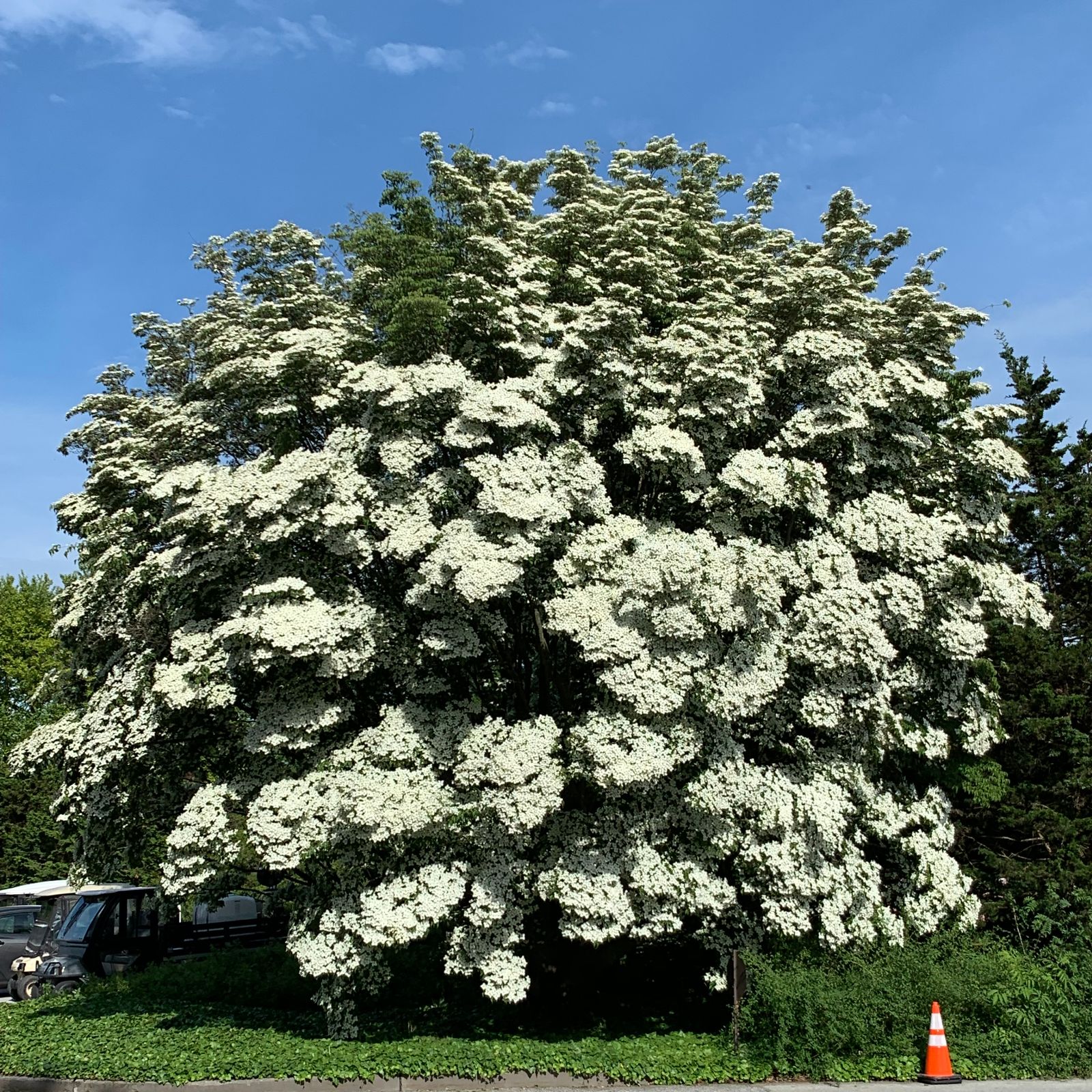
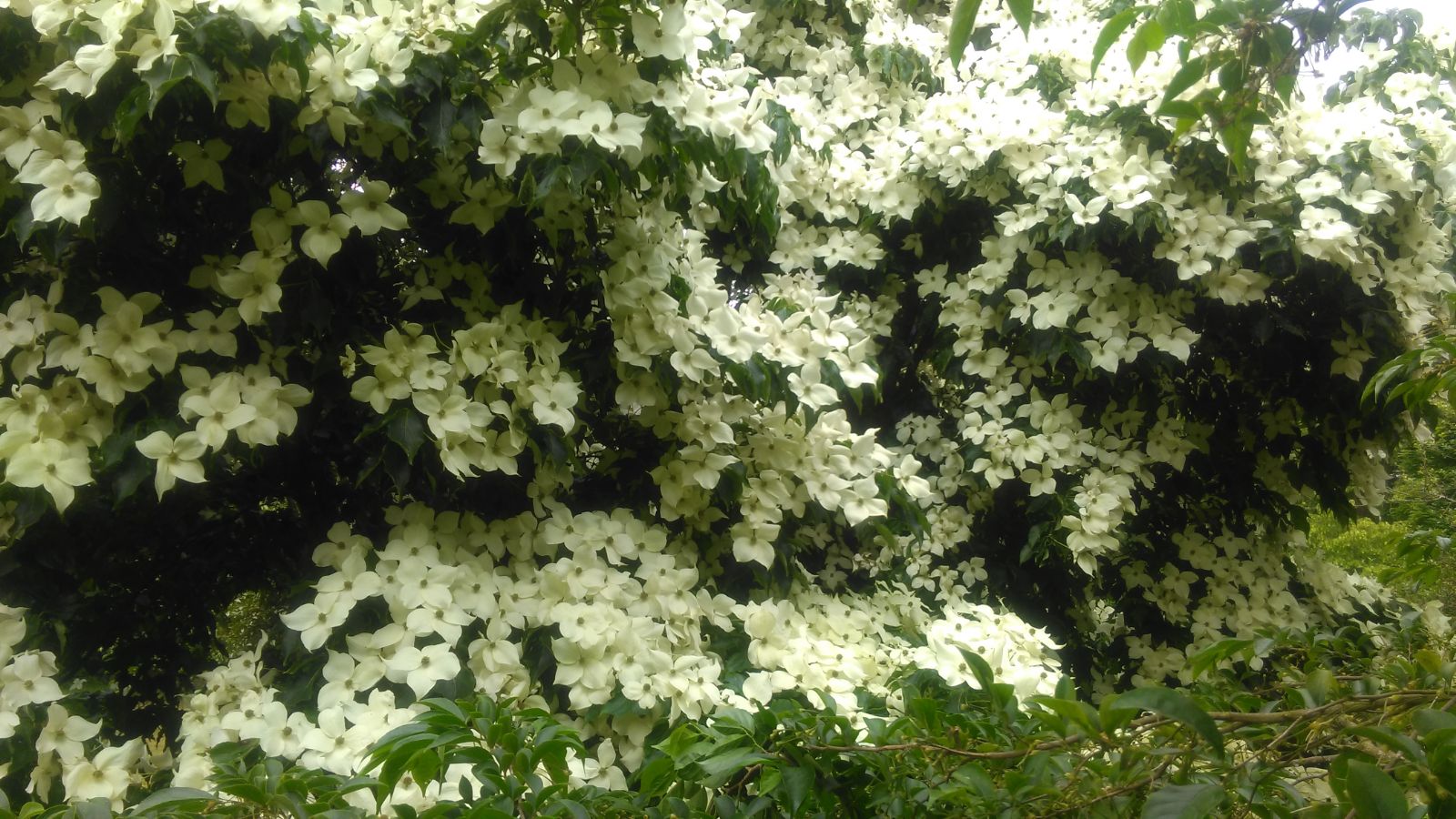
For gardeners in northwestern Europe, for whom the American big-bracted dogwoods have always hovered tantalisingly at the margins of feasibility, Cornus kousa – particularly in its modern incarnations – opens exciting possibilities. As a mid-sized ornamental tree with large white or pink petaloid bracts, the species is reminiscent of the North American Flowering Dogwood, C. florida, except that in C. kousa the involucral bracts are slender-pointed rather than obtuse and notched, and flowering occurs when the tree is already in full leaf in May and June. The white inflorescences are typically held erect in rows above the foliage, the bracts sometimes so densely arranged that the foliage is all but obscured, an unforgettable sight – ‘like a snowbank’ as one American catalogue aptly put it (Hicks Nurseries 1920). A very large number of cultivars have been selected, which we treat under entries headed Cornus kousa Cultivars A–D, E–I, J–L, M–R, S–Z. Its var. chinensis is discussed below.

In habit the tree is quite different from its American cousin, more spreading and rounded, and also more densely foliaged, particularly when grown as a specimen tree in the open. The species tends to branch low to the ground, and in cultivation trees are often seen grown on a short leg above which a complex of ascending branches diverges to give a vase-shaped crown. The lower branches typically develop a horizontal habit that contrasts with the upper crown: the bough architecture of old specimens can be remarkably characterful. Multistem specimens are also commonly seen – younger plants and less vigorous forms may make rounded shrubs.

In cultivation in temperate climates, Cornus kousa is a far more forgiving species than C. florida, with little of the fussiness that makes the latter so challenging to grow outside its natural range; it is also resistant to some of the fungal diseases that have ravaged the American dogwoods. The popular view of C. kousa as an Asian correlate to C. florida is somewhat misleading, however, since while both species are part of the ‘large-bracted dogwood’ clade that split off from the dwarf cornels around 42.4 Ma, they actually belong to separate lineages that diverged around 28.1 Ma and which are recognised as distinct subgenera on the basis of their contrasting fruit morphology and geographical distribution (Du et al. 2023). The New World subgenus Cynoxylon, to which Cornus florida belongs, is characterised by the simple drupes that appear to be the ancestral condition in Cornus (Eyde 1988). By contrast, Cornus kousa belongs in subgenus Syncarpea, a derived East Asian subclade with strawberry-like compound fruits – other species include C. capitata, C. hongkongensis, and C. multinervosa (the latter still rare in cultivation). Both species have evolved to shield their inflorescence buds from winter cold, but these protective structures are not homologous: in C. kousa a pair of valvate scale leaves encloses a mixed bud containing the entire inflorescence (including the involucre) and two pairs of leaves, whereas in C. florida the rudimentary inflorescence is protected by the involucral bracts, which clasp the inflorescence in two valvate pairs.

Infraspecific taxa

Cornus kousa is a mountain species native to central and southern Japan, Korea, Taiwan and Central China, the Chinese and Taiwanese populations being recognised as subsp. chinensis. The two subspecies are not markedly dissimilar, separated mainly by trichome type, leaf texture and the thickened peduncle base, but the distributions appear discrete and clearly delineated. Based on a small number of samples, Du et al. (2023) posit that the two populations may have diverged as long ago as 9 Ma, though other studies from a population-genetic perspective indicate a much more recent date: Nowicki et al. (2020) suggest that the Chinese, Korean and Japanese populations all descend independently from a (possibly extinct) ancestral population that was split when the range was broken up by a changing climate after the last glacial maximum. The purported discovery of a tiny disjunct eastern Himalayan population of C. kousa subsp. kousa in Sikkim, India near the border with Nepal (Chettri et al. 2012) is to be treated with suspicion (published images do not accord with the description of the trees).

While recent work supports the recognition of infraspecific taxa from a botanical perspective, in cultivation it has in the past not been possible to assign western-bred cultivars to one or other of the subspecies with any certainty (though many cultivars have been so referred on a speculative basis). However, recent analysis by Moreau et al. (2024) has demonstrated that it is possible to identify the subspecies to which a cultivar belongs by genetic means (or to recognise hybrids). This information will be of interest to many growers, and of course to breeders. However, since this degree of exactitude is unnecessary for horticultural purposes, we list all cultivars simply under the broader species (in alphabetical groups), though where a cultivar’s taxonomic affinity has been conclusively established, this is noted in the entry.

Early encounters by Western botanists

The history of Cornus kousa in cultivation is complex. Japan was closed to all foreigners until 1854, only the Dutch being permitted to maintain a closely guarded presence on Deshima island in the Bay of Nagasaki, Kyushu. Cornus kousa – both the plant and its local name kousa – became first known to Western botanists through the dried specimens assembled by Philip von Siebold and his assistant Heinrich Bürger (?1806–1858) who worked with him between 1825–1832. Bürger made a handwritten list of nearly 1800 Japanese names of plants, mostly associated with a Linnean counterpart (van Steenis-Kruseman 1962), as well as making his own herbarium, both of which ended up at the Rijksherbarium as part of von Siebold’s vast collection. The name kousa (‘from Bürger’s herbarium’) was cited by Miquel (1866), and was eventually published by Hance as the name of the species.

The difficulties encountered by von Siebold and his compatriots in collecting in rural Japan are well documented: strict chaperoning and restrictions on travel meant that specimens often had to be obtained by proxy (or stealth), and localities and other observations are often not recorded, a lack that in many cases lessens the collections’ scientific and botanical value. Enormous effort has been expended to recover or infer the missing documentation, Bürger’s collections (some of them listed under the name Jacques Pierot) having proven particularly valuable because, unlike von Siebold’s own, they frequently include local names and locations. Both Bürger and Siebold recorded the species’ vernacular name as Tsukubani, Siebold noting the habitat as the ‘high mountains’ between 600 and 1200 m asl (Siebold & Zuccarini 1835).

Thanks to the work of Yamaguchi et al. (2003), we know that some of Bürger’s Cornus kousa specimens (Leiden 0175472 and 0175469) are from Hakone, Honshu, probably wild-collected on his Court Journey to Edo in 1826 in the mountainous region through which the road travelled. Von Siebold reported that the species was grown as a garden plant in Osaka, but that these plants did not thrive when transplanted to the more southerly location of his ad hoc botanical garden at Deshima (Siebold & Zuccarini 1835); on the other hand, Bürger collected the species from Cape Nomo Saki, a few miles to the south of Nagasaki (Leiden 0175473) – probably a cultivated plant, to judge from its coastal location. (Interestingly, Chinese merchants were allowed to live in Nagasaki, their gardens apparently the source of some of the collections in the von Siebold herbarium – Daphne genkwa, for example – raising the slight possibility that some cultivated plants seen near Nagasaki may have been of Chinese origin.)

History in cultivation

Although noticed by Westerners in the 1820s, Cornus kousa was introduced to Western horticulture surprisingly late. Two varieties (‘Major’, and ‘Minor’ – the latter more upright, with smaller leaves) were imported to the United States by Parsons Nurseries, Flushing, New York from material sent from Japan by Thomas Hogg in 1875. These flowered for the first time in 1888 (The Garden 1888), and were introduced commercially the following year under the name Benthamia japonica (Parsons & Sons [1888], [1889]). The Veitch nurseries brought the species to Britain in 1892 (The Garden 1893), but Maurice de Vilmorin was apparently unfamiliar with the tree when he saw it at the Arnold Arboretum in 1893 (de Vilmorin 1894). By the turn of the century C. kousa was still little known either side of the Atlantic (Duncan 1901; Veitch 1903), ‘scarcely met with except in botanical collections’ (Goldring 1901). In New York, however, the specialist importers Suzuki & Iida were beginning to import seed (under PI 5008) and offering both typical and variegated young trees (Suzuki & Iida 1903), a trade that picked up in the following years. By the 1920s, young plants were being imported to Europe from Japan (The Garden 1923), enriching the genetic pool of cultivated material and laying the groundwork for future developments in breeding. Subsp. chinensis was not introduced until Wilson sent it back from western Hubei (to the Arnold Arboretum) in 1907, this material passed to Kew in 1910 ([Bean] 1920); in China, wine is made from the fruits (Xiang & Boufford 2005).

The provenance of Veitch’s material is not clear, though the species’ appearance in Britain shortly after Parsons had begun to market it in the United States suggests that the ultimate source was probably Hogg, possibly by way of Parsons – this network is well documented, for example in the case of Parsons’ clone C. florida ‘Flore Rubro’ (see also Del Tredici 2017). As a matter of record, J.G. Veitch had himself admired C. kousa in the wild on Mount Hakone during his eventful Japanese expedition in 1860, having escaped the wreck of the SS Malabar en route (Naudin 1861). There is no record of his having sent material back to Britain, however, and the species was completely overlooked by Robert Fortune the following year. These surprising omissions perhaps reflect the tight leash on which European tourists were kept, since the species is described as ‘common’ in Japan (Ohwi 1965), at least in the mountainous environments in which it occurs (though oddly Sargent (1894) reported the opposite impression, encountering it in only two locations).

Curiously, a variegated form of Cornus kousa had already been sent to the United States in 1861 by George Rogers Hall, part of a consignment – presumably rooted cuttings – of Japanese garden plants, many of them variegated forms, that Hall had assembled (Howe 1923) and which came into the hands of the Boston horticulturist Francis Parkman. Parkman grew the plant on and showed it (as Benthamia variegata) at the Massachusetts Horticultural Society in May 1865 (Story 1866), but it disappeared from the historical record thereafter – oddly, for so garden-worthy a subject (Hall’s specimen seems to lie behind the allusion by E. H. Wilson (1928) to the species’ being ‘sparingly in cultivation in the West since about 1860’).

In modern times, most introductions of Cornus kousa have been horticultural selections, interest in wild-collected typical material restricted mainly to subsp. chinensis (see that entry). However, Korean wild-collected material is found in a number of institutions, originating chiefly from the expeditions masterminded by Barry Yinger to northwest (1984) and southwest (1985) South Korea: KNW 243 and 278 (from Ganghwa-gun, Gyeonggi-do), KNW 1003 (Namyangju) and KSW 3723 from Buan-gun, Jeolla Pukto. Yinger’s own collection 2663 from Kyonggi-Do is grown at the Morton Arboretum. Howick Arboretum in Britain grows KFB 22 from Namhaedo. Japanese wild collections, all from Honshu, include HGA 89336 (from Gunma prefecture at 650 m) at Howick, Yuji Kurashige’s 1990 collection YK 384 from Shizuoka prefecture at 1170 m (Howick and the Sir Harold Hillier Gardens); RBG Edinburgh hold BBJMT 120, collected in 2005 at Niigata at 180 m; the Morton Arboretum has plants grown from seed collected at Chubu, Yamanashi prefecture. Crûg Farm offers collections from Japan (BSWJ 14620, from Fukuoka, Kyushu at 1000 m asl) and the colder part of South Korea (BSWJ 12610, from Sobaeksan) (Crûg Farm 2026).

Cultivation and varieties

Robust, voluptuous, and easy-going, Cornus kousa is an exceptionally attractive tree, though for grace and filigree lightness it cannot compete with C. florida, which continues to enjoy a partisan following in North America. Even there, however, C. kousa has been found to have certain advantages over its American cousin, particularly in the colder northern states, where its greater bud hardiness confers a distinct advantage. The later flowering is also a decided advantage in less predictable climates (Wilson 1928). The best qualities of the two species have been brought together in the interspecific hybrids, named C. × rutgersensis, which marry the large, obcordate bracts of C. florida with the prolific flowering and resistance to disease and abiotic stress of C. kousa.

Within Cornus kousa itself, many selections are attributable to the efforts of two influential – even visionary – American breeders, both named Polly, and both the founders of arboreta with specialist kousa collections. Polly Hill (1907–2007) founded, in 1958, the Polly Hill Arboretum on Martha’s Vineyard, Massachusetts, where the celebrated Dogwood Allée consists of more than two dozen seed-raised C. kousa, of which a number (notably ‘Blue Shadow’ and ‘Snowbird’) have been introduced as cultivars. Mary ‘Polly’ Wakefield (1914–2004) took classes in plant propagation at the Arnold Arboreum for many years (with the dogwood specialist Donald Wyman, among others), raising many new C. kousa from seed she collected at the Arnold Arboretum: more than 300 of her original selections – including commercial introductions such as ‘Fanfare’ and ‘Greensleeves’ , ‘Moonbeam’ and ‘Triple Crown’, among others – form the basis of the Wakefield Arboretum, Massachusetts. The consistency of Wakefield’s approach is intriguing: beginning in 1956, for more than three decades she collected seed from the same group of three neighbouring trees growing near the top of the Arnold Arboretum’s Bussey Hill, one of which was a round-headed specimen much larger than others nearby. She later noted that ‘all the kousa dogwoods that I planted over the next thirty-four years – and I now have more than six hundred of them spread over several acres – are descended from these particular Arboretum specimens’ (Wakefield 1990). Given the restricted seed source, it is striking that a recent study found considerable genetic disparity within some of Wakefield’s better-known selections, variously referred to each of the two subspecies, as well as to a hybrid origin (Moreau et al. 2024) – the species is of course an obligate outcrosser, and Wakefield’s trees were subject to open pollination in a well-stocked arboretum.

The suitability of Cornus kousa for colder conditions accounts for the vast number of cultivars that have been developed in Europe over recent decades. Wil and Anneliese van Ooi at Kwekerij van Ooi, Reeuwijk, Netherlands have been responsible for many popular selections, as has Piet Vergeldt in Lottum and Pépinière Le Try in Belgium. In Britain, Karan Junker at Junker’s Nursery has been the species’ most influential advocate, offering a wide assortment, though the trees’ potential is arguably still not as widely appreciated by British gardeners as it deserves.

In recent decades, breeding efforts have focused on the pink-bracted forms, observed in wild populations in Korea (Choi et al. 2006), but unknown in cultivation until two pink cultivars were introduced within a few years of one another in the 1980s and 1990s (the bracts on some of Wilson’s subsp. chinensis collections fade through pink as they age, though this type of incidental pigmentation is not what is generally understood as the pink-bracted condition). The first of these, ‘Satomi’, was bred in Japan by Akiri Shibamichi, introduced commercially by Brookside Gardens, Maryland in 1980 or 1981, who assigned the cultivar name, though the clone appears to have been launched under a number of different names (Moreau et al. 2024). The second, selected by Nabuo Yamashita, Hisao Ishikawa and Toshihiro Hagiwara, originated from seed wild-collected in 1970 on the southeastern slope of Mount Fuji, Honshu at 800–1000 m asl; this clone was introduced under the cultivar name ‘Benifuji’, the United States patent filed in 1992 (US PP08676).

Gayraud (2013) reports his large collection of Cornus kousa in eastern France to be unaffected by temperatures that drop to –20°C, but this figure (based on observation) should not be taken as a lower limit. Indeed, there is scope within the species to cope with far greater cold, some selections tolerating –35°C (‘Luce’, selected by Paul Cappiello but not yet introduced) (Cappiello & Shadow 2005). Most forms of the species will thrive given a position in full sun, ideally on acidic soils with good drainage (Lancaster 2008), though variegated cultivars may benefit from a less exposed situation. Autumn foliage colour on the variegated selections can often be particularly spectacular, since the areas of reduced chlorophyll allow the developing red pigmentation to show earlier and more clearly (Junker Nursery 2023).

Finally, a note on the identification and description of cultivars. As discussed at greater length in the genus entry (see under ‘Bracts’), the bracts of Cornus kousa alter in shape, form and frequently colour during the growing season, meaning that photographs and descriptions must be approached with a broad mind and some circumspection: early-, mid- and late-season descriptions of the bracts of the same plant might easily be taken to represent distinct cultivars (see for example the entry for ‘Benifuji’). Likewise, accurate ascriptions of bract colour – a key element of many plant patents and some herbarium protocols – are all very well; but as Hamm et al. (2026) note, bract colouration is dependent on environmental conditions during bract development in the spring: cool, damp conditions result in more saturated colour.


subsp. chinensis (Osborn) Q.Y.Xiang

Common Names
Chinese Kousa Dogwood

Synonyms
Cornus kousa var. chinensis Osborn
Benthamidia japonica var. chinensis (Osborn) H.Hara
Benthamidia sinensis (Nakai) T.Yamaz.
Cynoxylon pseudokousa Pojark.
Dendrobenthamia japonica var. chinensis (Osborn) W.P.Fang

Subsp. chinensis differs from the typical subspecies in its branches with dense, rounded lenticels; thicker textured leaves with pale green lower surfaces and curled, white trichomes; and its often conspicuously enlarged peduncle bases (Xiang & Boufford 2005).

Distribution  China Anhui, Fujian, Gansu, Guizhou, Henan, Hubei, Hunan, Jiangsu, Jiangxi, Nei Mongol, Shaanxi, Shanxi, Sichuan,Yunnan, Zhejiang Taiwan

RHS Hardiness Rating: H5

USDA Hardiness Zone: 5-8

The distinctions between subsp. chinensis and typical Japanese trees are subtle. Taxonomic opinion having been formed on the basis of relatively small samples, it is not impossible that the distinguishing characteristics cited in the literature may have been extrapolated from natural variation that occurs across the whole species. On the other hand, recent work has uncovered genetic differences between discrete populations of C. kousa that tend to support the recognition of infraspecific taxa, though the Korean population (not separable on the basis of morphology) also appears to be genetically distinct, which muddies the water. Opinion on this question may change as more is learned about the species as a whole, the true distribution of which is still not fully understood.

In terms of cultivated material, plants with known Chinese provenance tend to have larger flowers than those from Japan, and may lack the pubescence in the leaf axils altogether; Roy Lancaster has observed wild trees in the Wudang Shan with glabrous undersides (Lancaster 2008). Wilson collected the tree twice in the spring of 1900 in western Hubei – presumably branches without fruits, since no introduction resulted (Wilson for Veitch 811 and 681). In 1907, returning to the area on behalf of the Arnold Arboretum, Wilson was able to collect seed (Wilson 223 and 223a), which was introduced to the Arnold Arboretum and thence to Kew in 1910 (Rehder in Sargent 1916). Trees grown from this seed, collected near Yichang at 1200–2100 m asl, still grow at the Arboretum (13123*A ) and elsewhere, including at Glasnevin, where a specimen from W 223 ‘forms a beautiful picture every June when covered in masses of white bracteate flowers, which later age to blush-pink’ (O’Brien 2011). Another old tree at the Arnold Arboretum (13202*A) originates from a collection by Joseph Hers, received in 1921 (Moreau et al. 2024).

Recent collections have expanded the range of provenances represented in Western cultivation. Many botanical collections grow Sichuanese material from SICH 1750 and 1613. Several NACPEC editions have collected the species, from Shaanxi (NACPEC 11010, 11060, 08020), and the Quinling Mountains of Shaanxi and Gansu (QLG 026 and 246 respectively). The 1980 Sino-American Botanical Expedition collected it in Hubei (SABE 1316), and material brought back from Hunan by Allen Coombes in 2004 grows at the Sir Harold Hillier Gardens (CMBS 869) (Quarryhill Botanical Garden 2026). In Taiwan the subspecies is rare (Li & Yang 1993), and Taiwanese material is barely represented in foreign collections, if at all (the island is an obvious outlier in climatic terms).

In Britain, trees flower in June, the foliage colouring early in autumn, with increasingly brilliant colour for up to a month. Bean (1976) stated that no garden – even smaller ones – should be without the tree, it being ‘perfectly hardy, growing well in a rich, well-drained, loamy soil and blossoming at a season when most hardy trees and shrubs are out of flower’. In view of the improved selections now available, Bean’s sentiment is more valid than ever.

The following cultivars were confirmed by Moreau et al. (2024) as belonging to subsp. chinensis: ‘All Summer’, ‘Big Apple’, ‘Blue Shadow’, ‘Bodnant’, ‘China Girl’, ‘Emerald Star’, ‘Flowertime’, ‘Galzam’, ‘Little Poncho’, ‘Madison’, ‘Madi-II’, ‘Melissa’s Mountain Snowfall’, ‘Ohkan’, ‘Pam’s Mountain Bouquet’, ‘Samzam’, ‘Snowflake’, ‘Snowy Peak’, ‘Triple Crown’, ‘Tri-Splendor’, ‘Trinity Star’, ‘Wolf Eyes’.