
Cornus florida L.

TSO logo

Sponsor

Kindly sponsored by
Hugh and Judy Johnson

Credits

Martin Deasy, Dan Crowley, Jack Aldridge & Răzvan Chişu (2026)

Recommended citation
Deasy, M., Crowley, D., Aldridge, J. & Chişu, R. (2026), 'Cornus florida' from the website Trees and Shrubs Online (treesandshrubsonline.org/articles/cornus/cornus-florida/). Accessed 2026-06-16.

Family

  • Cornaceae

Genus

Common Names

  • American Boxwood
  • Eastern Flowering Dogwood
  • Flowering Dogwood
  • Amerika-yama-bosi
  • Hana-mizuki
  • Bois de bouton
  • Bois de flèche

Synonyms

  • Cynoxylon floridum (L.) Britton & Shafer
  • Benthamidia florida (L.) Spach
  • Benthamia florida (L.) Nakai

Glossary

acuminate
Narrowing gradually to a point.
anthesis
Flowering period; when flower fully open and pollen beginning to be shed.
apex
(pl. apices) Tip. apical At the apex.
bloom
Bluish or greyish waxy substance on leaves or fruits.
bract
Reduced leaf often subtending flower or inflorescence.
calyx
(pl. calyces) Outer whorl of the perianth. Composed of several sepals.
Extinct
IUCN Red List conservation category: ‘there is no reasonable doubt that the last individual [of taxon] has died’.
included
(botanical) Contained within another part or organ.
involucre
A ring of bracts surrounding an inflorescence.
style
Generally an elongated structure arising from the ovary bearing the stigma at its tip.
variety
(var.) Taxonomic rank (varietas) grouping variants of a species with relatively minor differentiation in a few characters but occurring as recognisable populations. Often loosely used for rare minor variants more usefully ranked as forms.

References

Credits

Martin Deasy, Dan Crowley, Jack Aldridge & Răzvan Chişu (2026)

Recommended citation
Deasy, M., Crowley, D., Aldridge, J. & Chişu, R. (2026), 'Cornus florida' from the website Trees and Shrubs Online (treesandshrubsonline.org/articles/cornus/cornus-florida/). Accessed 2026-06-16.

Short-trunked or multistemmed bushy deciduous tree to 20 m, usually less in cultivation. Bark corky, forming small rectangular or many-sided plate-like scales. Branchlets green, red, or dark red, with appressed pubescence, lenticels protruding, one-year-old branchlets nearly encircled by narrow leaf-scars in winter. Leaves opposite, 5–12 × 2–7 cm, chartaceous, elliptic, ovate or obovate, dark-green above, undersides whitish and pubescent with appressed trichomes and with tufts of erect trichomes in secondary vein axils, five to seven secondary veins on each side of the midvein, margins entire, apex shortly acuminate; petiole 0.3–2 cm long. Inflorescence capitulate, flat-topped, 1–2 cm diameter, 15–30-flowered, subtended by 2 pairs of involucral scales (the lower pair often breaking off during winter), peduncle 1–2 cm long, bracts four, large, petal-like, enclosing inflorescence over winter, 2–6 × 1–4.5 cm, apex rounded or emarginate; flowers with petals 0.3–0.5 cm long. Fruit a drupe, usually red, drying black, with remnant of persistent calyx and style, borne in a loosely radiating 2–10-fruited cluster, 1.3–1.8 × 0.6–0.9 cm, stone ellipsoid, 1–1.2 × 0.4–0.7 cm, smooth. Flowering March to June, fruiting August to October (North America), fruits often remaining on the tree until late winter. (Murrell 2015; Sargent 1965; Klymenko et al. 2023).

Distribution  Canada Ontario MexicoUnited States Alabama, Arkansas, Connecticut, Delaware, District of Colimbia, Florida, Georgia, Illinois, Indiana, Kansas, Kentucky, Louisiana, Maine, Maryland, Massachusetts, Michigan, Mississippi, Missouri, New Hampshire, New Jersey, New York, North Carolina, Ohio, Oklahoma, Pennsylvania, Rhode Island, South Carolina, Tennessee, Texas, Vermont, Virginia, West Virginia

Habitat Deciduous, mixed, and pine forests between 0 and 2000 m asl.

USDA Hardiness Zone 5-9

RHS Hardiness Rating H5

Awards Award of Merit

Conservation status Not evaluated (NE)

Cornus florida is one of the jewels of the forests of eastern North America, its inflorescences enlivening the spring subcanopy with shades of white and pink. This ‘aristocrat of native flowering trees’ (Dirr 2009) has been cultivated by gardeners since European colonists discovered it growing in Virginia in the seventeenth century. In modern times an impressive array of cultivars has been developed, exploiting the vivid autumnal foliage in shades of orange through crimson, as well as its attractive inflorescences in spring. Outside its native range it can be a difficult tree to grow well, and even in its natural environment it is increasingly subject to serious fungal diseases. Regrettably, most horticulturists will find a more rewarding ‘flowering dogwood’ from among the numerous selections available in Cornus kousa, C. × elwinortonii, C. × rutgersensis and C. × transamericana. Within Cornus florida itself, a large number of cultivars have been selected, which we treat under entries headed Cornus florida Cultivars A–G, H–M, N–R, S–Z.

Cornus florida is prized above all for its floral display, but what are often taken for individual flowers are in fact pseudanthia: the large ‘petals’ are two pairs of obcordate (inversely heart-shaped) bracts that subtend a tight button-like cluster of insignificant (four-petaled, greenish-yellow) flowers in the centre of the involucre. Both flower buds and bracts are initiated in autumn, the bracts enclosing the buds over the winter. In spring, as the flower develops, the bracts expand in size but continue to adhere at their apices, forming a lantern-like structure that finally separates into its four components just before anthesis, leaving a small deformation at the apex of each bract (in the geographical subsp. urbiniana this separation does not normally occur, and the bracts remain attached until they fall).

Cornus florida is one of ten or so species in the large-bracted dogwood clade, which splits in turn into East Asian and American subclades (subgenera Syncarpea and Cynoxylon, respectively), each containing a mixture of evergreen and deciduous species. C. florida is closely related to the Central American C. disciflora, rarely cultivated in our area of study, and the better known Pacific Dogwood C. nuttallii. The latter is superficially similar but is smoother-barked, with more numerous bracts (>4) that lack apical notches, overwintering buds that are not enclosed by the developing involucre, and spherical heads of multiple small fruits (in C. florida the infructescences are looser and fewer-fruited). The deciduous species in the Asian subclade – C. kousa and the rarely seen C. multinervosa – are easily told by their acuminate bracts.

The range of Cornus florida extends from southwest Maine and the border of southern Ontario southwards to northern Florida and northern Mexico, and westwards to the edge of the great plains in Eastern Texas and southeastern Kansas; annual precipitation is in the range 75–200 cm, and the average annual temperature is 7–21°C. The species grows on soils that vary from deep and moist to light and well-drained (pH 6–7), in a very wide variety of different forest types, particularly those characterised by pines (e.g. Pinus palustris and P. banksiana among others) and oaks (Quercus coccinea, Q. alba, Q. velutina etc.); other common associates are Sassafras albidum, Diospyros virginiana and Liquidambar styraciflua. The leaves are calcium-rich (2–3.5% of dry weight in comparison with 0.4–1.1% in Quercus velutina, Q. alba, Liquidambar styraciflua and Pinus taeda): the high rate of litter decomposition – three times the speed of hickory, and ten times that of oak and sycamore (Platanus occidentalis) – makes it a noted soil improver, and the presence of the species has bee​​​n demonstrated experimentally to contribute to soil fertility in seral successions on former cultivated land (Vimmerstedt 1965; Coile 1940).

Pure stands of Cornus florida are rare (Vimmerstedt 1965; McLemore 1990), but on his travels through the southern states in 1774–75, the naturalist William Bartram described passing through an extensive dense grove of small spreading trees approx 3.5 m tall near Mobile, Alabama – ‘one vast, shady, cool grove, so dense and humid as to exclude the sun-beams and prevent the intrusion of almost every other vegetable’ – this glade ‘continued nine or ten miles unalterable, except here and there a towering Magnolia grandiflora’ (Bartram 1791). The trees grew on a level site, in ‘a shallow, loose, black mould, on a stratum of stiff, yellowish clay’. The famous grove – sadly no longer extant – is a curious anomaly, and there are several strange things about it, not least the apparently uniform age of the trees. Given current understandings of the species’ natural history, the existence of such an extensive stand is hard to explain, though one intriguing hypothesis posits that the site may have been a massive roost for migrating Passenger Pigeons (Ectopistes migratorius) several decades earlier, the attendant devastation (for which the now extinct birds were notorious) perhaps combining with other environmental factors to create the unusual conditions in which a Dogwood monoculture might arise (Gelbart 2018).

History in cultivation

Quinn (1955) notes that the Flowering Dogwood had been noticed by Elizabethan colonists during the Roanoke escapades of 1584–90, Thomas Hariot having remarked on what seems likely to have been the tree in 1585–86. It took a further century for the species to be subjected to close inspection, when the Oxford-educated Virginian settler John Banister (1649?–1692) encountered it in the Virginia woods in the late 1600s. An illustration of the leaves and flowers, probably based on a drawing by Banister, was published in Leonard Plukenet’s Phytographia (1691, tab. 26), though the stylised engraving leaves something to be desired – Plukenet habitually treated his subjects like dried specimens rather than living plants, spatchcocked and flattened, with neither perspective nor depth. Plukenet’s plant is unmistakeably a dogwood, but a poor representation of the species since the oddly-shaped bracts are neither obcordate nor notched. Interestingly, the caption reveals that Banister’s reference plant had red bracts – ‘Cornus mas virginiana, multiple small white flowers bursting out of a four-petaled red involucre’.

European naturalists had to wait several more decades before Mark Catesby was to furnish a life-like illustration of the species (Cornus mas virginiana, Cornier mâle de la Virginie) in the first volume of his Natural History of Carolina (1729). Catesby’s plate once again depicts a red-bracted (‘rose-coloured’) form, which he had found in the wild in Virginia and brought into cultivation there. When Catesby returned to England in 1719, he brought with him the typical white-bracted form, which was introduced by Thomas Fairchild’s nursery in Hoxton (Catesby 1729). The second volume of Philip Miller’s Gardeners’ Dictionary (1739) listed two forms of the tree – Plukenet’s red-bracted variety, and another ‘with oblong leaves and larger red fruit’. From Miller’s cultivation notes (‘very hardy plants’, growing ‘ten or twelve Feet high, and spread[ing] pretty much on every side into branches’) it has been plausibly inferred (following Sims 1801) that the plants were then growing at the Chelsea Physic Garden, which Miller superintended. If this is the case then the listing of Plukenet’s red-bracted form represents a puzzle, since no contemporary mention of plants with coloured bracts survives (we can be reasonably certain that any plants raised from seed thus labelled had not yet flowered). The species had arrived in the Netherlands by 1737, when Linnaeus’ Hortus cliffortianus mentions the ‘Cornus involucro maximo’ from Virginia growing at De Hartekamp, George Clifford’s garden in Heemstede (Eyde 1987).

Though seed-grown trees in their natural environment commonly flower at around six years of age (McLemore 1990), these preliminary introductions – at least the British ones – were evidently shy to flower. During these early decades a tree in bloom was an object of curiosity, and an occasion for wonder, as is clear from marginalia in Peter Collinson’s copy of Miller’s Dictionary: ‘17th May 1761: I was invited by Mr. Sharp, at South Lodge on Enfield Chace, to dine, and see the Viriginia dogwood (Cornus florida). The calyx of the flowers is as large as those figured by Catesby, and (what is remarkable) this is the only tree that bears these flowers amongst many hundreds that I have seen: it began to bear them in May 1759(Lambert 1811). In 1801, Willam Curtis’s Botanical Magazine featured the species, with an illustration of a mature tree growing at Sion Hill, Isleworth (not to be confused with Syon House), which had flowered freely for many years but never fruited (Sims 1801, t.526). Having reached 5 m in height on a 1.8 m clear stem, with a spread of 5.5 m and girth of 60 cm at 1 m, this specimen was supposed to date back to these early introductions.

By the middle of the twentieth century, in the eastern half of the United States, at least, the Flowering Dogwood had become the suburban and domestic flowering tree par excellence, a signifier of homeownerly pride and gentility, as reflected in the remark by one influential horticulturist that ‘a house isn’t your home until you plant at least one dogwood!’ (Dick Bir, quoted in Ranney 2025). The central position occupied by the species in American cultivation is the culmination of a long process that began with Banister’s explorations of the Virginia backwoods – indeed the Flowering Dogwood can be seen as an emblem of the productive tension between forest and garden that has shaped American horticulture for more than two centuries. Cornus florida was included in the earliest American nurserymen’s ‘broadside’ catalogues, for example those of William Prince of Flushing, New York (Prince 1771; as ‘White Dogwood’), and John Bartram’s nursery in Philadelphia (Bartram 1783) – it was one of five native Cornus species offered by Bartram (his ‘Cornus sanguinea’ is obviously C. sericea, not the European species). In landscape terms the Dogwood was then treated as a reasonably large tree to be deployed in the middle distance in the grounds of well situated country piles, rather than as an ornamental specimen on a more domestic scale; it is telling that nurserymen tended to list it under the heading ‘Forest Trees’, a rubric and concept that distinguishes American nursery catalogues from their European equivalents, and which underlines the distinct character of American horticulture during this period (cf. Prince & Mills 1823; Kenrick 1832). Together with other trees of this type – Redbud (Cercis canadensis), Hornbeam (Cornus caroliniana), diverse elms and maples – the Dogwood was an important feature of the ‘grove’ plantings that were an essential component of the gardens of contemporary rural mansions, and which functioned as a pivot between the domestic grounds and the unenclosed landscape beyond. Thomas Jefferson used the species in this way at his estate, Monticello, in the early 1770s, and George Washington would do do the same at Mount Vernon fifteen years later (Jefferson 1944).

Although its association with the privileged ‘rural residence’ (Kern 1855) would persist at least until the Civil War, over the course of the nineteenth and early twentieth centuries, the Flowering Dogwood was gradually brought closer to the house – partly as a function of the massive post-bellum growth in modest cottage lots (somewhat akin to Loudon’s suburban villas in Britain), and partly in response to the availability of newly ornamental forms of the species, above all the red-bracted form brought to market by Thomas Meehan in Pennsylvania in 1880. The influential guide to Beautifying Suburban Home Grounds by Frank Jessup Scott (1870) foresaw a starring role for the species in one such ‘fifty-foot lot’, and his cameo gives a glimpse of things to come: ‘let us picture Mr. and Mrs. A, master and mistress of the house, unskillful but enthusiastic, engaged in their first plantings’, among which is included ‘a white dogwood … kept clipped down at the top so that it shall not exceed eight feet in height or breadth of top’ (Scott 1870). The effect of this attempt to reduce the tree to a large lollipop is all too easily imagined (Scott was a real-estate agent, not a horticulturist), but times and tastes were changing, and the advent of a more informal style of gardening influenced by the naturalistic English approach of Gertude Jekyll and William Robinson (Miller 1911) enabled the species to demonstrate its true strengths and potential as a garden tree, assisted by the availability of new, smaller cultivars and ornamental selections. Its graceful, relaxed character, informal, rather pendulous branch habit, and understated presence made it ideally suited to this newly influential aesthetic that sensitively married domestic architecture and planting design. Thus the species’ gradual ‘approach to the house’ reached its culmination, and the the Flowering Dogwood assumed its position as the ideal of suburban residential planting: ‘how often you have envied the foresighted neighbour whose home is panoplied in a gorgeous shower of springtime blossoms!’ exclaimed an advertisement for pink and white Dogwoods in the influential ‘middle-class’ magazine House and Garden (1921). The stylised vegetation depicted in Disney’s classic animated films – those repositories of the American subconscious – attest to the Flowering Dogwood’s penetration into the cultural psyche as an idealised image that projected far beyond the species’ native eastern range: in the forest and domestic landscapes of Snow White and the Seven Dwarfs (1937), for example, the delicately branched flowering trees with sprays of four-bracted obovate pinkish-white involucres are unmistakeable, reflecting a suburbanised ideal of residential planting design that could have come straight from the pages of House and Garden or the leafy residential districts of Philadelphia or Memphis.

Cultivation

Though it can be a beguilingly beautiful tree, Cornus florida has a well-deserved reputation amongst European growers for being difficult to please, above all in Britain. Bean (1976) noted that the tree was ‘rarely seen in good health’ and in some British gardens flowered rarely, if at all – and he was writing before the advent of Dogwood Anthracnose and powdery mildew, diseases that threaten the species’ horticultural viability even in its native climate (see below). E. H. Wilson (1928) described the species as ‘the envy and despair of English gardeners’ – and indeed, it would probably save a great deal of unnecessary trouble if it were simply recognised that the species is at best only marginally viable in most of the British Isles. Indeed, one contemporary British grower frankly discourages all but the most determined British growers from planting C. florida, in favour of almost any other of the large-bracted Cornus, likely to be more rewarding subjects (Junker Nursery 2022), as does the German grower Wolfgang Eberts (pers. comms. to John Grimshaw).

If the attempt is to be made then the trees’ rather exigent requirements must be met, an exercise that requires both ingenuity and a fortunate situation. Cold-hardiness is not a concern, since the species comes from a continental climate, and its natural range encompasses conditions at least as severe as Western European winters. All forms of the tree are quite able to bear temperatures well below freezing (Gayraud (2013) reports it as undamaged at –29°C in France). The major problem – at least for British growers – is rather that a temperate maritime climate, even in the milder parts of the British Isles, does not allow sufficient opportunity for the wood-ripening that is essential to ensure good flowering and longevity: plants are simply not exposed to enough sun. At first glance this seems counterintuitive, since C. florida as a wild plant is most frequently encountered as a understorey tree growing in the shade of a deciduous canopy. Nevertheless, wild trees exhibiting this high tolerance of shade are effectively being suppressed by competition for light: the species’ tendency to grow best at the edges of clearings, and its capacity for rapid opportunistic growth into newly opened canopy gaps (McLemore 1990; Wallace & Dunn 1980; Tirmenstein 1991) both indicate that it thrives best in sun. Outside its zonal climate – as it is in northern Europe – Cornus florida cannot be treated as a shade-tolerant tree, and needs to be positioned where it can benefit from full sun and summer heat. George Jessel, whose garden was at Goudhurst, Kent, UK, found that flowering could be improved by pruning against trees’ natural tendency towards bushiness, allowing sun into the crown by the removal of side shoots and training on a single trunk (Clarke 1988). It is noteworthy that it performs much better in continental Europe, even so close to Britain as northern Belgium, where summers are a few degrees warmer – as witnessed by spectacularly flowering specimens at Arboretum Wespelaar.

Equal care is needed with respect to soil conditions, since edaphic factors are the main influence on the species’ local distribution in the wild. Being extremely shallow rooting, the trees are particularly sensitive both to moisture deficits in the upper soil profile and to waterlogging. They are practically never found growing directly in poorly-drained clay (though as William Bartram noted they can grow well in shallow organic soils perched over underlying clay), and in forest environments their frequency has been observed to increase as drainage improves and soil texture lightens (McLemore 1990). At the same time, they require evenly available moisture – in the southerly part of their range they are known as one of the first species to wilt in dry conditions (McLemore 1990), a tendency exacerbated in the case of specimen trees grown outside of sheltered woodland settings. Certain cultivars are said to be less drought-susceptible than others, though such claims should be treated with caution – drought-resistant C. florida is considered a non-existent category by Cappiello and Shadow (2005).

When the two North American species are grown in close proximity in northern Europe, Cornus florida is observed to flower approximately two weeks later than its western counterpart C. nuttallii. In wild plants, however, the onset of flowering varies widely throughout the species’ extensive range, which stretches north to south more than fifteen hundred kilometres. Anthesis – which occurs simultaneously with leaf development – occurs in February in Louisiana and Florida, in April or May in the ‘middle states’, but not until late May or even June in the north of the range, in response to accumulated air temperature values above 2.2°C over a six-week period (Reader 1975). Flowering was taken by the Native Americans as indicating ‘when Indian corn is to be planted’ (Rafinesque 1828).

Taking their cue from indigenous Americans, early European settlers employed a decoction of the bark as a remedy against the malaria (‘intermittent fever’) that plagued the moist woods; the preparation was held by some authorities to be as effective as Peruvian bark, or Cinchona (Schoepf 1787). Such ethnobotanical knowledge took on renewed importance during the Civil War of the 1860s, when blockade and shortage forced hard-pressed Confederate field-surgeons to improvise, and Cornus florida was once more pressed into service as an antimalarial (the species features prominently in Francis Porcher’s Resources of the Southern Fields and Forests (1863), a volume that gives a fascinating insight into the interplay between practical botany and official ingenuity in a war economy). Eighty years later, the United States again found supplies of quinine interrupted, this time by the Japanese invasion of Java, the German army having seized stockpiles in the Netherlands (Graziose 2012). Once again, the indigenous North American flora was systematically screened for antimalarial activity, C. florida being found to have some antiplasmodial activity against avian malaria induced in ducklings (Spencer et al. 1947), though this research did not result in any practical application. Later research suggested that C. florida’s medicinal value may lie more in its febrifugal action than its antiplasmodial effect: Graziose et al. (2012) found that isolates from the bark (ursolic acid and derivatives of betulinic acid) showed only a limited direct effect on human Plasmodium falciparum, but – unexpectedly – a potent effect against the Leishmania parasite, potentially opening a promising line of treatment for the tropical disease leishmaniasis.

In the southern United States, Cornus florida – together with Persimmon (Diospyros virginiana) – was important in textile manufacturing as a source of shuttles for mechanical looms, hard-working, shortlived components that needed replacing every two years on average (Draper Corporation 1923). Dogwood shuttles were prized since as well as being shock-resistant and exceptionally hard, the wood acquired increasing smoothness with use, a particular advantage in the weaving trade (USDA Forest Service 1973). Peattie (1950) reports that – curiously – the timber was not widely adopted industrially until James Leonard Plimpton’s roller-skating craze of the late 1860s absorbed supplies of the previously favoured ‘Turkish boxwood’ timber (Buxus sempervirens). Industrial uses for Dogwood doubtless had an impact on natural populations, though noting its medicinal value Groover (2021) has suggested that the severe depletion of the tree in the southern states may also be partly attributable to the Civil War. The depletion of tree cover in Confederate states was considerable, a consequence of the forest-based tactics adopted by General Lee, which resulted in large-scale devastation to wooded landscapes, particularly at the lower elevations in which the species thrives, and of felling for firewood (Nelson 2012). One wonders whether either of these accounts for the disappearance of Bartram’s famous grove.

Infraspecific taxa and cultivars

In disjunct Mexican populations in the extreme south of the species’ range, the bracts do not separate at anthesis, but remain attached as a cage-like structure, to be shed later as a single unit. This population of Cornus florida is recognised as subsp. urbiniana. Du et al. (2023) have plausibly suggested that specific rank may be justified in view of the allopatric distribution and early divergence (estimated to have occurred 4.82 Ma), though the Flora of North America treatment (Murrell & Poindexter 2015) declines to do so on the basis that the characters in the two populations overlap.

Numerous other infraspecific taxa have been described, mostly at the rank of forma, though in botanical terms these tend now to be viewed as part of the natural variation existing within the broader species, and Flora of North America (for example) does not recognise these plants at taxonomic rank. Yellow-fruited trees are found occurring spontaneously in the wild, reported from several locations in North Carolina and Long Island, New York, and Tennessee (Sargent 1965; MacDonald 1968), the colour due to the lack of two anthocyanins (peonidin and petunidin). These have been described as forma xanthocarpa (Rehder) Rehder; there are a few clonal selections (see ‘Poinsett’).

Red- or pink-bracted forms of the species are infrequent in the wild state, varying in the form and intensity of the bract colour: a recent survey of US herbarium records retrieved just 13 instances of wild-collected red-bracted specimens out of nearly 12,000 C. florida records from a strikingly wide geographical range in Arkansas, Missouri, Pennsylvania and Virginia (Moreau et al. 2024). Such forms have been described as forma rubra (Weston) Schelle, and are treated in the present account as a cultivar group (Red-Bracted Group). As a horticultural novelty, red- and pink-bracted cultivars constitute the overwhelming majority of selected forms, the earliest red clones having been introduced during the late ninteenth century (see ‘Flore Rubro’), rather earlier than the first commercial white-bracted selections (e.g. ‘Hillenmeyer’ (1959) ‘Cherokee Princess’ (1959) and ‘Spring Time (1957). Given the genetic profile of the modern cultivated species, spontaneous red-flowered seedlings are quite likely to be encountered by gardeners – these may be assigned to the Red-Bracted Group, which as a matter of course also includes all named red- or pink-bracted cultivars, though these are so numerous that it is more convenient here to list them alphabetically with the other cultivars. It is worth noting that the primary aim of the celebrated Rutgers dogwood breeding programme since 2006 has been to produce true red-bracted (rather than merely pinkish) C. kousa hybrids that could bear comparison with the intense red-pigmented forms found in C. florida. This has proved surprisingly difficult, but the appearance in 2015 of C. kousa ‘Rutpink’ Scarlet Fire® suggests that the charms of red-bracted C. florida might at last be within reach of a broader range of growers (Molnar 2022). Hamm et al. (2026) note that the intensity of pigmentation in red-bracted cultivars may vary according to the weather during bract development in spring: cool, damp conditions result in more saturated colour (Hamm et al. 2026). This ought to be borne in mind when reading descriptions, or when comparing living plants with photographs or other images.

Other selected characters are listed below (more detail is given in the individual cultivar entries):

White bracts: ‘Applachian Joy’, ‘Moonglow’, ‘Rebecca’s Appalachian Angel’, ‘Spring Grove’, ‘Spring Time’, ‘Weaver’s White’.

Red bracts: ‘Andrea Hart’, ‘Comco No. 1’, ‘Erica’s Appalachian Sunrise’, ‘Fircomz’, ‘Flore Rubro’, ‘Cherokee Chief’, ‘Junior Miss Variegated’, ‘Pink Flame’, ‘Prairie Pink’, ‘Prosser’, ‘Pumpkin Patch’, ‘Purple Glory’, ‘Red Giant’, ‘Rutnam’, ‘Rutnut’, ‘Spring Song’, ‘Stokes’ Pink’, ‘Sunset’, ‘Sweetwater Red’, ‘Welch’s Junior Miss’.

Supernumerary bracts: ‘Applachian Joy’ (4–8 bracts), ‘Eternal Dogwood’ (12–20), ‘Pluribracteata’ (6–8).

Yellow fruits: ‘Poinsett’

Golden foliage:‘Aurea’, ‘Blonde Luster’, ‘Moonglow’

Yellow variegation: ‘Daniela’, ‘First Lady’, ‘Golden Nugget’, ‘Hohman’s Golden’, ‘President Ford’, ‘Sunset’

White or cream variegation: ‘Daybreak’, ‘Fircomz’, ‘Sterling Silver’, ‘Variegata’

Multicoloured variegation: ‘Welchii’ (pink, white and green), ‘Junior Miss Variegated’ (cream, white, yellow), ‘Pink Flame’ (green, yellow, pink), ‘Rainbow’ (green, yellow, red)

Autumn foliage: ‘Poinsett’ (deep red) ‘Pumpkin Patch’ (orange), ‘Appalachian spring’, ‘Mystery’, ‘Ozark Spring’, ‘Purple Glory’, ‘Stokes’ Pink’, ‘Sweetwater Red’

Propagation

Cornus florida can be propagated vegetatively using tip-cuttings (8 cm with 2–4 leaves) taken from young trees just after flowering, treated in IBA and rooted under mist (McLemore 1990); plants have been observed to produce two or three times the quantity of roots under long-day (>18 hour) as under short-day (<12 hr) lighting (Vimmerstedt 1965). Alternatively plants may be budded or grafted in winter, a technique commonly used by commercial nurseries, and useful with material that is difficult to root from cuttings, as the pink- and red-bracted clones are reputed to be (McLemore 1990). Seeds germinate naturally in the first (occasionally the second) spring after they fall, but exhibit strong dormancy: collected seed requires stratification in the region of 0–10°C for 100–130 days (Davis 1927) – e.g. 5°C for 120 days (Brinkman & Vankus 2008). Davis (1927) concluded that dormancy was related to embryo metabolism rather than the physical character of the seed coat, finding that dormancy could not be broken through acid or ethylene treatment, but only by cold stratification; however, Lie et al. (2015) found that chilling could be reduced to 60 days if preceded by a 10-minute immersion in sulphuric acid followed by a soak in 500 mg/L GA3 for 72 h.

Diseases and pests

Cornus florida is susceptible to a dispiriting array of diseases, including target and basal stem cankers (caused by Nectria galligena and Phytophthora cactorum respectively) as well as attack by opportunistic pathogens such as Armillaria mellea (Honey Fungus) and Verticillium albo-atrum (causing verticillium wilt). A number of different fungi – Botrytis cinerea, Elsinoe corni (spot anthracnose) Septoria cornicola and Cercospora cornicola – cause disfiguring leaf spots that also affect the ornamental bracts, and which may weaken trees that are repeatedly beset; plants are also affected by a number of leaf viruses including Tobacco Ringspot, and Tomato Ringspot Viruses, and in the United States, root galls caused by Meliodogyne incognita (root knot nematode) leads to stunting in young plants (McLemore 1990).

The greatest threat to natural populations is posed by Dogwood Anthracnose (Discula destructiva), a virulent and destructive pathogen usually first noticed as brown spots or lesions (often purple-ringed) on the leaves and bracts of the lower crown. This is followed by progressive necrosis along the leaf veins and then the lamina, and subsequent dieback and annual canker once the infection reaches the branches, which may eventually be girdled. Tip necrosis on young leaves is also sometimes seen. Epicormic shoot systems – often produced as a reponse to the initial infection – are particularly susceptible to blight of the entire leaf, the pathogen then entering the shoot through the petiole. Bract infections usually manifest as spots and lesions. Infected trees will usually die in 3–6 years, as effective canopy is lost and the extent of canker increases (Daughtrey et al. 1996; Bartlett Laboratory 2026). The disease, which appeared in North America in the 1970s from an unknown source, was described from symptoms observed in Cornus nuttallii in the Washington State in 1979 (Davidson & Byther 1979), and the causal pathogen identintified in 1991 (Redlin 1991), by which time it had spread throughout natural populations of C. florida in the northeastern United States, from New York to northern Alabama, causing significant losses (Trigiano et al. 2018). Daughtrey et al. (1996) note that the lower-crown dieback attributed to Colletotrichum gloeosporioides in New York City trees in the late 1970s was in fact a manifestation of Dogwood Anthracnose.

Discula destructiva was first intercepted on imported American material in the UK in 1995, and subsequently reported from Germany (2002) and nurseries in northern Italy (2003); since 2007 it has been assessed as widespread within Europe, particularly in the UK (EPPO 2025). Genetic analysis of Cornus leaves from historical herbarium specimens in a number of countries succeeded in isolating D. destructiva on specimens of Chinese C. walteri (collected in 1976) and Japanese C. brachypoda (1949 and 1951), as well as Japanese C. controversa (1956), suggesting that the disease originated in Asia, probably as an asymptomatic endophyte, since it has never been detected in living material (Miller et al. 2016). In ideal growing conditions in the United States, healthy trees are able to survive infection if supported through careful irrigation and canopy management (removal of epicormic sprouts, infected leaves and branches, and thinning to reduce humidity within the crown), as well as fungicidal treatments. Trees grown in shade are particularly susceptible, so siting of new plants is key to minimising the risk of infection; the choice of modern resistant cultivars would also be prudent.

While anthracnose remains an active problem in forest conservation, the development of resistant varieties and hybrids, and the availability of fungicidal treatments able to keep the disease at bay means that the focus of concern, at least for horticulturists and producers, has shifted to powdery mildew caused by Erysiphe pulchra (Cooke and Peck) U.Braun and S.Takamseems (syn. Microsphaera pulchra). First identified in Cornus florida in 1887, this disease became rife in the United States quite suddenly in 1994, forcing numerous small nurseries to abandon dogwood production as unsustainable when confronted with the unplanned costs of routine fungicide treatment (Li et al. 2009; Trigiano et al. 2023). As with Dogwood Anthracnose, resistant cultivars and hybrids (principally with C. kousa) have since been developed – notably the University of Tennessee’s Appalachian Series – though the scope for developments using the C. florida genome alone is limited by practical problems such as self-incompatibility and inbreeding depression (Li et al. 2009). Commercial nurseries in the United States manage the disease by deploying extensive spray programmes during the summer months, an approach that is impractical or undesirable in amenity contexts (and is unavailable or heavily restricted in many jurisdictions). Fortunately, even in cases of severe infection, the spores overwinter on leaves rather than stems, so general hygiene measures (e.g. removal of leaf debris) can make a significant contribution to disease reduction, in combination with canopy thinning to increase airflow (Doubrava et al. 2024). The very precise water requirements of C. florida render it particularly susceptible to fungal attack when stressed by drought-induced wilting or excessive humidity, so appropriate siting and irrigation are key to minimising disease risk. Avoidance of soft growth caused by excessive fertilisation is also advisable.

Dogwood Borer (Synanthedon scitula) is a serious, native pest of Pecan and Dogwood in North America, but causes damage in many other species besides (notably Malus). The borer is the larva of a clearwing moth (family Sesiidae), which feeds and grows in tunnels beneath the bark of affected trees, before emerging as an adult moth in spring. Eggs are laid on the bark, usually in or close to an existing wound, into which the first instar bores on hatching. The plant’s response is to produce a gall-like swelling, which causes the bark to shear from the trunk, and interferes with water and nutrient transport up and down the tree, leading to stress symptoms (reddening of foliage) or dieback in the crown. Infestations can be fatal in young trees. Older ones are usually able to survive, even despite losing branches, though repeated attacks may weaken even large trees fatally. Since the larva exploits an existing weakness in the bark to gain entry to the vascular tissue, attention to tree health and integrity is paramount – careless or poorly timed pruning, and damage from lawnmowers both raise the risk of attack (Joseph 2023; Slone 2026).


subsp. urbiniana (Rose) Rickett

Common Names
Sochilcorona
Corona de San Pedro
Corona de Montezuma

Synonyms
Cornus florida var. pringlei of authors

The Mexican subspecies of C. florida is semi-evergreen and has fewer flowers in the inflorescence. The floral bracts are acute and often adhere at the apices, forming a cage-like structure that usually falls as a single unit. There are typically only one to three comparatively large fruits in each cluster. In comparison, subsp. florida is deciduous and has free, rounded floral bracts with an apical notch. There are up to 20 flowers per inflorescence and up to 10 fruits per cluster. Rickett 1945, Sosa 1978, Dudley & Santamour 1992.

Distribution  Mexico Nuevo León, Veracruz

RHS Hardiness Rating: H5

USDA Hardiness Zone: 7

Cornus florida subsp. urbiniana was first introduced by F. G. Meyer in 1948, with fresh blood (fresh sap?) coming from reintroductions in the early 1990s by the Yucca Do Nursery team of Carl Schoenfeld and John Fairey, who have done so much to promote Mexican plants in North American horticulture. They have made two selections, whose names honour the tree’s discoverer, Cyrus Pringle: the striking ‘Pringle’s White’ and the faintly pink-flushed ‘Pringle’s Blush’. The illegitimate name var. pringlei still crops up in the literature (cf. Cappiello & Shadow 2005) and in nursery lists. The foliage of these trees persists longer than in other C. florida taxa, but is not evergreen. In full growth it is an attractive deep-green, with a slight sheen.
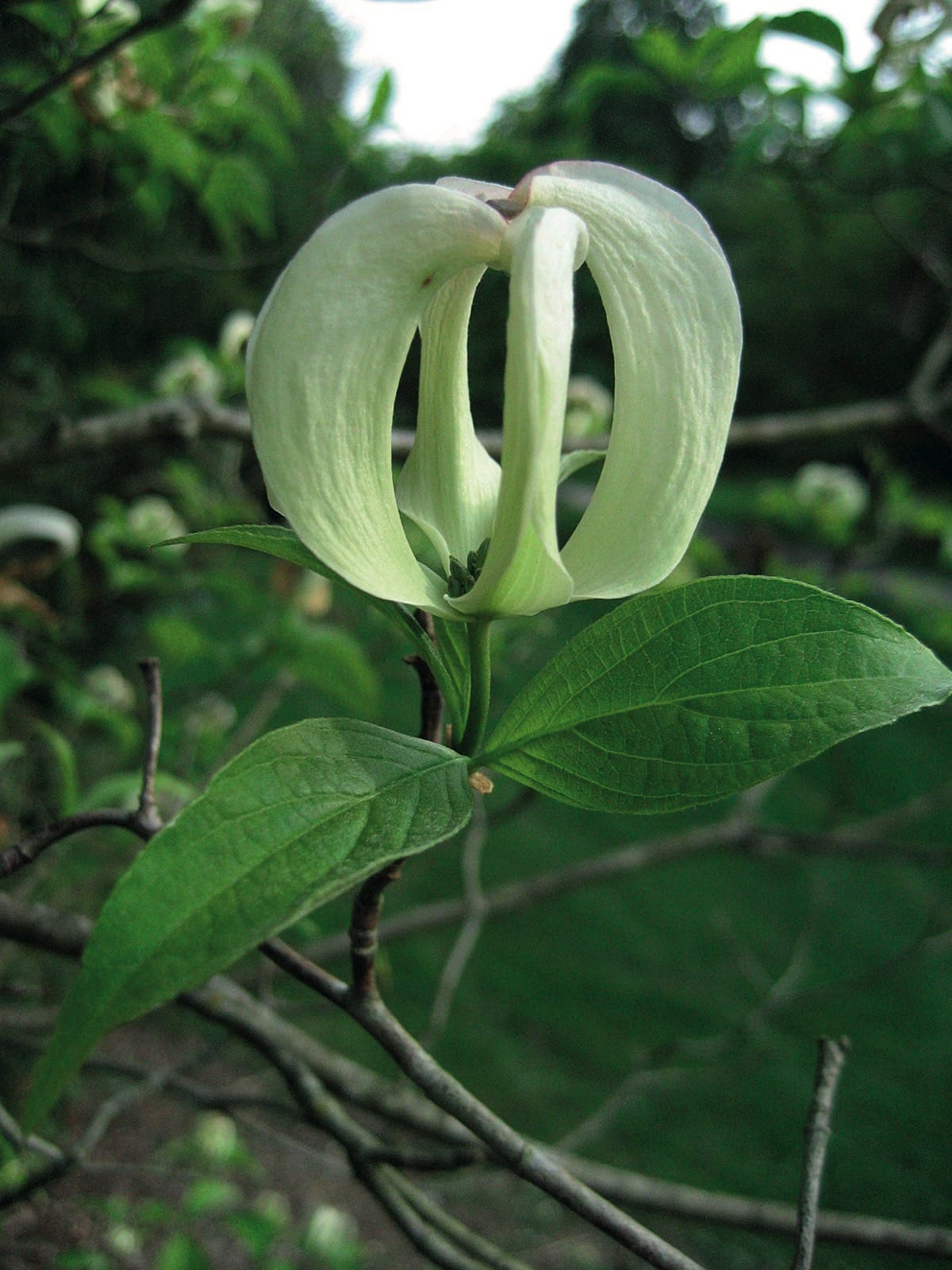
The clasping bract tips in this taxon give it a unique appearance while in flower, and certainly add a different effect to a collection of flowering dogwoods. Larger trees such as those in the US National Arboretum, now 6.5 m tall and 5 m wide, after planting in 1992 (United States National Arboretum 2007), can be covered in flowers and make a spectacular show. It is now widely cultivated in the United States, succeeding wherever normal C. florida is happy. Jacobson (1996) reported an 18.6 m tree in Seattle, 37 years old. In Europe it is still scarce but there is a 4 m tree at Tregrehan that is growing well. Du et al. (2023) suggest that recognition as species may be appropriate, on the basis of the early divergence in the mid Pliocene.