IDS Trees and Shrubs Online has become a fundamental source of reliable information about cultivated woody plants, freely available to everyone, everywhere. We hope you find it useful.
For the first time we are asking our users if you could support us.
If everyone who uses TSO during May 2026 gives just £10, we would cover our costs for a whole year, enabling us to accelerate our work.
Kindly sponsored by
Nicholas Barber CBE
Martin Deasy, Richard Olsen & John Grimshaw (2025)
Recommended citation
Deasy, M., Olsen, R. & Grimshaw, J. (2025), 'Catalpa × erubescens' from the website Trees and Shrubs Online (treesandshrubsonline.
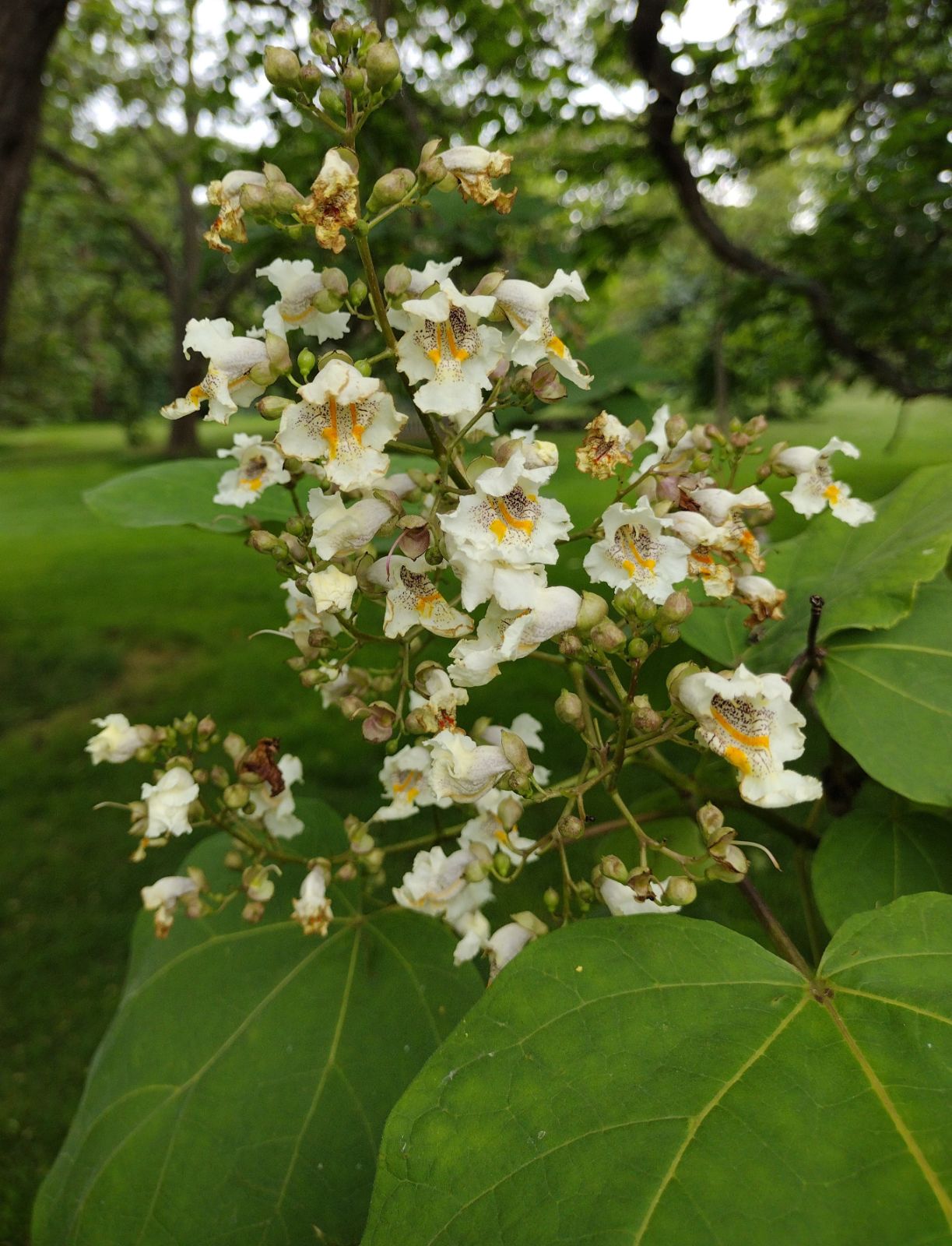
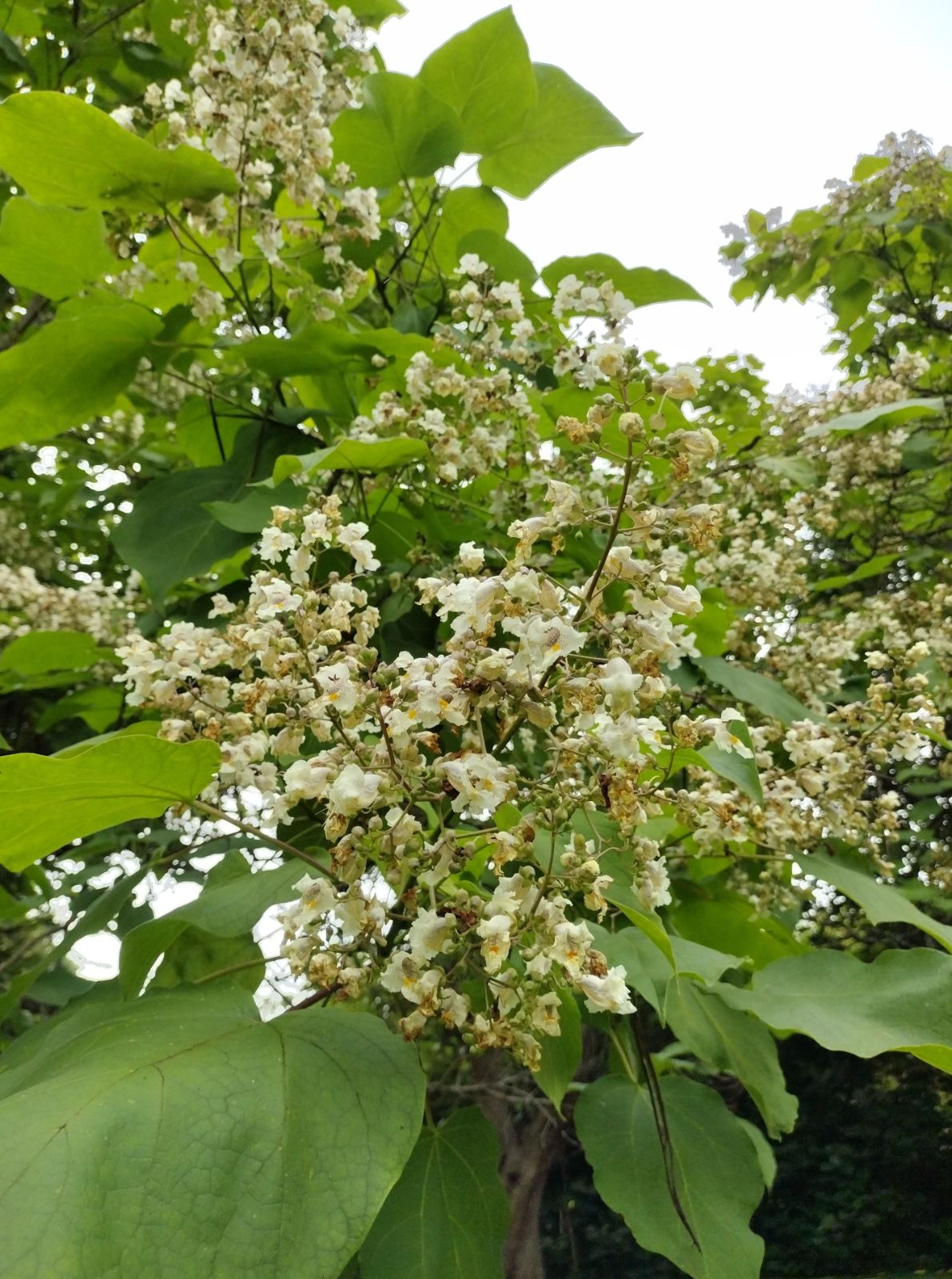
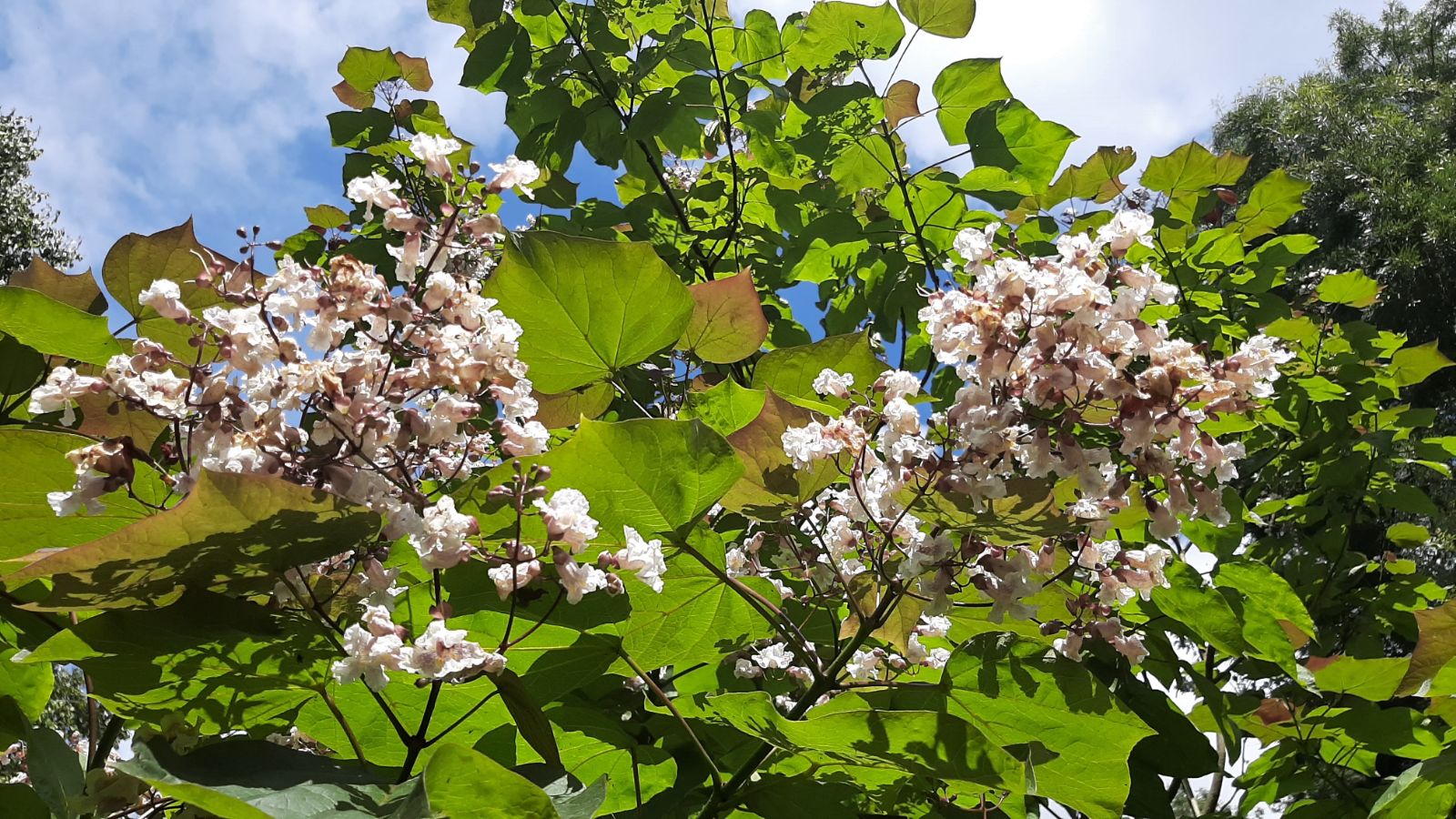
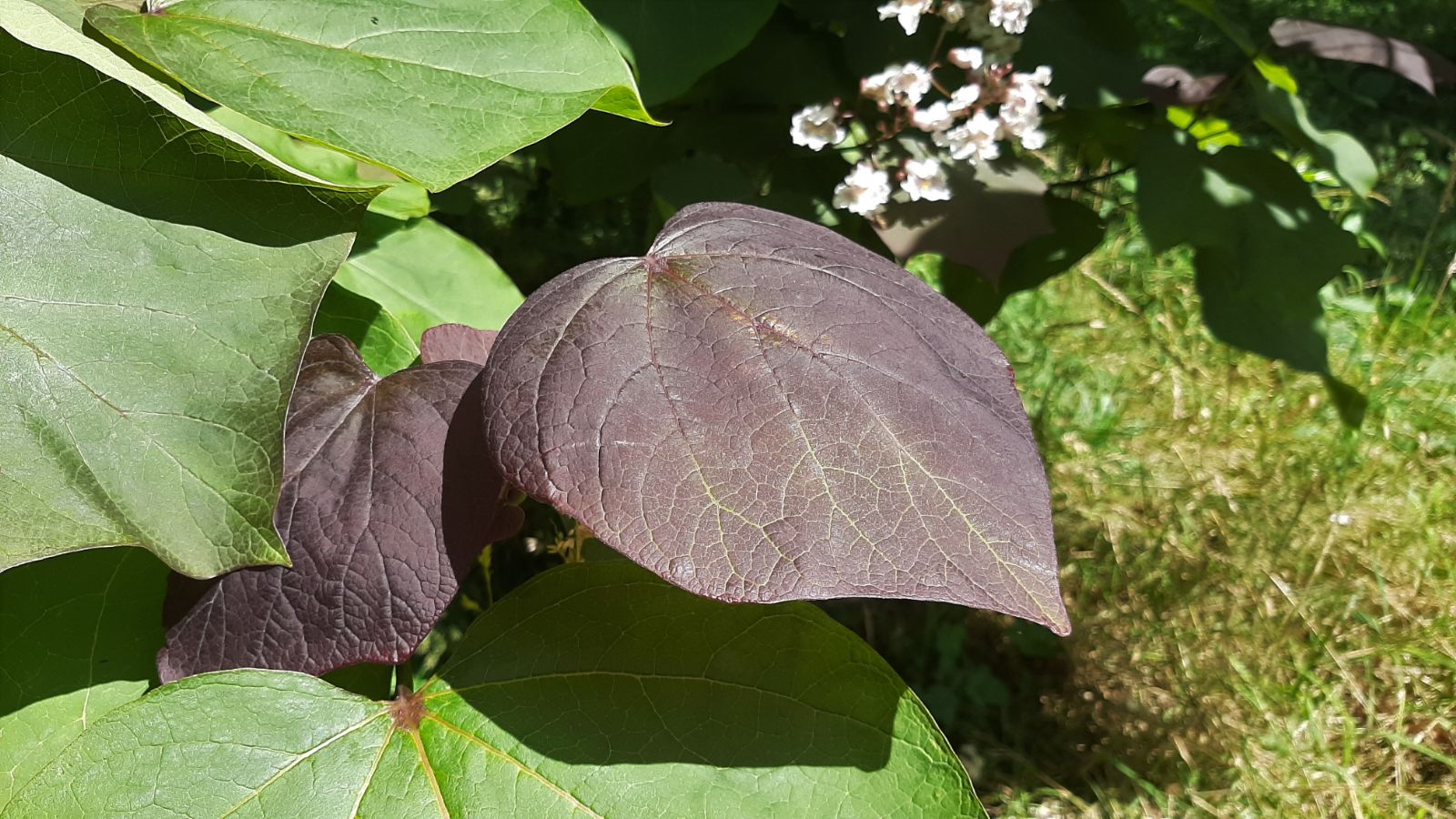
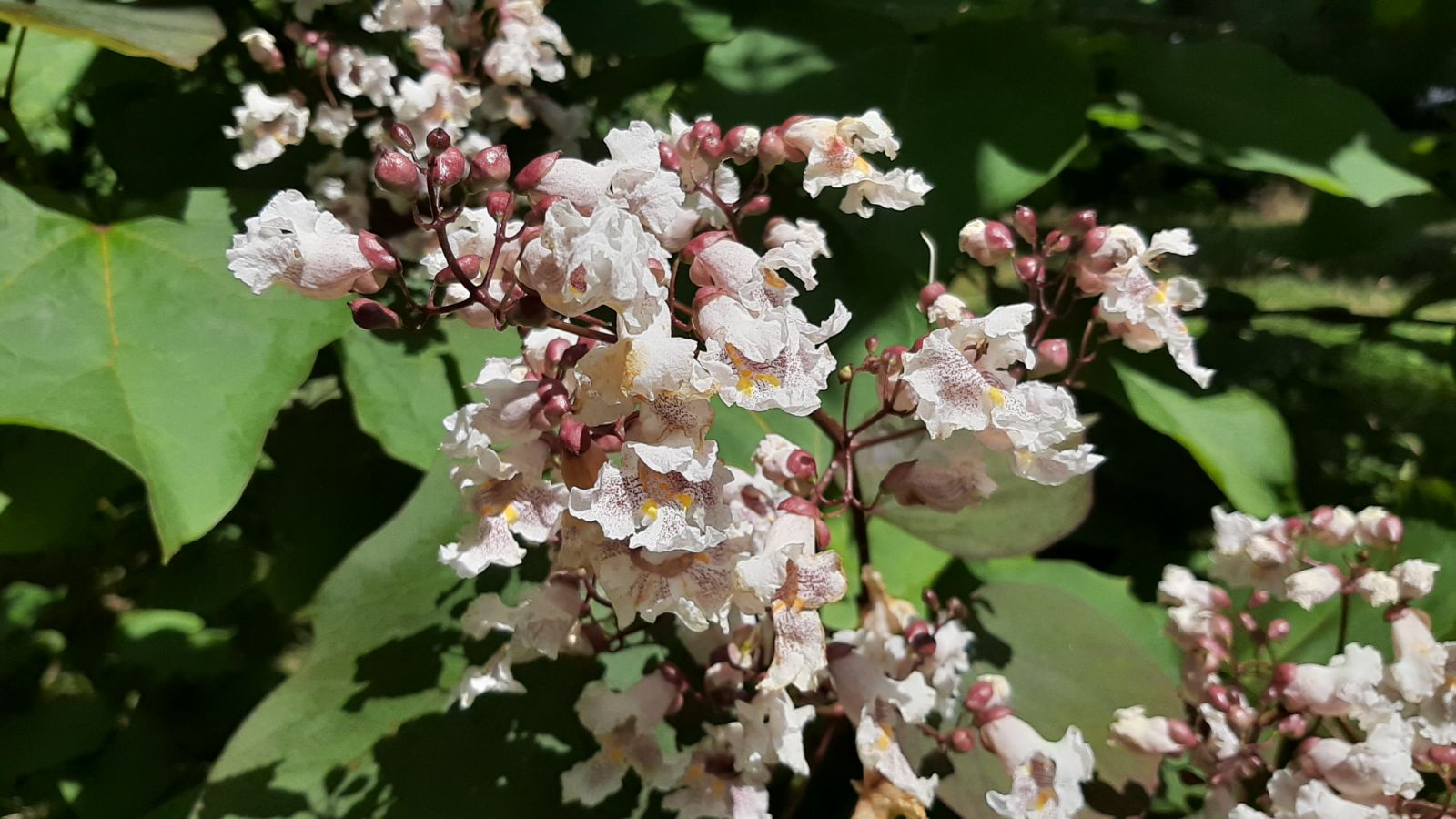
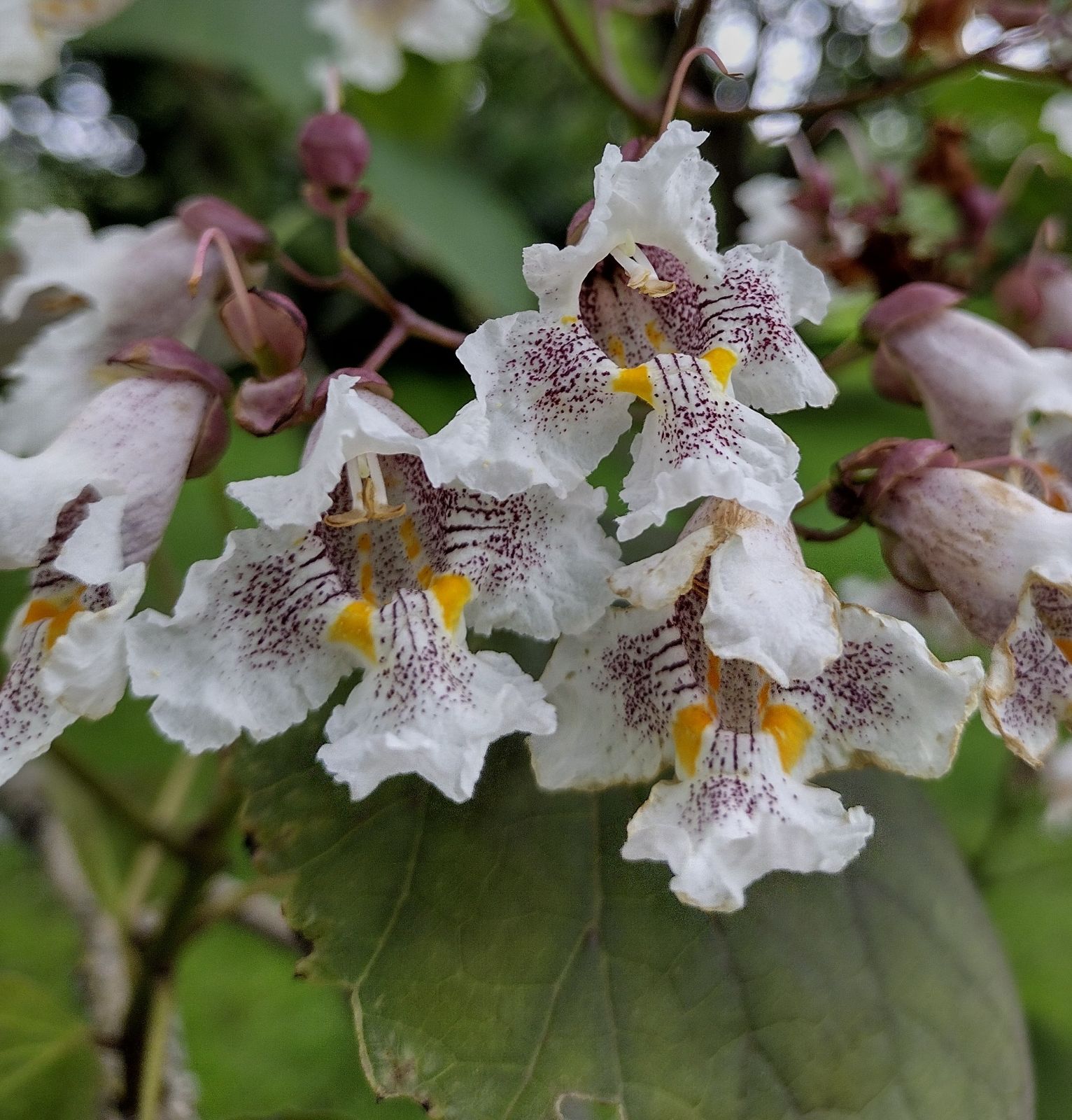
When Catalpa ovata is grown in the vicinity of C. bignonioides or C. speciosa there is a chance that hybrids will be produced. C. speciosa flowers a couple of weeks in advance of either of the other species, but there is occasional overlap, depending on weather and perhaps the provenance of C. ovata. Determining the exact North American parent in purported hybrids is difficult and often just a matter of conjecture (simply distinguishing the two North American species is confounding enough for many). However, C. ovata hybrids are easy to pick out from the foliage alone, even without the distinctive flowers and fruits: the purple petioles and prominent purple foliar nectaries (glands on the lower leaf surface, where the veins meet the petiole) of C. ovata are inherited in the hybrids, and the new foliage often displays a purple flush, though this character usually fades quickly (and is not in itself diagnostic, since C. bignonioides leaves may be purple on emergence). Inflorescences are typically larger than in either parent, with the branched structure and smaller flower size of C. ovata predominating. The white flower colour of the North American species is dominant over yellow. Fruit thickness is intermediate between the parents, but fruits are often longer than either. In Europe, plants are often pollarded.
The first documented C. × erubescens hybrid arose in the nursery of the the Muséum d’histoire naturelle, Paris before 1869, when it was first described by Carrière, but no type was designated at the time, and the original plant is not known to survive. Carrière stated that this plant was never distributed, ‘and very probably exists nowhere outside the Muséum nursery’ (Carrière 1874). The plant was redescribed as Catalpa aureovittata (the epithet meaning ‘golden-banded’) by both Carrière and the Italian botanist Paolo Corbelli in recognition of the bright yellow stripes in the throat of the corolla, but these names are treated as homotypic synonyms by Olsen and Kirkbride (2017).
Catalpa species are typically out-crossing (Stephenson & Thomas 1977), so it is unsurprising that instances of this hybrid have arisen spontaneously in cultivation wherever the parent species have been grown together, and several cultivars have been named. Well known (or at least, well described) early crosses were documented in France, the centre of horticultural (rather than agricultural) Catalpa studies in the nineteenth century, and in the United States. The two Japanese-provenanced hybrids ‘J.C. Teas’ (from a Japanese-origin seed parent growing in Indiana), and ‘Japonica’ (from Japanese seed germinated in France) are discussed in further detail under the respective entries.
Plouvier (1947) and Paclt (1948) independently reported instances of C. × erubescens having produced double or semi-double flowers – one at Buttes-Chaumont, Paris (initially attributed by Plouvier to C. bignonioides, referred to the hybrid by Paclt (1952)), and one at Plzen, Czech Republic. Paclt (2005) subsequently observed the same phenomenon in Trnava, Slovakia. The double or partially double flowers on these trees were produced alongside large quantities of normal flowers (J. Paclt pers. comm. to R. Olsen, 2007). The development of stamens into petaloid forms, which is also occasionally observed in hybrids in the Catalpa breeding programme at the United States National Arboretum, is probably caused by incongruities in the parent genomes interfering with control of floral meristem identity. As Plouvier noted in correspondence with Paclt, the phenomenon was not consistent: not only did the trees produce a variety of intermediate forms, but at Buttes-Chaumont the phenomenon appeared to vary from year to year (Paclt 1952).
Paclt described trees bearing this type of double flower as a forma, C. × erubscens f. adina, this epithet later being misapplied as a cultivar name by Jacobson (1996) to two large old trees growing at Washington Park Arboretum, both of which have since died (Jacobson 2005), and to an apparently unrelated double-flowered tree discovered at Queen Victoria Park, Niagara Falls, Canada, and registered under the cultivar name ‘Victoria’ by S. Zalany in 1994 (Clemants 1995, Dirr 2009). The uniqueness of this latter tree is debatable, and it is doubtful whether it was ever introduced to the nursery trade. In fact, no double-flowered hybrid has ever been introduced commercially, or even propagated: the unstable nature of the floral anomaly in question – presumably attributable to the trees’ hybrid genome – is likely to pose a significant challenge to the development of a stable clone.
A plant labelled Catalpa szechuanica (an unpublished binomial), grown by Meise Botanic Garden (accession number 2003138916) has white, purple-spotted flowers and reddish young leaves that are consistent with C. × erubescens. The name C. szechuanica has not been published, and the reason for the geographical epithet is opaque, though the Meise plant – received from Shanghai Botanic Garden – is apparently of northwest Chinese provenance (from Maijishan, Gansu Province). Young plants under this name are offered by a handful of nurseries, furnished with little accompanying information; in one case the plant appears very different from the Meise specimen (Esveld 2025).
Described by Späth in 1898 from a plant growing in his Berlin arboretum, advertised as having ‘black-red new growth’. Krüssmann (1984) considers it to belong to the clone ‘J. C. Teas’, but the plate accompanying Späth’s description (1898) shows typical C. × erubescens, suggesting that this could just be another spontaneous hybrid of European origin.
Synonyms / alternative names
Catalpa hybrida japonica hort., not Rehder
This is the oldest surviving clone, with inflorescences far larger than those of either parent. The white, spotted flowers are produced in enormous quantities, thyrses in excess of 300 flowers having been reported (Bean 1976), though 150 is more usual (Grimshaw & Olsen 2011). The broadly ovate leaves, too, dwarf those of the parent species: vigorous shoots can produce leaves 60 cm in length, though again 30 cm is more normal; they are a good dark purple when young. Bean described it as ‘decidedly inferior’ to C. bignonioides in the British climate, but it is worth growing for the gigantic leaves alone.
The strongly purple-tinted new growth – the epithet erubescens is best translated as ‘blushing’ in this case – makes it a useful foliage plant in addition to its floral qualities; the purple flush is said to fade to green in the summer heat of the southern United States (Tripp & Raulston 1995), but the colour is more persistent in cooler climates. Controlled pollinations were conducted a century ago by Jones & Filley (1920), and more recently at the U.S. National Arboretum, but so far all named cultivars have been chance seedlings.
This cultivar was raised by J.C. Teas at Bayville, Indiana, U.S.A. around 1874, from seed from Japanese C. ovata (Sargent 1889) positioned close to specimens of both C. speciosa and C. bignonioides, leading to doubt over the pollen parent. Teas thought it was likely to be C. speciosa, and Dode agreed, using Teas’ plant as the type of the new nothospecies Catalpa × teasiana (Dode 1907). Both were wrong, and the parentage was subsequently shown to be C. ovata × C. bignonioides, on the basis of wood anatomy (Penhallow 1905) and studies on the reciprocal cross by Hayes in 1911 (Jones & Filley 1920).
In early American catalogues (e.g. Ellwanger & Barry 1900) this tree may be found listed as ‘Teas’ Japan Hybrid’ – Catalpa hybrida japonica’, though, confusingly, Rehder later made the valid combination Catalpa hybrida var. japonica for a different Japanese-provenanced clone distributed in France (see the entry for C. × erubescens ‘Japonica’).
Synonyms / alternative names
Catalpa × japonica Dode
Catalpa × erubescens var. japonica (Dode) Paclt
Catalpa × hybrida var. japonica (Dode) Rehder
A vigorous and quick-growing clone, resembling the other named cultivars in its large glossy green leaves and large inflorescences of fragrant white flowers, violet-spotted inside.
Seed sent from Japan to Simon-Louis Frères in 1886 produced an unfamiliar Catalpa that was referred by Dode (1907) to the new species C. japonica, based on herbarium specimens from Japan. In comparison with C. ovata, Dode found the inflorescence narrower and reduced (‘compact and pyramidal’), and the leaves less lobed, petioles less coloured, and the foliar nectaries green (not red-brown). Dode acknowledged, however, that his new species appeared intermediate between C. ovata and C. bignonioides, a position confirmed by Paclt (1952), who sunk Dode’s species into C. × erubescens at varietal rank.
‘Japonica’ and ‘J. C. Teas’ are of botanical interest since both are derived from C. ovata of Japanese provenance. In the case of the Simon-Louis plant, the cross itself took place in Japan, while Teas’ hybrid arose in the United States. The common Japanese provenance has, however, led to confusion, since American catalogues (e.g. Ellwanger & Barry 1900) often use Catalpa hybrida japonica hort. to refer to ‘Teas’ Japan Hybrid’, while Rehder’s published name Catalpa hybrida var. japonica is based on Dode’s C. japonica, and therefore ecompasses Simon-Louis’s ‘Japonica’ clone, which Rehder distinguished by its ‘broader and more abruptly acuminate leaves’ (Rehder 1914).
The Japanese provenance of the ‘Japonica’ cross testifies to the long history of cultivation and global spread of the North American species C. bignonioides, particularly in East Asia (cf. Kirkbride & Olsen 2011). Lack of awareness of this misled Paclt (1952) into assuming a European garden origin – a salutary lesson for all those who seek to disentangle the histories and provenances of cultivated plants.
Synonyms / alternative names
Catalpa × hybrida var. atropupurea Späth
Catalpa × erubescens f. purpurea (Wawra & Abel) Paclt
This is a clone with very dark black-red new leaves, becoming dark green but retaining their dark purple petioles, which complement the purple spotting on the corolla. It can be spectacular as a regularly coppiced or pollarded foliage plant, as the repeated flushing of new foliage continues the purple haze throughout the season. The effect is remarkable, the foliage colour defying easy description – Wawra & Abel (1890) describe the leaves as ‘metallic brown and dark black-green’.
‘Purpurea’ originated as a seedling in the Philadelphia nursery of Hosea Waterer, who introduced it in 1885 and distributed it in America (Wawra & Abel 1886). Son of the renowned breeder Anthony Waterer of Knaphill, Surrey, UK, Hosea had accompanied his father to Philadelphia to exhibit at the 1876 Centennial Exhibition, staying on there to open his own seed and bulb nursery (Desmond 1994). The Philadelphia firm’s name was reported both as H. Waterer and (subsequently) A. Waterer (Wawra & Abel 1886, 1890), confusing later writers (e.g. Paclt 1952) who, knowing Anthony Waterer as a British nurseryman, assumed a more likely Philadelphia source to have been the local nurseryman Thomas Meehan; this misconception has been much disseminated (e.g. Jacobson 1996).
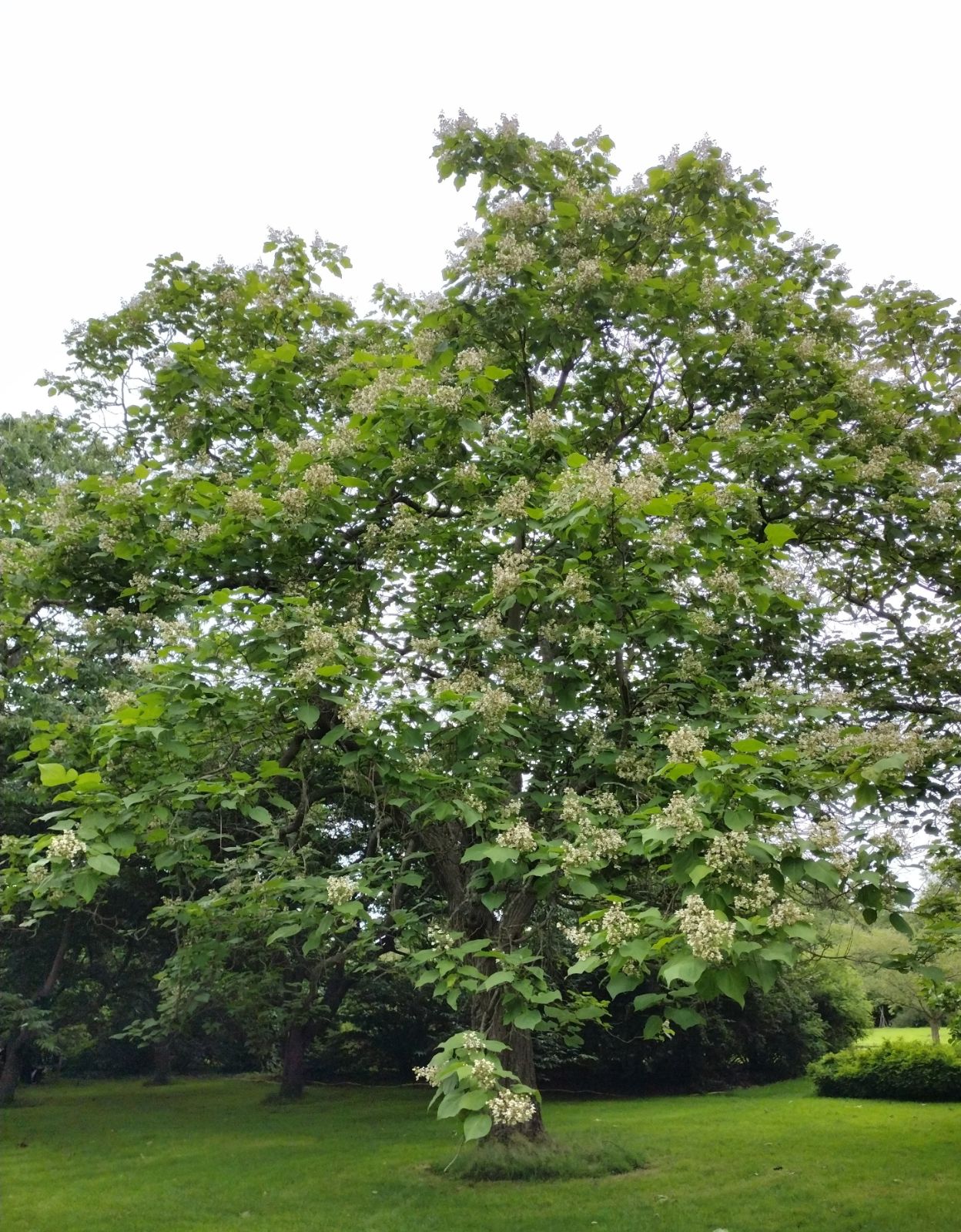
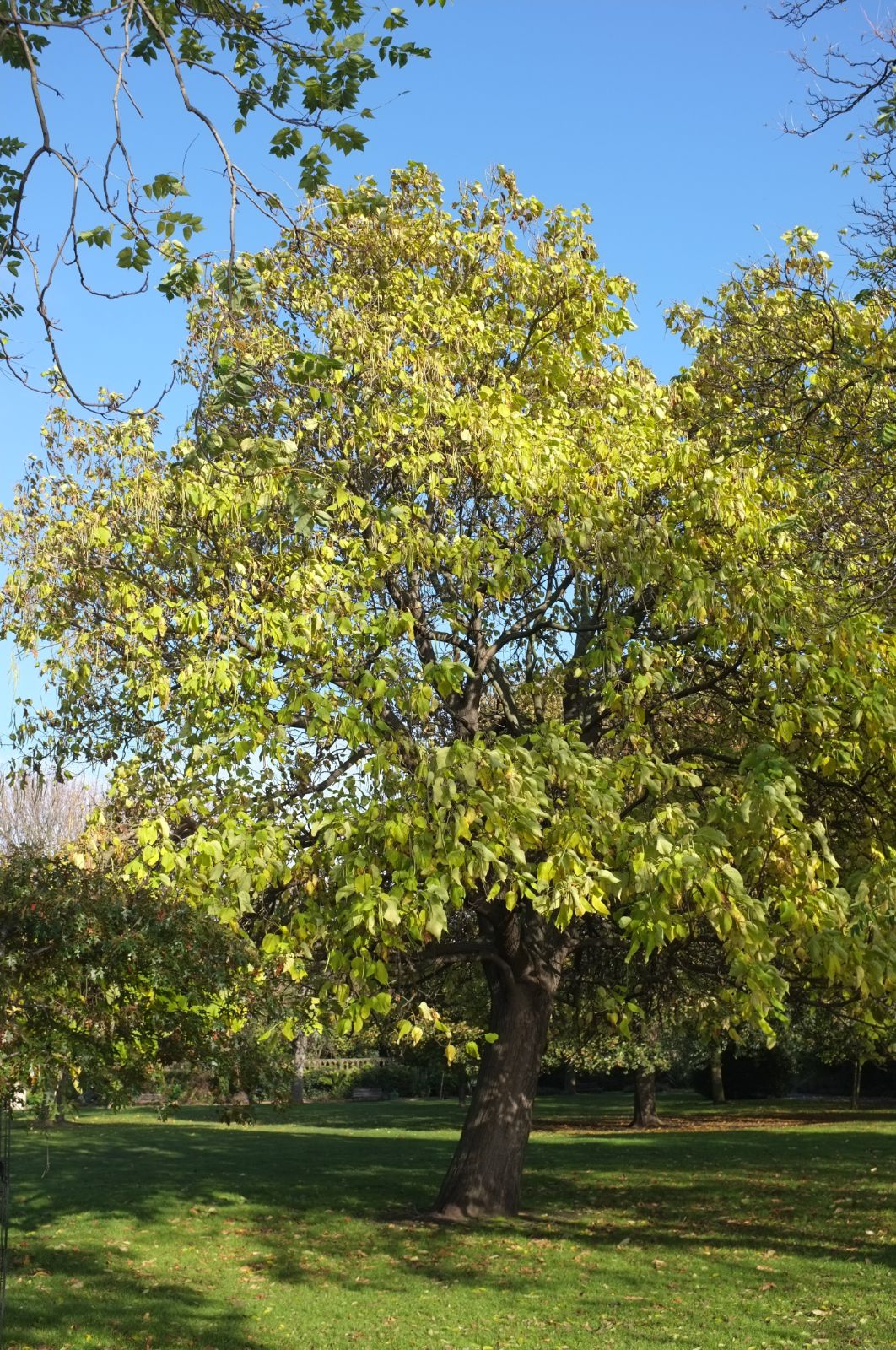
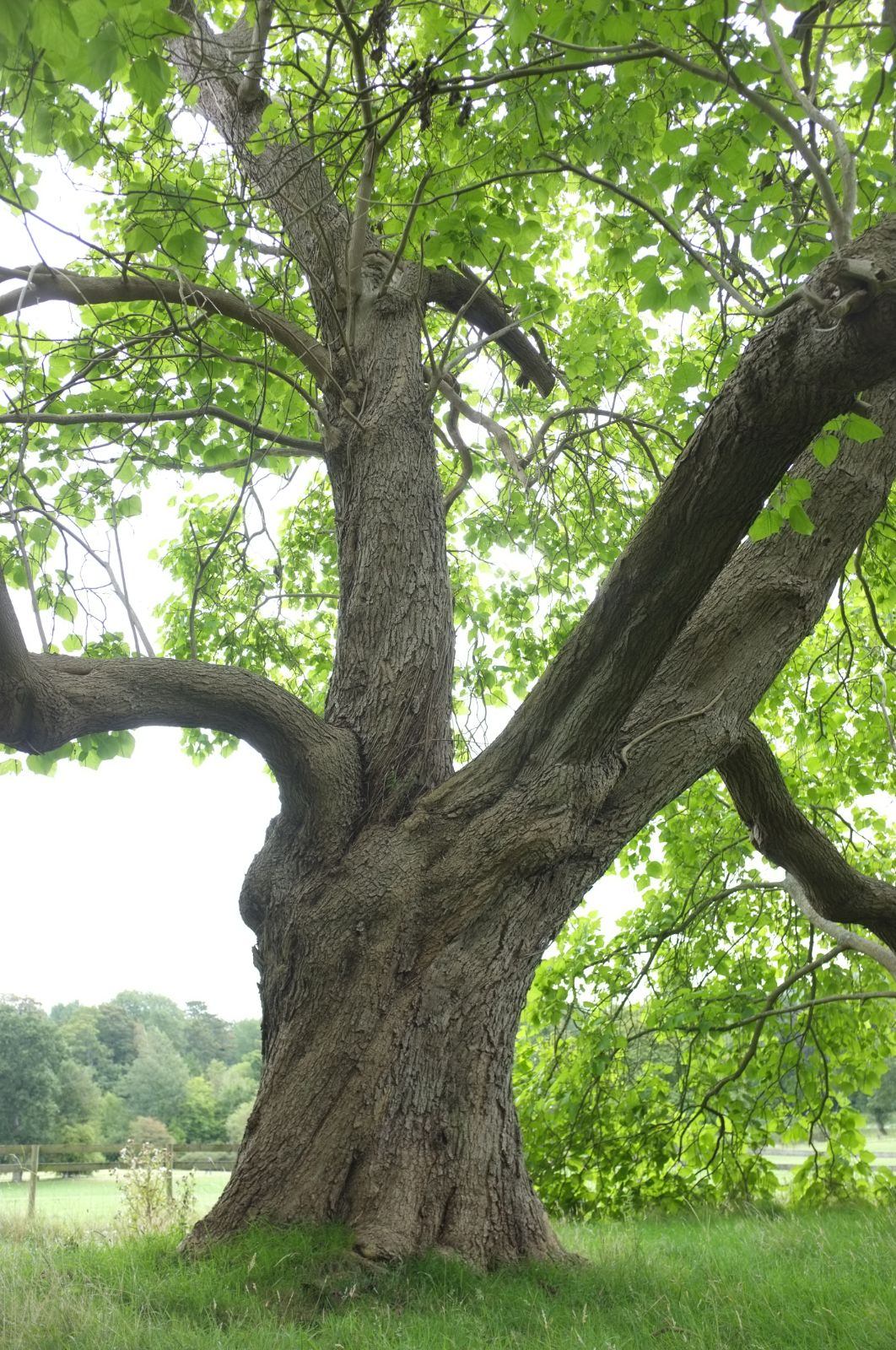
This cultivar does not make an especially tall tree (the tallest British trees are measured at c. 17 m) but may attain considerable stature nevertheless: the famous specimen in the rock garden of the University Botanic Garden, Cambridge, planted in 1950, had a girth of 341 cm (height 11.2 m) when measured in 2025 (The Tree Register 2025). It is probably the most commonly cultivated clone of C. × erubescens, and in 2025 was the only form of it commercially available in Britain (Cubey 2025).
The discovery by Olsen and Kirkbride (2017) of stellate hairs on the young growth is puzzling, since the only other catalpa with stellate hairs is C. bungei. While this finding seems to implicate C. bungei in the hybrid genetics of the ‘Purpurea’ clone, this ancestry is difficult to account for in practice, since C. bungei was not in cultivation in 1885, at least outside China. Molecular investigation may help to disentangle this puzzle.
A rare variegated cultivar of unknown origin, and which appears never to have been described, and is rarely seen in cultivation. In plants such as the one offered by this Czech nursery, the yellow leaves have one or more green patches of varying size adjacent to the midrib, each patch irregular in shape and extending unilaterally or bilaterally outwards from the midrib. Said to be prone to sunburn (Houtman 2004). There may be confusion between this taxon and plants grown or offered under the name C. bignonioides ‘Variegata’.