IDS Trees and Shrubs Online has become a fundamental source of reliable information about cultivated woody plants, freely available to everyone, everywhere. We hope you find it useful.
For the first time we are asking our users if you could support us.
If everyone who uses TSO during May 2026 gives just £10, we would cover our costs for a whole year, enabling us to accelerate our work.
Kindly sponsored by
Nicholas Barber CBE
Martin Deasy, Richard Olsen & John Grimshaw (2025)
Recommended citation
Deasy, M., Olsen, R. & Grimshaw, J. (2025), 'Catalpa' from the website Trees and Shrubs Online (treesandshrubsonline.
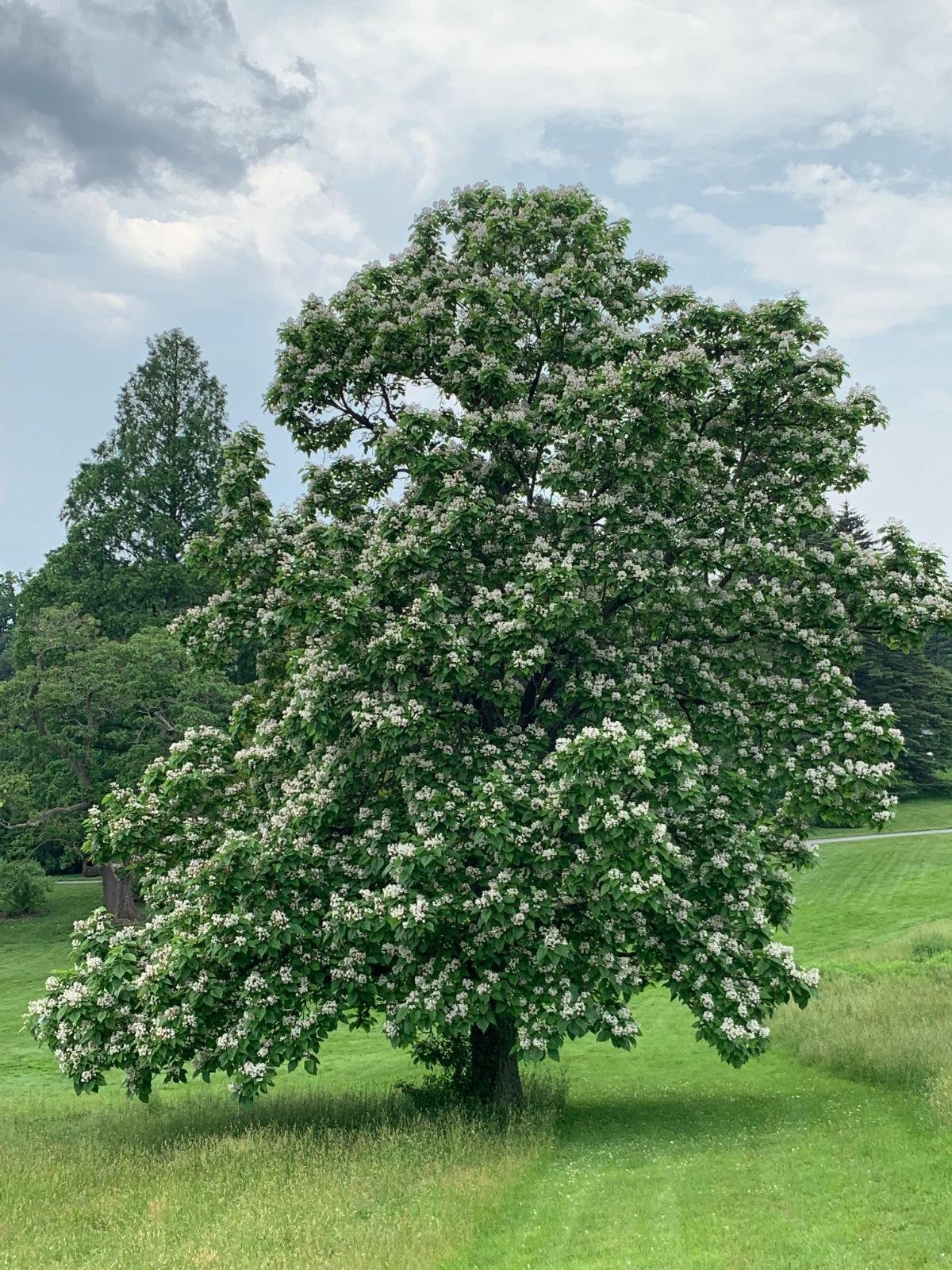
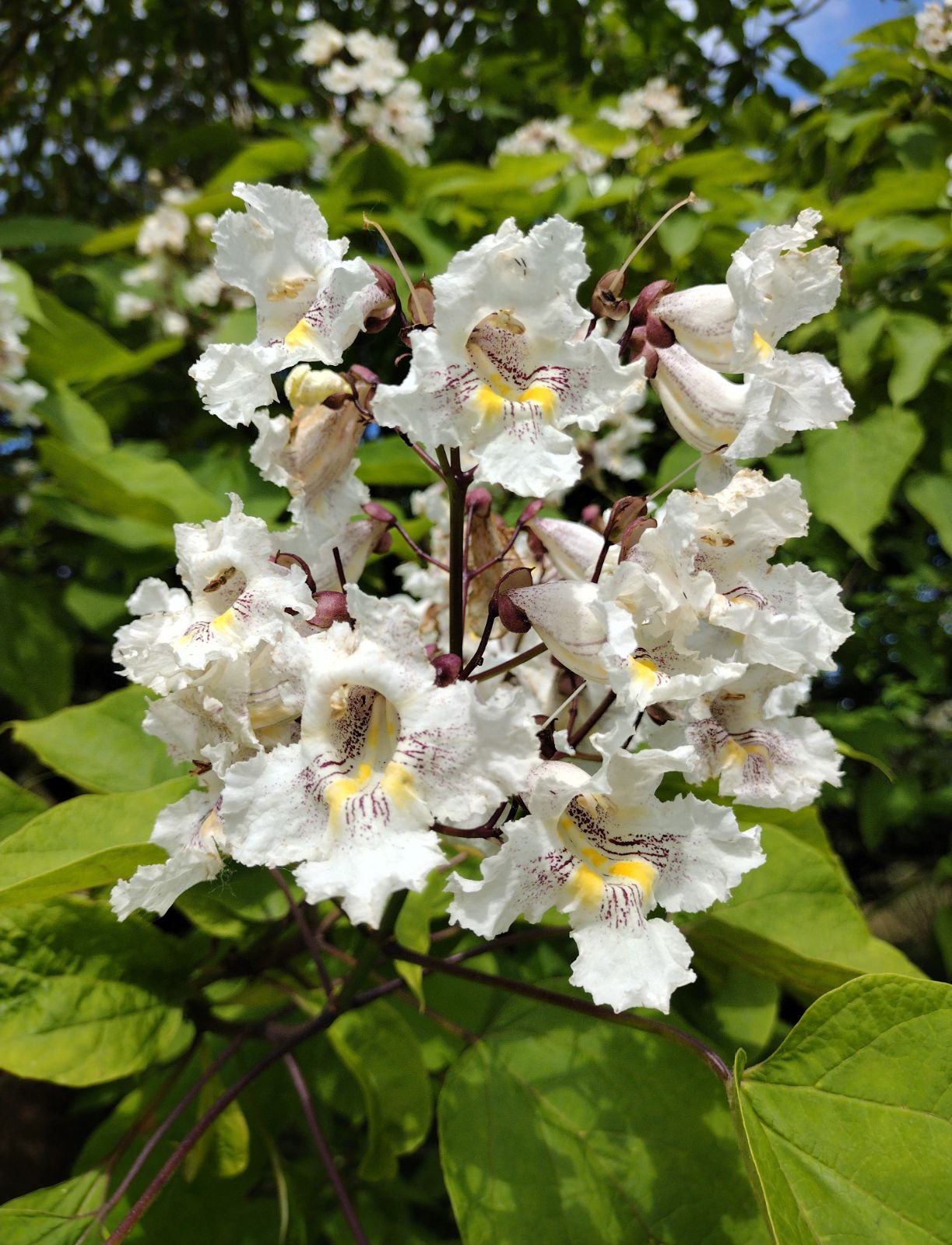
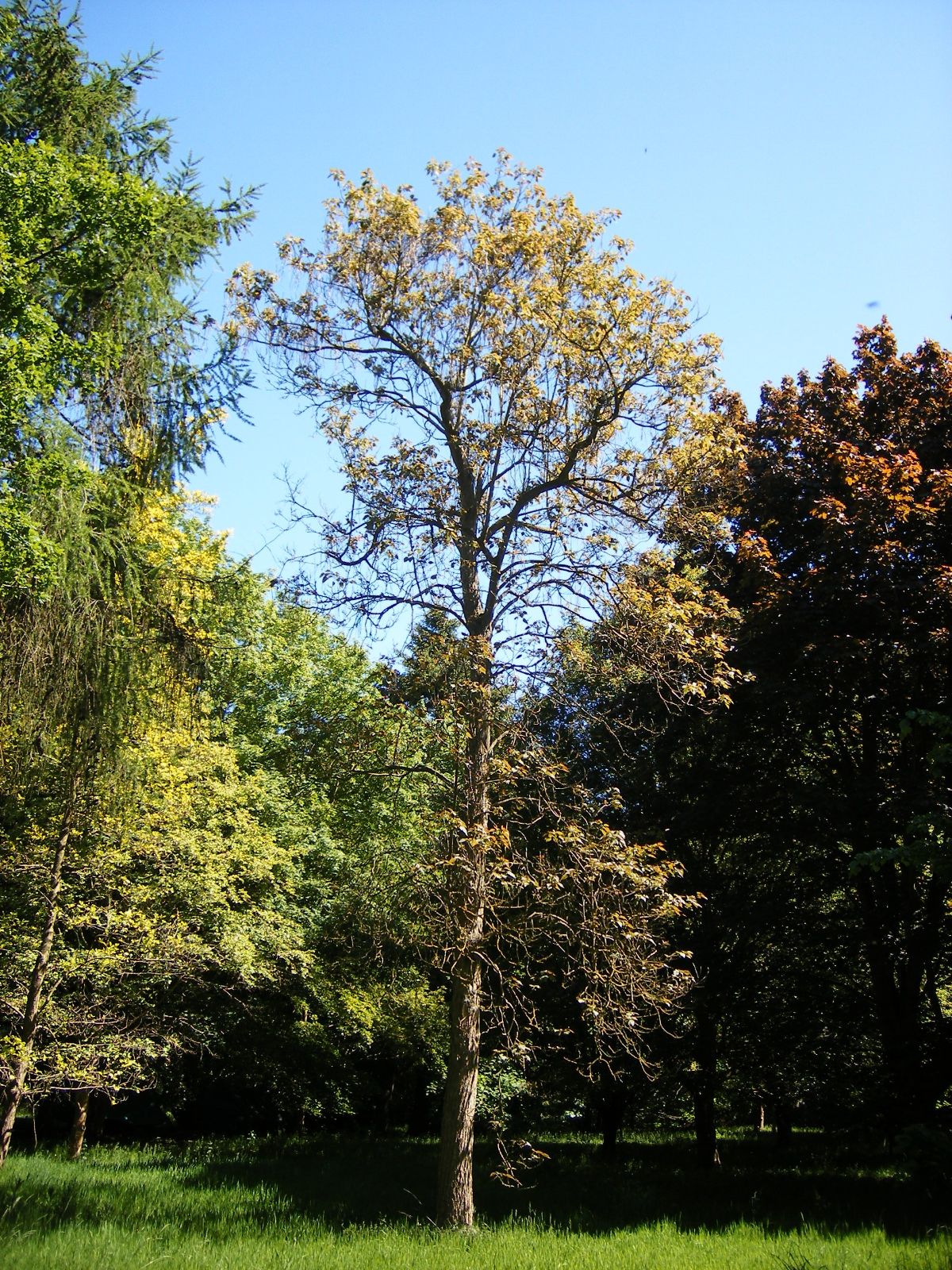
Small to large deciduous or evergreen (Sect. Macrocatalpa only) trees, usually with single, straight trunks, bearing a rounded or dome-shaped crown. Branches typically stout and spreading, often rather brittle, with a thick pith; twigs somewhat stout, with raised, circular leaf-scars; buds small, rounded,with 2–4 reddish-brown scales, embedded in the bark, all axillary, with the apex of the shoot dying in summer leaving no terminal bud. Leaves opposite or occasionally in whorls of three, especially on vigorous shoots or seedlings, long-petiolate, simple, usually entire but occasionally lobed usually ovate, often cordate at base, usually glabrous above, sometimes hairy below with extrafloral nectaries in the axils of veins below that are glossy green and glabrous. Inflorescences terminal, paniculate, corymbose, or racemose. Flowers few to many; pedicels short; calyx bilabiate or irregularly divided, rounded in bud; corolla campanulate, with a broad tube that becomes bilabiate, upper lip 2-lobed, lower lip 3-lobed; fertile stamens 2, included, inserted at base of corolla tube, staminodes 3, minute; nectary disc small; style elongate, with two lobes at apex that are sensitive to touch; ovary 2-locular; ovules several. Capsule narrow and elongated, dehiscing loculicidally; valves thin; septum slender, terete. Seeds in two or four rows, rounded, thinly membranous, with hair tufts at both ends. Cotyledons epigeal, deeply bifid. (Elwes & Henry 1906–1913; Zhang & Santisuk 1998).
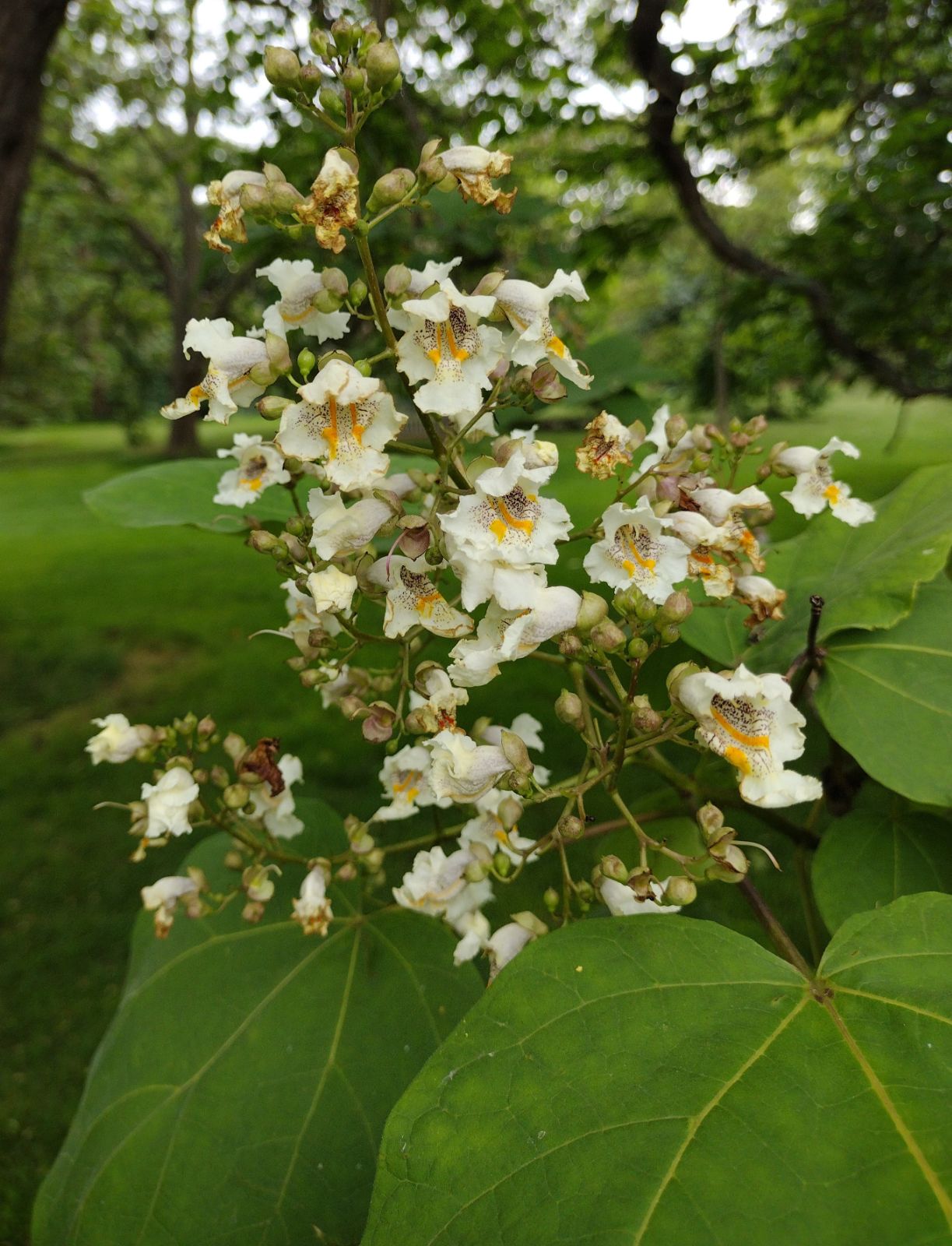
Catalpa comprises eight species of tree found in eastern Asia, the eastern United States and the Caribbean. In horticulture the genus is most familiar in the form of the two closely related American species, C. bignonioides and C. speciosa, the latter much less commonly grown than the former. Both are valued for their early summer displays of white flowers and bold foliage, and for their striking elongated fruits that often persist on the tree into winter. The two Chinese species, C. bungei and C. ovata, much less well known in cultivation, are poorly known and understood in gardens and confused in the horticultural trade. C. bungei, a tree of great beauty, has a limited presence in European and North American gardens, though the far less attractive C. ovata (as well as a non-flowering clone of C. bignonioides) can often be found masquerading under that name. Four species occur in the Antilles, one of which makes a useful landscape tree in tropical climates, but none of these can be grown within our area of study.
Understanding of relationships within Catalpa has improved greatly in recent years with the publication of a taxonomic revision by Olsen and Kirkbride (2017). An ongoing breeding programme at the United States National Arboretum is exploiting this newfound clarity to develop a novel series of Catalpa hybrids that aims to combine the best features of floral beauty, vigour and disease tolerance from across the genus. At the same time, molecular studies of Catalpa have added detail to the biogeographical and evolutionary picture of this interesting group, throwing up new questions even as they have solved old ones.
Phylogeny and systematics
The family Bignoniaceae is widely distributed in the tropics and warmer temperate regions of the world, occurring as far north as the central United States and Japan, and southwards to Tasmania and northern New Zealand. Nearly all members of the family are woody, with highly distinctive, showy, usually zygomorphic and two-lipped flowers. The bark usually has conspicuous lenticels, and the leaves are opposite and usually compound (tendrils sometimes replacing leaflets in climbing species). The flowers consist of five petals fused into a tubular corolla, expanding into upper and lower lips that are usually lobed. This basic model is elaborated into a diversity of different shapes and colours that represent adaptive responses to different animal pollinators (Gentry 1974), which may be insects (as in Catalpa), birds (e.g. Trumpet Vine Campsis radicans (L.) Bureau,), or bats (e.g. Sausage Tree Kigelia africana (Lam.) Benth.). Successful pollination results in the development of typically elongated fruits containing two series of flattened and often winged seeds. Also commonly found within the family are extrafloral nectaries on a range of different organs, including leaves, stem nodes, and the external surface of the calyx (Stevens 2001–2025).
Catalpa and its close relative, the monospecific Chilopsis, are unusual on account of their simple leaves, a character found in only a handful of Bignoniaceae genera (Gentry 1980). Molecular data places them together in the tribe Catalpeae Meisner (Li 2008), and the two genera share a pollen structure that is unique within the family (Gentry & Tomb 1979). Although they are able to interbreed (giving the nothogenus ×Chitalpa T.S. Elias & W. Wisura), their separate identities have been upheld on the basis of stamen number, Chilopsis differing in its four fertile stamens and one staminode (Dong et al. 2022).
Phylogenetic studies suggest that Bignoniaceae originated in South America in the early to mid Paleogene c. 47–61 Ma (Stevens 2001–2025, Fonseca 2021) before spreading northwards, dispersing into the Old World multiple times (Olmstead et al. 2009, Olmstead 2013). Tribe Catalpeae appears to have first diversified in southwestern North America, though Catalpa itself occurs in both East Asia and North America, a pattern usually indicative of a wide distribution during the Tertiary period (65–2.6 Ma): fossils of ancestral Catalpa species have been found throughout Western Europe (Dong et al. 2022), as well as in locations as far north as Oregon and Siberia (Meyer & Manchester 1997, Pigg & Wehr 2002).
The ancestor of sect. Macrocatalpa appears to have moved into the Caribbean region in the Oligocene, c. 22–34 Ma or earlier (exquisitely well-preserved Catalpa flowers – differing from modern species in their lack of staminodes – have been found preserved in secondarily deposited Dominican amber dated to c. 15–45 Ma (Poinar 2016). Meanwhile, the ancestors of sect. Catalpa migrated northeastwards, eventually dispersing in two directions into both Europe and China by way of the Bering and North Atlantic land bridges (Dong et al. 2022). The finding by Li (2008) that the North American and Chinese species do not constitute independent lineages, but that the American catalpas are embedded in a larger Asian clade, has interesting biogeographical implications. Two interpretations are possible, both involving multiple dispersal events. Either the ‘core’ Catalpa clade evolved in North America, with the ancestors of C. ovata and those of C. bungei making their way into East Asia separately; or, after an initial dispersal out of North America, the lineages of all present-day catalpas evolved in Asia, the common ancestor of both C. bignonioides and C. speciosa then migrating back to North America, probably in the Miocene (Olsen & Kirkbride 2017, Dong et al. 2022). The latter scenario – the more likely, once fossil and morphological data is taken into account – is complicated slightly by the contradictory findings of Dong et al. (2022) using a much larger DNA dataset, who recovered the Asian catalpas as a clade based on chloroplast data, while results from the nuclear genome placed C. ovata with the American species, in agreement with Li (2008). This discordance – attributable to a phenomenon known as incomplete lineage sorting – reflects the fact that ancestral alleles (different versions of a gene) are randomly inherited by daughter populations as they diverge, and, particularly in rapidly evolving species, may not necessarily ‘sort’ into patterns that mirror the species tree.
In cultivation, Catalpa could only be (and surprisingly frequently is) confused with Paulownia, with which it shares large, opposite leaves and a terminal branched inflorescence of showy bilabiate flowers. Their superficial similarity belies the fact that the two genera are not closely related – the relationship between Paulownia and the Bignoniaceae, much debated in the past, was finally settled by molecular studies that supported the placement of Paulownia in its own family, Paulowniaceae, whose closest relatives are the parasitic broomrapes, Orobanchaceae (APG IV 2016, Olmstead et al. 2001). Convenient field characters distinguishing Paulownia are its dense brown indumentum on the calyx (Stevens 2001–2025), flower buds set on the previous year’s growth, and flowers that open before or simultaneously with leaf emergence in spring.
Cultivation
Although most temperate Catalpa species, once established, are capable of withstanding winter temperatures down to –25°C or colder (USDA Zone 5), they belong to a largely tropical family and will thrive best where summers are hot, or at least warm. Writing for British gardeners, Bean (1976) recommended ‘an open, sunny, but not a bleak spot’, recognising the need for shelter from wind for the large leaves. Their lateness into leaf generally protects them from late frosts (Neudecker 2009). A rich deep loamy soil is also advised (Bean 1976), but they are quite tolerant of different soil types from sand to clay (Dirr 2009, Tripp & Raulston 1995). The Asian species as a whole prefer better drainage than the North American species, whose native habitat includes alluvial flood plains and bottomland forests. In congenial conditions they can be extremely fast growing.
Irregular branching patterns resulting from the (apparently programmed) loss of the terminal bud call for careful training and formative pruning to ensure that young plants develop a strong central trunk (Bean 1976, Tripp & Raulston 1995). This is especially important in marginal areas with cool summers, where growth may not be so vigorous. Trees both young and old exhibit remarkable regenerative capacity, shrugging off the loss of entire branches, or even complete loss of the crown through e.g. storm damage (Neudecker 2009). This vigour can have its downsides: Brown (1995) cautioned that shortening branches to remove weight can result, paradoxically, in an even heavier limb after a few years’ new growth.
Propagation is best from seed sown in spring in warm conditions, with no special treatment needed. Softwood cuttings root readily, though winter hardwood cuttings (with bottom heat) may be found easier to manage on the propagation bench, lacking the large leaves. Commercially, cultivars like C. bignonioides ‘Nana’ are often grafted onto stocks of C. bignonioides or C. speciosa, or can be budded in August (Dirr & Heuser 1987).
Catalpa species are notoriously susceptible to Verticillium wilt caused by the soilborne fungi V. dahliae and V. albo-atrum, a frequent cause of losses in street trees, though not necessarily fatal providing the tree is able to produce a subsequent season’s growth of conductive sapwood (Hepting 1971). The major complaint affecting Catalpa is powdery mildew caused by the fungal pathogen Erysiphe elevata (Burrill) Braun & Takamatsu), an organism native to North America but now established in northern Europe, the Balkans and Turkey, having first been reported in Hungary in 2002 (Mieslerová et al. 2020, Ellis 2001–2025, Erper et al. 2091, Latinović et al. 2019). The symptoms – leaf deformation, premature defoliation and necrosis on flowers (Latinović et al. 2019) – are usually disfiguring rather than seriously debilitating. The Asian species and, to some degree, their hybrids show resistance both to Erysiphe infection and to some other leaf spot diseases found on the North American species (C. × erubescens clones appear variable in this respect) (Olsen, Ranney & Hodges 2006).
The polyphagous Japanese mealybug Pseudococcus comstocki Kuwana, accidentally introduced into the United States early in the twentieth century, became so serious a pest of American catalpas that it was dubbed the ‘Catalpa Mealybug’. Damage is mainly a consequence of sooty moulds growing on the secreted honeydew, but the infestation of bark wounds can lead to the formation of galls (Herrick 1935). Long present in Eastern Europe, P. comstocki was reported in Western Europe for the first time in 2004, and has since become established in Northern Italy where it affects a range of nursery plants including C. bignonioides (Pellizzari et al. 2012). Considering the difficulty in treating and intercepting hemiptera pests on woody plants, further spread would be unsurprising, and is probably to be expected given modern production practices and supply chains.
In the eastern United States all species of Catalpa are attacked by caterpillars of the Catalpa Sphinx Moth (Ceratotomia catalpa Boisd.), a species of hawkmoth for which Catalpa is the only host plant. Heavy infestations can result in severe defoliation (Herrick 1935), though in nature the trees appear by and large to coexist alongside the pest, with which they must have coevolved (see the discussion under C. speciosa). The larvae (‘Catawba worms’) are prized by catfish anglers in the southeastern United States – one of the few arboreal pests that can be purchased freeze-dried by mail-order (US patent 7429398B1). The first use of an aeroplane for aerial pesticide spraying – with lead arsenate! – was to control the caterpillars on a Catalpa plantation near Troy, Ohio, in 1921 (Herrick 1935).
Identification key | ||
| 1a | Inflorescences thyrsoid | 2 |
| 1b | Inflorescences corymbose or racemose | 3 |
| 2a | Petioles purple | 4 |
| 2b | Petioles green | 5 |
| 3 | Flowers pink or light purple (or tree non-flowering), small tree | Catalpa bungei |
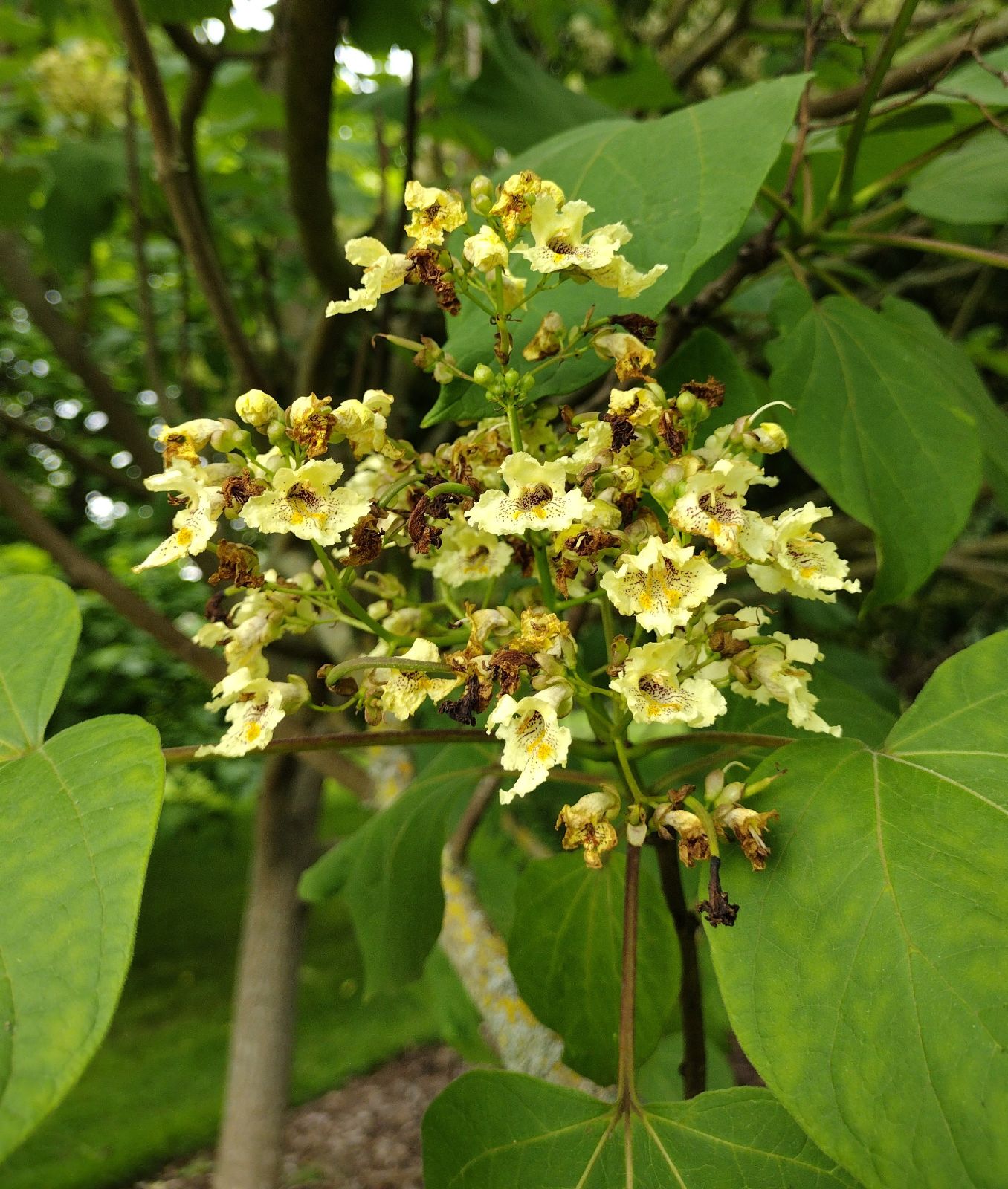
| 4a | Flowers yellow, many in an inflorescence, leaves broadly ovate, 20-35 fruits in inflorescence | Catalpa ovata |
| 4b | Flowers white, many in an inflorescence, prominent purple foliar nectaries on leaf undersides | Catalpa × erubescens |
| 5a | Large vigorous tree to 30 m | 6 |
| 5b | Smaller tree to 16 m | 7 |
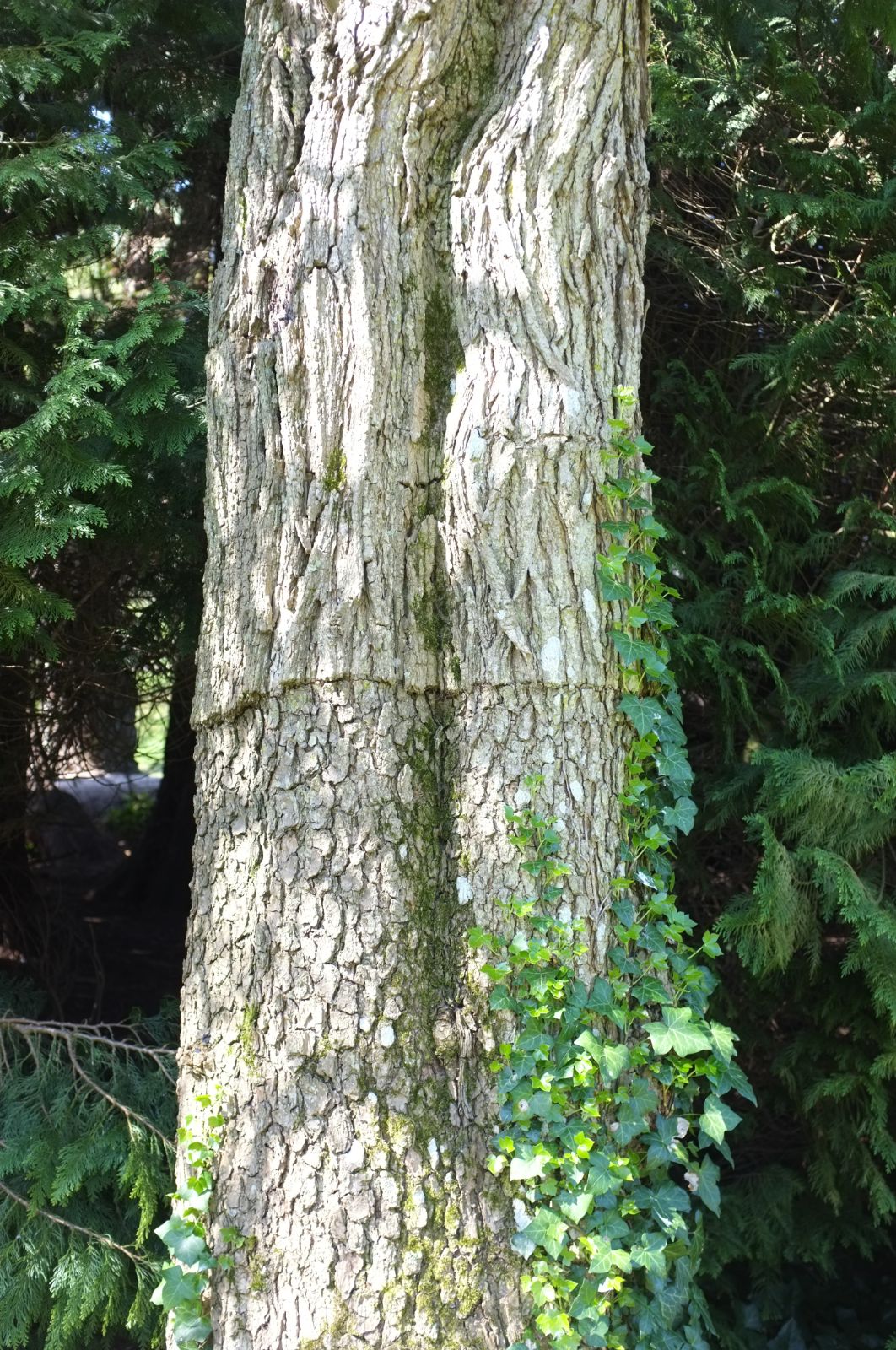
| 6a | Mature bark with scale-like plates, leaves of rank odour, flowers 60–80 per inflorescence, heavily purple-spotted | Catalpa bignonioides |
| 6b | Mature bark vertically furrowed, leaves inodorous or only faintly scented, flowers 28–40(–75) per inflorescence, lightly purple-spotted | Catalpa speciosa |
| 7 | Leaves weakly to strongly trilobate, ovate to broadly ovate, rare cultivated tree | Catalpa × galleana |