
Brachyglottis
Credits
Article from Bean's Trees and Shrubs Hardy in the British Isles
Recommended citation
'Brachyglottis' from the website Trees and Shrubs Online (treesandshrubsonline.
Family
- Compositae
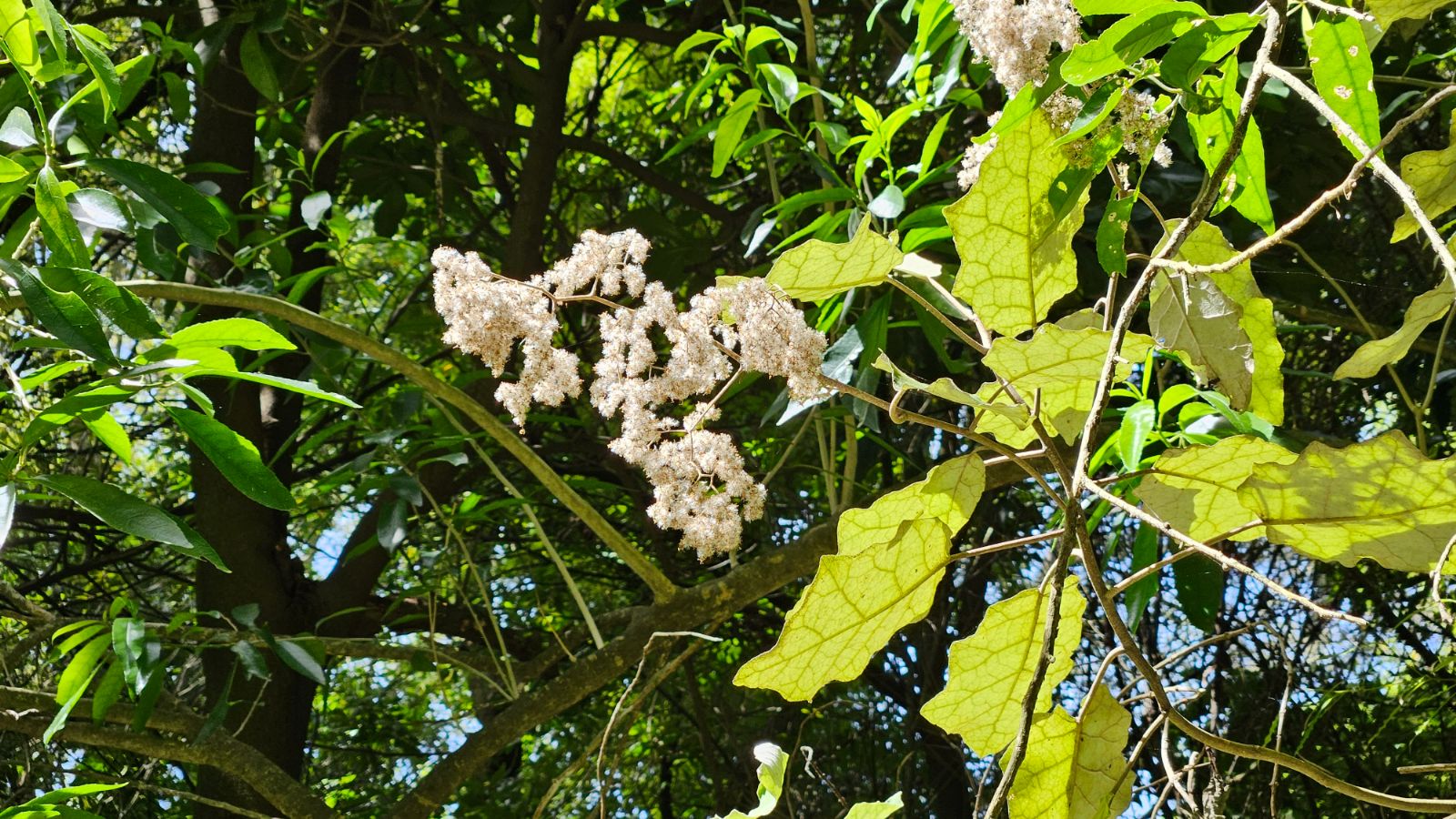
A genus of a single species, closely allied to Senecio and endemic to New Zealand.
From the Supplement (Vol.V)
As pointed out in the introductory note to Senecio in Volume IV, the New Zealand species described under that genus are more correctly placed in Brachyglottis, and, with the exception of Senecio kirkii, were transferred to it by B. Nordenstam in 1978. The synonymy is as follows:
B. bidwillii (Hook. f.) B. Nord. Senecio bidwillii Hook. f. (under S. reinoldii, Volume IV, page 357).
B. buchananii (Armstrong.) B. Nord. S. buchananii Armstr.; S. bennettii Simps. & Thorns. (under S. reinoldii, Volume IV, page 356).
B. compacta (Kirk) B. Nord. Senecio compactus Kirk.
B. Dunedin Hybrids, to which belongs the well-known cultivar ‘Sunshine’ (Senecio ‘Sunshine’, until recently grown under the erroneous names Senecio laxifolius or Senecio greyi).
B. elaeagnifolia (Hook. f.) B. Nord. Senecio elaeagnifolius Hook. f.
B. greyi (Hook. f.) B. Nord. Senecio greyi Hook. f.
B. hectoris (Buchan.) N. Nord. Senecio hectoris Buchan.
B. huntii (F. v. Muell.) B. Nord. Senecio huntii F. v. Muell.
B. laxifolia (Buchan.) B. Nord. Senecio laxifolius Buchan.
B. monroi (Hook. f.) B. Nord. Senecio monroi Hook. f.
B. perdicioides (Hook. f.) B. Nord. Senecio perdicioides Hook. f.
B. rotundifolia J.R. & G. Forst. Senecio rotundifolius (J.R. & G. Forst.) Hook. f., not Stokes nor Lapeyr.; S. reinoldii Endl.
S. kirkii should also be included in Brachyglottis, but so far as can be ascertained the new combination has not been published. Nordenstam transferred it to the new genus Urostemon.