Betula nigra L.

TSO logo

Sponsor

Kindly sponsored by the Banks family in memory of Lawrence Banks CBE DL VMH

Credits

Hugh A. McAllister, Kenneth Ashburner, Paul Bartlett & Martin Deasy (2026)

Recommended citation
McAllister, H. A., Ashburner, K., Bartlett, P. & Deasy M. (2026), 'Betula nigra' from the website Trees and Shrubs Online (treesandshrubsonline.org/articles/betula/betula-nigra/). Accessed 2026-09-05.

Family

  • Betulaceae

Genus

  • Betula
  • Subgenus Betula section Dahuricae

Common Names

  • River Birch
  • Red Birch
  • Black Birch

Synonyms

  • Betula americana Buc'hoz
  • Betula lanulosa Michx.
  • Betula rubra F.Michx.
  • Betula rupestris Raf.

Glossary

herbarium
A collection of preserved plant specimens; also the building in which such specimens are housed.
cuneate
Wedge-shaped.
glaucous
Grey-blue often from superficial layer of wax (bloom).
petiole
Leaf stalk.
rhombic
Diamond-shaped. rhomboid Diamond-shaped solid.

Credits

Hugh A. McAllister, Kenneth Ashburner, Paul Bartlett & Martin Deasy (2026)

Recommended citation
McAllister, H. A., Ashburner, K., Bartlett, P. & Deasy M. (2026), 'Betula nigra' from the website Trees and Shrubs Online (treesandshrubsonline.org/articles/betula/betula-nigra/). Accessed 2026-09-05.

Editorial Note

This TSO article is an edited digest of the species account in Kenneth Ashburner and Hugh McAllister, The Genus Betula: A Taxonomic Revision of Birches (2013; repr. 2016).

Trees and Shrubs Online, 23 June 2026

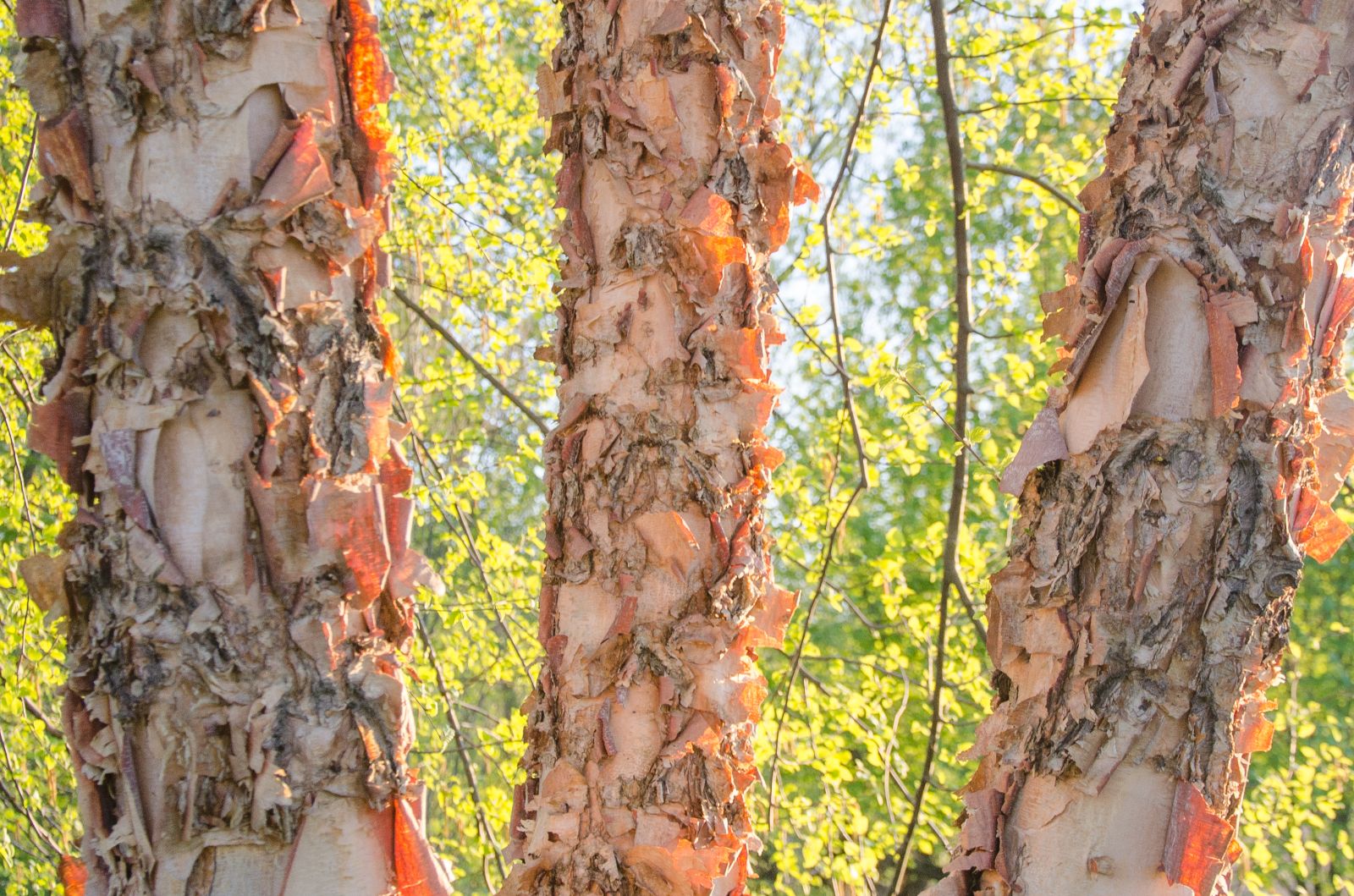
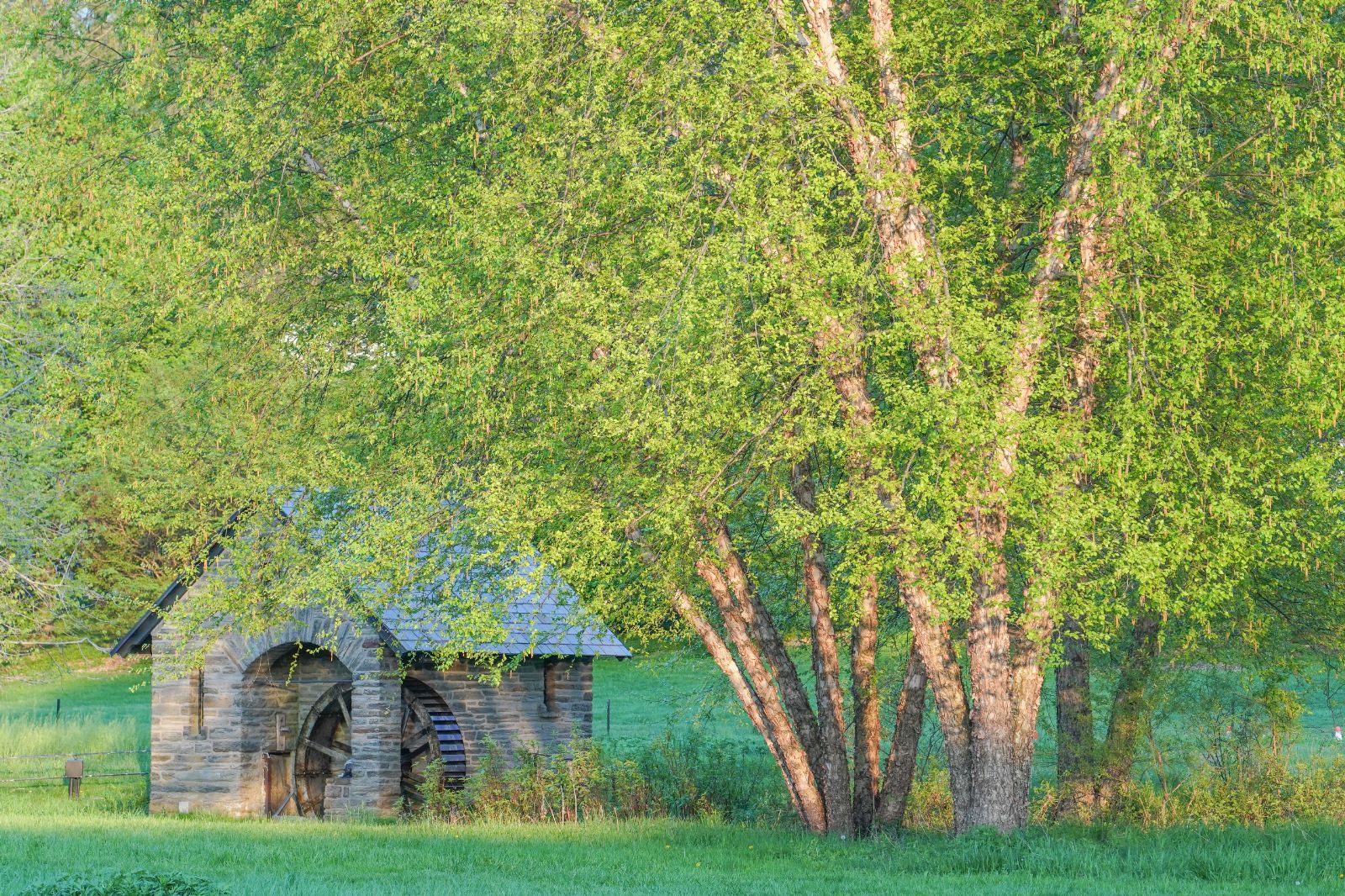
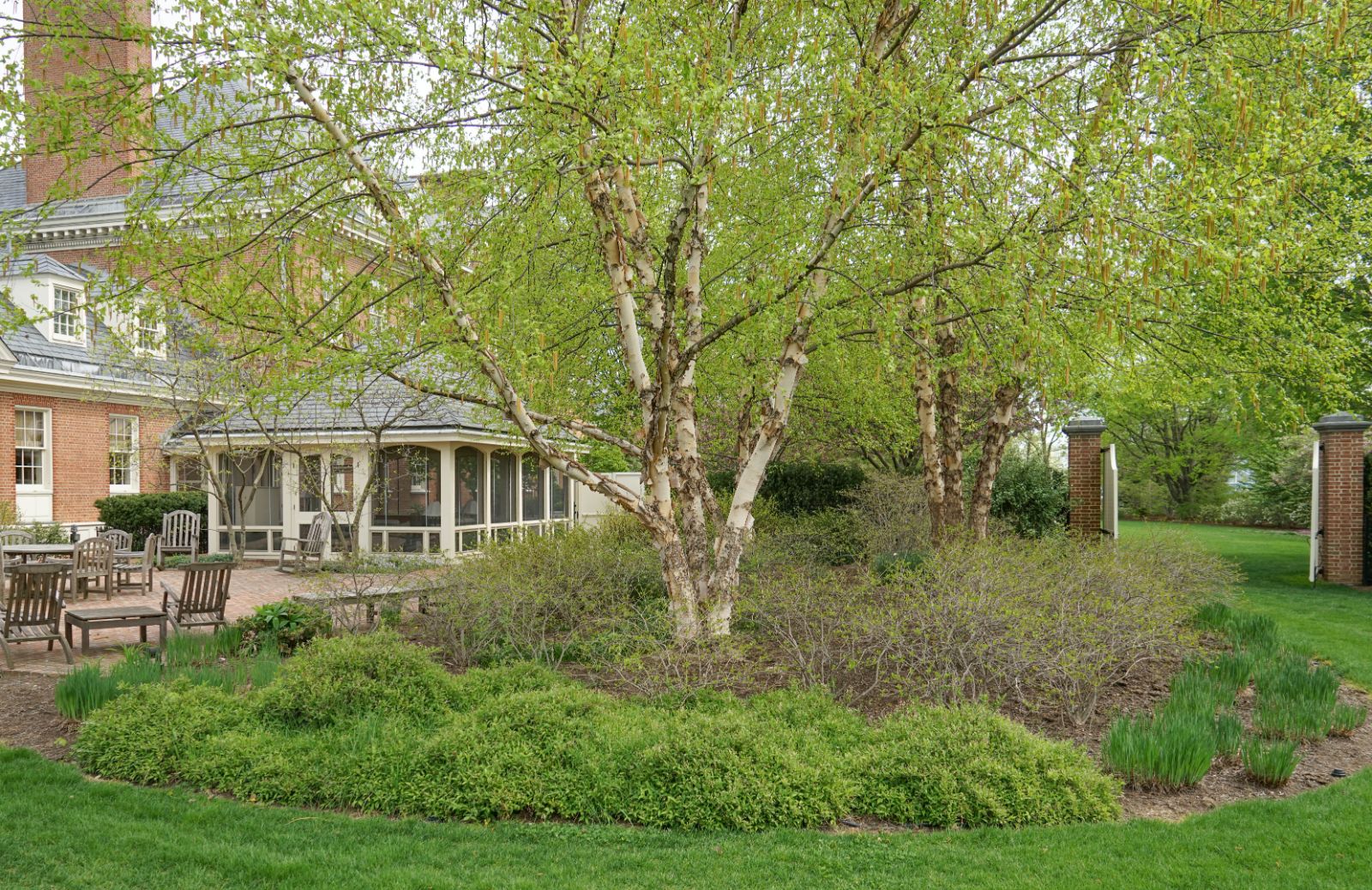
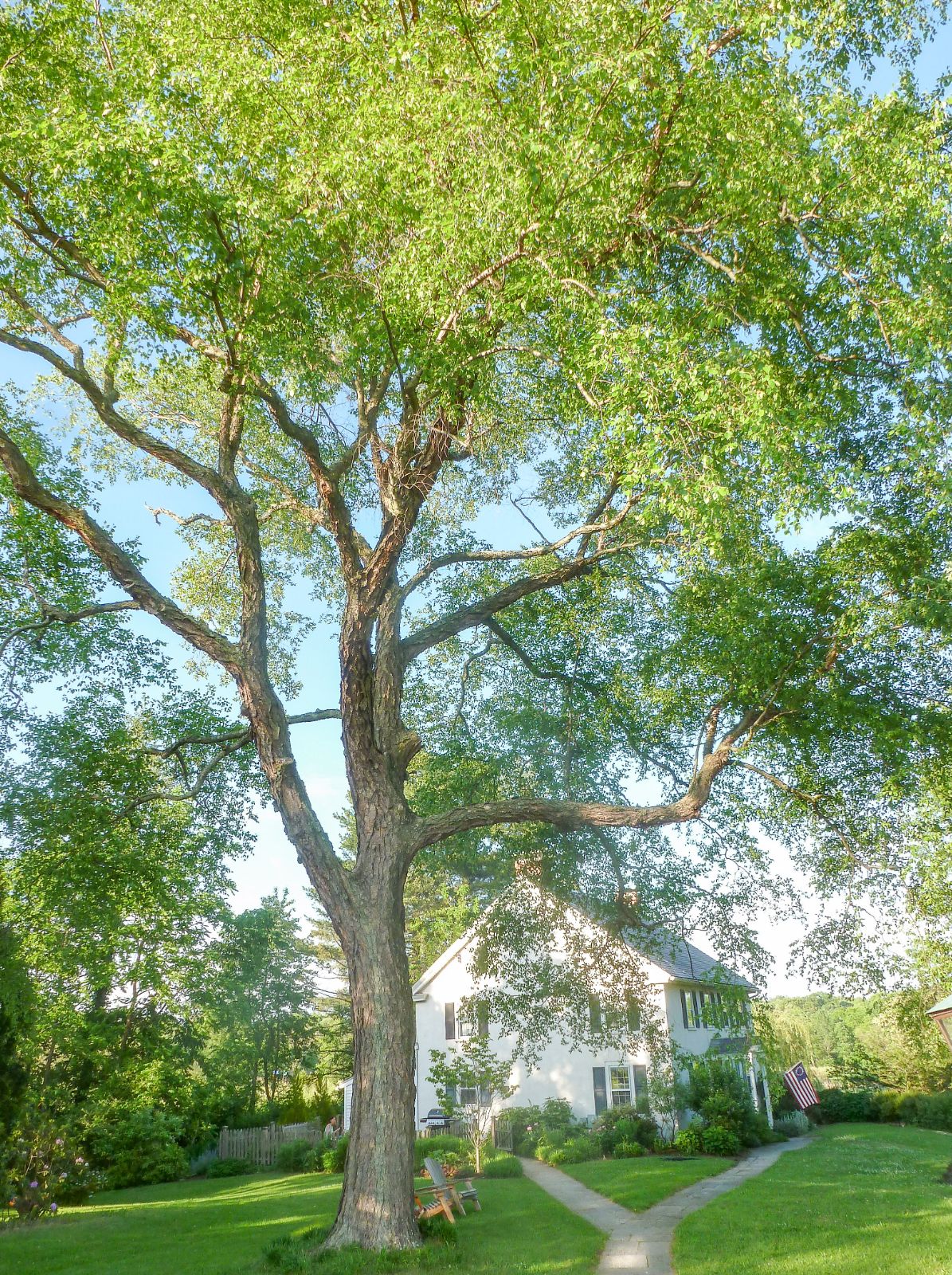
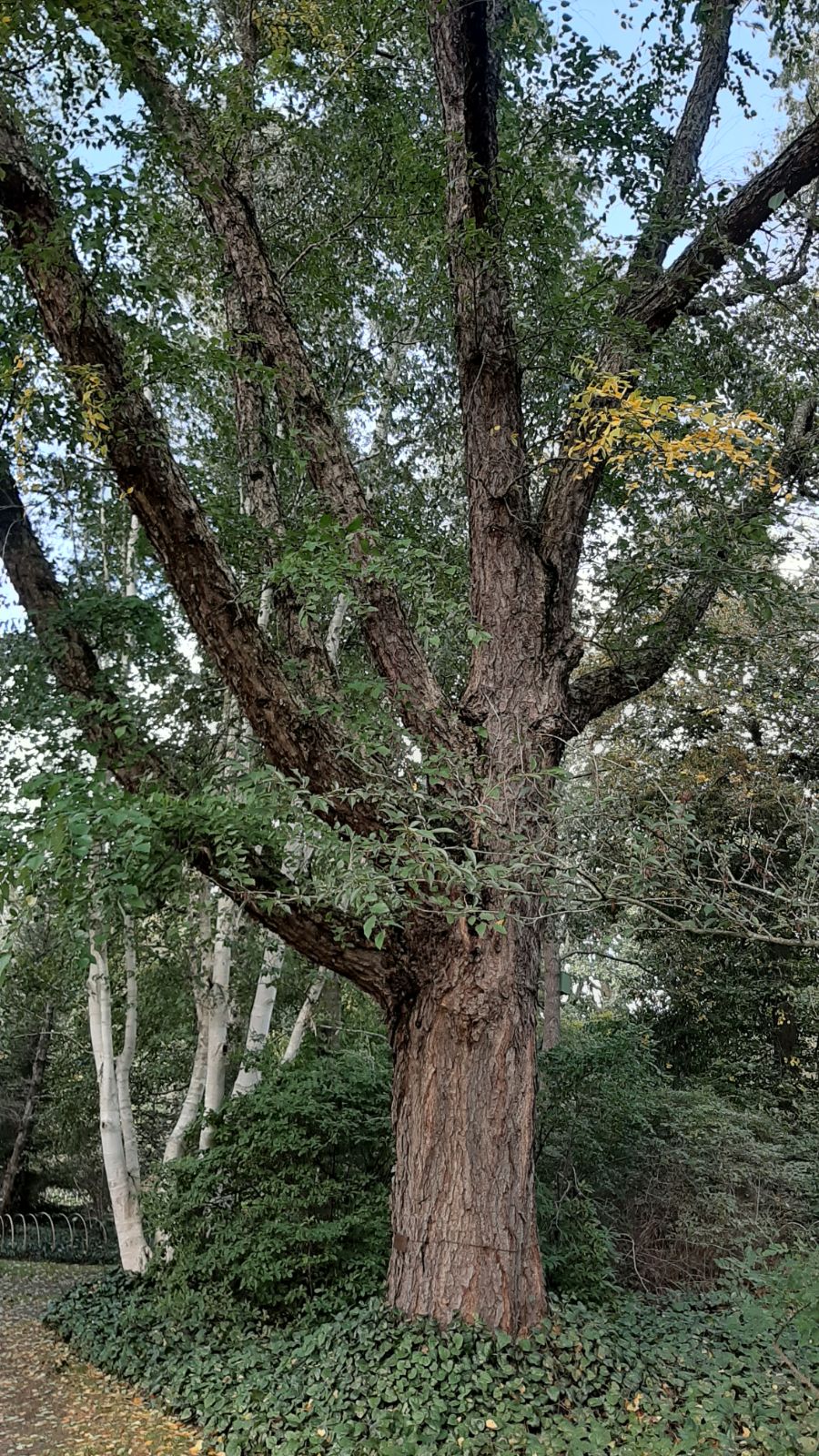
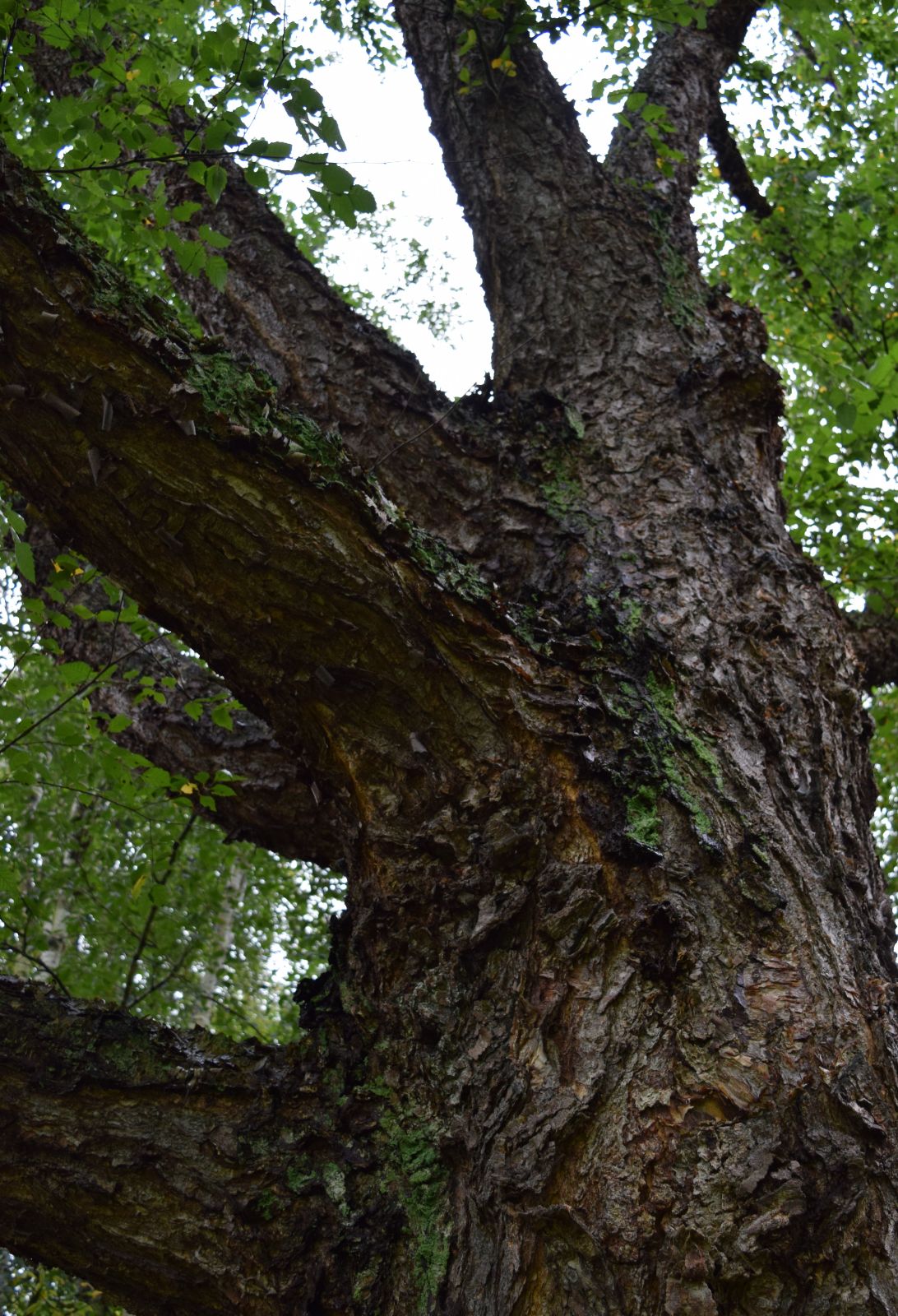
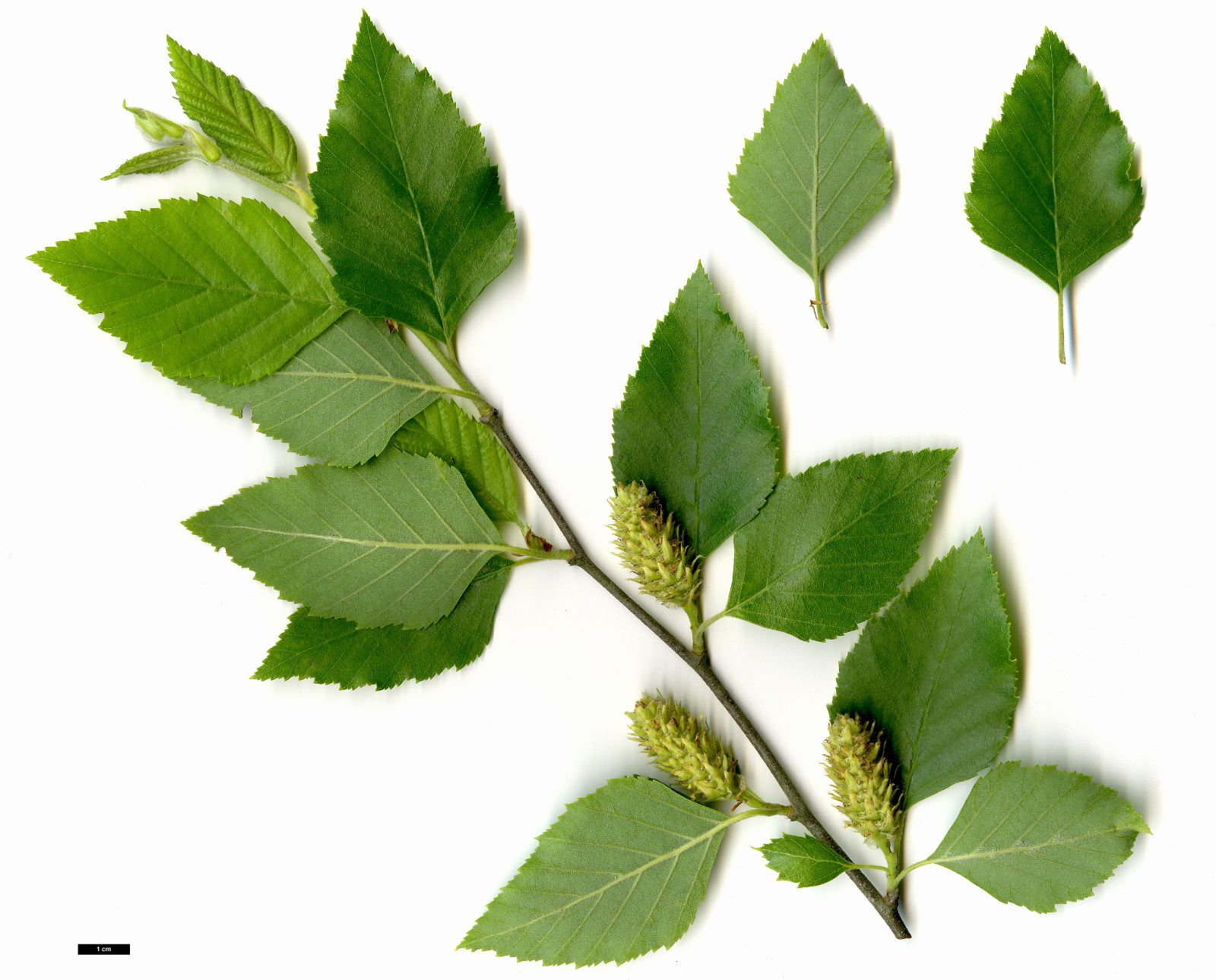
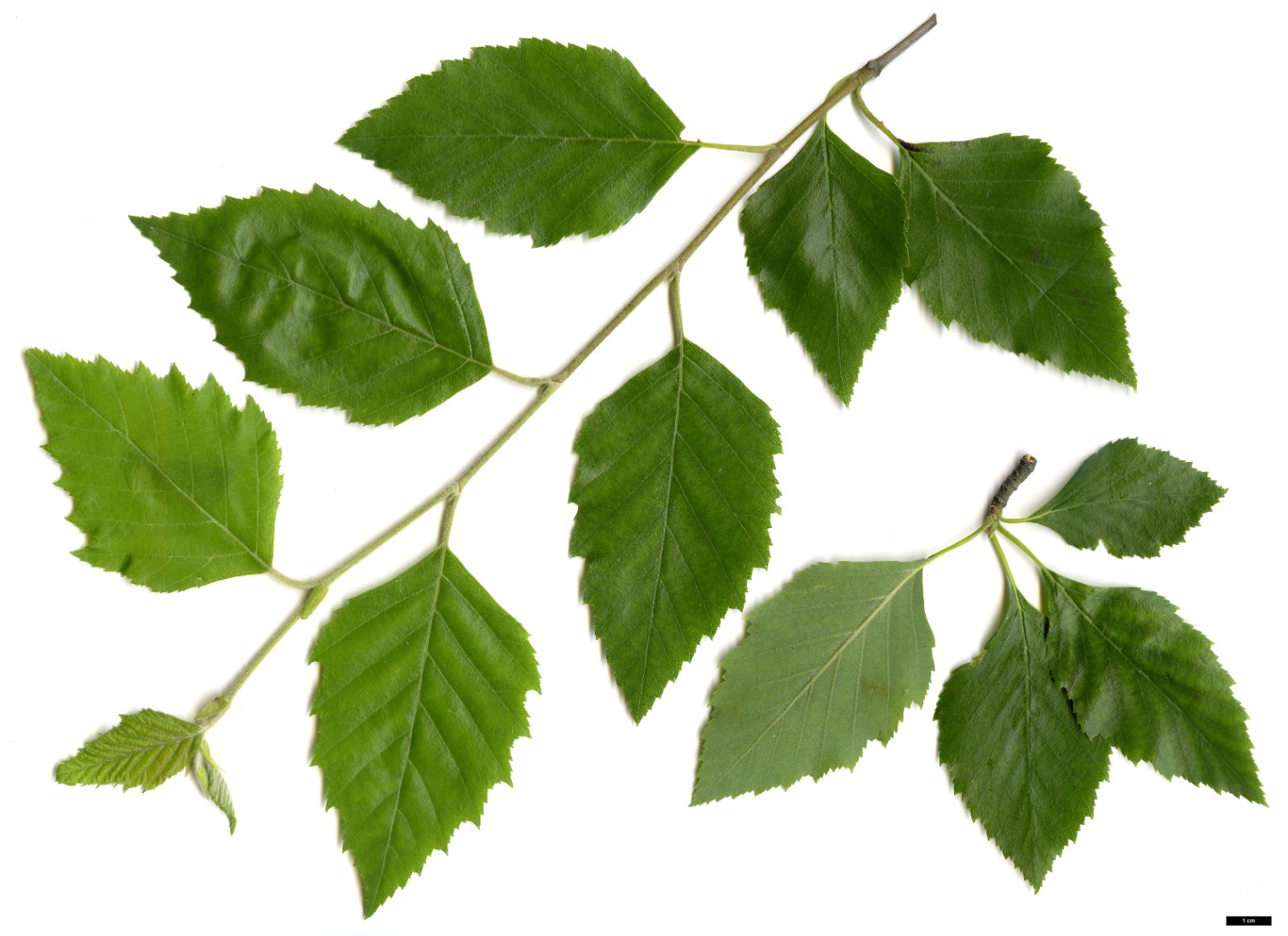
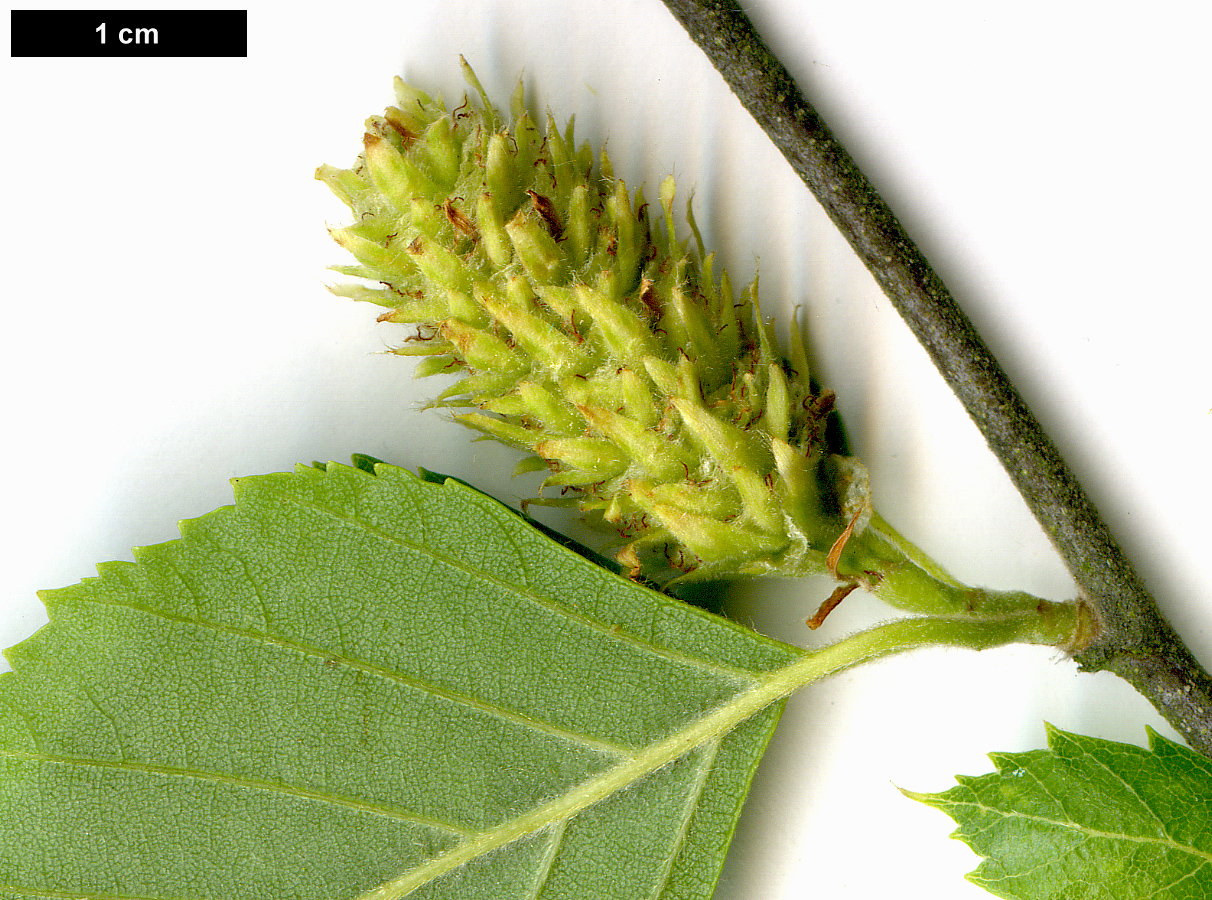
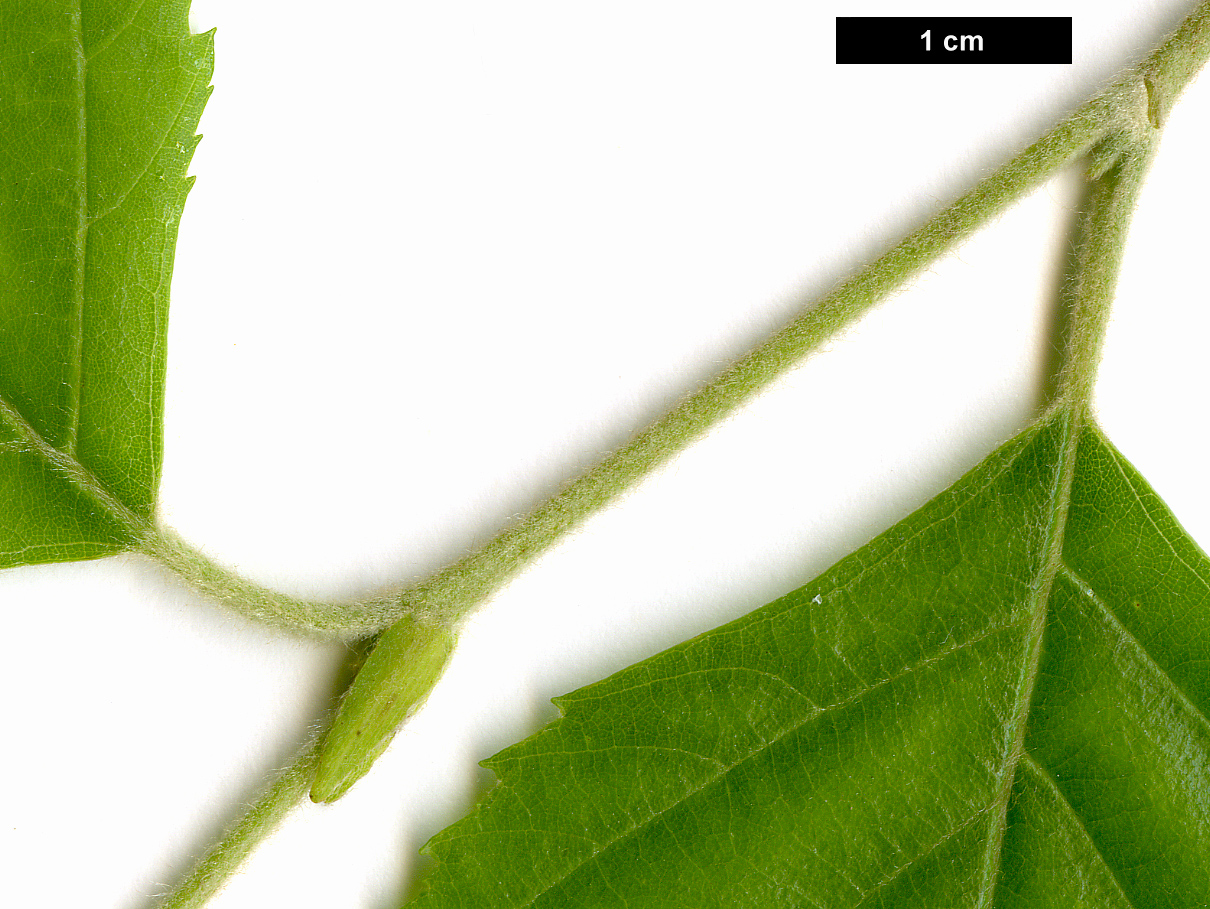
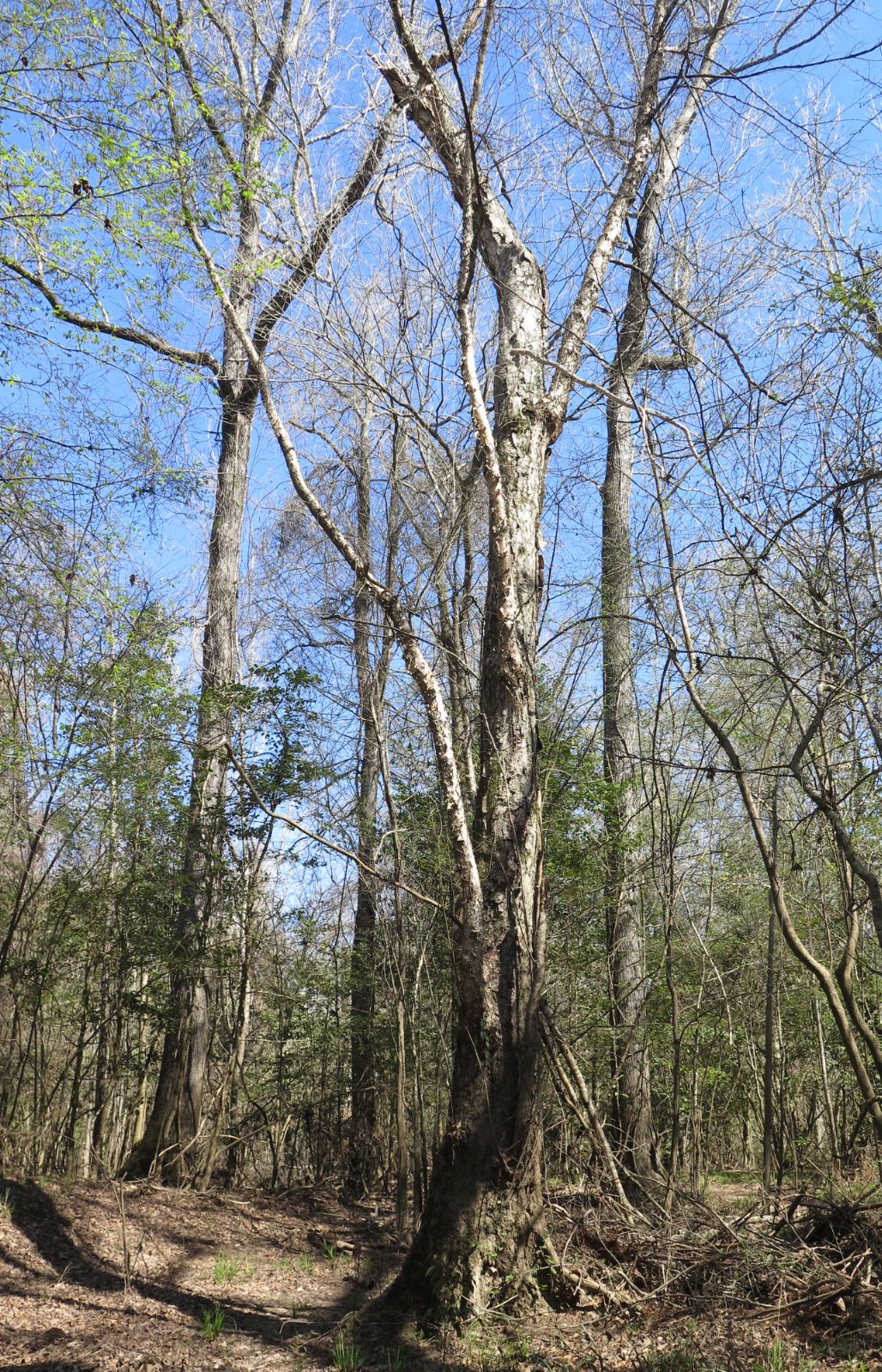
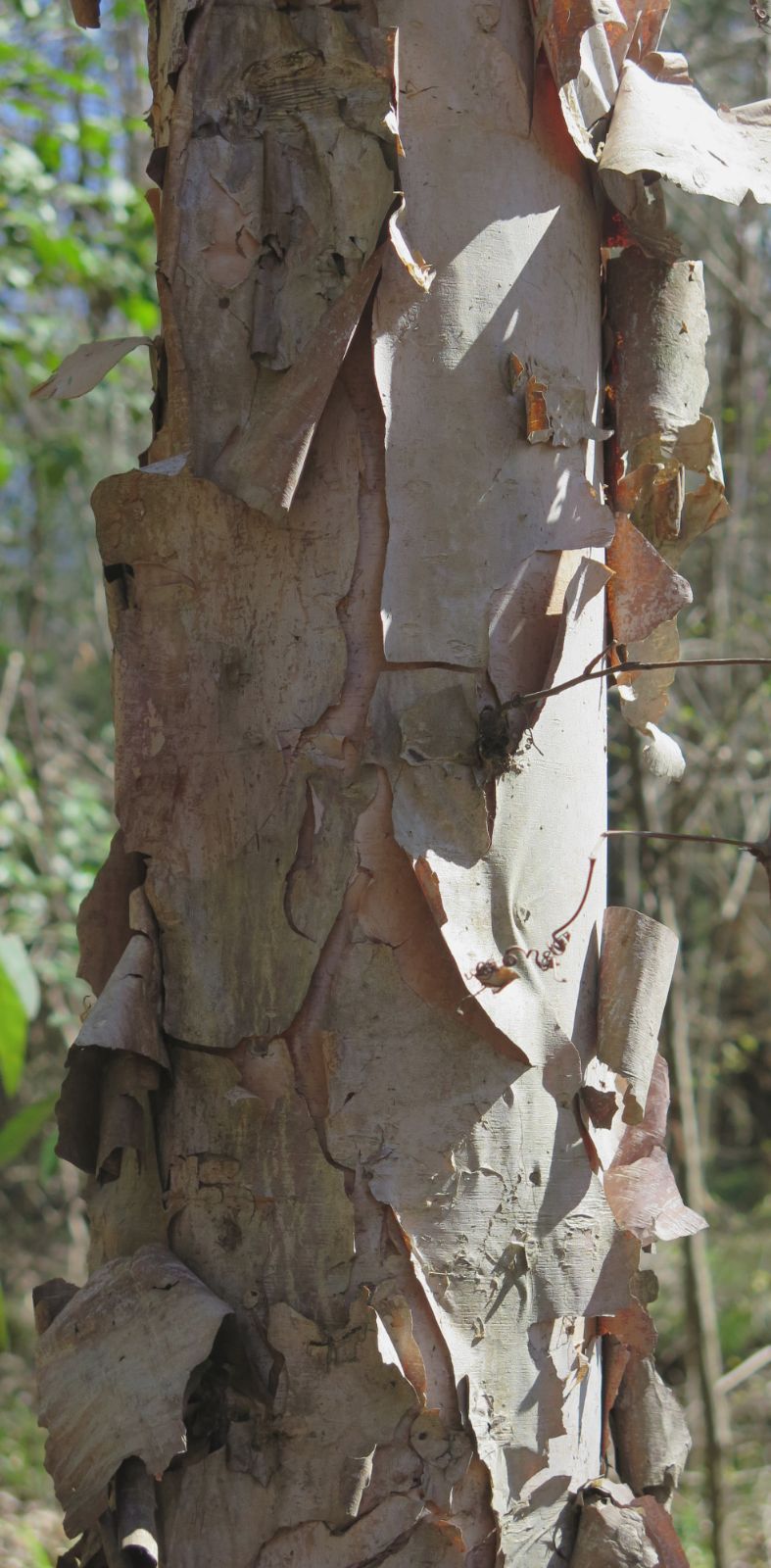
Large trees to 25 m, often with several trunks. Bark shaggy, peeling off in numerous small curls, whitish to quite dark brown in thicker trunks. Twigs hairy to glabrous. Buds small and narrower than adjoining internode, to 5.0 × 2.0 mm. Scales shining pale brown or green, more or less hairy. Shoots glabrous to densely hairy, smooth, with small lenticels and glands; petioles glandular. Leaves on long-shoots 50–90 × 30–60 mm, matt pale green and only shiny on youngest leaves, always matt and glaucous beneath, rhombic- ovate, cuneate to truncate at base; lateral veins (5–)7–10 (–12) and impressed when young, brown or crimson-brown beneath and densely hairy; leaf margin with lobes up to 1 cm deep, sharply double serrate; lateral veins ending in large forward-curving teeth, each with slender tip. Basal long shoot and spur shoot leaves (i.e. those preformed in bud) often smaller, ovate, cuneate, acute rather than acuminate, usually 38–40 × 24–30 mm, sometimes greener rather than glaucous beneath, serrations less deep, with sinus as little as 1–2 mm deep, margin sometimes scarcely double-toothed, with only 2 or 3 minor teeth between the major, with c. 6 veins. Blade:petiole ratio usually 1:5 to 1:6, to 1:3 in larger, more rhombic leaves. Fruiting catkins more or less erect, horizontal or pendent, more or less cylindrical but mostly tapering at base, about 15–30 × 10–25 mm. Seed almost circular, c. 4 × 4 mm with wing about half nutlet width. Flowering time. March–April; fruiting June. 2n=28.

Distribution  United States

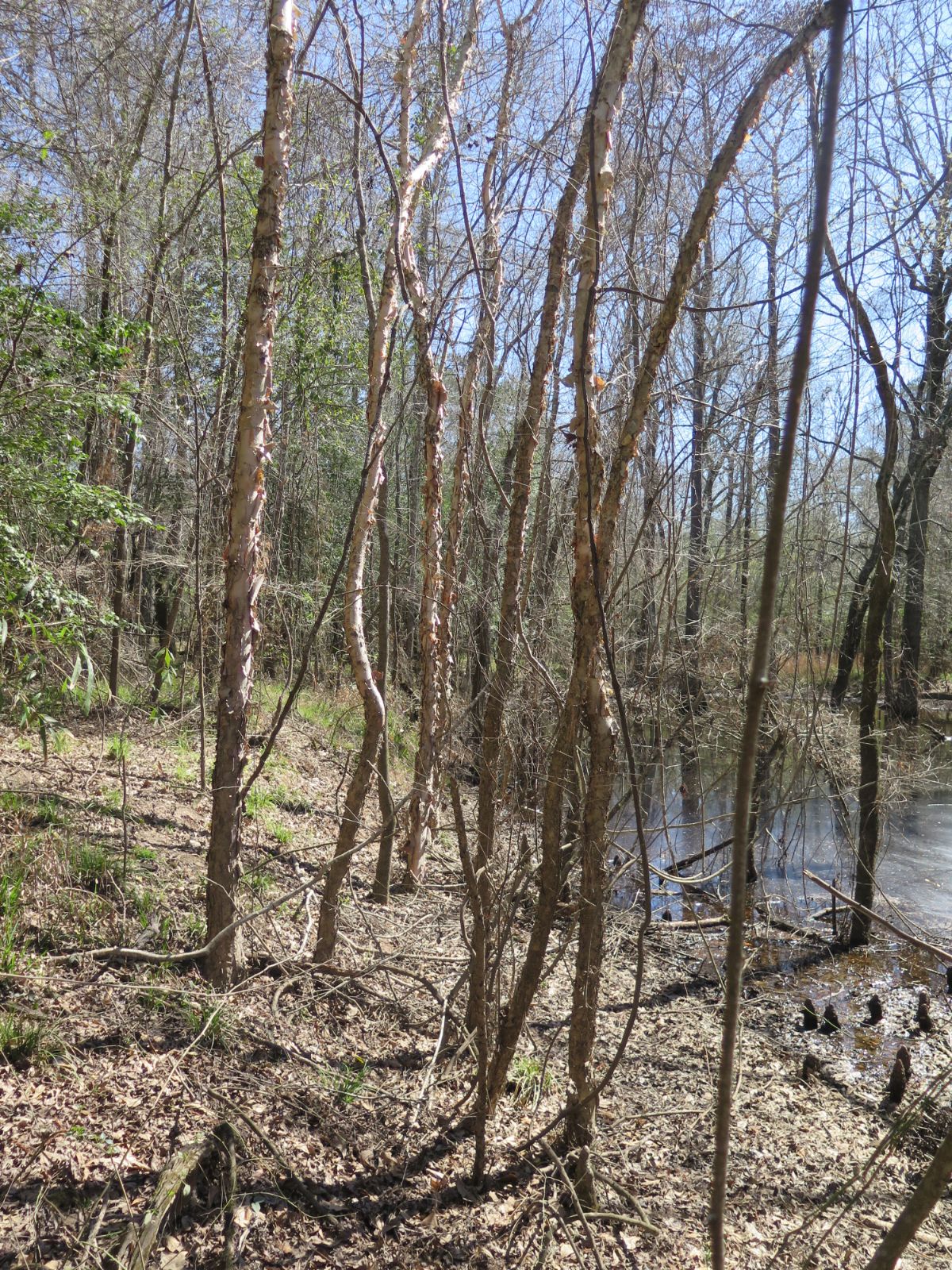
Betula nigra is one of the most striking birches, recognisable instantly by several characters, most obviously the peculiar bark, which on young trees is dusty pink, the clinging flakes curling and tightening as the stems increase in size, eventually assuming on mature trunks the stiffly flaking texture of overbaked phyllo pastry. Equally distinctive are the rhomboidal, abaxially glaucous leaves with cuneate bases tapering into the petiole, and the thin, smooth, brown or yellow-brown twigs with their resinous glands and very small buds. Bean (1976) noted the tendency of both wild and cultivated trees to divide low down into two or three erect limbs. The species has been grown in Europe since at least the mid eighteenth century: it appears in the seventh edition of Miller’s Dictionary (1759) but the botanising colonist John Bartram may well have been responsible for its introduction to the Old World a few decades earlier, as he sent quantities of tree seed from Virginia to Peter Collinson, who distributed them to subscribers.

The north–south range of Betula nigra in the east of North America is very great, stretching continuously from Massachusetts in the north to Florida in the south and as far west as Texas and Ohio. The species appears to be scarce in the Appalachians but can be seen by riversides in West Virginia. Otherwise it is common between the Appalachians and the sea, and also on the western side of the mountains. There are significant groves of the trees in bottomlands and streamsides in southeast Ohio.

Betula nigra was named in Linnaeus’ Species Plantarum (Linnaeus 1753), based on the plant that Plukenet (1696) had called Betula nigra virginiana, and Gronovius (1743) had characterised as Betula foliis ovatis oblongis acuminatis serratis, albeit Gronovius’ phrase name refers to a specimen of John Clayton’s now kept in the Herbarium of the Natural History Museum, which turns out to be B. alleghaniensis! Though Betula nigra is also known as Red Birch, or sometimes Black Birch, the vernacular name River Birch is particularly appropriate, since throughout its natural range the species is found on sites subject to periodic inundation such as flood plains, next to seasonal ponds and river banks. This preference for riparian situations is almost certainly related to the ripening and dispersal of seed in June – germination and establishment of seedlings depends on the availability of moist soil during the summer. The fruits – winged and rather corky – float easily, an adaptation favouring efficient dispersal by water. As is the case in other species such as Ulmus americana and Acer saccharinum, dispersal during early summer may be especially advantageous since the soils are then unlikely to be flooded (Sargent 1896; Furlow 1997).

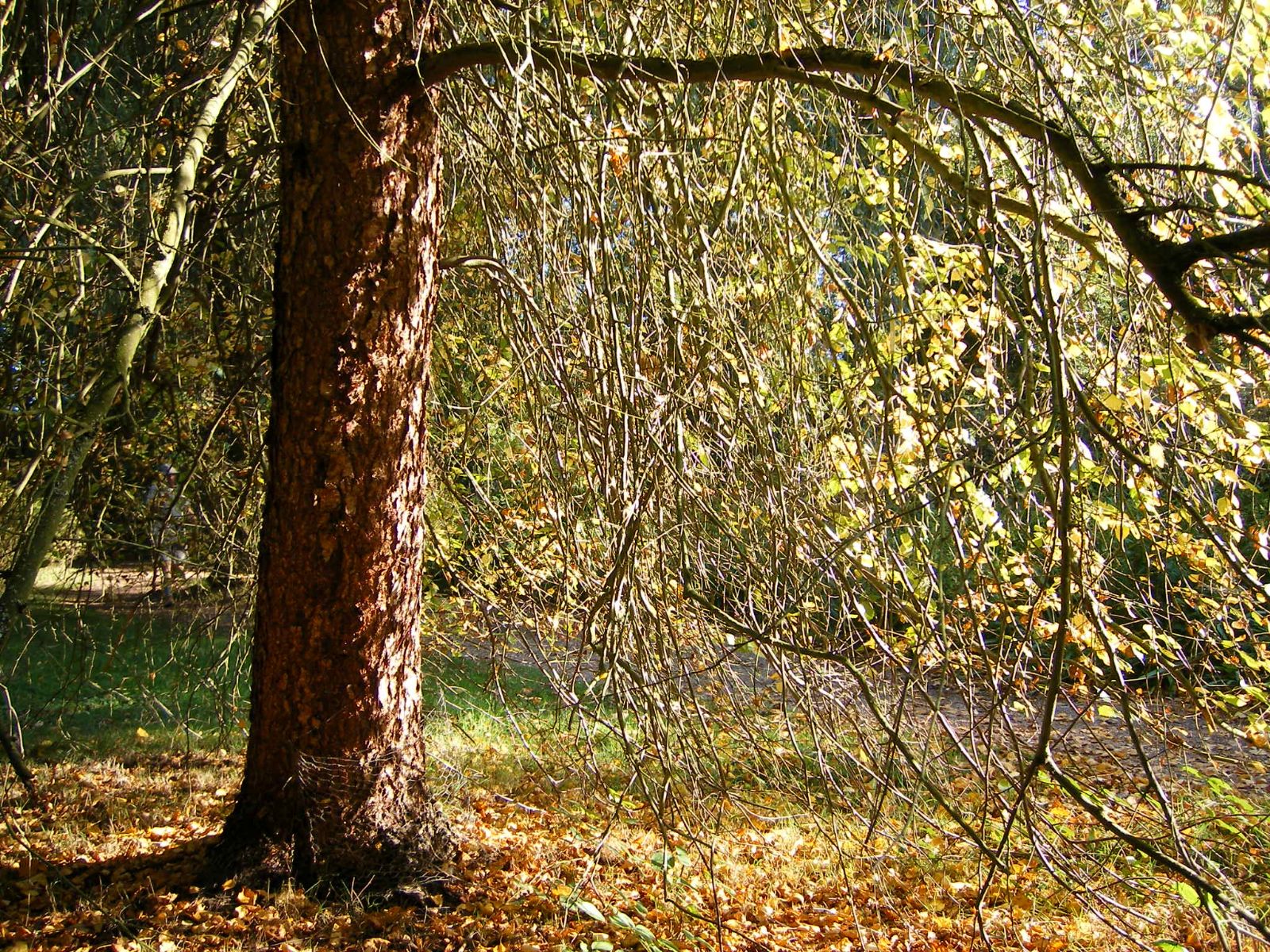
In cultivation Betula nigra will grow happily enough in drier sites – indeed, trees can grow to quite a respectable size in such situations. Branches tend to be brittle, snapping off easily in high winds, and in areas where summers are too cool for the twigs to ripen properly considerable winter die-back may occur. Softwood cuttings strike easily in mist, and many selections have been made for bark colour, particularly of the paler shades. There are many different forms of the tree from which to choose. Many specimens found growing in arboreta – for example the cultivars ‘Heritage’ and ‘Wakehurst’ – have markedly distinct characters, being whiter in bark when young and with bigger, shinier, more rhombic leaves that are blue-green rather than pale green and have fewer, more widely-spaced lateral veins. A word of warning is in order, however: Betula nigra originates from areas with hot summers, where the trees’ tolerance of heat appears to impose a limit on their vigour. While many of the cultivars below have been described (by breeders or nurserymen) as compact or shrubby in nature, it has been observed that in more temperate climates, many of them will grow significantly larger than advertised. Caveat emptor!