Betula globispica
Credits
Article from Bean's Trees and Shrubs Hardy in the British Isles
Recommended citation
'Betula globispica' from the website Trees and Shrubs Online (treesandshrubsonline.
Genus
Other taxa in genus
- Betula albosinensis
- Betula alleghaniensis
- Betula × aurata
- Betula bomiensis
- Betula × caerulea
- Betula chichibuensis
- Betula chinensis
- Betula coerulea-grandis
- Betula cordifolia
- Betula corylifolia
- Betula cylindrostachya
- Betula davurica
- Betula delavayi
- Betula ermanii
- Betula forrestii
- Betula glandulosa
- Betula grossa
- Betula humilis
- Betula insignis
- Betula jacquemontii
- Betula lenta
- Betula luminifera
- Betula lutea
- Betula mandshurica
- Betula maximowicziana
- Betula medwediewii
- Betula nana
- Betula neoalaskana
- Betula nigra
- Betula occidentalis
- Betula papyrifera
- Betula pendula
- Betula platyphylla
- Betula populifolia
- Betula potaninii
- Betula pubescens
- Betula pumila
- Betula raddeana
- Betula schmidtii
- Betula szechuanica
- Betula tianschanica
- Betula × utahensis
- Betula utilis
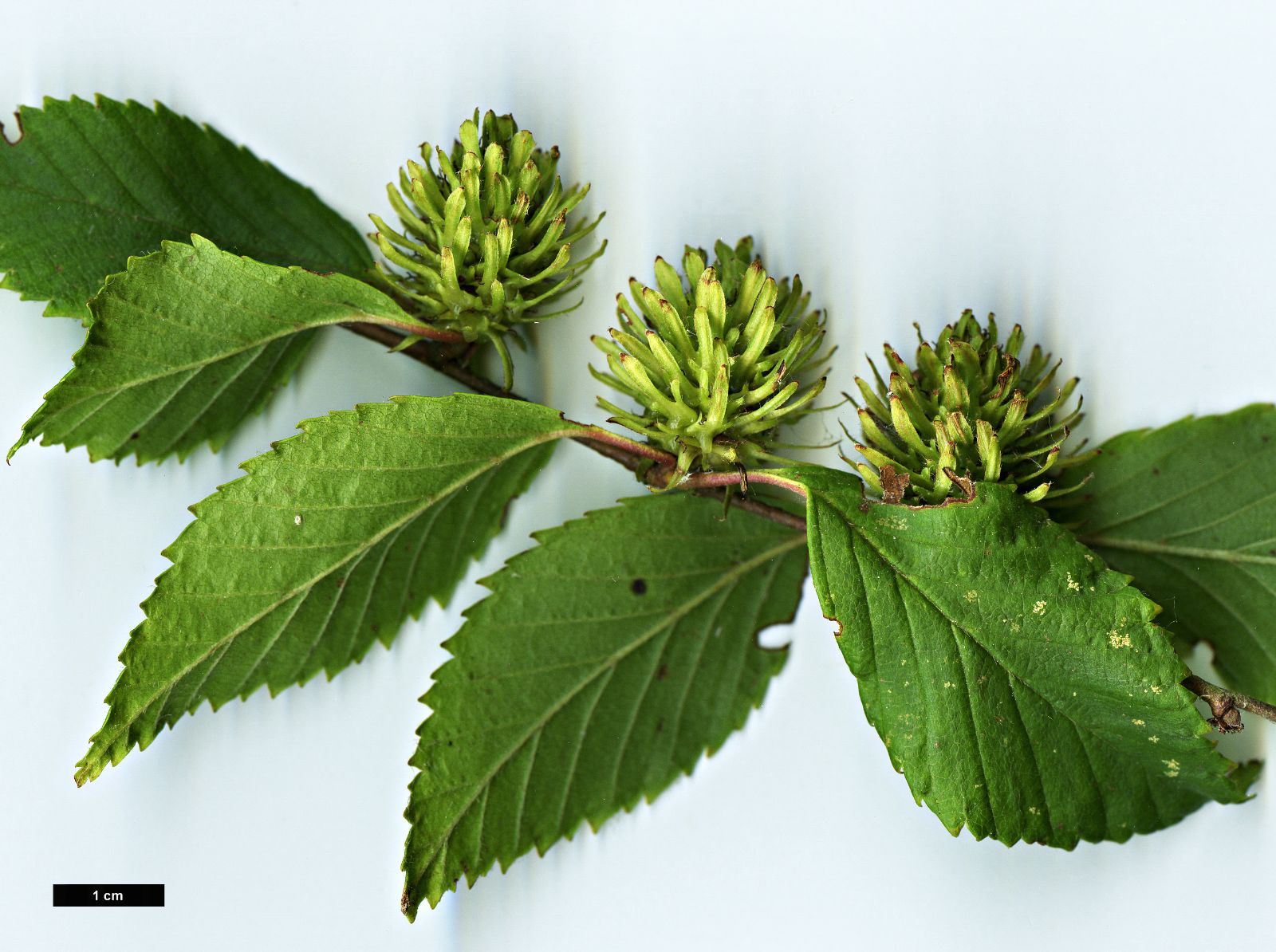
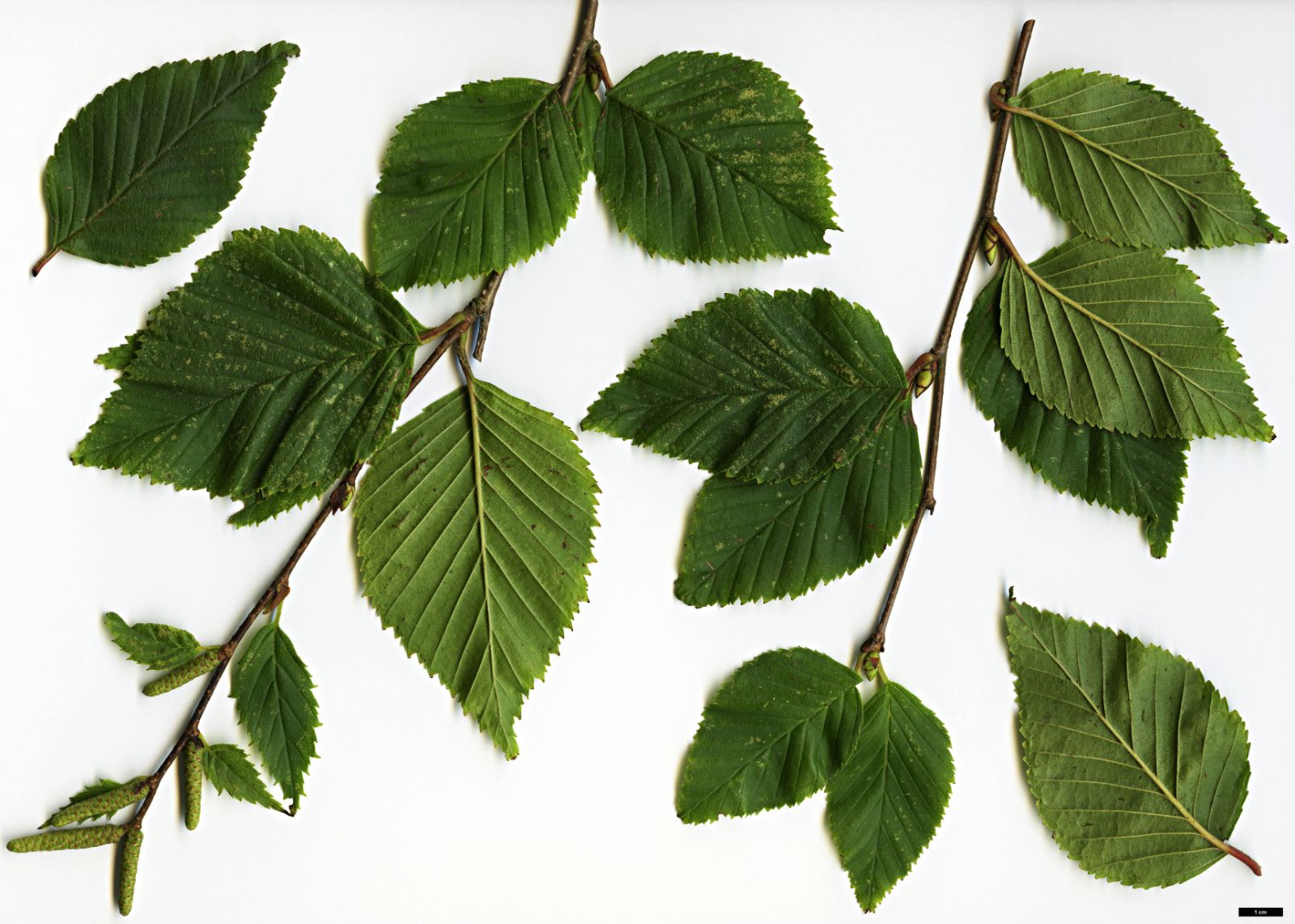
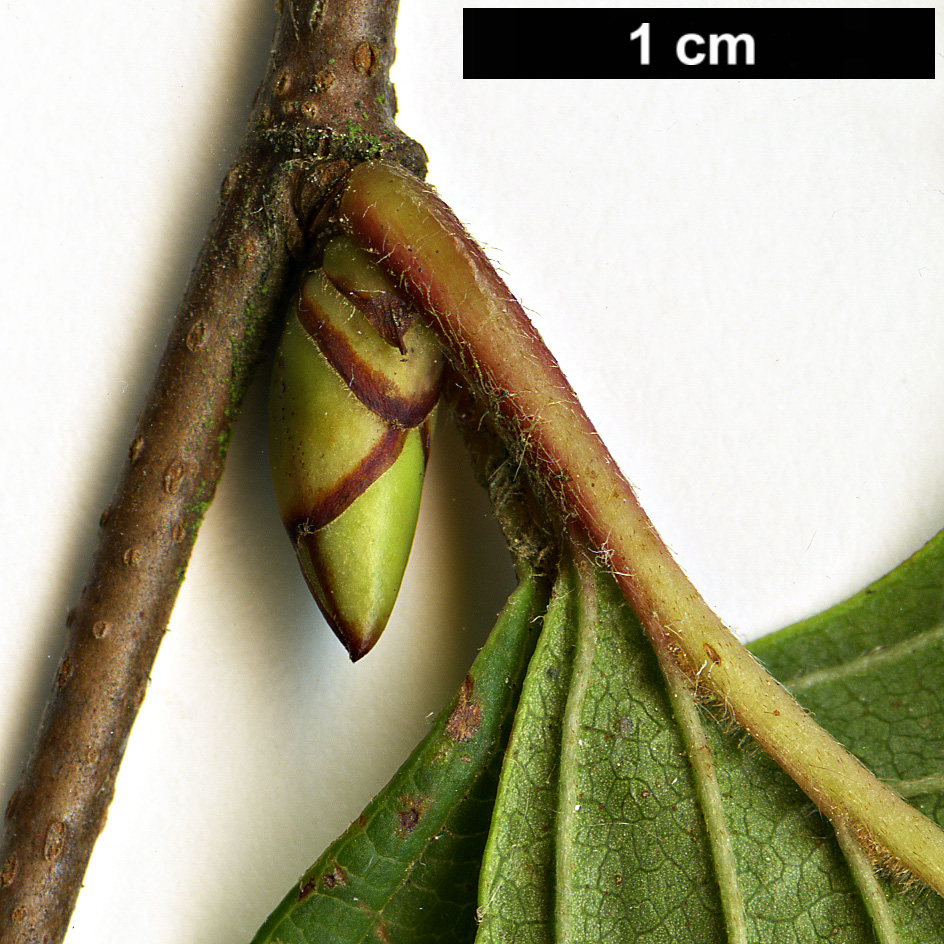
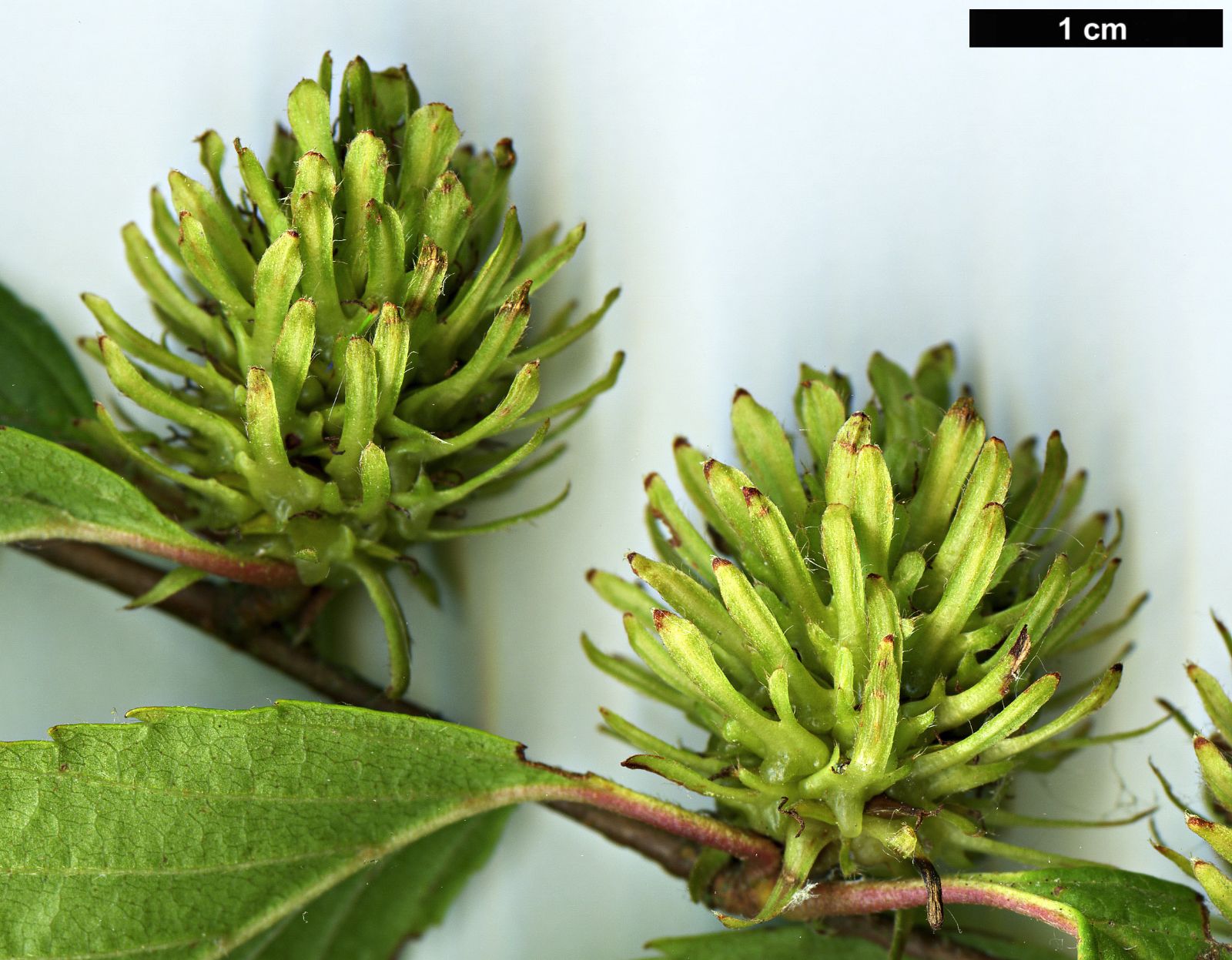
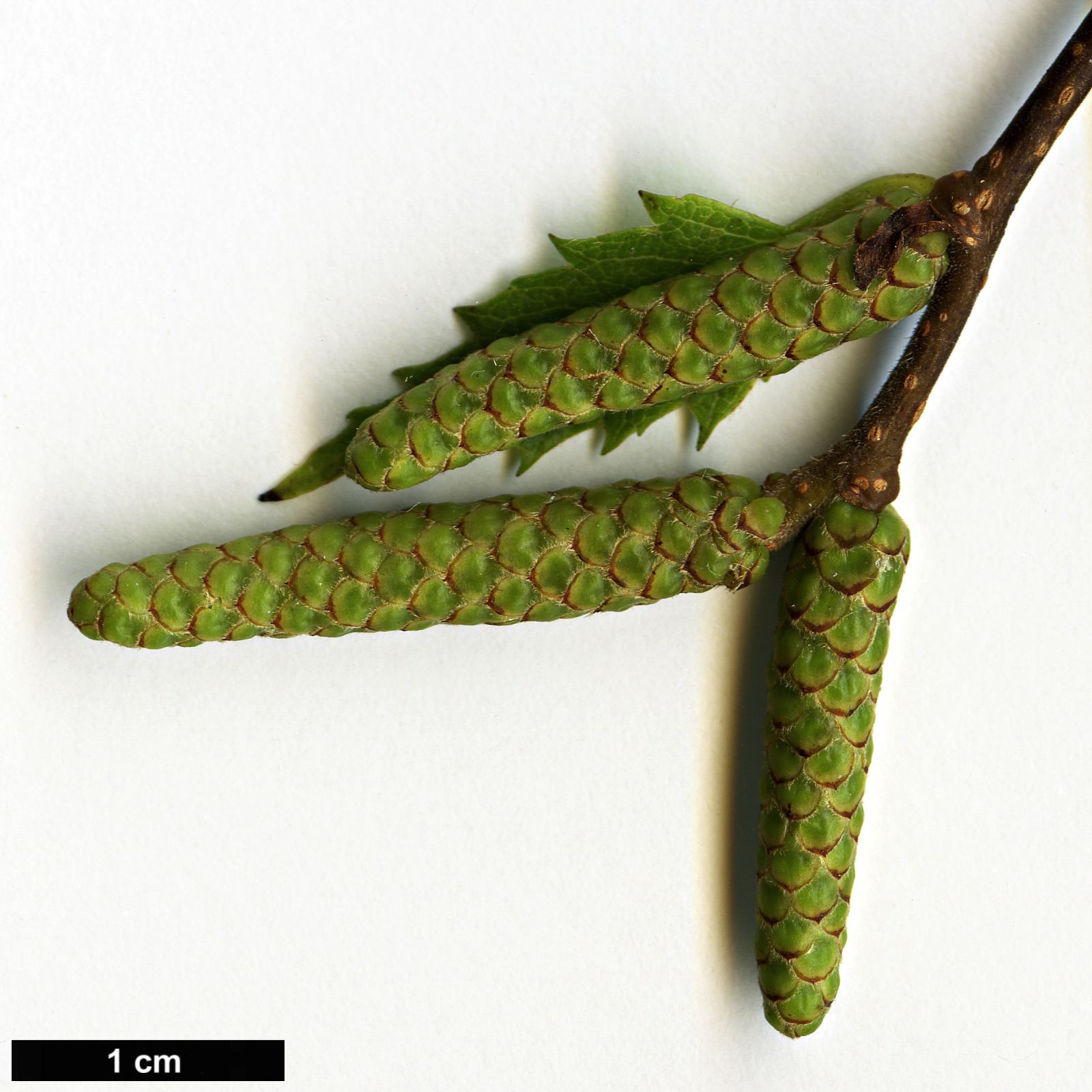
A deciduous tree to 70 ft high in the wild, with a greyish-white bark peeling in papery flakes; branchlets yellowish grey or greyish brown. Leaves broad ovate, 13⁄4 to 23⁄4 in. long, with eight to ten pairs of veins, abruptly tapered at the apex to a blunt point and with a wedge-shaped or rounded base; margins sharply and coarsely toothed; downy beneath on the midrib and main veins. Fruit-bearing catkins ovoid to globose, 1 to 11⁄2 in. long; lobes of scales very narrow and edged with fine hairs, the lateral ones shorter by a half or a third than the middle lobe.
A rare birch, found here and there in the mountains of central Japan. It is scarcely known in cultivation in this country, but there are young trees at Kew, planted in 1957. It is well distinguished by the short, thick fruit-catkins.