Kindly sponsored by the Banks family in memory of Lawrence Banks CBE DL VMH
Hugh A. McAllister, Kenneth Ashburner, Paul Bartlett & Martin Deasy (2026)
Recommended citation
McAllister, H. A., Ashburner, K., Bartlett, P. & Deasy M. (2026), 'Betula davurica' from the website Trees and Shrubs Online (treesandshrubsonline.
This TSO article is an edited digest of the species account in Kenneth Ashburner and Hugh McAllister, The Genus Betula: A Taxonomic Revision of Birches (2013; repr. 2016).
Trees and Shrubs Online, 23 June 2026
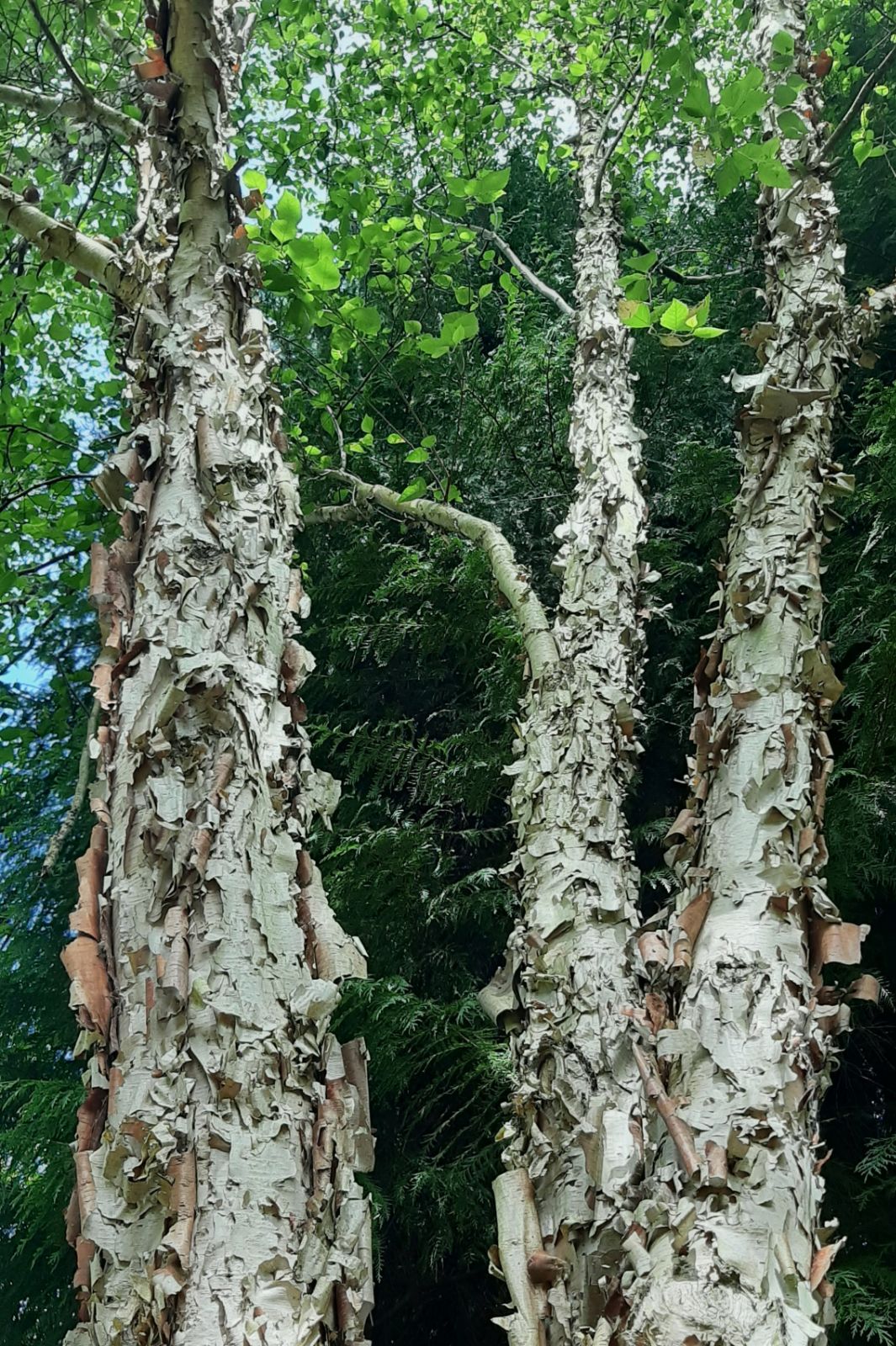
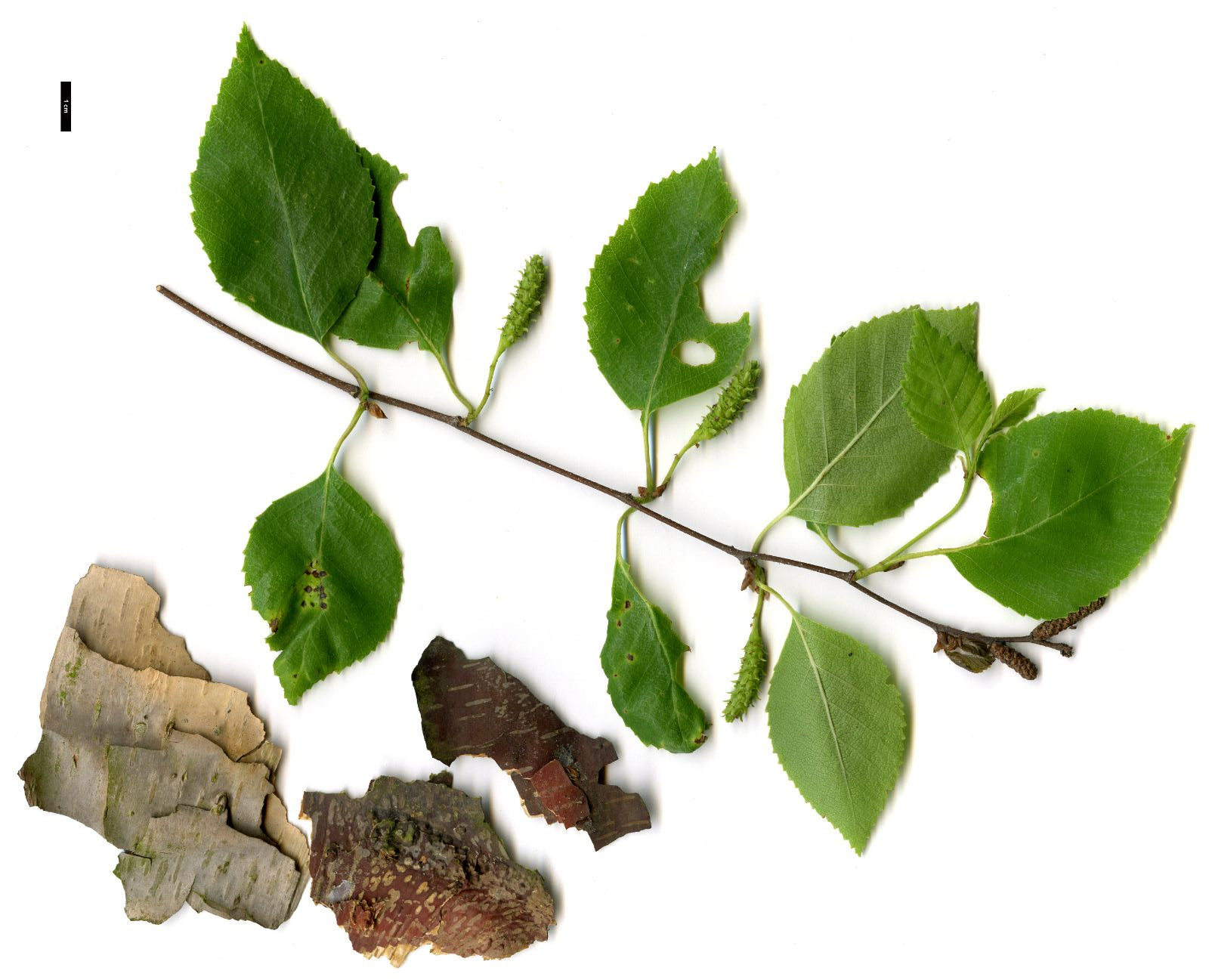
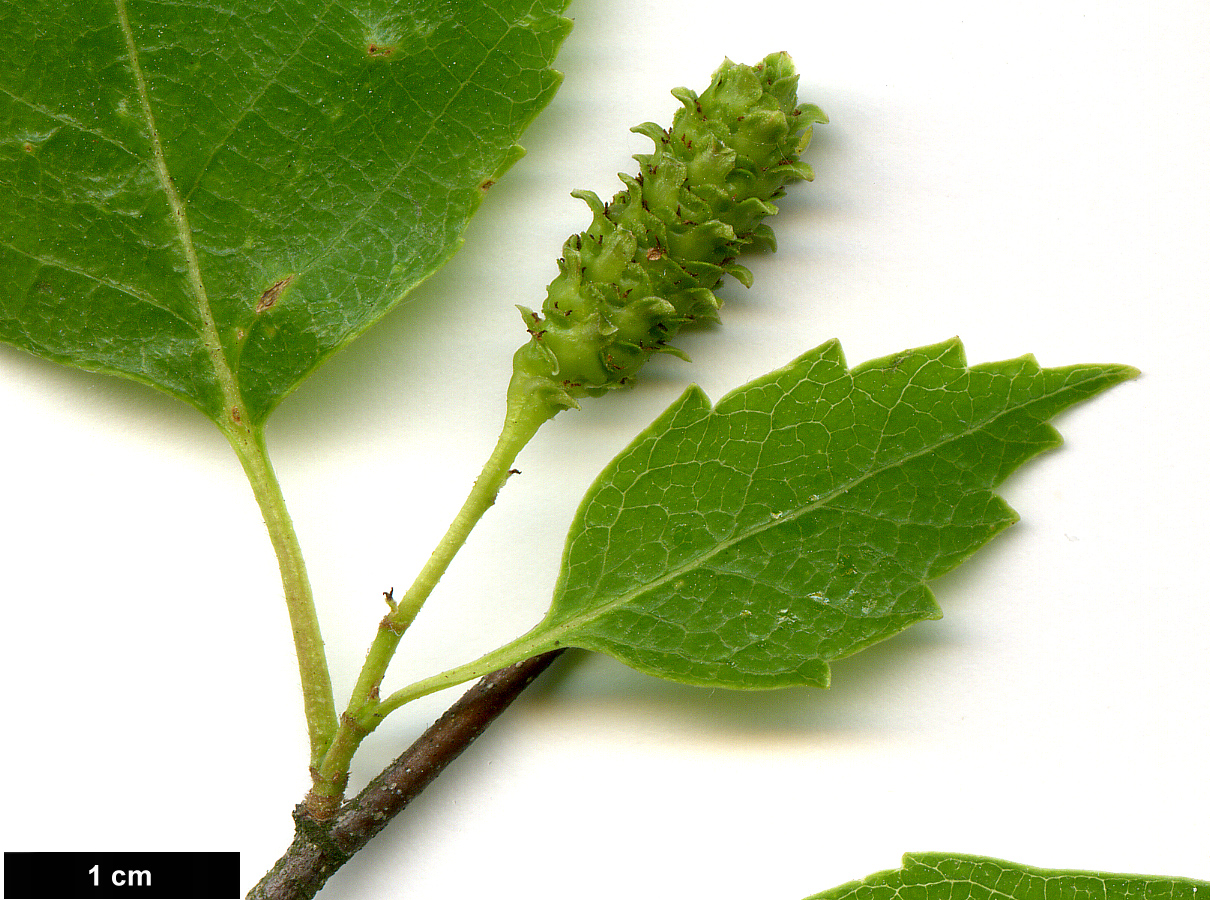
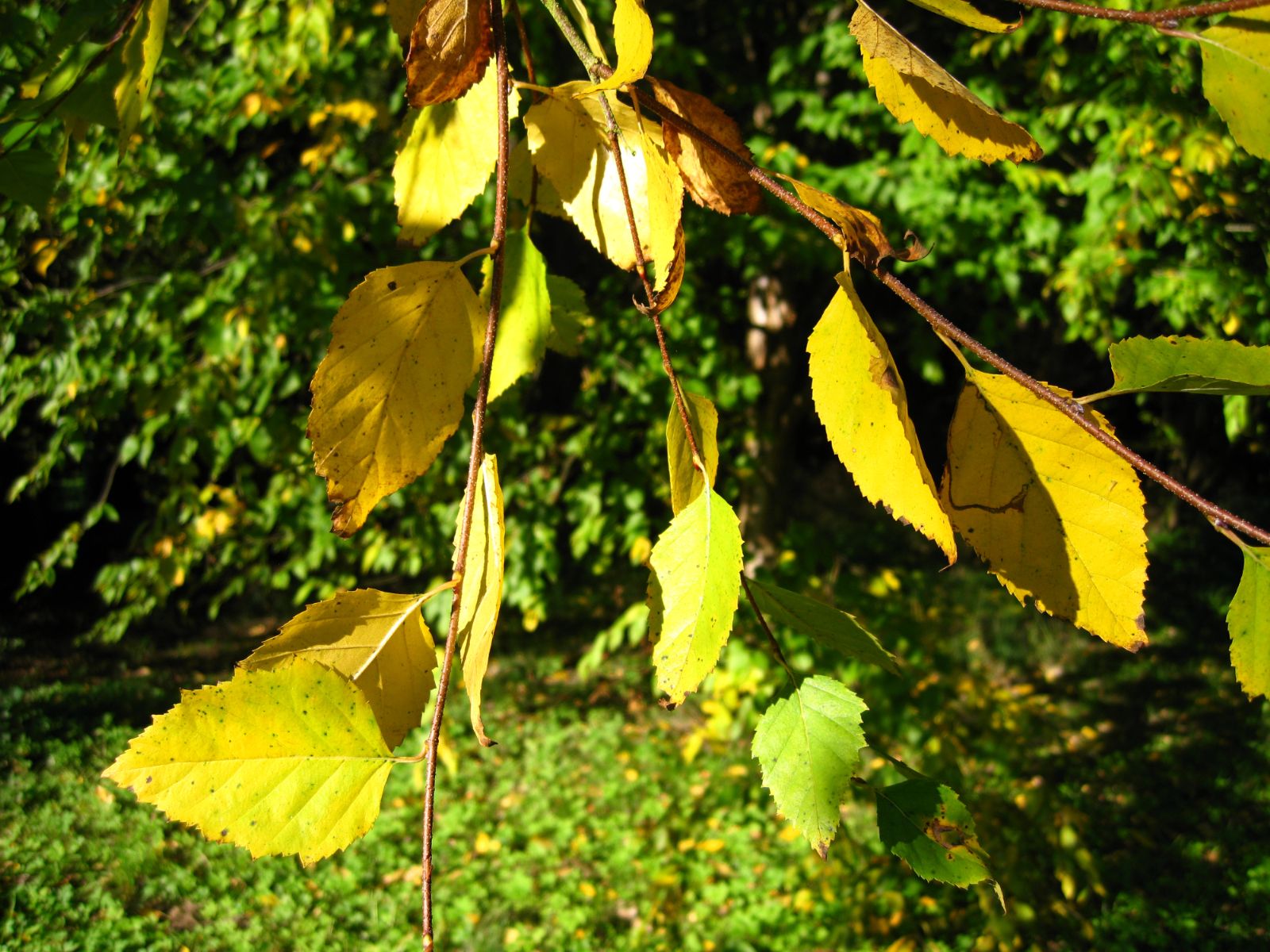
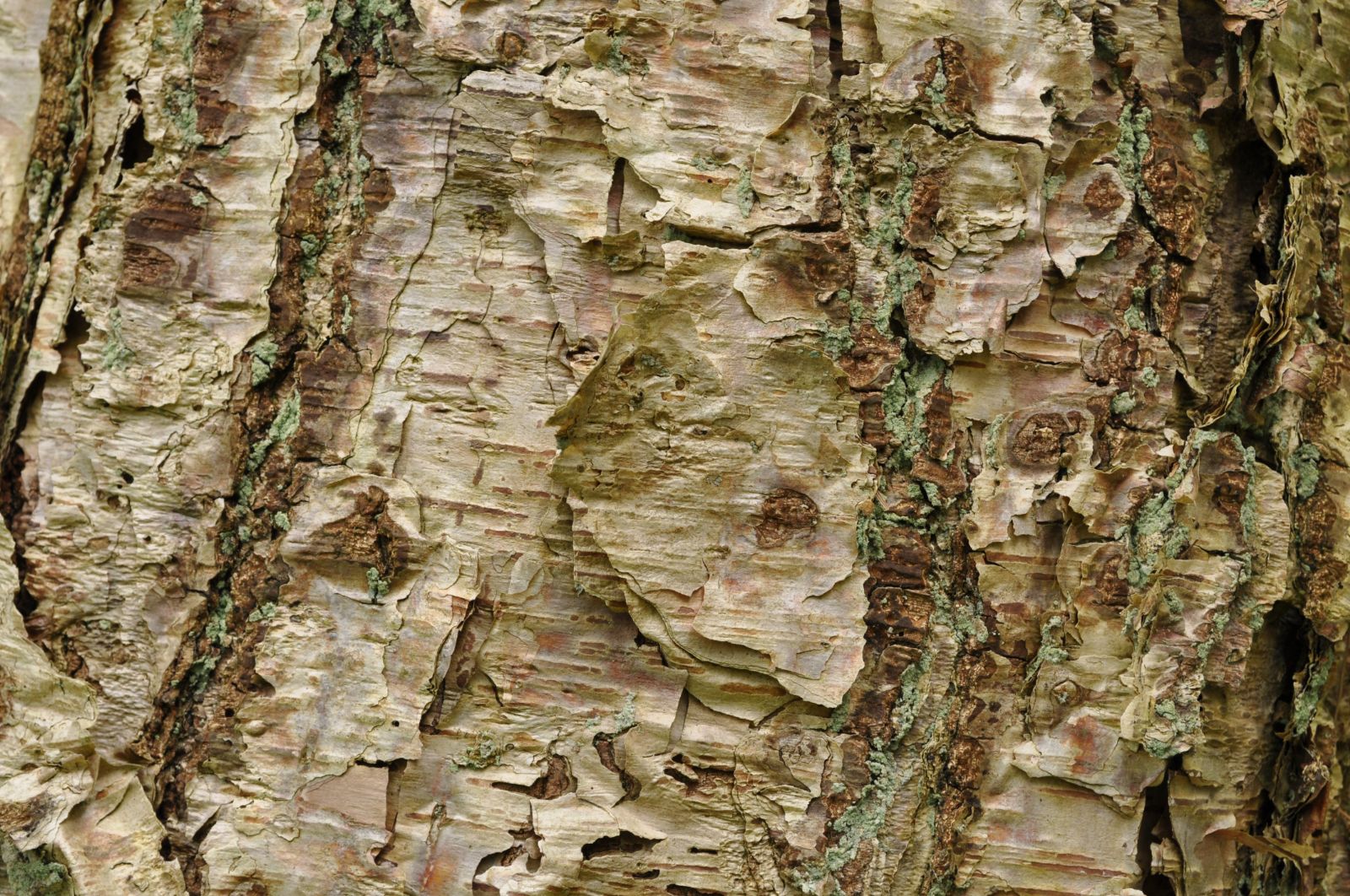
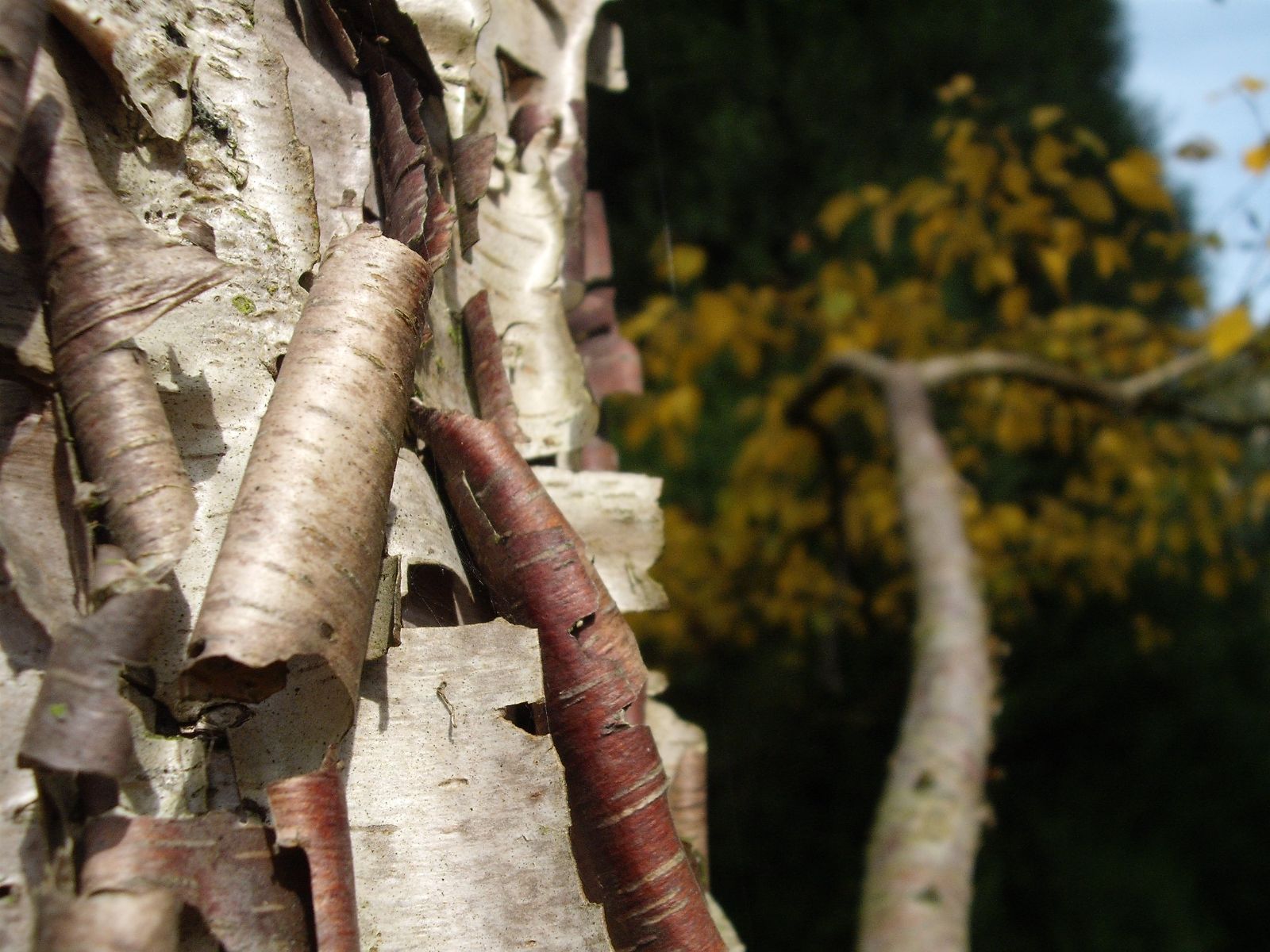
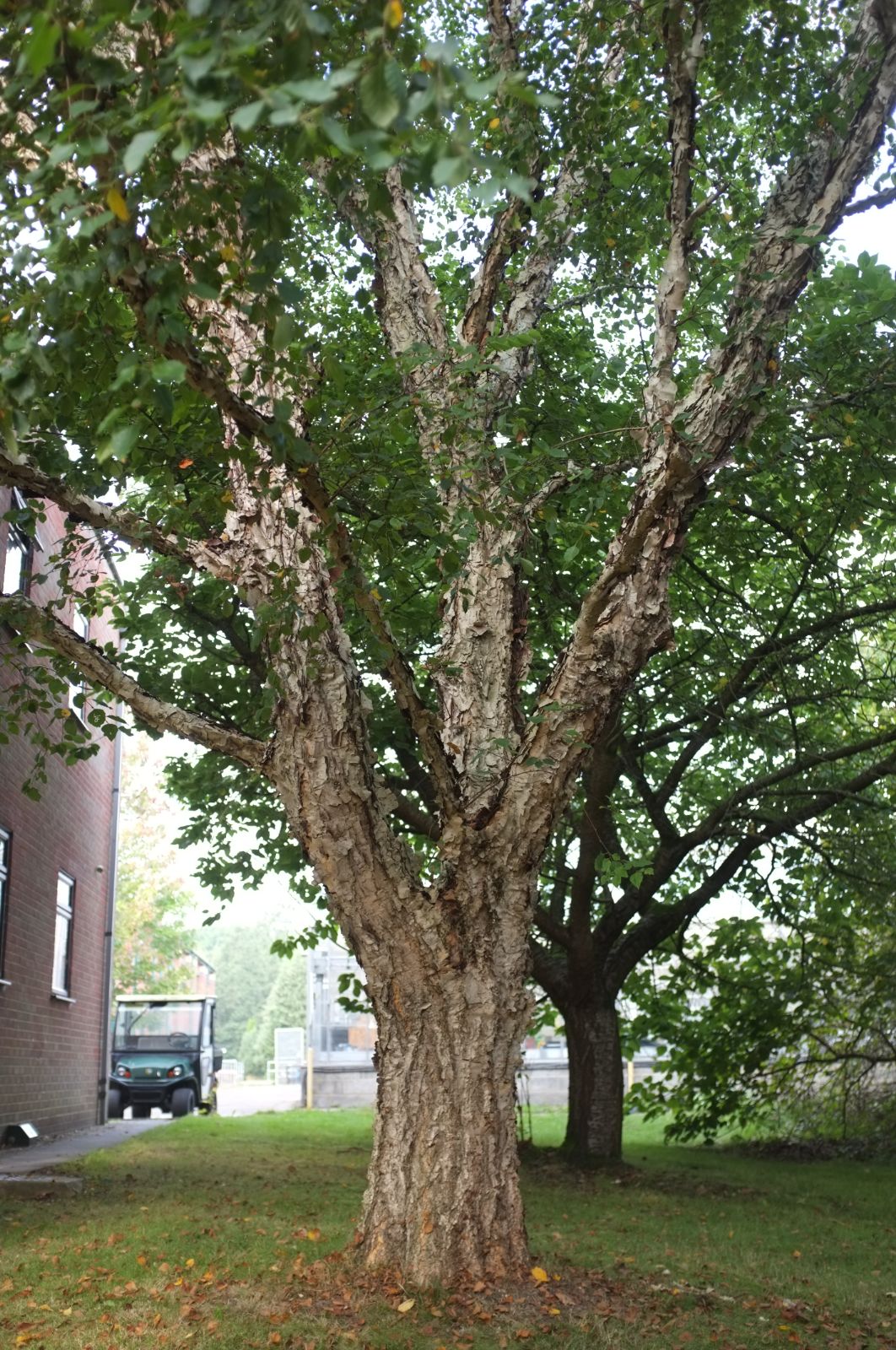
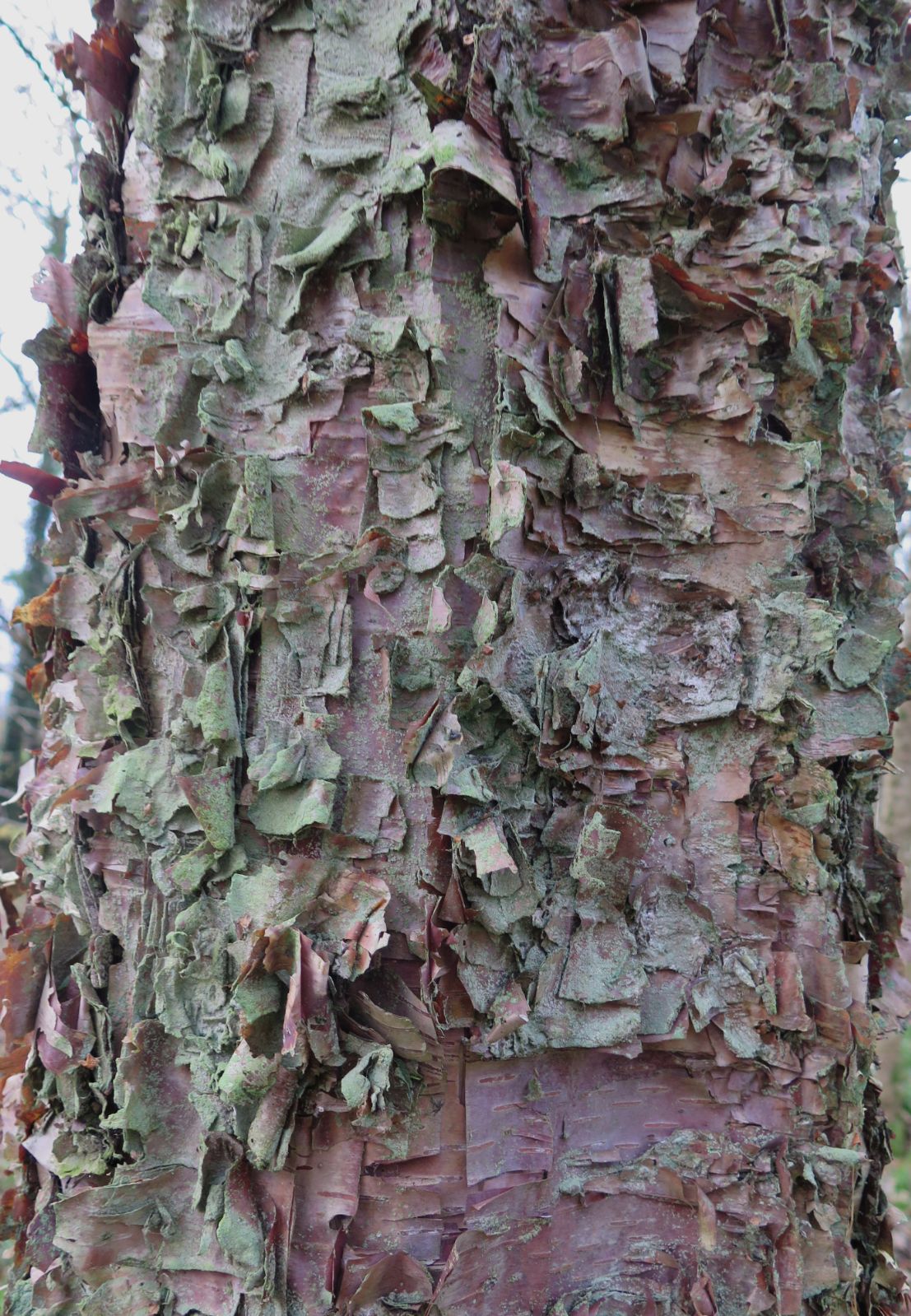
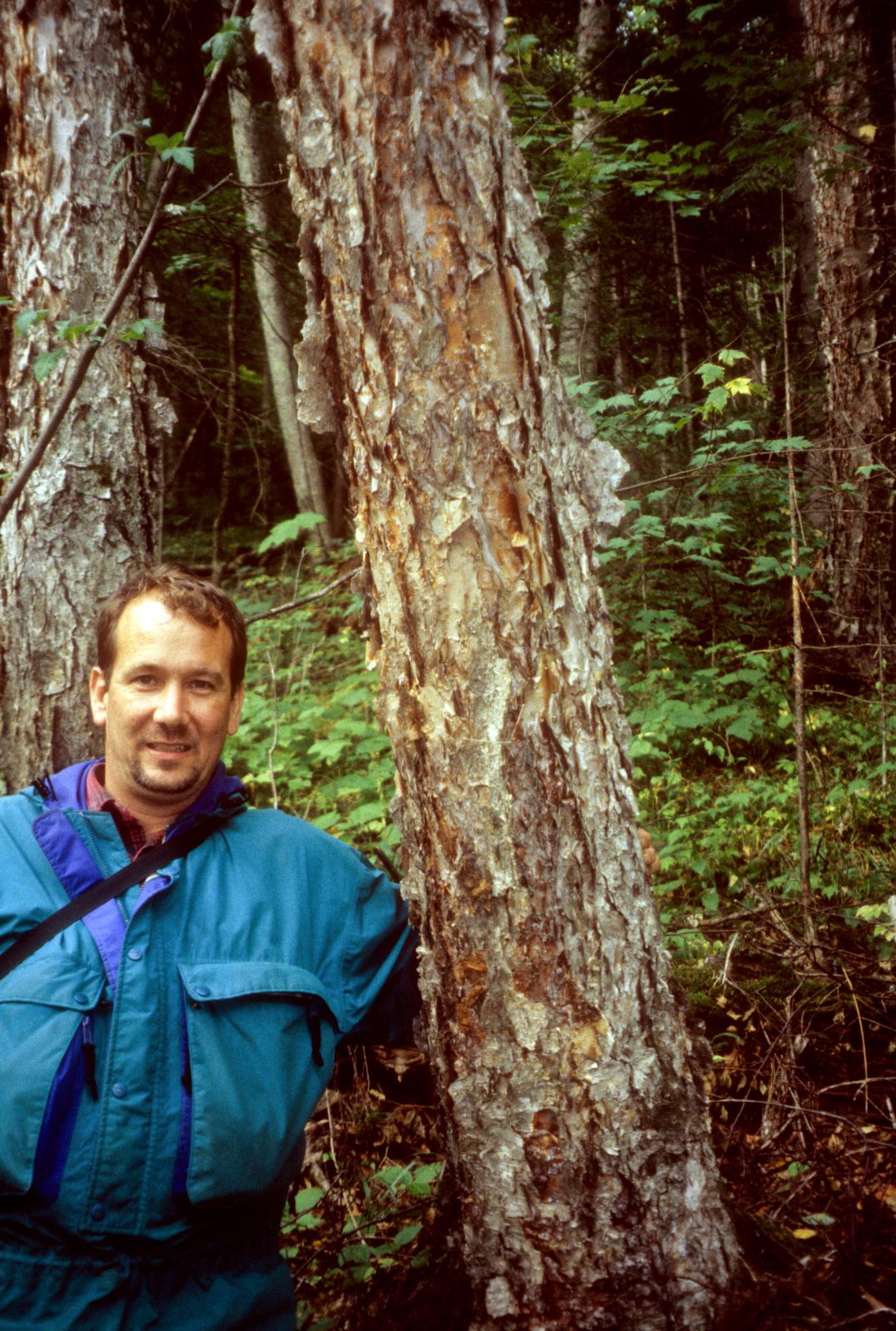
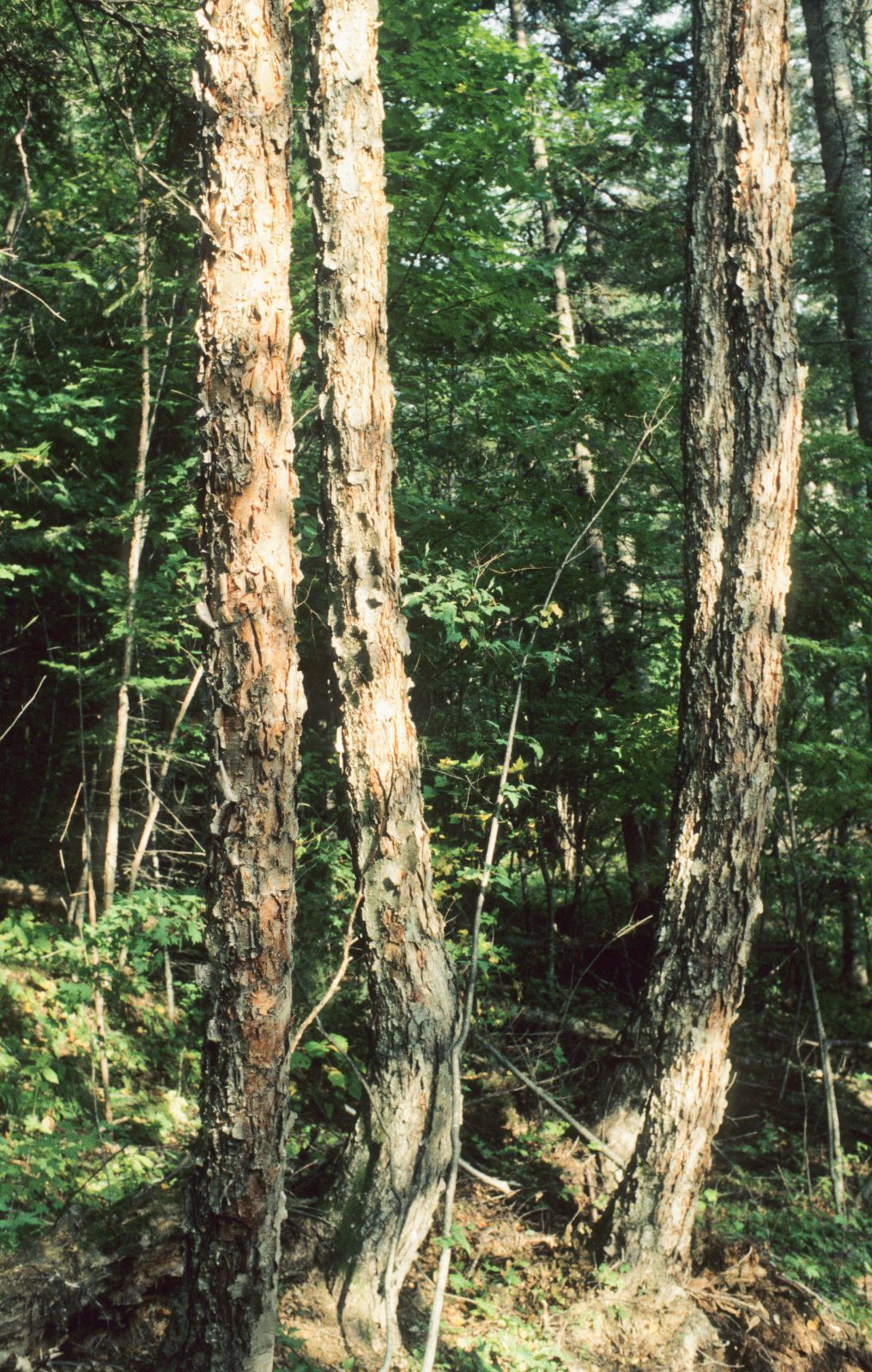
Tree to 20 m. Bark initially creamy white on young branches, becoming irregularly covered with curling flakes of white peeling bark giving a very distinctive appearance as branches increase in diameter; eventually thick and corky and black-brown in old trunks. Shoots very warty with copious resinous secretions, with variable amounts of longer silky hairs and short puberulent hairs, especially in axils of buds, becoming a rich brown colour, relatively thin, to about 3 mm diam.; vigorous and epicormic shoots of current year often branching freely. Twigs persistently hairy with both long ciliate and short puberulent hairs persisting on 2nd year twigs, especially near buds. Leaves with blade usually more or less rhombic to ovate but varying from broadly ovate to elliptic, cuneate at base, 4–8 × 3.5–5 cm; with 6–8 pairs of veins. Reddish glands mainly restricted to veins on upper surface and lamina of lower surface. Male catkins about 18 × 4 mm. Fruiting catkins more or less erect to horizontal to pendent, to about 30 × 10 mm, only sometimes ‘spikey’ due to patent or recurved scale midlobes even in unripe catkin; scales hairy to glabrous, glandular; style c. 0.75 mm, pyriform. Seeds with wings as wide as or narrower than nutlet, more or less adnate to style.
Distribution China Hebei, Heilongjiang, eastern Jilin, northern Liaoning, Nei Mongol, Shaanxi, Shanxi Japan Hokkaido (var. okuboi), Honshu (var. parvifolia); North Korea South Korea Mongolia Russia Kurile Islands (var. okuboi), eastern Siberia: Dahuria; Far East: Ze, Buryatia, southern Uda, Ussuri
Habitat Mixed broadleaved/coniferous and coniferous forests on dry or moist soils and exposed rocky places at 400–1300 m asl.
Conservation status Least concern (LC)
Betula davurica – the epithet often appearing as dahurica – shares with the eastern North American B. nigra the shaggy peeling bark and coarsely toothed, relatively few-veined, (sub)rhomboidal leaves that help to distinguish the three species of subgen. Dahuricae from the other birches. Within this group, Betula davurica can be distinguished from B. nigra by its non-spiky, later-ripening fruiting catkins, less distinctly touble-toothed leaves, and from B. raddeana by usually more than five pairs of leaf veins. The species was described by Peter Simon Pallas (1741–1811) from material collected on his expedition across Russia during 1768–1774. A precocious zoologist and botanist who earned his doctorate at the age of 19, Pallas was invited by Catherine the Great to be a professor at the Academy of Sciences in St Petersburg, from where he travelled east to the Altai, Lake Baikal, and into the upper Amur basin, where he collected B. davurica. Many of the plants collected on this trip – including this species (see below) – were beautifully illustrated in Flora Rossica (Pallas 1784–1788). Li & Skvortsov (1999) describe Betula davurica as occurring in mixed or coniferous forests, on dry or moist soils and exposed rocky places. In some situations it can be the dominant or co-dominant species in the forest (Zhang, Zheng & Zhang 2007; Hou, Mi & Ma 2006).
The species occurs as two cytotypes: the more common octoploid – described by McAllister and Ashburner (2013) as the type variety davurica – is common and widespread in continental north-eastern Asia including Korea. The rarer hexaploid consists of three disjunct populations (two varieties) in Japan and the Kurile Island of Iturup, in which lengthy geographical isolation has produced a degree of morphological variation. The Kurile Island and Hokkaido populations are distinguished as var. okuboi Miyabe & Tatew., reported by Ohwi (1965) to have leaves with up to nine pairs of lateral veins and fruiting catkin bracts with the central lobe longer than the lateral lobes. The Honshu population from Nobeyama (var. parvifolia Ashburner & McAll.) is the most morphologically distinct in its uniformly small, conspicuously double-toothed leaves with usually seven closely and evenly spaced pairs of veins, which giving the leaf a more strongly veined appearance than seen in any other population. A key to the varieties is given below.
The species was introduced to Kew by Bretschneider in 1882, but remains rare in Western cultivation (Bean 1970). Bean dismissed it as an amenity tree for much of the British Isles on the grounds that, coming early into leaf, it was susceptible to late frosts (upland situations were suggested to be more suitable). As has often been the case, this conclusion was based on the performance of the small number of introductions then in cultivation. Experience with more recent collections suggests that plants from Honshu (var. parvifolia) and the Korean introduction (KFBX 43) may be better suited to the British climate, since trees with these provenances are growing well in several places within the British Isles, the former at Ness Botanic Garden and Dawyck (as well as the Arnold Arboretum in Boston), and the latter at Kew and Ness.
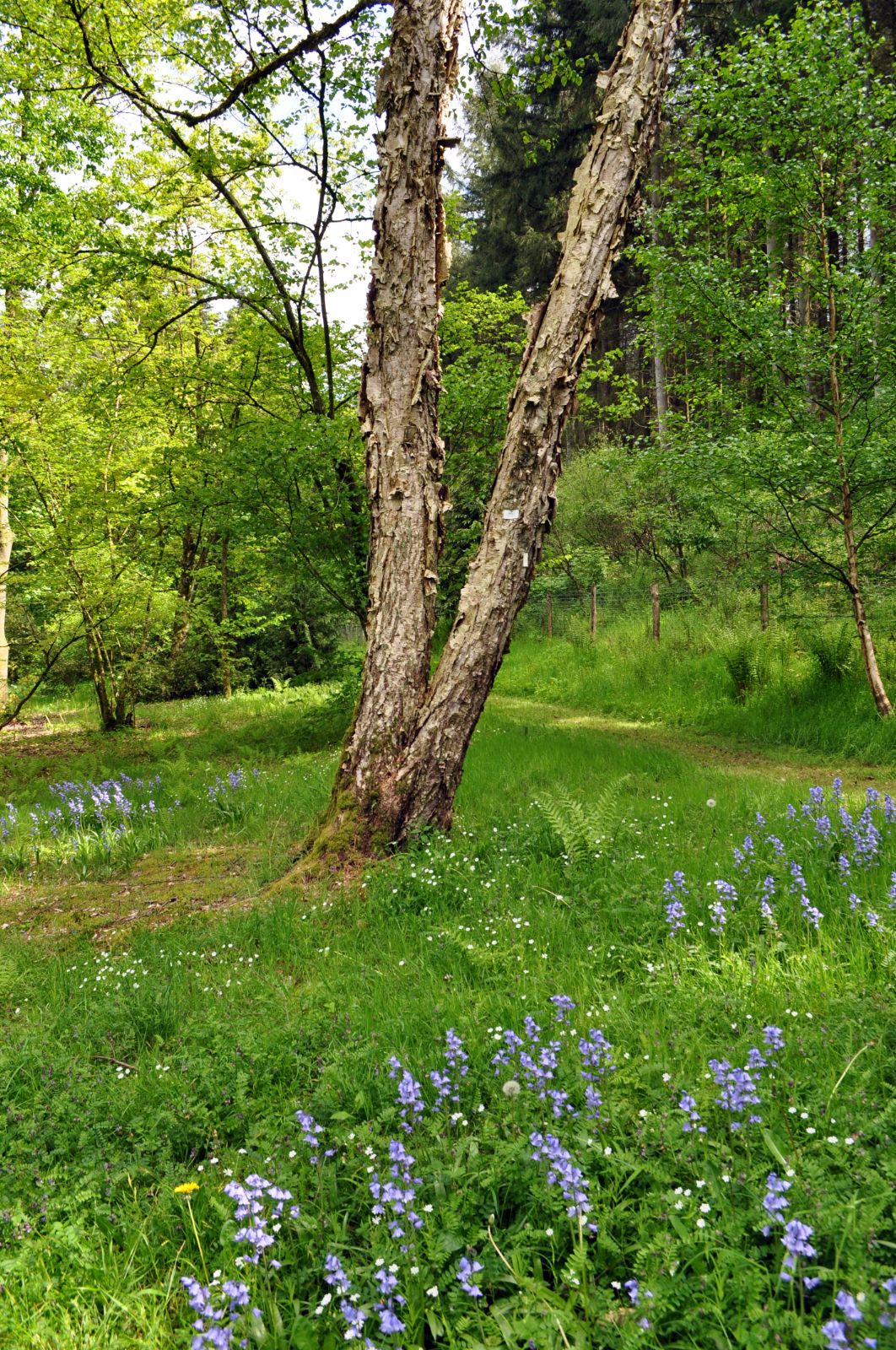
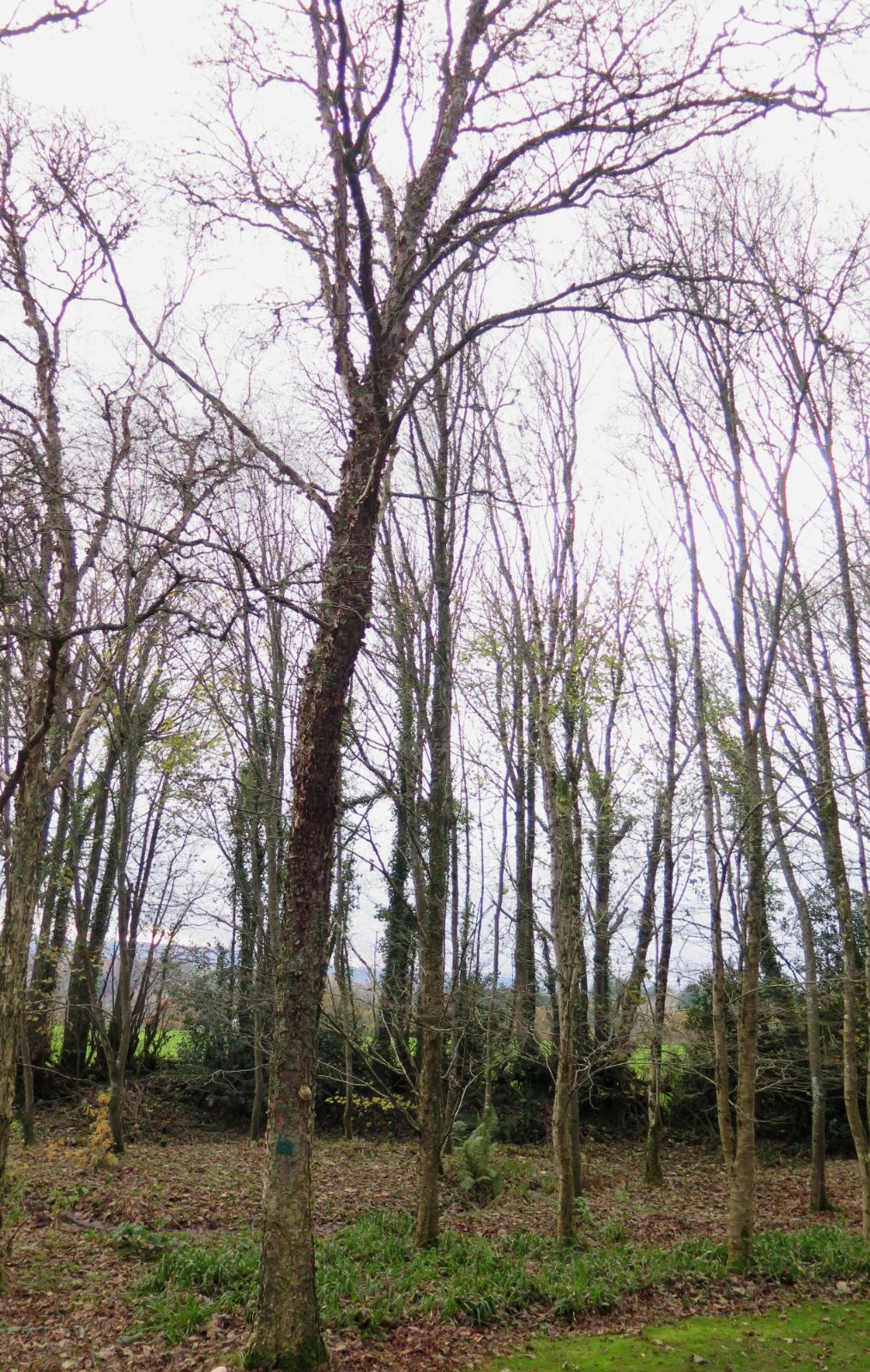
In the wild Betula davurica can grow into a tall tree, but in (European) cultivation, individuals of most provenances make relatively small, often several-stemmed trees, probably due to winter dieback of the leading shoots. The report by Clarke (1988) of a 30 m tree at Hergest Croft, Herefordshire is hard to believe, but two of the three tallest British trees currently grow there (17.9 and 18 m); the British champion of 18.4 m is at Ascott House in Buckinghamshire (Tree Register 2024). Young trees grow relatively slowly in comparison with other white-barked birches, at least in cultivation in the British Isles, and are slower to reach maturity and produce catkins. For many years seedlings only produce long shoots, and it is only after about ten years that spur shoots are formed and catkins produced.
Provenances in cultivation
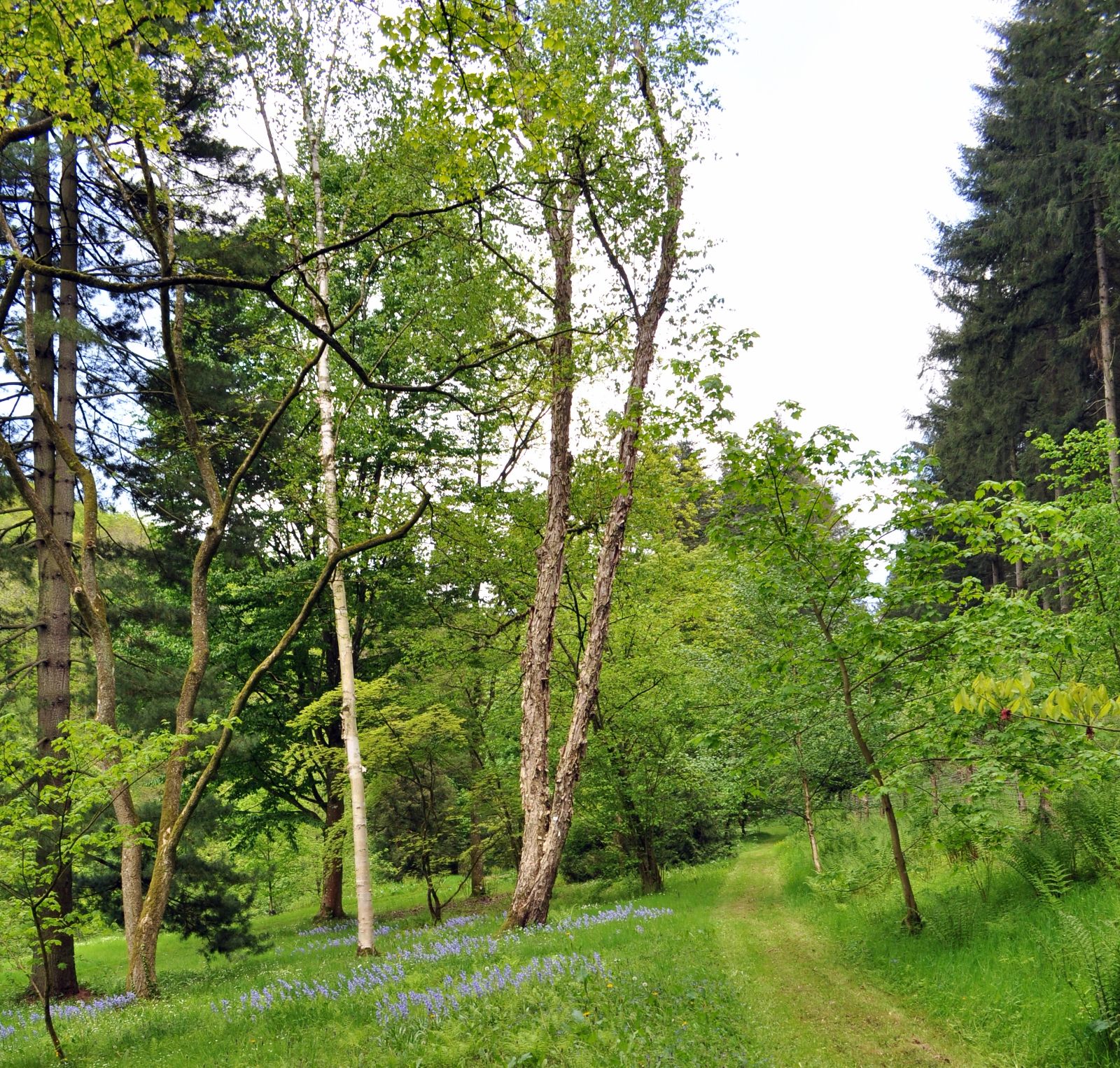
Trees of var. parvifolia from Honshu promise to be a valuable addition to the range of trees in cultivation, forming narrow, attractive, erect trees often with a single trunk and relatively short branches. The smaller leaves produce a lighter canopy than in other collections, and their peeling bark is particularly attractive. They fruit freely every year. Trees of var. okuboi from Hokkaido grow well in Devon, though further north at Ness Botanic Garden they suffer from late spring frosts and form twisted trunks due to dieback of leading shoots – the form and habit is nevertheless however interesting and attractive. At Ness, the Kurile Island population from Okeanskiy on the island of Iturup suffers severely from winter dieback, especially of the lower twigs, giving rise to a rather open, leggy, unattractive tree. By contrast, trees of Korean provenance are thriving at Ness, making attractive small trees with the characteristic flaky bark. Their relatively dense, early-developing young foliage is bright green and the trees are among the first to leaf in spring, an attractive feature but one which makes them sensitive to late frosts. As has been observed in other cultivated species from eastern continental Siberia, their fruiting behaviour is often very erratic from year to year. Collections from further north in extreme eastern Russia are doing less well, suffering considerable dieback of the thinner, weaker twigs in winter. In the United States this species initially appeared to be resistant to the bronze birch borer, but recent reports of attacks indicate that any resistance is not complete (Dosmann, quoted in McAllister & Ashburner 2013).
Key to the varieties of Betula davurica | ||
| 1a | Male catkin scales appearing circular with margins mostly fully exposed; leaves small (less than 65 × 50 mm), double-toothed with fine toothing (mostly >5 teeth per 10 mm of mid-leaf margin); fruiting catkin scales 5–6 mm (Honshu, Japan) | davurica var. parvifolia |
| 1b | Male catkin scales overlapping apically; leaves often larger, single or double toothed with coarser toothing (mostly <5 teeth per 10 mm of mid-leaf margin) | 2 |
| 2a | Fruiting catkins scales 5–6 mm (Hokkaido, Japan; Iturup, Kurile Islands) | davurica var. okuboi |
| 2b | Fruiting catkins scales (5.5–)6.5–7 mm (mainland Asia) | davurica var. davurica |
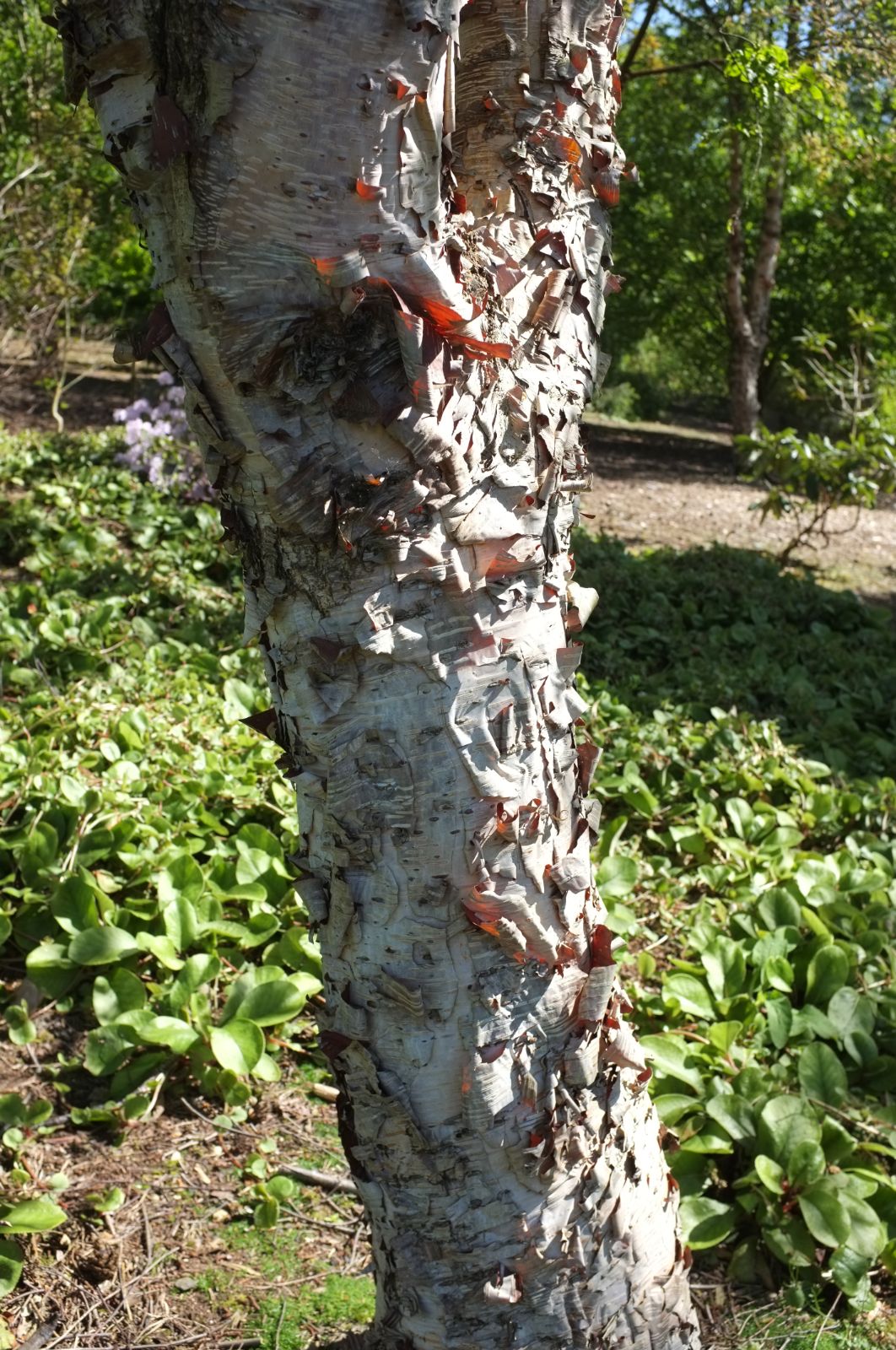
A rather vigorous and very shaggy barked cultivar of wild Hokkaido provenance, less susceptible to late frosts than most continental Betula davurica. The bark is pale on mature trees, but red when young, with a showy red-brown colour to the inner surface of the exfoliating flakes typical of hexaploid populations from Hokkaido, Honshu and Iturup. Grown from seed collected from a forest plot at Yamabe, Furano. Selected by Maurice Foster from a tree at Stone Lane Gardens, Devon, and named by Kenneth Ashburner.
The very dark bark ex-foliates in curly cinnamon-like flakes to reveal a pinky layer beneath; propagated from a tree at Stone Lane Gardens, Devon from the same group of wild-source seedlings as ‘Maurice Foster’. Named by Kevin Croucher of Thornhayes Nursery in 1997.