Betula corylifolia Regel & Maxim.

TSO logo

Sponsor

Kindly sponsored by the Banks family in memory of Lawrence Banks CBE DL VMH

Credits

Hugh A. McAllister, Kenneth Ashburner, Paul Bartlett & Martin Deasy (2026)

Recommended citation
McAllister, H. A., Ashburner, K., Bartlett, P. & Deasy M. (2026), 'Betula corylifolia' from the website Trees and Shrubs Online (treesandshrubsonline.org/articles/betula/betula-corylifolia/). Accessed 2026-06-15.

Family

  • Betulaceae

Genus

  • Betula
  • subgenus Nipponobetula section Nipponobetula

Glossary

axil
Angle between the upper side of a leaf and the stem.
bud
Immature shoot protected by scales that develops into leaves and/or flowers.
glabrous
Lacking hairs smooth. glabrescent Becoming hairless.
monospecific
(of a genus) Including only one species (as e.g. Aextoxicon).
nutlet
Small nut. Term may also be applied to an achene or part of a schizocarp.
pollination
Act of placing pollen on the stigma. Various agents may initiate pollination including animals and the wind.

Credits

Hugh A. McAllister, Kenneth Ashburner, Paul Bartlett & Martin Deasy (2026)

Recommended citation
McAllister, H. A., Ashburner, K., Bartlett, P. & Deasy M. (2026), 'Betula corylifolia' from the website Trees and Shrubs Online (treesandshrubsonline.org/articles/betula/betula-corylifolia/). Accessed 2026-06-15.

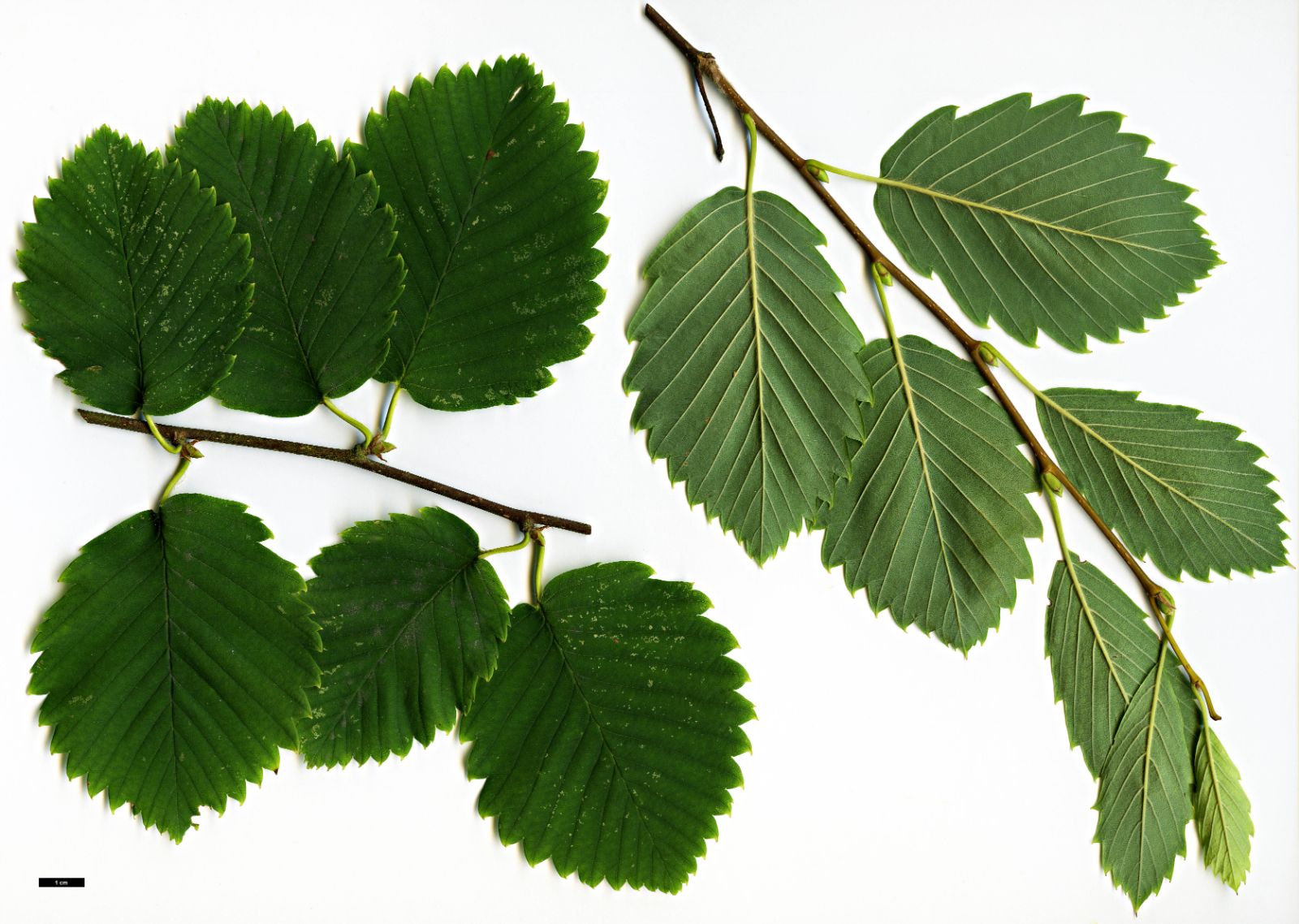
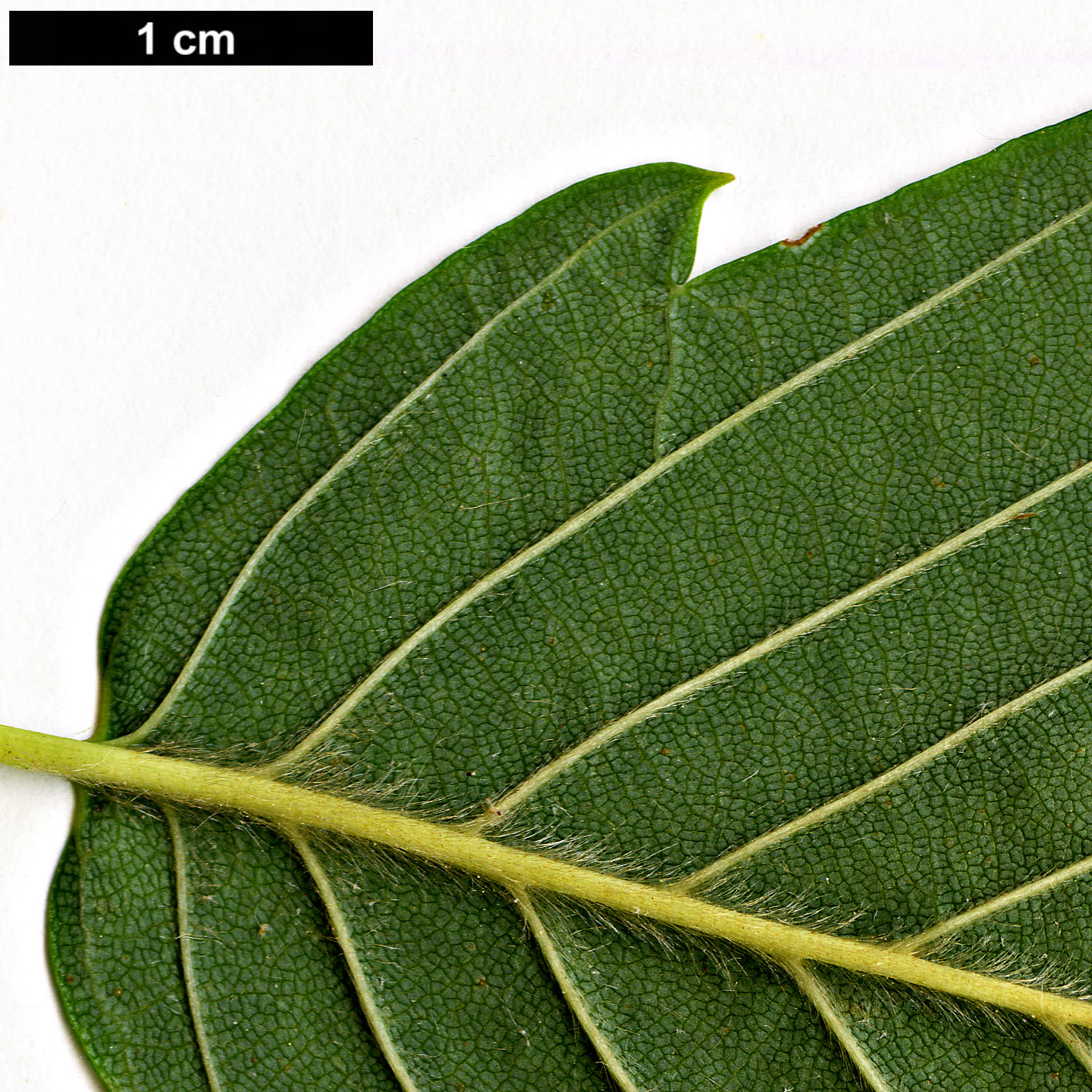
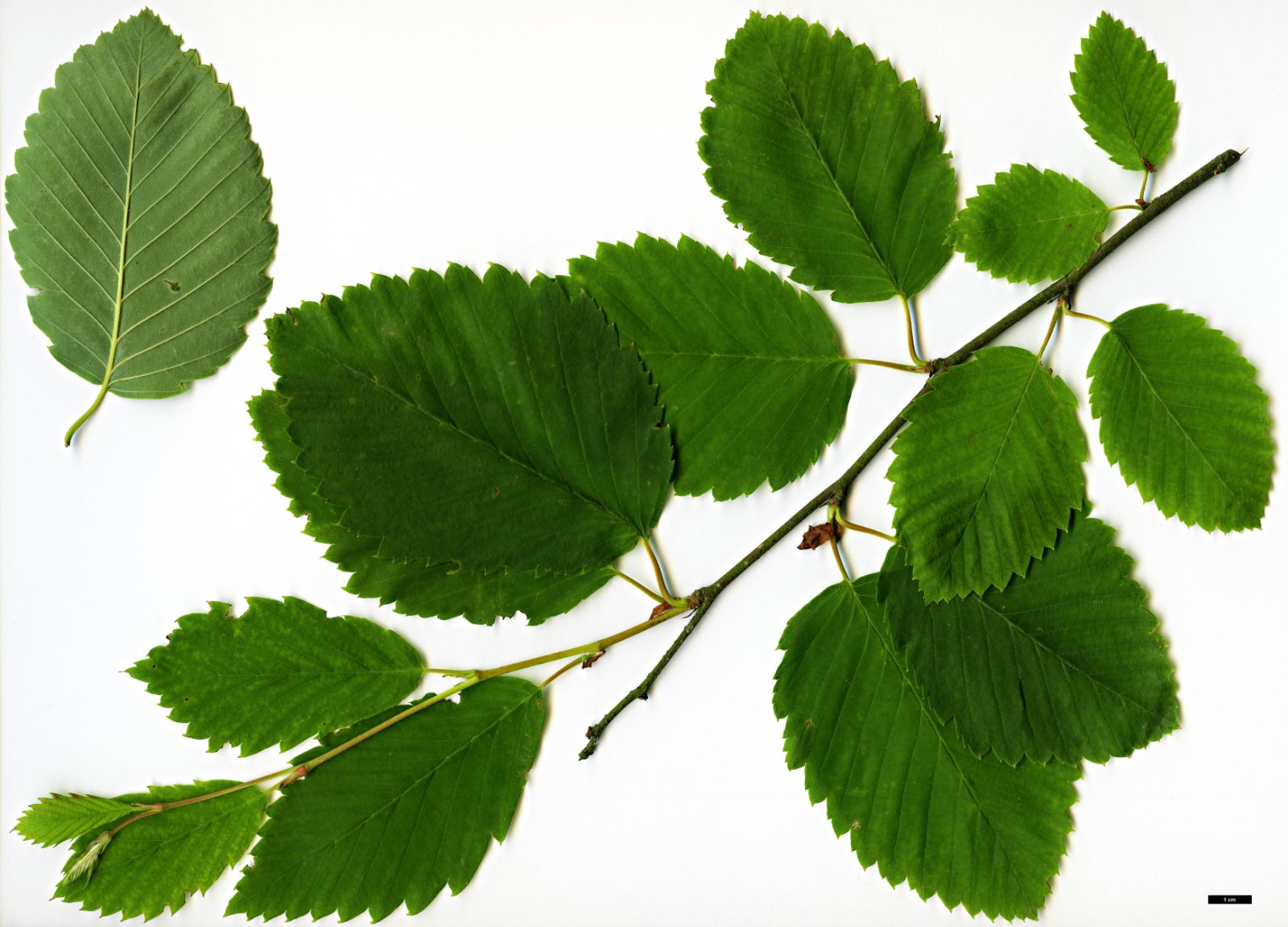
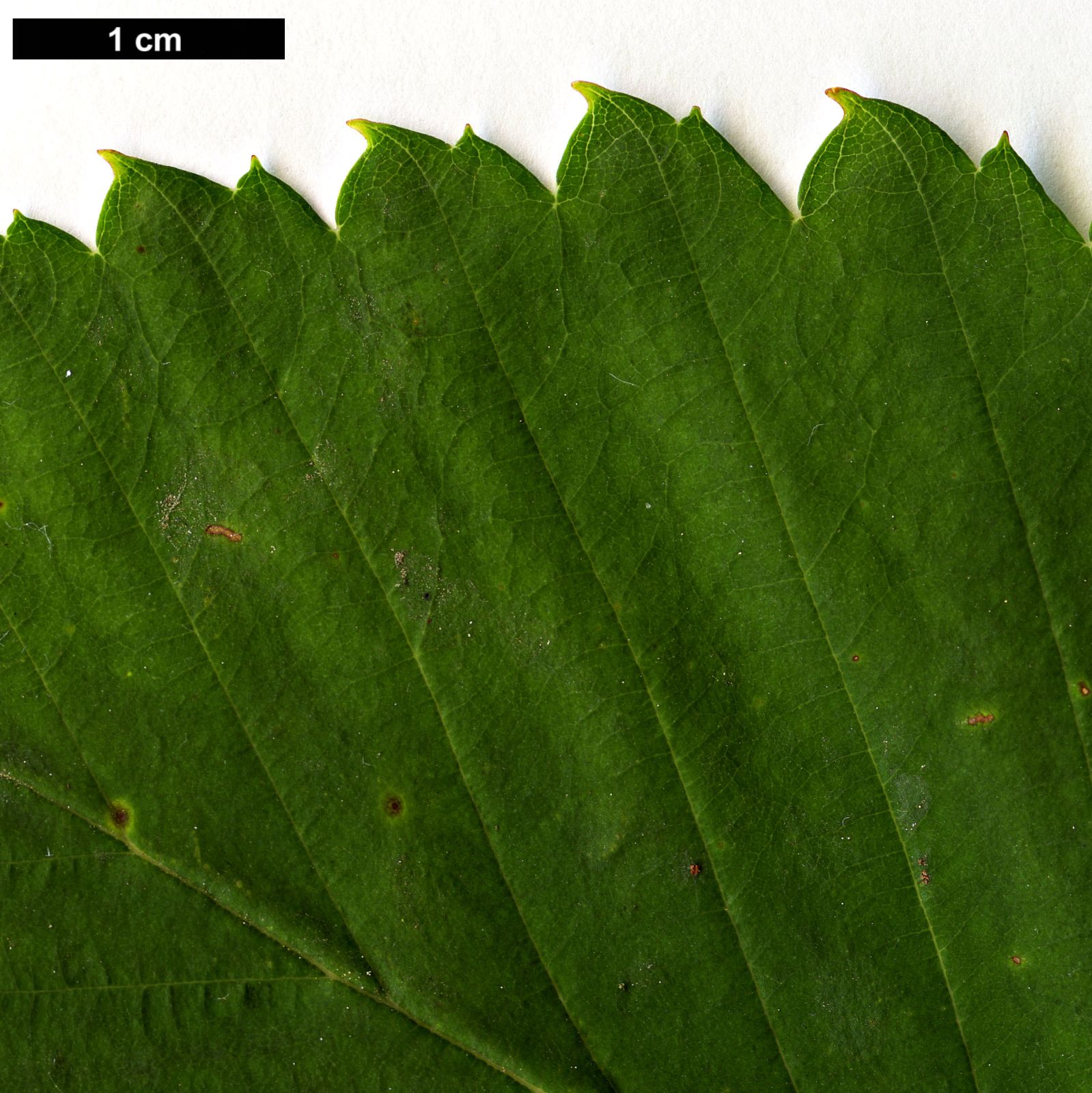
Trees to 17 m. Bark dark reddish-brown. Twigs to 4.25 mm in diam., brown, with variably persistent silky hairs and patent hairs of variable length, scented of oil of wintergreen when skinned. Buds ovate-elliptical to oblong-ovate on 2nd year twigs, about 6–11 × 3–4 mm. Young shoots covered with white silky hairs; petioles and veins on leaf underside silky hairy, glabrescent. Stipules ovate-triangular, about 10 × 5 mm, somewhat persistent (but less so than in the dwarf birches of section Apterocaryon). Leaves with petiole 7–15 mm; blade, broadly ovate, 40–80 × 25–50 mm, giving an approximate blade:petiole ratio of 5:1 to 6:1; coarsely toothed with 0 or 1–3 subsidiary teeth between the major teeth terminating the main veins; bluish-green, whitish beneath, with 8–14 pairs of veins. Male catkins up to 2 terminal, with up to 2 laterals, to 35 × 6.5 mm (not including protruding recurved scale tips in width), expanding to 60 × 9 mm; scales peltate but attached in lower third, with greenish-brown fleshy (living) base gradually tapering into triangular brown (dead) recurved apex, about 3 × 1.75 mm, diamond-shaped, brown. Margins ciliate, and both surfaces silky hairy. Fruiting catkins erect, to 3–6 × 2 cm, cylindrical. Scales to 9–13 × 6 –8 mm, ciliate on margins and at base of abaxial surface. Central lobe to 6–8(–9) mm, oblong; lateral lobes 3–4(–5) mm, oblong. Seeds one per scale, glabrous, to 4–5 × 5 mm, nutlet 2.5–3 mm across, wing to 0.5 mm, about ¼ nutlet width, opaque, more than one cell thick, beak style c. 1 mm, stigmas c. 2 mm. Diploid: 2n=28. Flowering April, May; fruiting in October.

Distribution  Japan Honshu (Kinki district and eastwards in the mountains)

Habitat Subalpine zone of high mountains, mixed with other species.

Conservation status Least concern (LC)

Betula corylifolia is a very distinct birch, probably not closely related to any other living species – Skvortsov (2002) created the monospecific subgenus Nipponobetula for it. The foliage gives the tree an appearance quite different from that of any other birch, the leaves having whitish undersides and matt, bluish-green upper surfaces, and with the major teeth (in which the secondary veins end) being broad and often lacking subsidiary teeth between them. The male catkins are also quite unlike those of other species, most resembling those of B. calcicola or B. chichibuensis in their thin, hardly fleshy scales with elongated triangular apical portions. These are recurved, giving the male catkins a very different appearance from the smooth glossiness of those of most birches. The fruiting catkins and their scales are large and only one nutlet is borne in the axil of each scale – these are glabrous with a distinct beak and narrow wing, distinct from all others in the genus.

Betula corylifolia has a very restricted range in the wild, found only at high altitudes in central Japan. In the subalpine forests of central Honshu it occurs with B. ermanii in areas dominated by Abies mariesii and A. veitchii, with Tsuga diversifolia regenerating in openings in the forest (Yamamoto 2000). In the Nikko region in Honshu north of Tokyo, trees of Betula corylifolia are found scattered at woodland edges, inconspicuous on account of their dark and only moderately shining bark.

Betula corylifolia was first collected by Tschonoski Sungawa (1841–1925), a Japanese collector who assisted Maximowicz during his stay in Japan from 1860 to 1864, and who is commemorated in such familiar species as Carpinus tschonoskii, Acer tschonoskii, and Malus tschonoskii (Ohwi 1965). Betula corylifolia was introduced to cultivation by E. H. Wilson (W 7651) in 1914 from Honshu, Shimotsuke province, at Yumoto, and has been represented in Britain since then by a single tree at RBG Edinburgh – other trees cultivated under the name were wrongly identified (Bean 1976).

Even in the presence of a wide range of other species this tree has produced only seedlings of true Betula corylifolia, suggesting that it cannot hybridise with other birches. Seed collected from the Edinburgh tree, probably in 1981, germinated to give six seedlings, which grew to over a metre in three years; five of them at Ness Botanic Garden died, largely of drought, and one at Stone Farm grew to four metres before dying in 2006. There is now another, younger tree in Edinburgh, probably grown from seed obtained from a Japanese nursery (as B. maximowicziana) of unknown wild source (McAllister & Ashburner 2013), and several plants in Edinburgh and at Benmore from a 2005 expedition to Nigata (Brownless, McNamara, Bolton, Jamieson & Tsukie 174). A recent introduction of seed from Mt Goyo, Iwate Prefecture, gave rise to two seedlings which were planted in a more favourable moist site at Ness: both grew well to 6 m and fruited, one producing viable seed by self-pollination. In spring 2006 many branches on both trees failed to break bud and the trees have since died, perhaps from waterlogging.

As a young tree, Betula corylifolia has a neat pyramidal habit and makes an attractive specimen with its sea-green leaves with whitish undersides. The large, erect fruiting catkins, which remain on the branches for most of the winter, are an unusual and interesting feature. It is relatively slow growing, and like many birches, perhaps especially those from mountainous areas, it appears to be very intolerant of shade and seems to grow best in moist, humus-rich soils in a relatively humid climate, in a sunny situation. Soft cuttings, taken in early summer, root readily under mist.