Betula chichibuensis Hara

TSO logo

Sponsor

Kindly sponsored by the Banks family in memory of Lawrence Banks CBE DL VMH

Credits

Hugh A. McAllister, Kenneth Ashburner, Paul Bartlett & Martin Deasy (2026)

Recommended citation
McAllister, H. A., Ashburner, K., Bartlett, P. & Deasy M. (2026), 'Betula chichibuensis' from the website Trees and Shrubs Online (treesandshrubsonline.org/articles/betula/betula-chichibuensis/). Accessed 2026-07-10.

Family

  • Betulaceae

Genus

  • Betula
  • Subgenus Asperae section Asperae subsection Asperae

Common Names

  • Chichibu Birch

Glossary

bud
Immature shoot protected by scales that develops into leaves and/or flowers.
clone
Organism arising via vegetative or asexual reproduction.
included
(botanical) Contained within another part or organ.
ovate
Egg-shaped; broadest towards the stem.

Credits

Hugh A. McAllister, Kenneth Ashburner, Paul Bartlett & Martin Deasy (2026)

Recommended citation
McAllister, H. A., Ashburner, K., Bartlett, P. & Deasy M. (2026), 'Betula chichibuensis' from the website Trees and Shrubs Online (treesandshrubsonline.org/articles/betula/betula-chichibuensis/). Accessed 2026-07-10.

Editorial Note

This TSO article is an edited digest of the species account in Kenneth Ashburner and Hugh McAllister, The Genus Betula: A Taxonomic Revision of Birches (2013; repr. 2016).

Trees and Shrubs Online, 23 June 2026

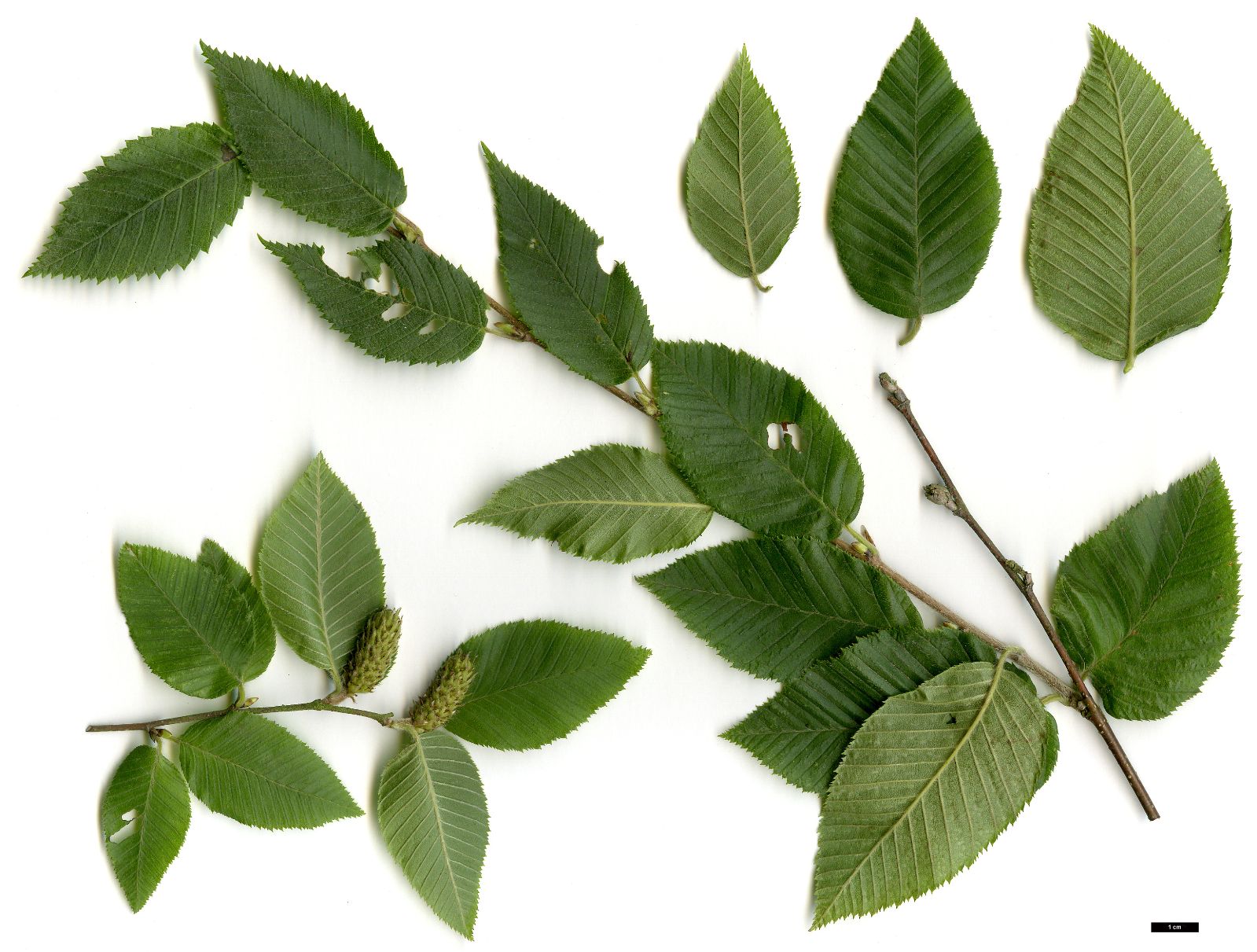
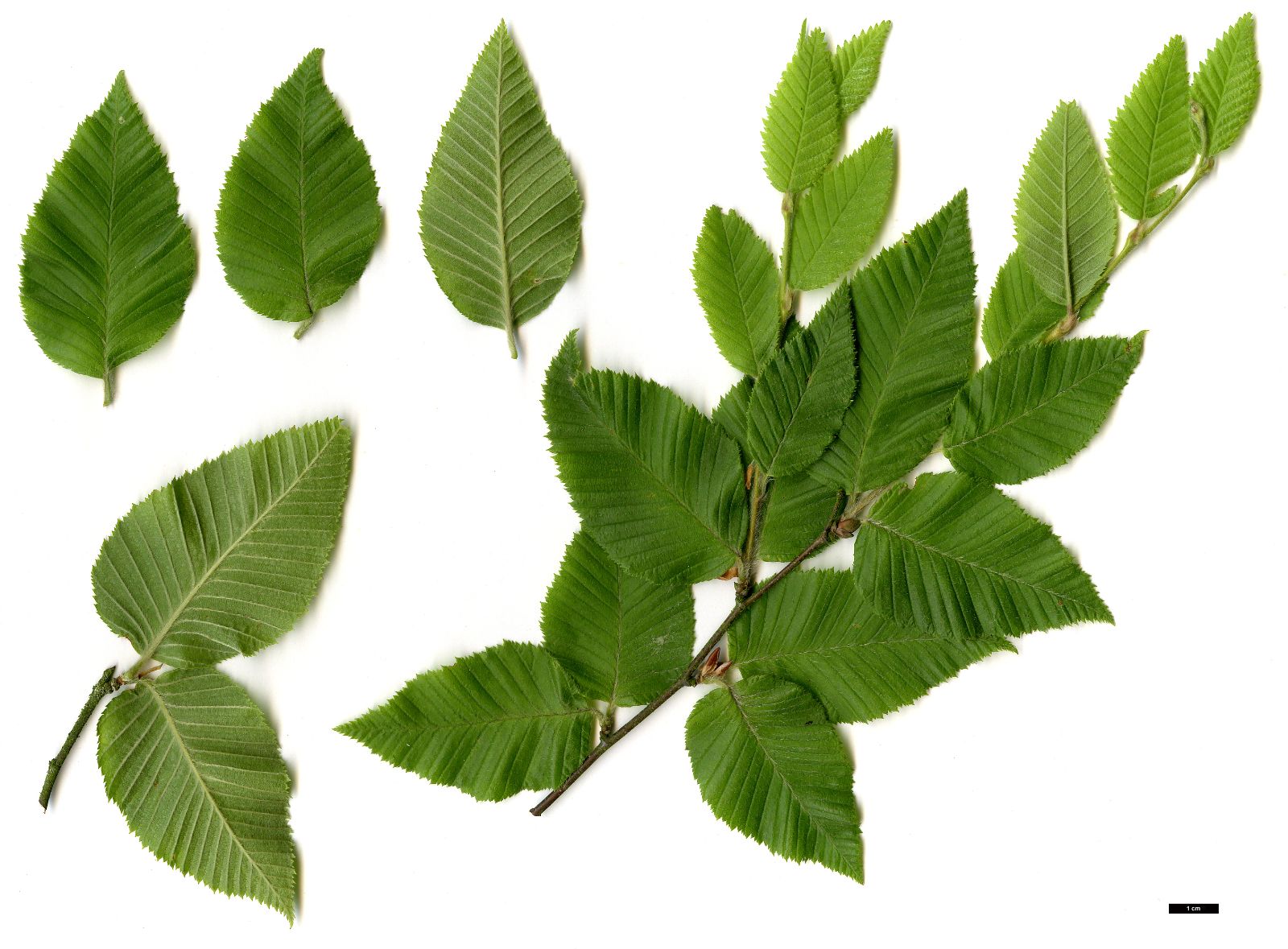
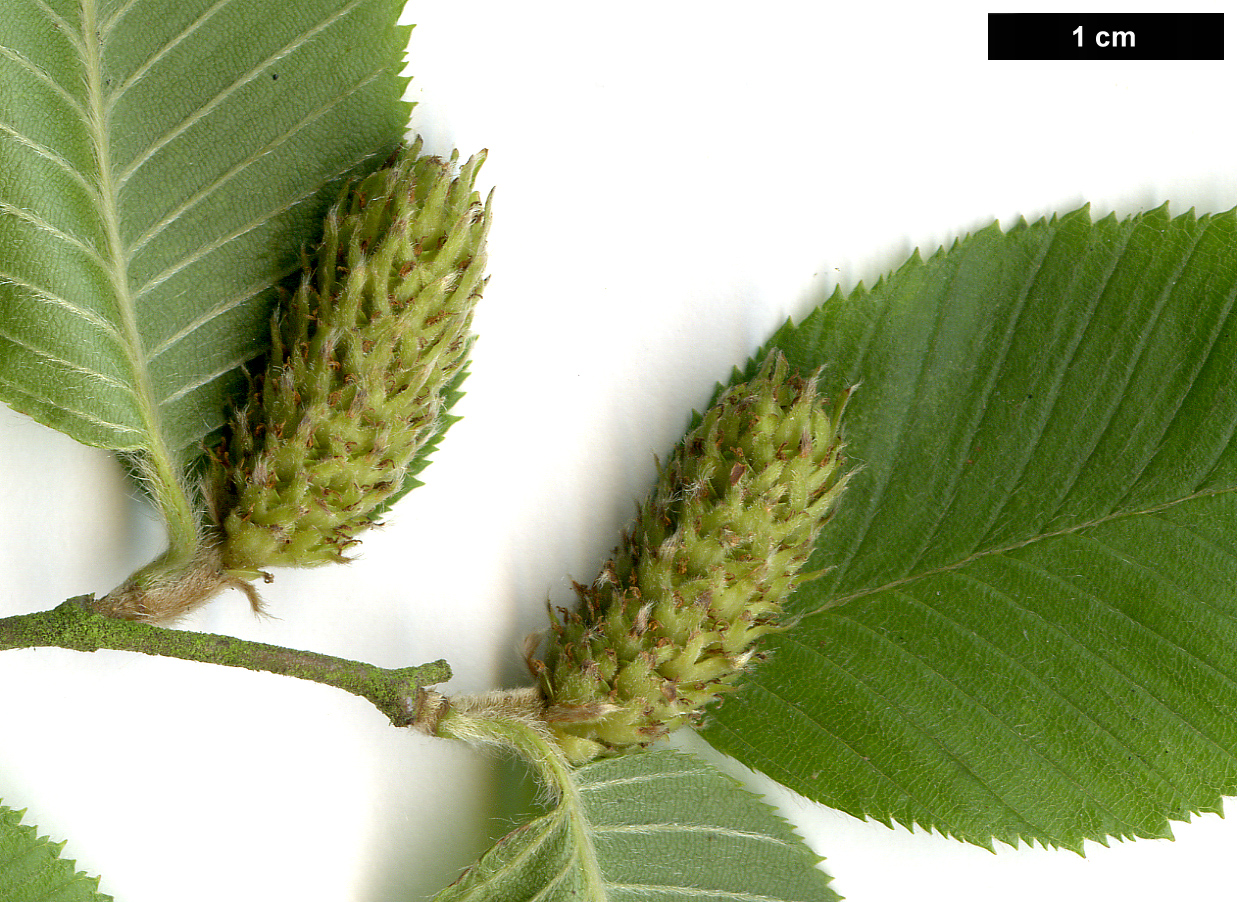
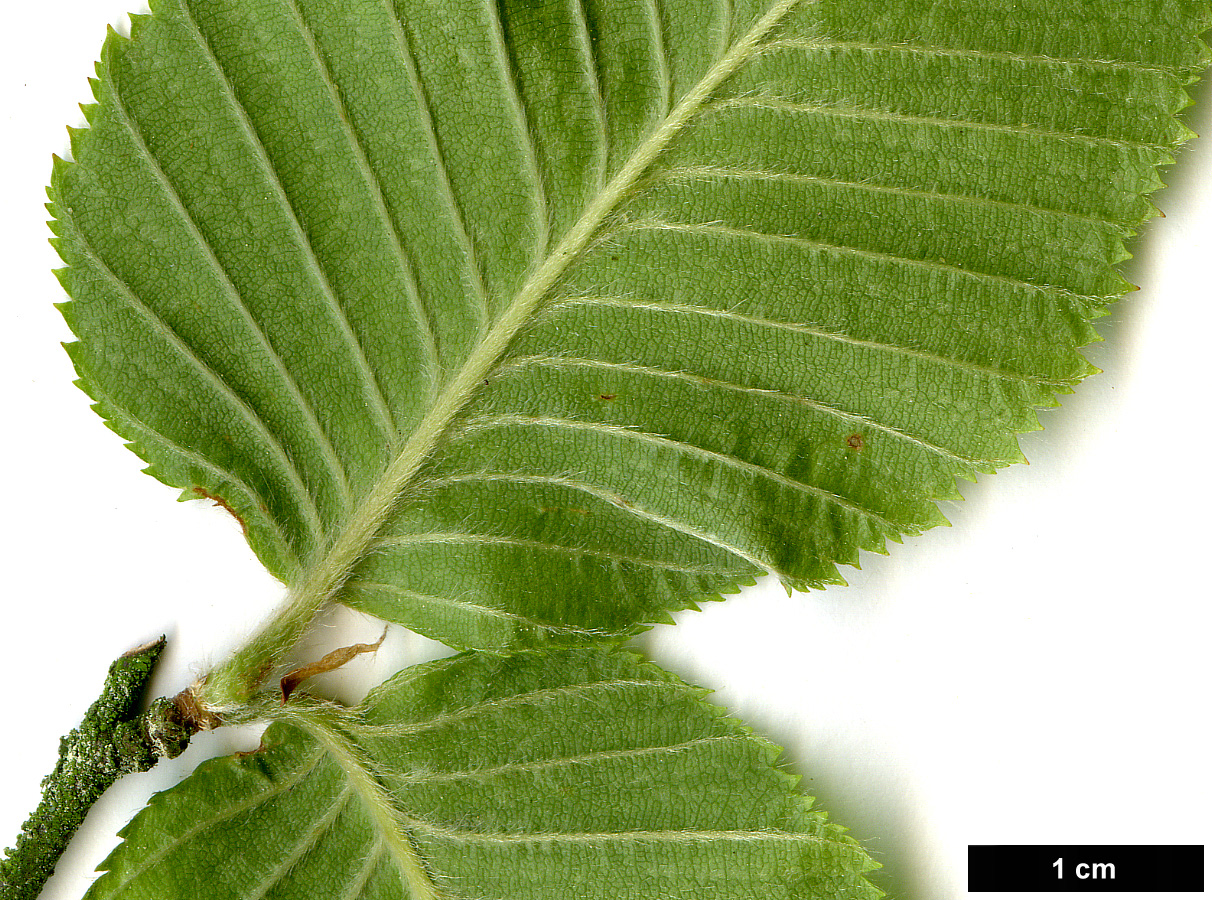
Tree or shrub to 8–10 m (Satake et al. 1989) although in cultivation so far much smaller and forming a spreading small tree to about 5 m. Twigs light brown, nearly hairless, to 3 mm in diam., slightly rough with pale brown lenticels. Buds light orange-brown, to 6 × 2.5 mm, wider than the shoot especially towards apex. Shoots pale brown and smooth, very hairy with silky hairs; eglandular; stipules persistent. Leaves ovate, acute, rounded or slightly cordate at base, mid-green and hairy so that the leaves feel soft with long hairs along midrib and lateral veins, with (14–)17–18 pairs of veins (only to 10 or more on long-shoot leaves), indented above, but leaf largely flat; with 1–3 teeth between teeth ending secondary veins; 30–75 × 15–45 mm; petiole:blade ratio 1:7 to 1:10. Male catkins to 3 terminal and 2 lateral, sometimes also with similar lateral clusters on short peduncles, giving large clusters of catkins towards the ends of the twigs; individual catkins to 20 × 4 mm in winter, expanding to 60–80 × 7 mm in spring; scales attached at their bases; stamens cream coloured. Female catkins erect, red, with showy violet styles, to 13–20 × 7 mm on 2-leaved short shoots. Fruiting catkin erect, 16–26 × 8–10 mm; peduncle 3–7 mm. Scales 5–7 mm with terminal lobe oblong, 2.25–3(–4) mm and lateral lobes oblong, 1.5–2 mm, densely silky hairy below (on abaxial surface), glabrous above (on adaxial surface). Seed 2.5–3 × 2–2.5 mm, shiny light chestnut brown, with very narrow wing (c. 0.15 mm wide), glabrous except at apex where it tapers into styles; styles about 2.2 mm, conspicuously hairy at bases. Diploid: 2n=28.

Distribution  Japan Honshu, Gunma Prefecture

Habitat Limestone outcrops at 600–1000 m asl.

USDA Hardiness Zone 7

Conservation status Critically endangered (CR)

Betula chichibuensis is one of the world’s rarest birches – the wild population at one point reduced to 21 trees (McAllister 1993), and is currently not believed to exceed 50 individuals (Shaw, Roy & Wilson 2014). The species is confined to the Chichibu area in the mountains of central Honshu on Mt Kamo-san in Gunma Prefecture, where it forms a multi-stemmed shrub or small tree to 10 m high. It was described as recently as 1956 by Hiroshi Hara, and is very distinct in its soft ovate leaves with up to 18 pairs of impressed lateral veins, clusters of numerous male catkins from several buds towards the ends of the twigs, and short, upright fruiting catkins with wingless seeds. The most similar birch is probably Betula schmidtii, but that species is much less hairy, has flatter leaves with fewer than 11 pairs of veins, male catkins only at the ends of the twigs, and forms an upright tree. Other related Chinese species have much more leathery leaves: B. potaninii has smaller, darker green leaves and smaller fruiting catkins; B. calcicola has broader leaves and much hairier shoots; and B. delavayi has much darker green leaves and larger female catkins and seeds.

The species is just as rare in cultivation as it is in the wild state. Kenneth Ashburner requested seed from Betula chichibuensis while visiting Japan in 1980, but it was only in 1986 that Mr Tetsuo Satomi was able to visit the trees when ripe seed was available and send it to Britain. Earlier visits to the site had been unsuccessful for various reasons, in one case because a hurricane had so damaged the trees that no seed had been set. The seed was very variable in size, and only around 1% of it (the larger seeds) was viable. Eight seeds were germinated, forming densely branched plants about 30 cm tall in their first year. They were wintered outside so that they would receive sufficient cold to induce bud break (many temperate woody species fail to break bud in spring if they have not been chilled for long enough). At the first sign of bud break in spring the young plants were brought indoors to promote early soft growth which makes the best cuttings (Howard & Harrison-Murray 1991) and gives the rooted cuttings the longest growing period. The shoots were cut and inserted in the mist unit when thee reached reached 2–3 cm, almost all of them rooting within two to three weeks.

The young plants – both seedlings and cuttings – grew well, producing a fairly dense, compact root system which included ‘droppers’, vigorous roots that penetrate deeply into the soil (unlike common white birch seedlings which quickly form a very superficial, far-spreading root system). Young bushes of Betula chichibuensis up to 2 m × 2 m transplant well with a well-developed root ball and grow on with little check. Recent transplants require protection from drought for a year after transplanting, but established plants appear to be remarkably drought-tolerant, probably because of their deep-rooting habit. The species also appears to be fairly tolerant of wet soils. Young plants – even those up to a metre or so in height – are densely bushy and appear to be relatively tolerant of shade, conditions that mature trees will not accept, shaded branches dying or becoming brittle and breaking over winter. In mature trees, closely-spaced leaves make for a dense canopy that casts deep shade, and there are consequently few if any shoots within the actual crown.

Eight clones from the original Ness introduction are now in cultivation, and have been distributed by rooted cuttings taken from the original seedlings (McAllister 1993); viable seed has also been distributed. At Ness, the original seedlings have formed small trees up to 5 m tall, flowering and fruiting freely from five years of age. Their foliage is remarkably handsome, as are the large bunches of creamy-yellow male catkins and small red female catkins with showy tufts of violet styles in spring. Where more than one clone is grown, a high proportion of the seed produced is fertile and self-sown seedlings are sometimes frequent underneath the trees.

Despite the species’ rarity, seedlings from the original wild-collected seed showed considerable variability, each individually identifiable in the nursery rows, primarily by character of habit. Two of the clones had a spreading habit, producing shrubs much wider than tall with drooping terminal branchlets. Others were much more upright, forming shuttlecock-shaped plants with much less drooping terminal twigs. Such genetic variability is not unexpected in a potentially long-lived species, even when the populations have been reduced to small numbers (Kuser 1983).