Betula bomiensis P.C.Li

TSO logo

Sponsor

Kindly sponsored by the Banks family in memory of Lawrence Banks CBE DL VMH

Credits

Hugh A. McAllister, Kenneth Ashburner, Paul Bartlett & Martin Deasy (2026)

Recommended citation
McAllister, H. A., Ashburner, K., Bartlett, P. & Deasy M. (2026), 'Betula bomiensis' from the website Trees and Shrubs Online (treesandshrubsonline.org/articles/betula/betula-bomiensis/). Accessed 2026-09-06.

Family

  • Betulaceae

Genus

  • Betula
  • Subgenus Asperae section Asperae subsection Asperae

Glossary

Tibet
Traditional English name for the formerly independent state known to its people as Bod now the Tibet (Xizang) Autonomous Region of the People’s Republic of China. The name Xizang is used in lists of Chinese provinces.
glandular
Bearing glands.
lectotype
Specimen or illustration chosen to serve as the type specimen for a taxon in cases where one was not designated by the original author.
synonym
(syn.) (botanical) An alternative or former name for a taxon usually considered to be invalid (often given in brackets). Synonyms arise when a taxon has been described more than once (the prior name usually being the one accepted as correct) or if an article of the International Code of Botanical Nomenclature has been contravened requiring the publishing of a new name. Developments in taxonomic thought may be reflected in an increasing list of synonyms as generic or specific concepts change over time.
type specimen
A herbarium specimen cited in a taxonomic account to define a particular species or other taxon.

Credits

Hugh A. McAllister, Kenneth Ashburner, Paul Bartlett & Martin Deasy (2026)

Recommended citation
McAllister, H. A., Ashburner, K., Bartlett, P. & Deasy M. (2026), 'Betula bomiensis' from the website Trees and Shrubs Online (treesandshrubsonline.org/articles/betula/betula-bomiensis/). Accessed 2026-09-06.

Editorial Note

This TSO article is an edited digest of the species account in Kenneth Ashburner and Hugh McAllister, The Genus Betula: A Taxonomic Revision of Birches (2013; repr. 2016).

Trees and Shrubs Online, 23 June 2026

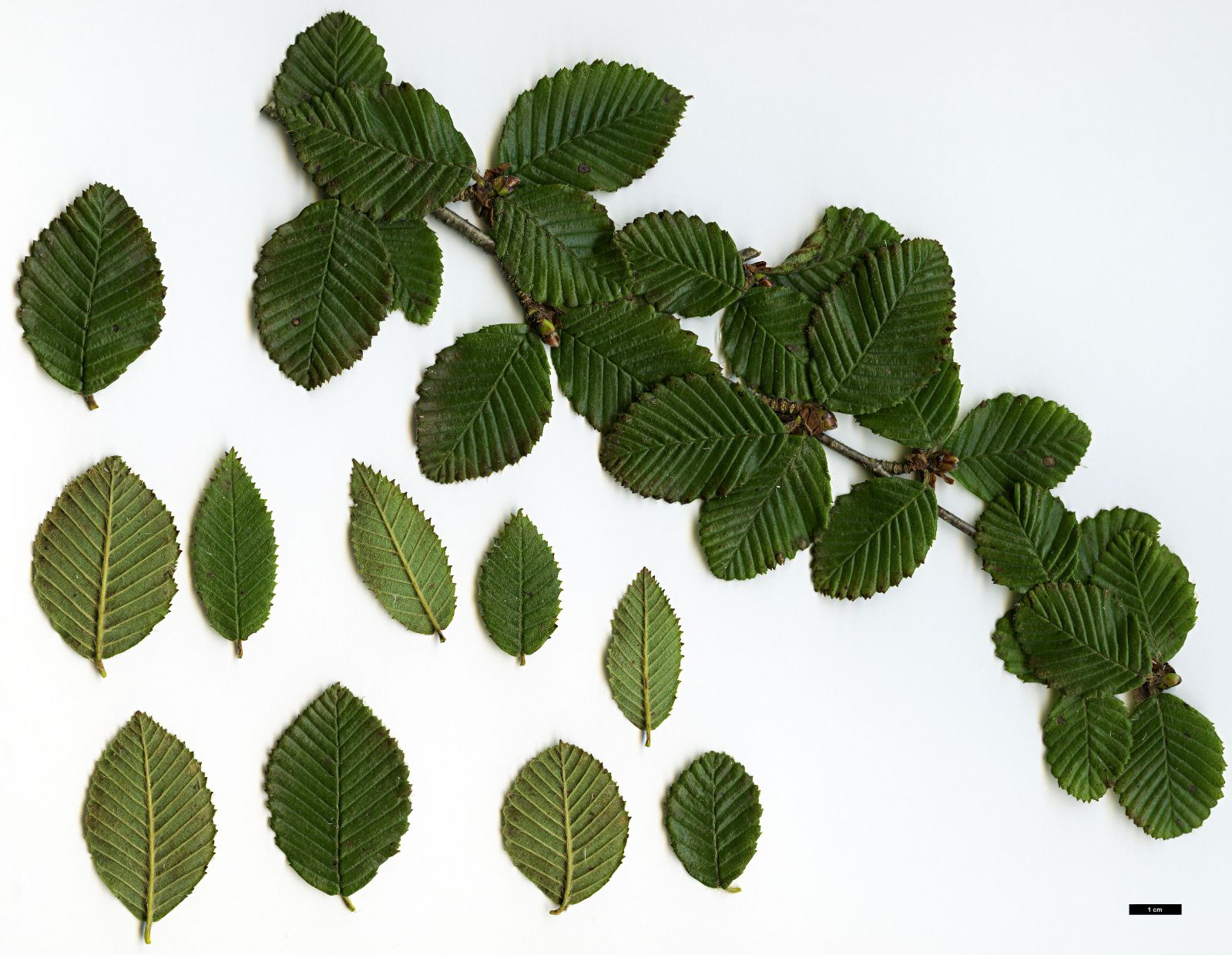
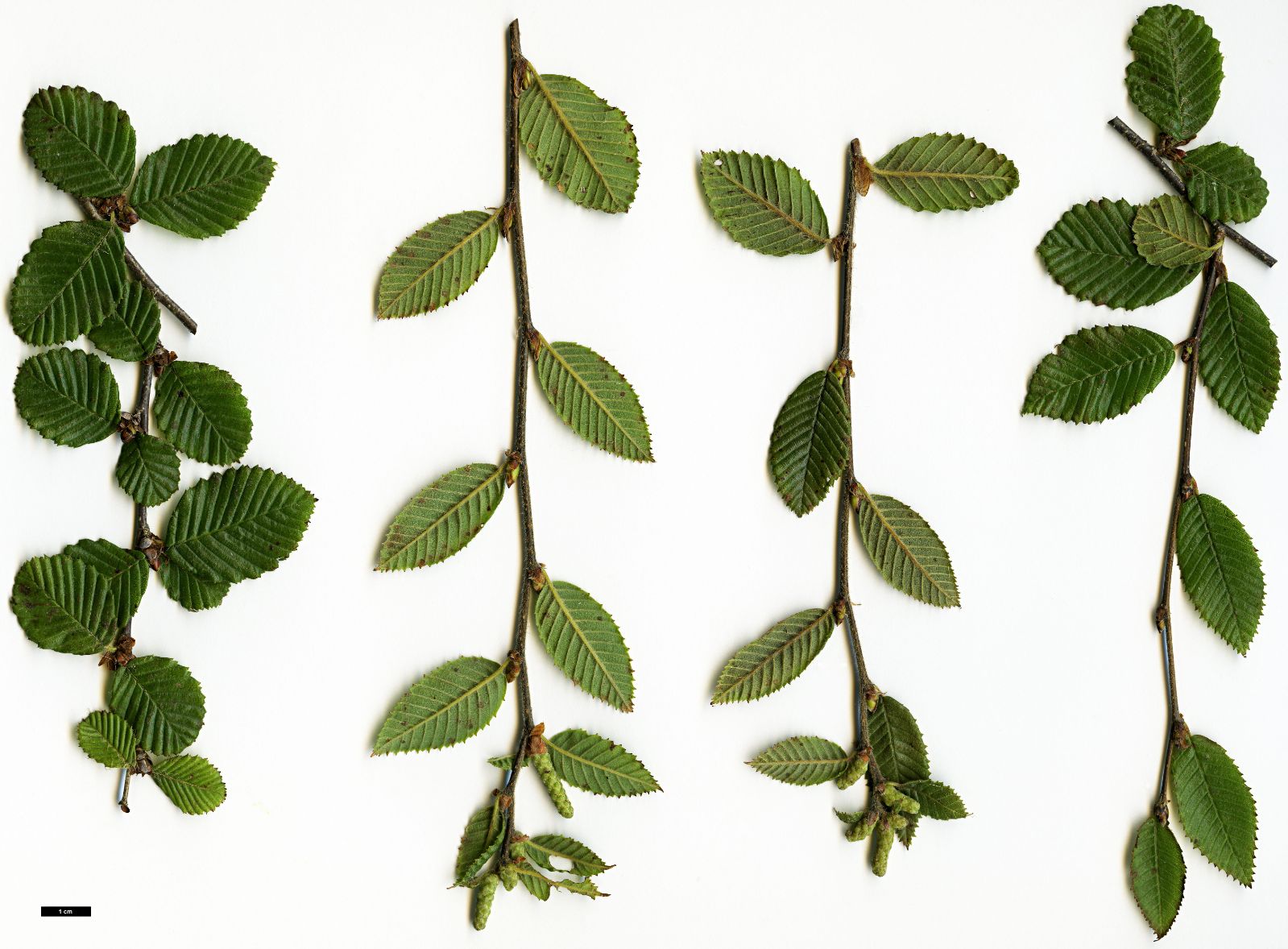
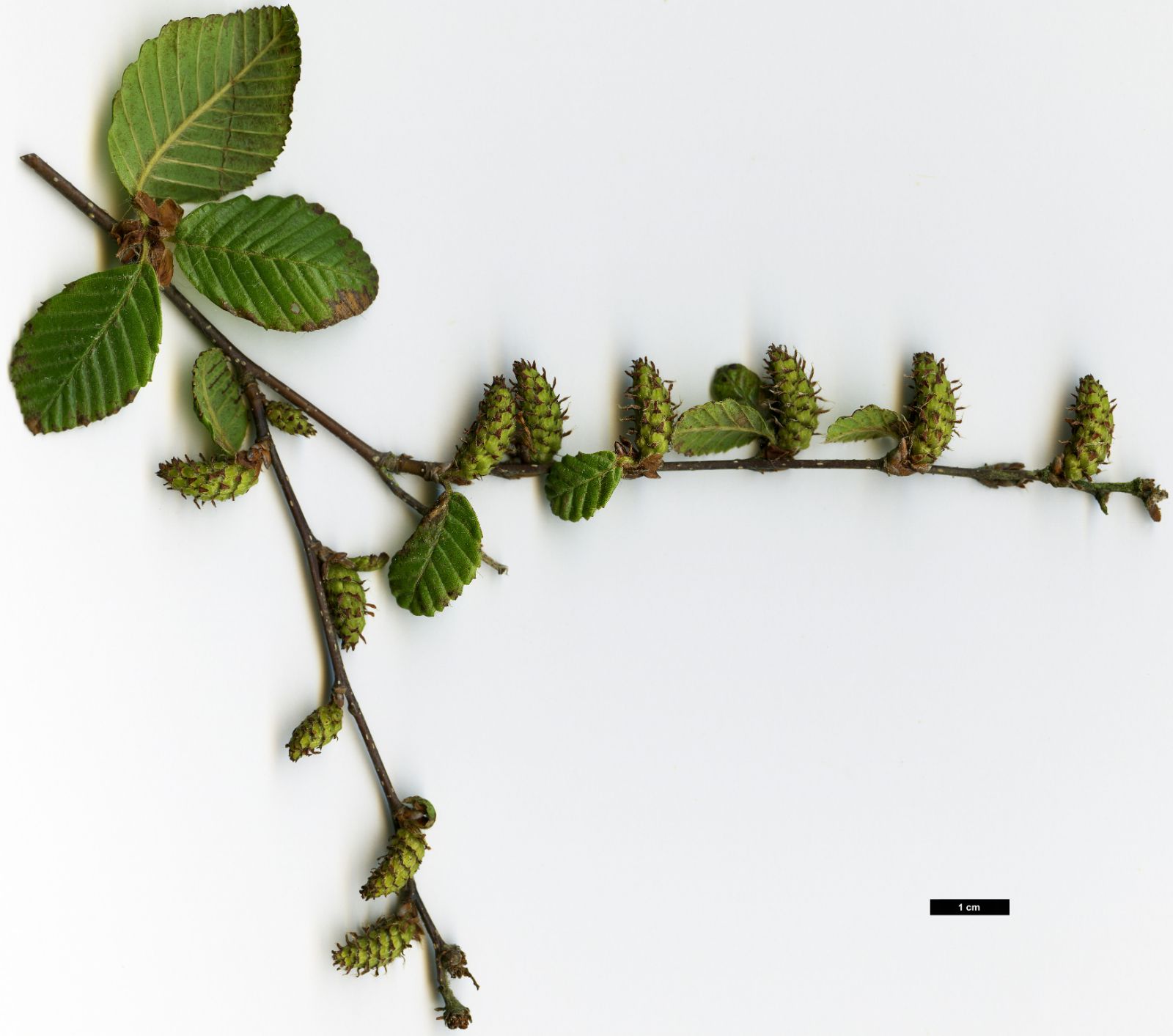
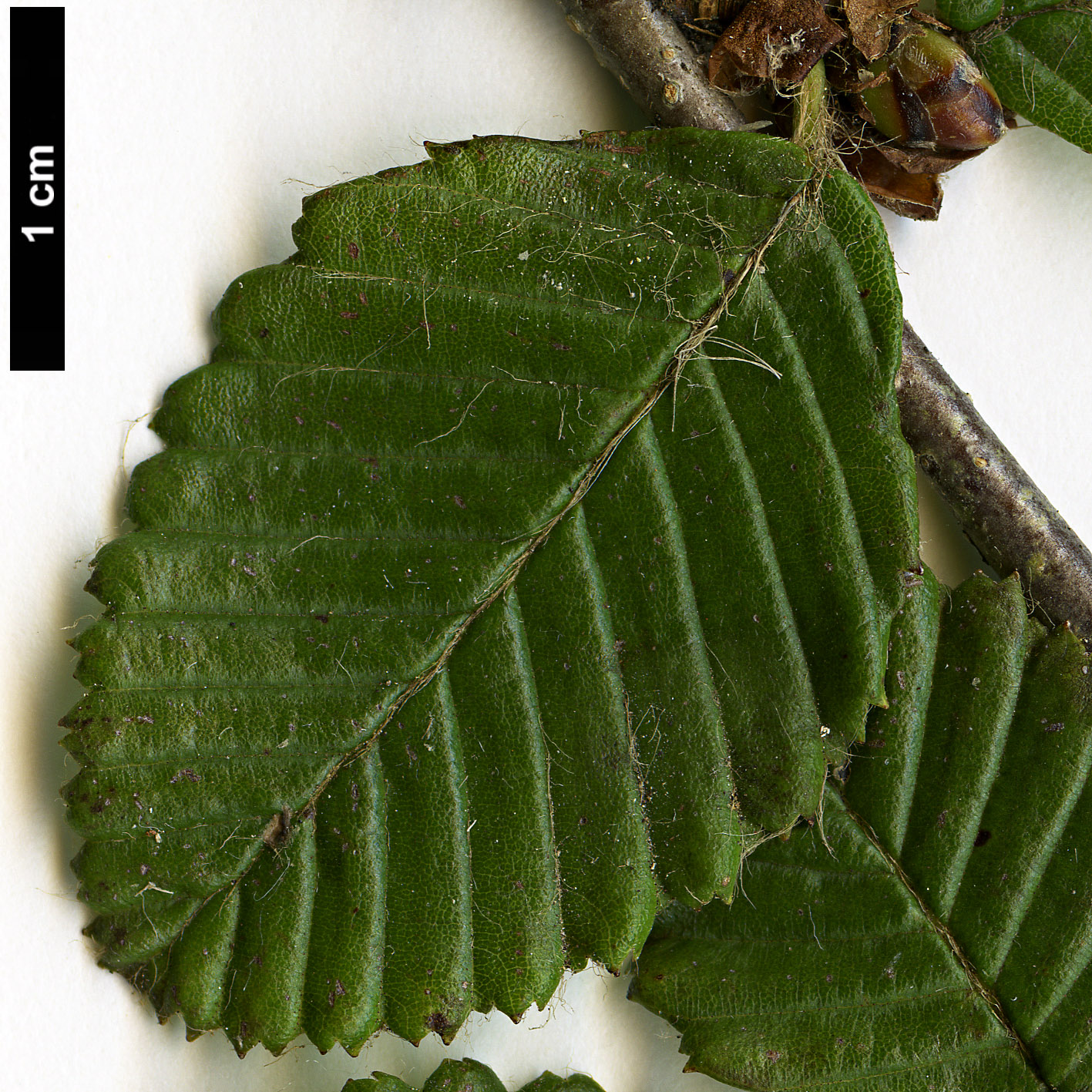
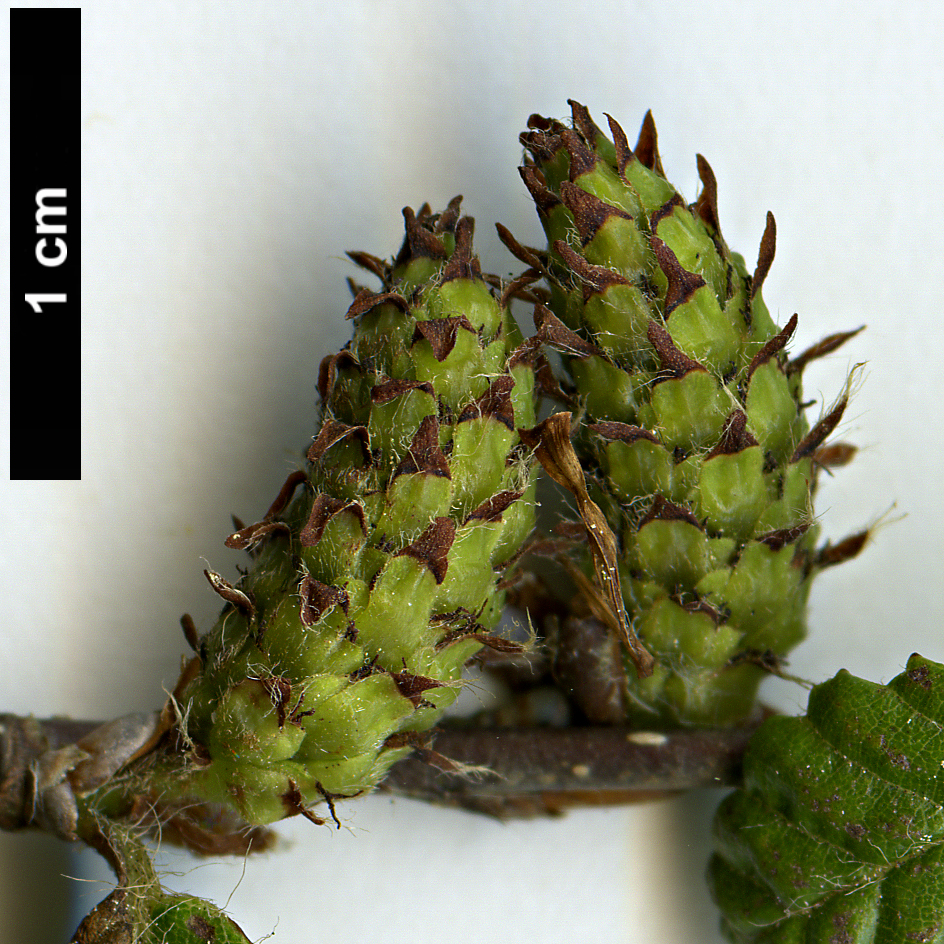
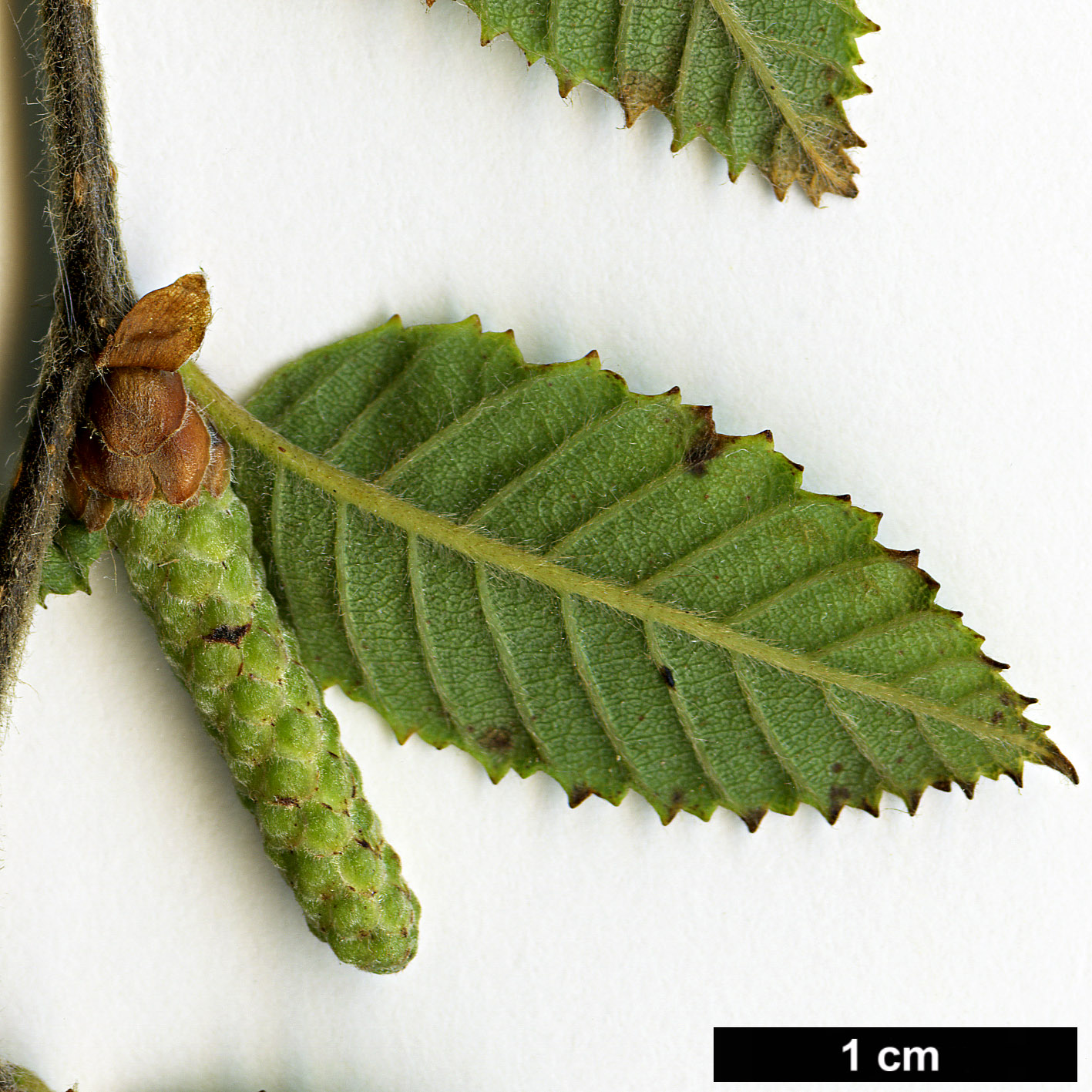
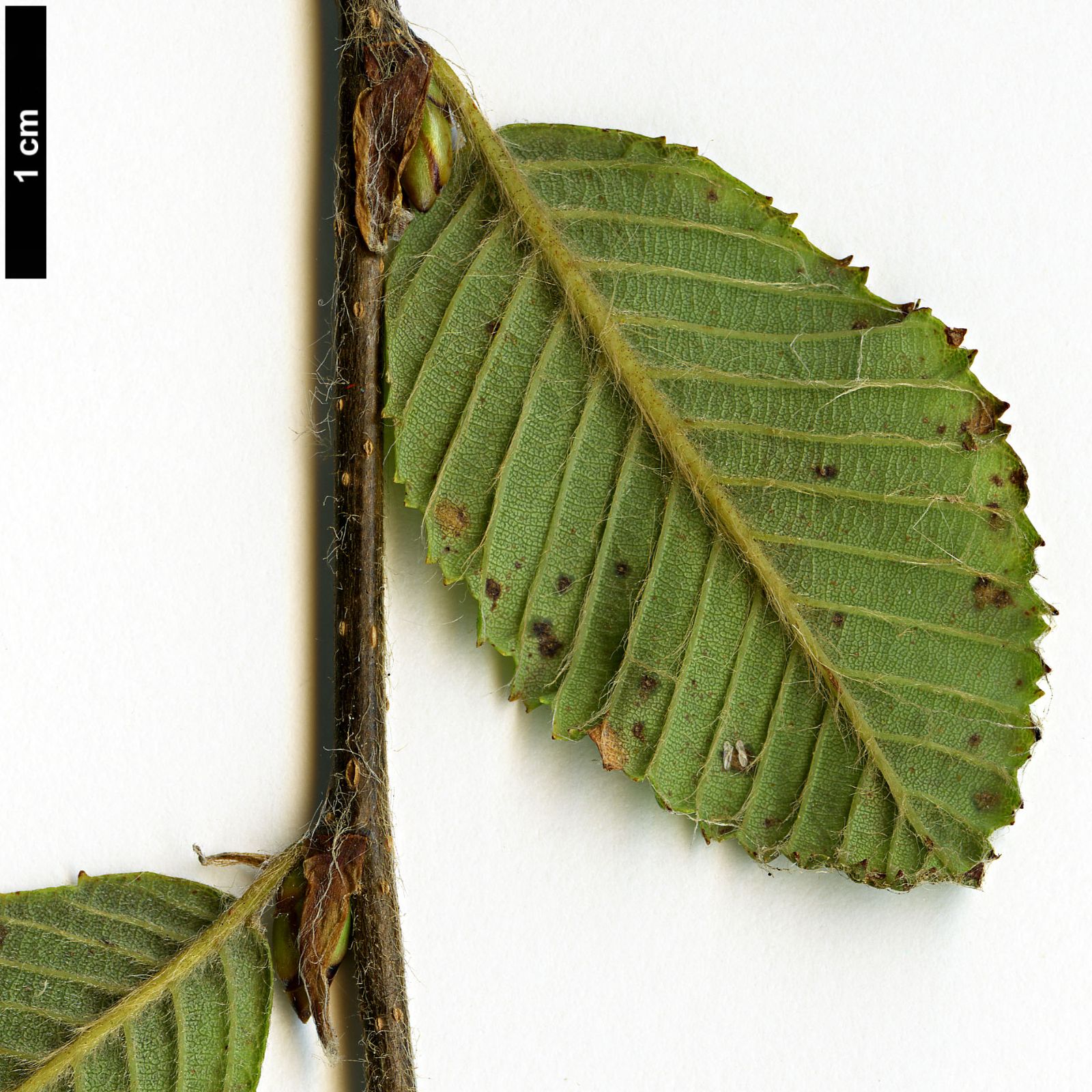
Small tree to 8 m with arching branches. Twigs more or less glabrous; young shoots initially densely softly silky hairy, to 2.5 mm in diam., smooth, brown, eglandular, with small (0.5– 1.0 mm) lenticels, white, roundish to elliptic, longitudinally elongated. Buds ovoid, acute, about 6 × 3 mm. Petiole 3–6 mm. Leaf blade from very small to 38 × 30 mm (rarely to 40 × 34 mm), with (5–) 9–13(–15) pairs of veins; veins deeply indented; secondary veins running to the sinus between the teeth and then bending up into the tooth; 1 (rarely 2) teeth between the teeth ending the secondary veins; secondary veins close 2 mm apart (–3 mm towards the apex); weak basal veins usually absent; margin recurved. Male catkins 1, or 2 or 3 in a cluster, to 4.7 cm; bracts densely yellow tomentose. Female catkins initially deflexed, clearly downward pointing, soon becoming erect. Fruiting catkin up to 18(–32) × 9 mm with peduncle about 3.5–8 mm and bracts usually covered with silky hairs. Scales silky hairy on dorsal (abaxial) surface, with ciliate margins, and apical hairs longer and twisted together to make point to 1.5 mm long. Seeds c. 2 × 1–1.5 mm, hairy towards apex; style c. 1 mm. Flowering June; fruiting October. Tetraploid: 2n=56.

Distribution  China southeast Xizang (Tibet), southwest and west Gansu

Habitat Margins of broad-leaved forests at approx. 2400 m asl.

Taxonomic note Flora of China treats Betula bomiensis as a synonym of B. delavayi var. microstachya P.C.Li, described from Sichuan.

Betula bomiensis was described by Li (1983) from plants from southeast Tibet near Bomi (Pomi) in 1979, though the type specimen was found to be a mixed collection – the lectotype was subsequently established by Keith Rushforth (2003). Cultivated plants derive from a collection made by Rushforth in 1999 between Bagu and Nambu, about 120 km due west of Bomi.

The species is closest to B. potaninii, which differs in its more elongated leaves with more numerous veins, and to B. skvortsovii, which differs in the persistently glandular leaves which usually have a pair of weak basal secondary veins. Whereas B. potaninii is diploid, B. bomiensis is tetraploid, and a seedling of what is probably B. skvortsovii is also tetraploid.

At Ness Botanic Garden, northwest England, Betula bomiensis has formed attractive small trees around 3 m tall, with arching branches bearing small, dark green leaves with deeply impressed veins. Most of the plants distributed to other gardens have died, presumably from the effects of late spring frost. Cuttings taken from seedlings root very easily and viable seed, which comes true, is produced where the different clones are grown together.