Kindly sponsored by
Jane Furse
Martin F. Gardner & Sabina G. Knees (2025)
Recommended citation
Gardner, M.F. & Knees, S.G. (2025), 'Azara petiolaris' from the website Trees and Shrubs Online (treesandshrubsonline.
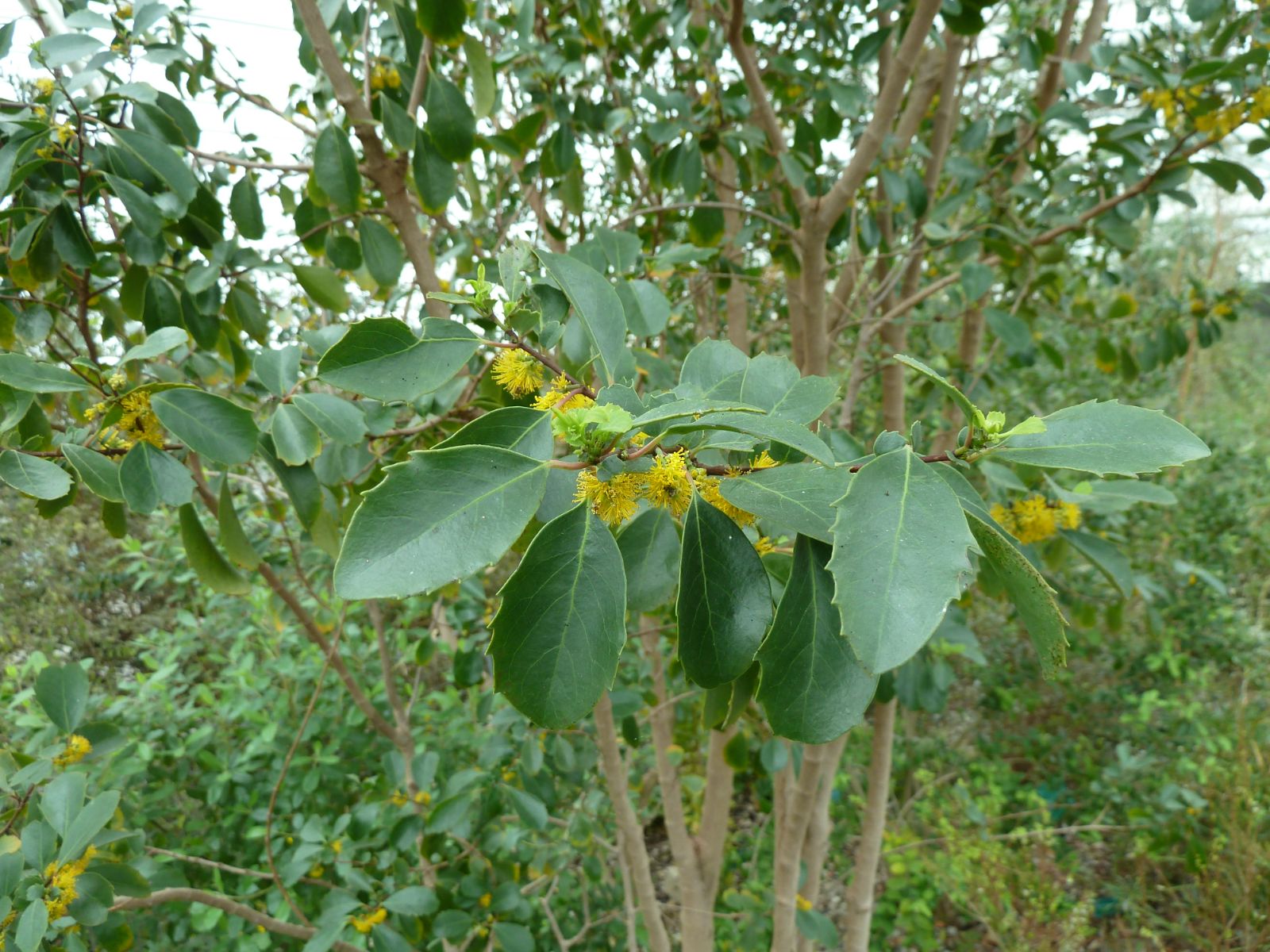
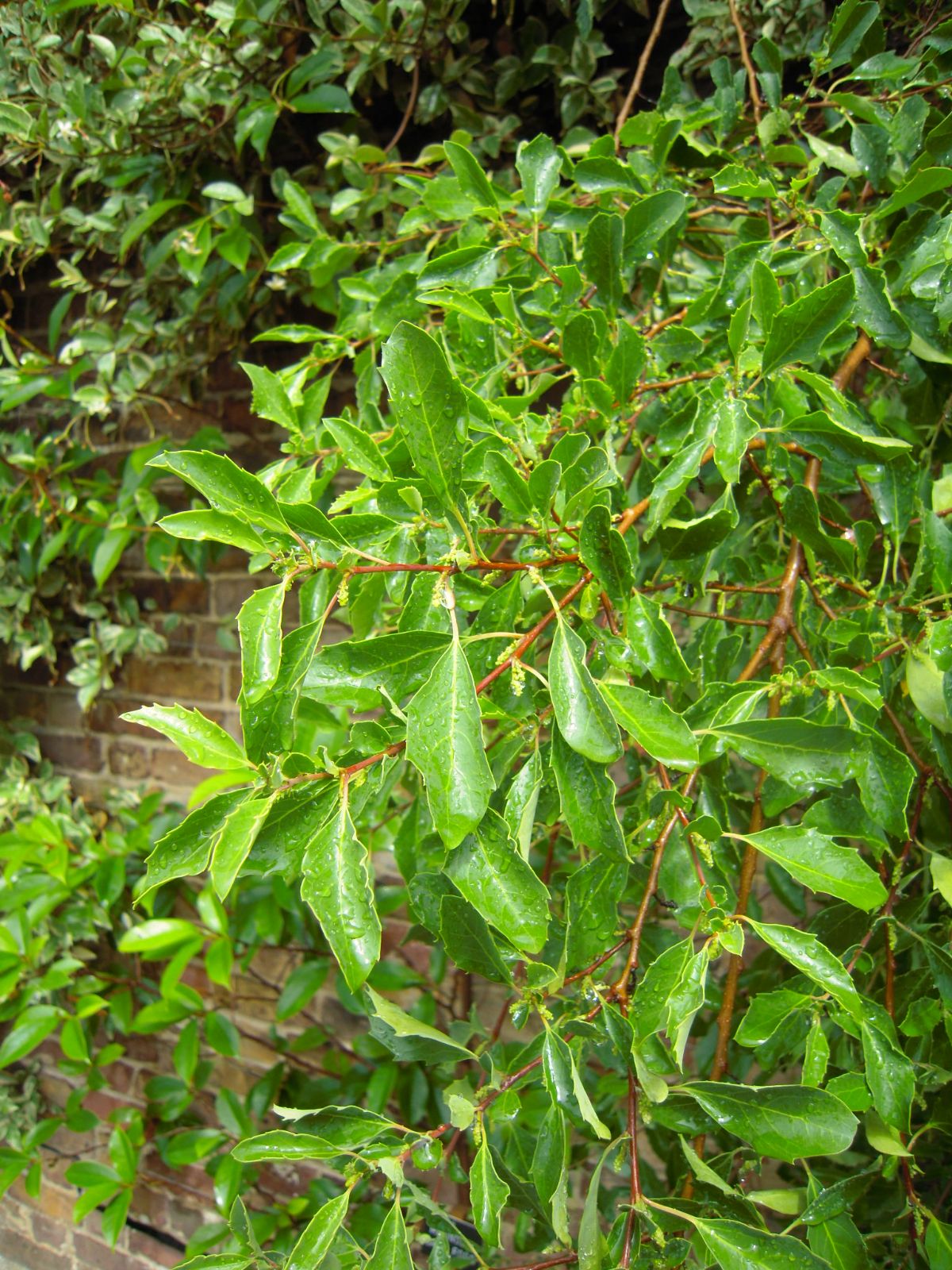
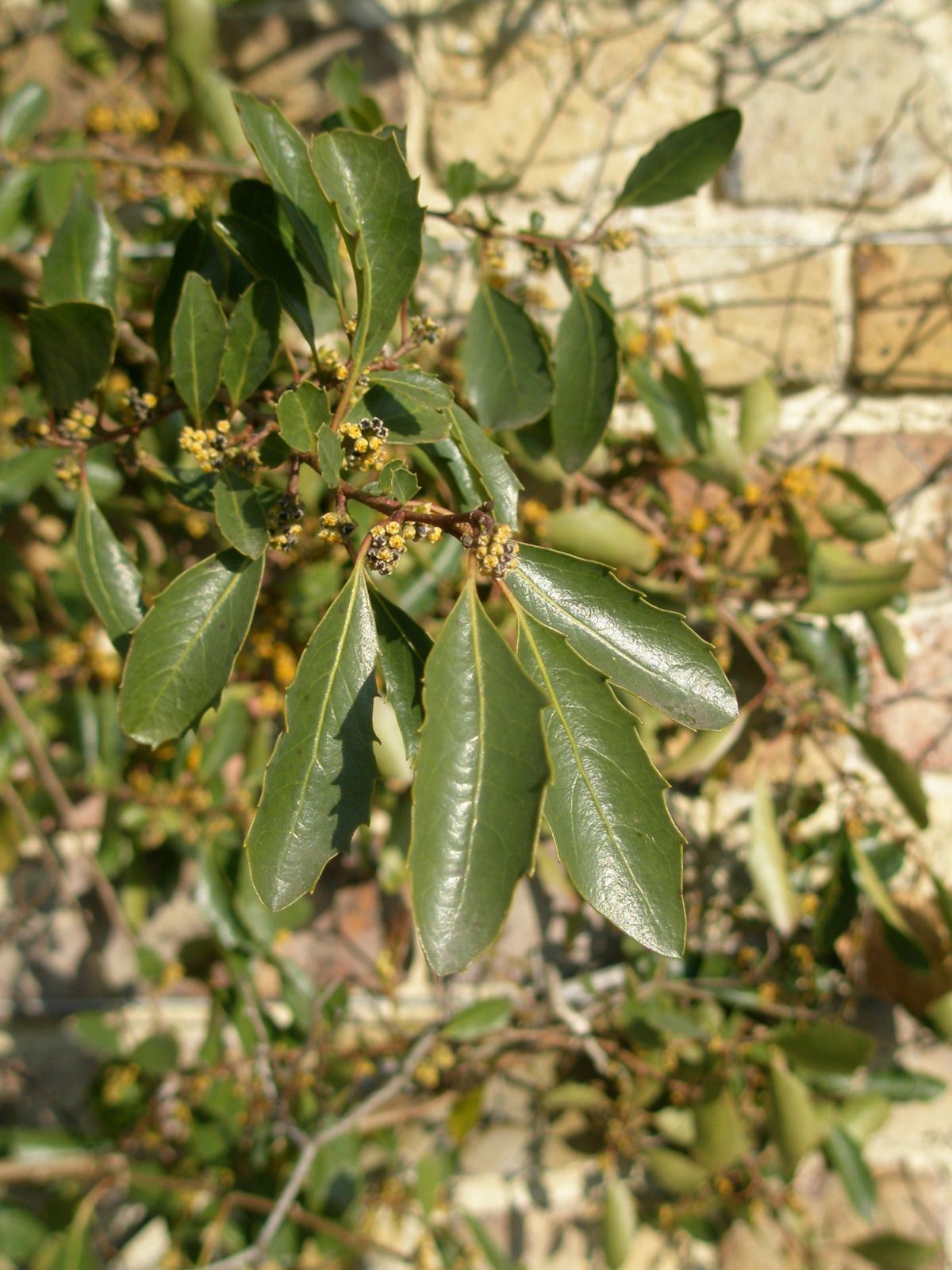
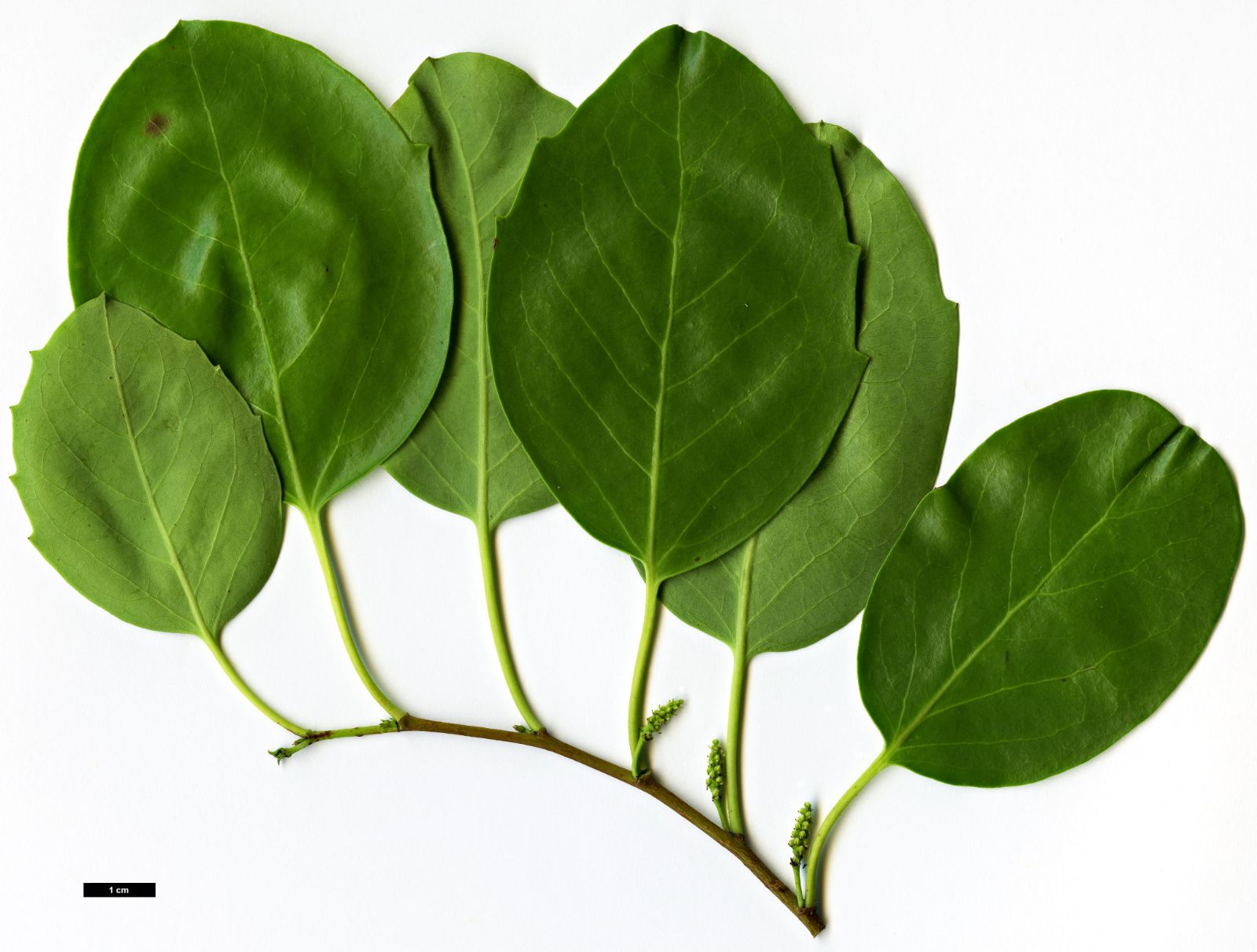
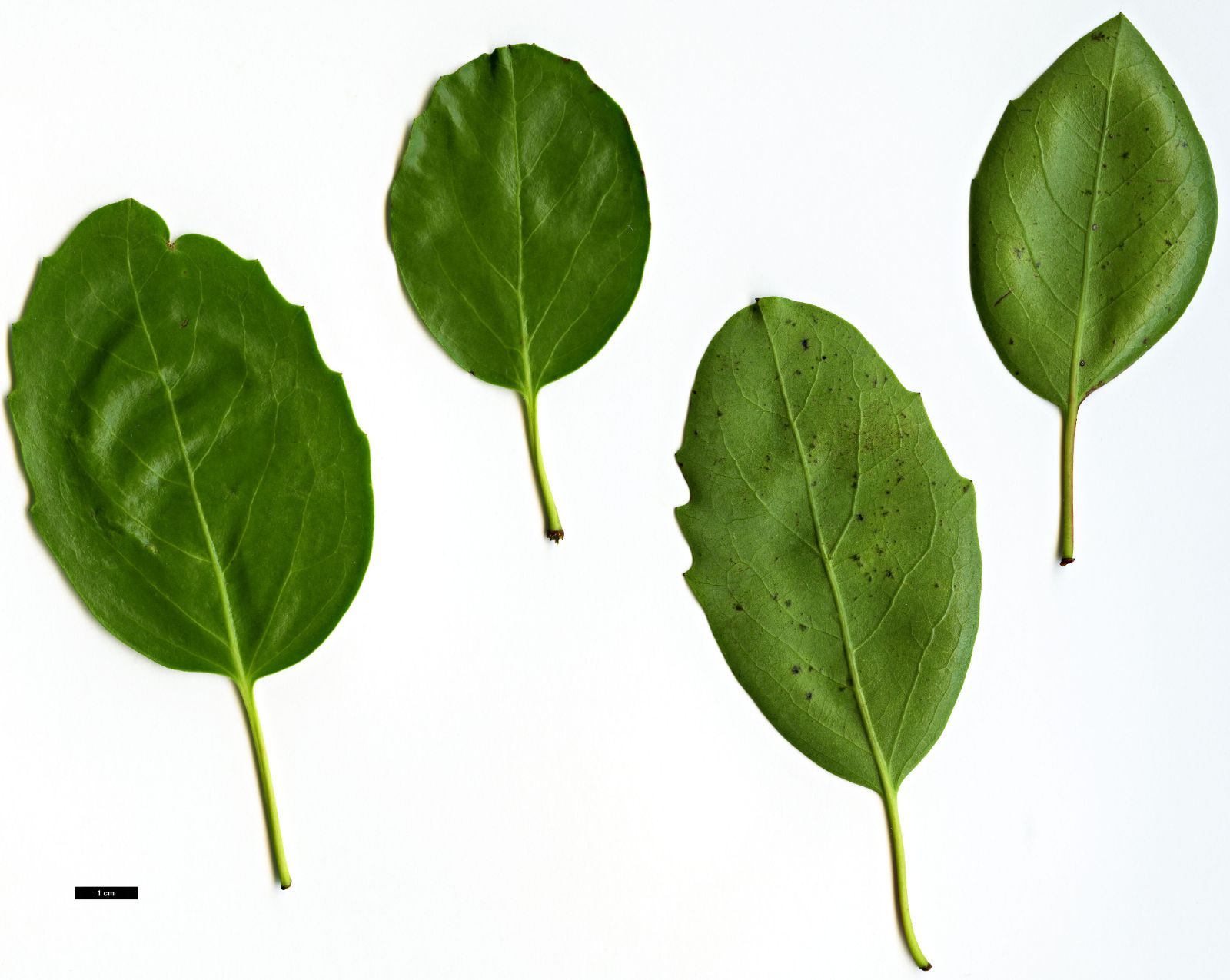
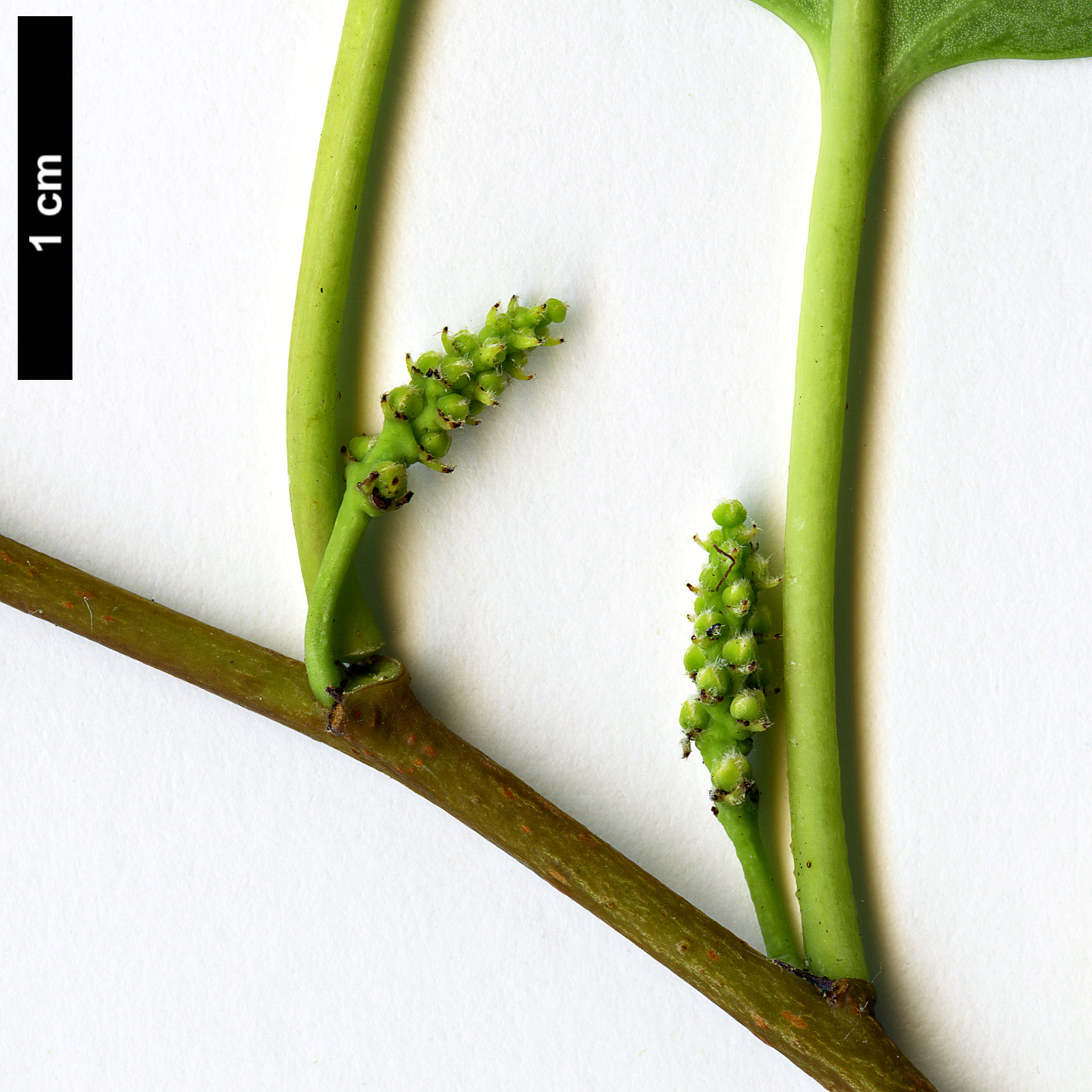
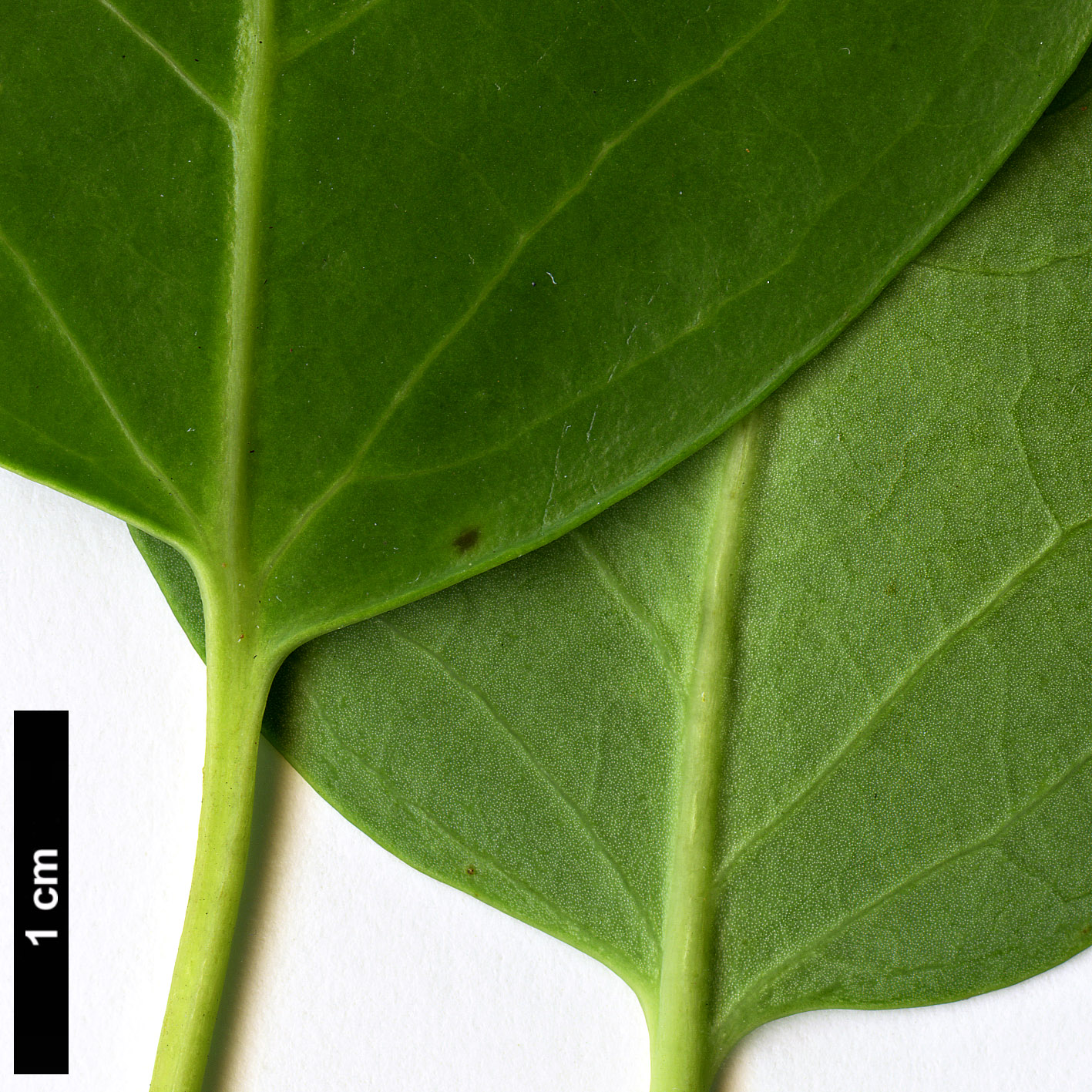
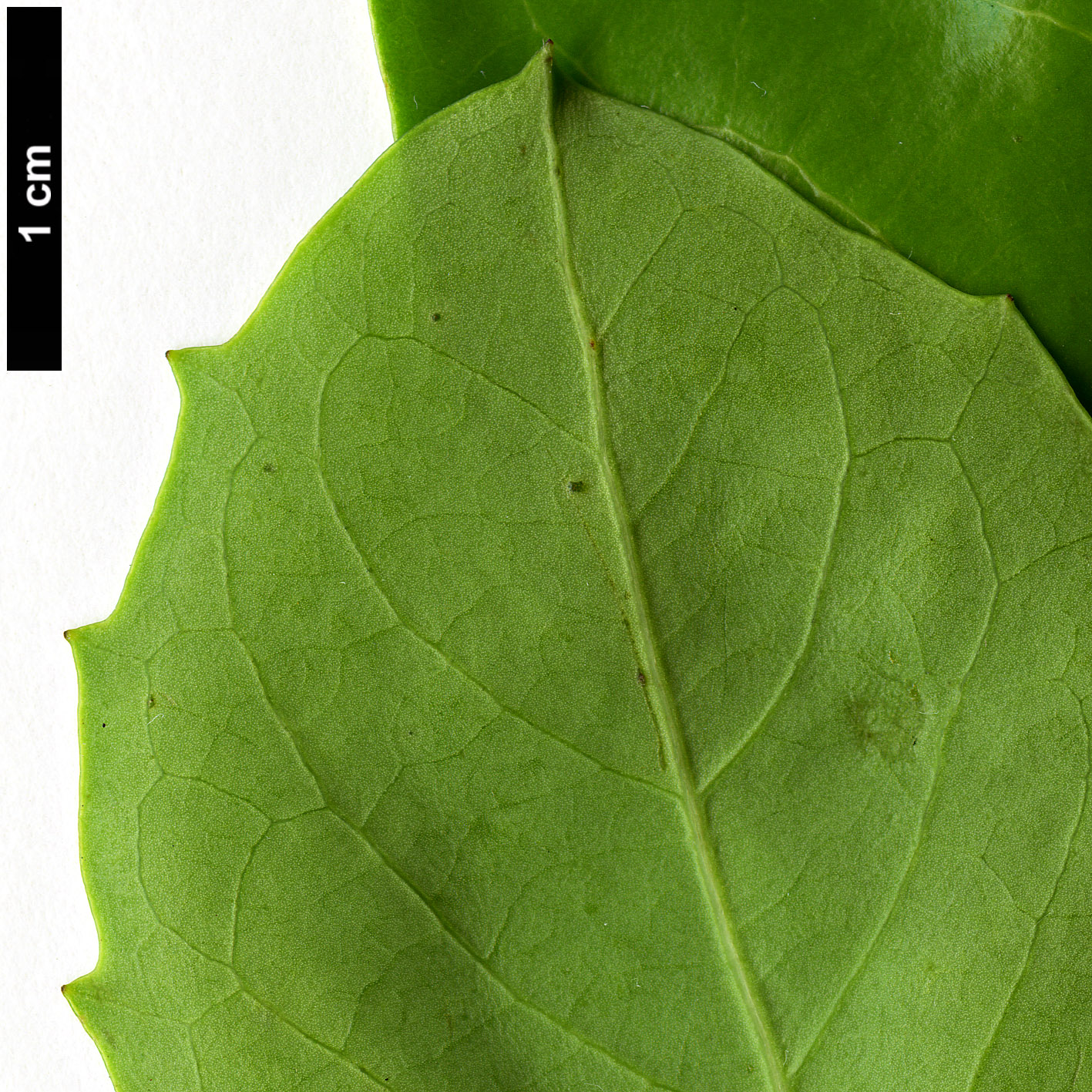
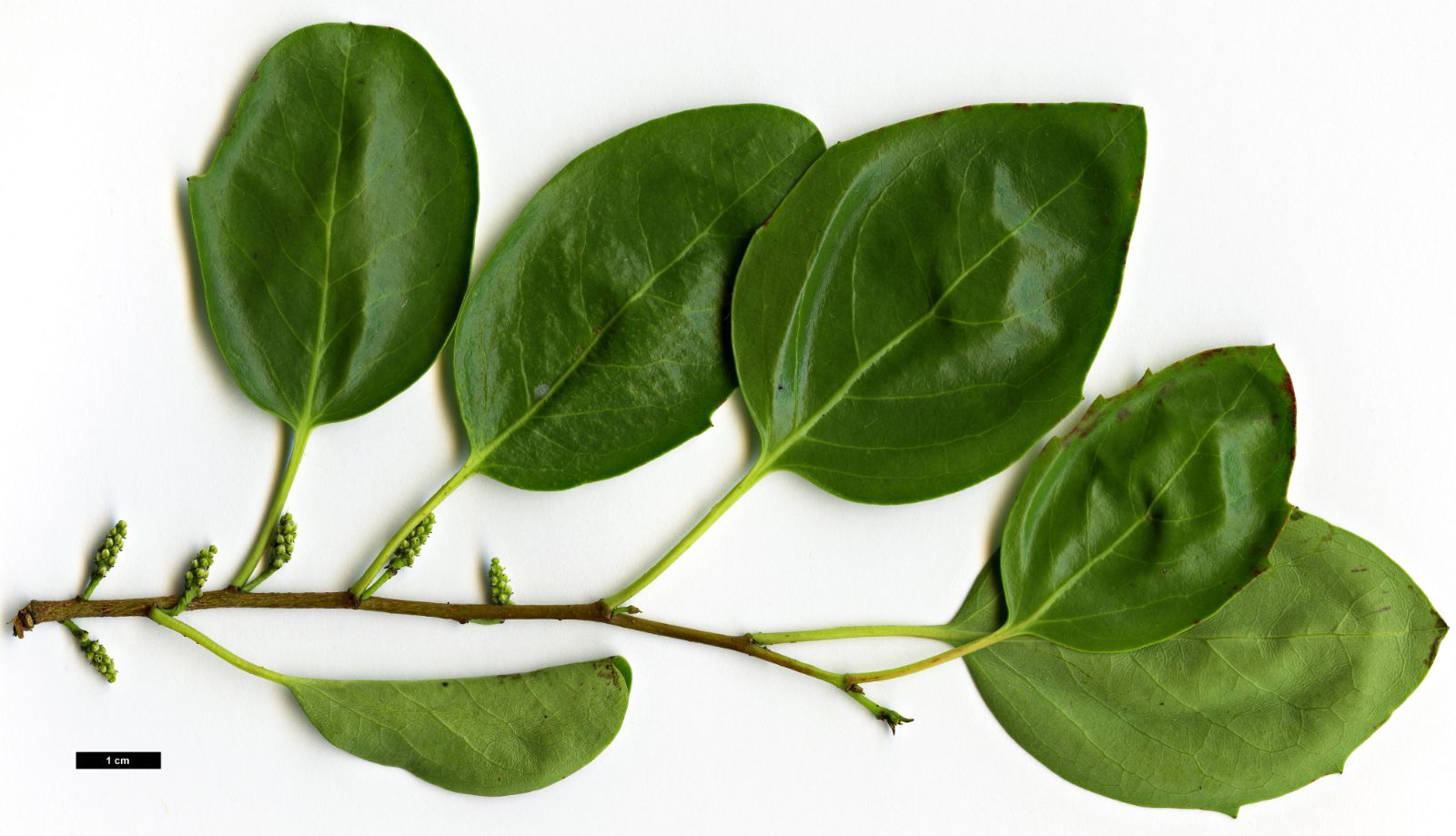
A large shrub but in time (c. 25 years) a tree up to 8 m tall. Trunk 20–40 cm across, bark smooth, greyish. Branches glabrous. Leaves 2–4 × 2–4 cm, broadly elliptic, sharply toothed, but sometimes with very few teeth, glabrous, leathery, often strongly drooping from the shoot. Petioles 1–2.5 cm, glabrous, reddish. Stipules leaf-like, leathery orbiculate, toothed, glabrous, often caducous before the flowers appear. Flowers golden-yellow, borne in dense axillary racemes or spikes, fragrant. Stamens 20–30. Nectaries 5. Flowering March–April. Fruit a globose berry, 8 mm across, pearly-white with pinkish mauve mottling, often produced in heavy bunches; seeds 4–6. (Cullen et al. 2011; Rodríguez & Marticorena 2019; Sleumer 1977).
Distribution Chile Regions of: Coquimbo, Valparaíso, Metropolitan, Libertador General Bernardo O'Higgins, Maule, Ñuble
Habitat Azara petiolaris is endemic to Chile where it has an extensive distribution from Cerro Tulahuén in the Province of Limarí (Coquimbo Region), south to the vicinity of Nevados de Chillán (Ñuble Region). Within this range it can be found from near sea level to 2000 m especially in the Mediterranean vegetation and mountain matorral where sclerophyllous forests prevail. Typically, these forests comprise woody species with hard, leathery leaves which are adapted to dry conditions, the plants are also fire-adapted and able to resprout from basal stems. Common woody associates include Austrocedrus chilensis, Cryptocarya alba, Kageneckia oblonga, Lithraea caustica, Maytenus boaria and Quillaja saponaria.
USDA Hardiness Zone 8b-9a
RHS Hardiness Rating H4
Awards RHS Award of Merit 1933
Conservation status Not evaluated (NE)
There is uncertainty regarding when exactly Azara petiolaris was first introduced to cultivation. It is known that Thomas Bridges was responsible for an introduction through the Royal Botanic Gardens, Kew as J.D Hooker (Hooker 1860) makes mention of this in his text which accompanied a coloured plate of A. petiolaris (under the earlier name A. gilliesii). Hooker states ‘Seeds were received at the Royal Botanic Gardens from Mr Bridges, and plants have for some time flowered with us in the winter months and from one of these our figure is made’ (Hooker 1860). The plant from which the painting was prepared for Curtis’s Botanical Magazine was therefore already several years old and one should disregard 1859 for its introduction which is given by some authorities (e.g. Hillier & Lancaster 2014; Krüssmann 1984). From observations in nursery conditions, A. petiolaris grown from seed can flower after about 4–5 years (pers. obs.), so the date of introduction could have been in the early 1850s as we know that Thomas Bridges was actively collecting in Chile at this time (Johnston 1928), however Bridges’ botanical exploration goes back to 1828 and it is conceivable that his introduction was during the intervening years.
Bean’s description refers to Azara petiolaris as being ‘… the most ornamental of cultivated azaras in its blossoms, but is, unfortunately, not hardy enough to succeed in the open at Kew … It is, however, more suited to the milder parts of the country’ (Bean 1976). Certainly it is one of the most ornamental of all Azara species but our experience of growing this species is quite different when it comes to its hardiness. When information was being collated for Bean’s Trees and Shrubs Hardy in the British Isles, the winters would have been much more severe than they have been in the last few decades. A 25-year old tree of Azara petiolaris that we cultivated in a private Edinburgh garden, which now stands at 8 m tall (D. Rae pers. comm. 2025) and is amongst the tallest trees of this species in cultivation, survived a few winters with temperatures of between –8 to –10°C. In some of the coldest winters it showed partial defoliation but fully recovered and still flowered magnificently. Following a good spring season of flowers it would also look quite stressed, losing some of its leaves but by mid-summer it had fully recovered. Despite being planted against a south-facing wall it was a relatively cold position due to being partially shaded by a nearby taller wall and by larger adjacent trees (pers. obs). There is no doubt that A. petiolaris can be difficult to establish as a young plant, especially if it is exposed to prolonged cold winters, therefore it is essential to protect plants for the first few years after planting. The Tree Register (The Tree Register 2025) only list seven trees and one of these is growing at The Sir Harold Hillier Arboretum with the accession number 19900014*R (Gardner & Knees 4416). This tree, now 5.5 m tall, has been planted with a south-east aspect and is partially shaded by nearby trees and it can produce copious amounts of fruitis. (D. Jewell pers. comm. 2024).
Surprisingly Azara petiolaris has been confused with A. serrata in cultivation, however, there are some very clear distinctions between the two species in that the latter has flowers without nectaries and the young inflorescences are never initiated very early in late summer as they are in A. petiolaris. Furthermore, A. petiolaris has very leathery leaves with distinctive long leaf stalks which are often tinged red.
Azara petiolaris is also known as maquicillo and maqui blanco in Chile due to its superficial resemblance to Aristotelia chilensis.
It is not only Eucryphia cordifolia and to a lesser extent Quillaja saponaria, Caldcluvia paniculata and Weinmannia trichosperma that produce commercial honey in Chile. Scientific analyses have established that A. petiolaris produces unifloral honey which has a distinctive flavour or other attributes due to it being predominantly from the nectar of a single species. Such honey commands a premium price.