Acer stachyophyllum

Sponsor
Kindly sponsored by
a member of the International Dendrology Society
Credits
Article from New Trees by John Grimshaw & Ross Bayton
Recommended citation
'Acer stachyophyllum' from the website Trees and Shrubs Online (treesandshrubsonline.
Genus
- Acer
- Sect. Glabra, Ser. Arguta
Infraspecifics
Other taxa in genus
- Acer acuminatum
- Acer amplum
- Acer argutum
- Acer barbinerve
- Acer buergerianum
- Acer caesium
- Acer calcaratum
- Acer campbellii
- Acer campestre
- Acer 'Candy Stripe'
- Acer capillipes
- Acer cappadocicum
- Acer carpinifolium
- Acer 'Cascade'
- Acer caudatum
- Acer ceriferum
- Acer chapaense
- Acer chienii
- Acer circinatum
- Acer cissifolium
- Acer × conspicuum
- Acer cordatum
- Acer coriaceifolium
- Acer × coriaceum
- Acer crataegifolium
- Acer davidii
- Acer diabolicum
- Acer distylum
- Acer divergens
- Acer duplicatoserratum
- Acer elegantulum
- Acer erianthum
- Acer 'Esk Flamingo'
- Acer fargesii
- Acer fenzelianum
- Acer flabellatum
- Acer forrestii
- Acer franchetii
- Acer × freemanii
- Acer fulvescens
- Acer 'Gimborn'
- Acer ginnala
- Acer glabrum
- Acer 'Gold Coin'
- Acer granatense
- Acer grandidentatum
- Acer griseum
- Acer heldreichii
- Acer henryi
- Acer × hillieri
- Acer hookeri
- Acer hyrcanum
- Acer japonicum
- Acer kawakamii
- Acer komarovii
- Acer laevigatum
- Acer laurinum
- Acer laxiflorum
- Acer lobelii
- Acer longipes
- Acer macrophyllum
- Acer mandshuricum
- Acer maximowiczianum
- Acer maximowiczii
- Acer metcalfii
- Acer miaotaiense
- Acer micranthum
- Acer 'Mindavi'
- Acer 'Minorient'
- Acer miyabei
- Acer miyabei × campestre
- Acer monspessulanum
- Acer morifolium
- Acer 'Mozart'
- Acer oblongum
- Acer obtusifolium
- Acer okamotoanum
- Acer oliverianum
- Acer opalus
- Acer orientale
- Acer palmatum
- Acer papilio
- Acer pauciflorum
- Acer pectinatum
- Acer pensylvanicum
- Acer pentaphyllum
- Acer pentapotamicum
- Acer pictum
- Acer pilosum
- Acer pinnatinervium
- Acer platanoides
- Acer platanoides × amplum
- Acer platanoides × truncatum
- Acer × pseudoheldreichii
- Acer pseudoplatanus
- Acer pseudosieboldianum
- Acer pubinerve
- Acer pycnanthum
- Acer rubescens
- Acer rubrum
- Acer rufinerve
- Acer saccharinum
- Acer saccharum
- Acer sempervirens
- Acer 'Serpentine'
- Acer serrulatum
- Acer shenkanense
- Acer sieboldianum
- Acer sikkimense
- Acer 'Silver Cardinal'
- Acer 'Silver Ghost'
- Acer sinense
- Acer sinopurpurascens
- Acer spicatum
- Acer taronense
- Acer tataricum
- Acer tegmentosum
- Acer tenellum
- Acer tetramerum
- Acer tibetense
- Acer tonkinense
- Acer triflorum
- Acer truncatum
- Acer tschonoskii
- Acer turkestanicum
- Acer tutcheri
- Acer ukurunduense
- Acer velutinum
- Acer wardii
- Acer 'White Tigress'
- Acer wilsonii
- Acer × zoeschense
Bean decribed this species and its varieties under the header Acer tetramerum, copied here for reference until a new entry is prepared for Trees and Shrubs Online. JMG December 2020.
A deciduous tree 20 to 30 ft high, with quite glabrous young shoots. Leaves ovate, coarsely toothed, sometimes lobed, 2 to 31⁄2 in. long, two-thirds as wide, the apex long-pointed, the base tapering, covered with fine down beneath, and with tufts of whitish hairs in the vein-axils. Flowers yellow, the males three or five together in short corymbs, the females in short slender racemes, appearing with the leaves. Fruit glabrous; keys 1 to 11⁄2 in. long; wings 1⁄4 to 1⁄2 in. wide, diverging at an angle of about 60°.
A. tetramerum is founded on a specimen collected by Henry in Hupeh but has a wide range in E. Asia from Kansu and Shensi to Upper Burma and S.E. Tibet. Even within a limited area it varies in the shape and indentation of the leaves and in the degree of downiness of the undersides and a number of varieties have been made out of these differences. These are, however, not very clearly demarcated from each other or from the type and it is best to distinguish the various cultivated forms by their original collectors’ numbers, where these are still known, rather than by a varietal epithet.
Wilson introduced this species on his first expedition to China in 1901, under W. 680, collected in Hupeh; this is the form originally distributed by Veitch. In 1910 he sent seed from W. Szechwan under W. 4102 and probably most of the trees labelled var. betulifolium are from this number. The species is also in cultivation from seed collected by Forrest (F. 30462, 30625, 29396 and 28596), but these forms are rarer than Wilson’s in gardens.
A. tetramerum is a very elegant maple, decorative in winter with its reddish to purplish young stems which later become green and striated after the fashion of the snake-bark maples. It is, however, quite distinct from these botanically and is more closely allied to A. argutum, being, like it, a dioecious species.
There are a number of good specimens at Westonbirt. The largest are in Clay Island and Victory Glade, both on two stems and about 40 ft high. Forrest’s 30462 is represented by two small trees in Mitchell Drive and others in Silkwood. A tree at Caerhays Castle, Cornwall, probably raised from W. 4102, is 32 ft high, on several stems.
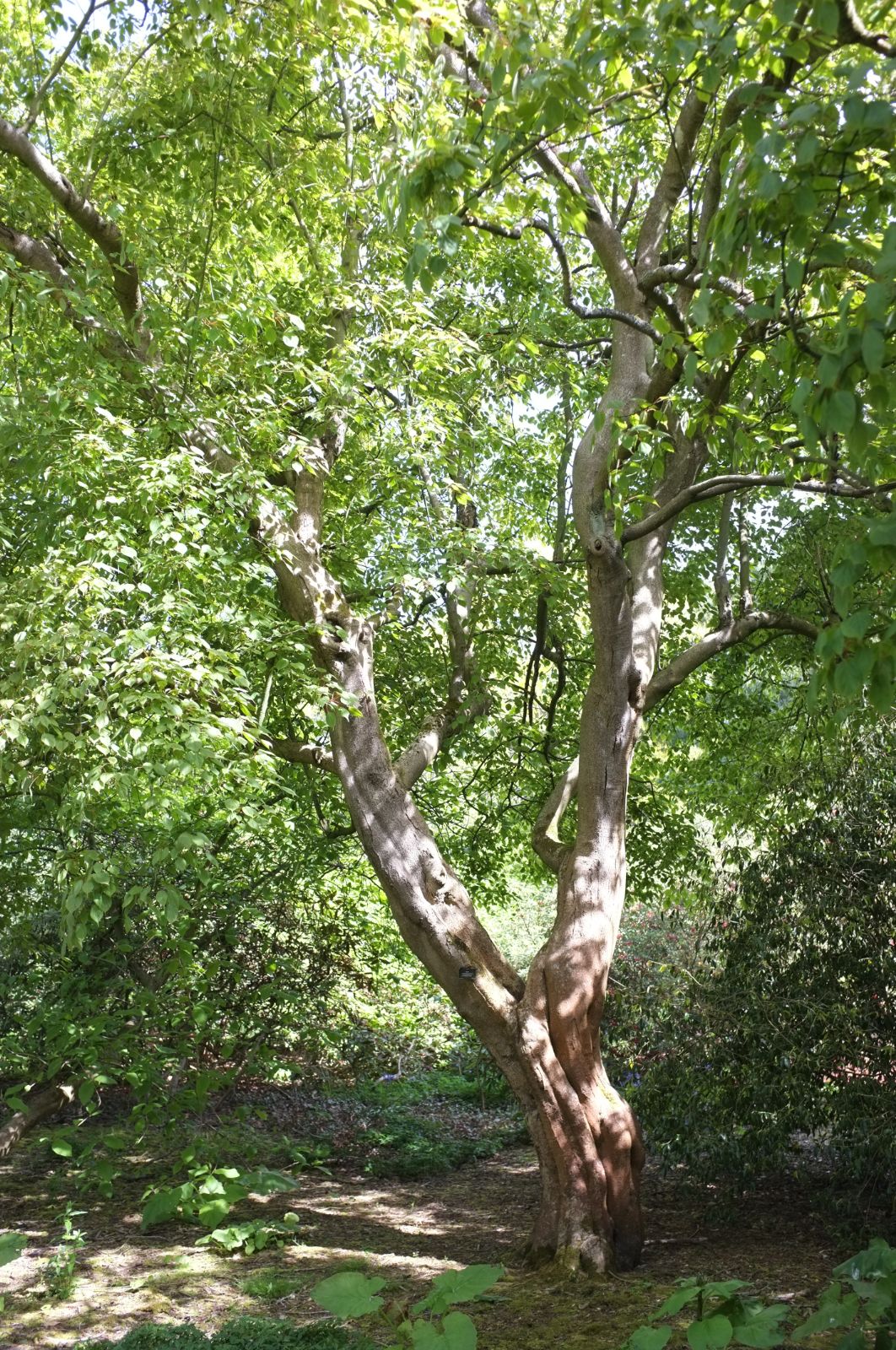
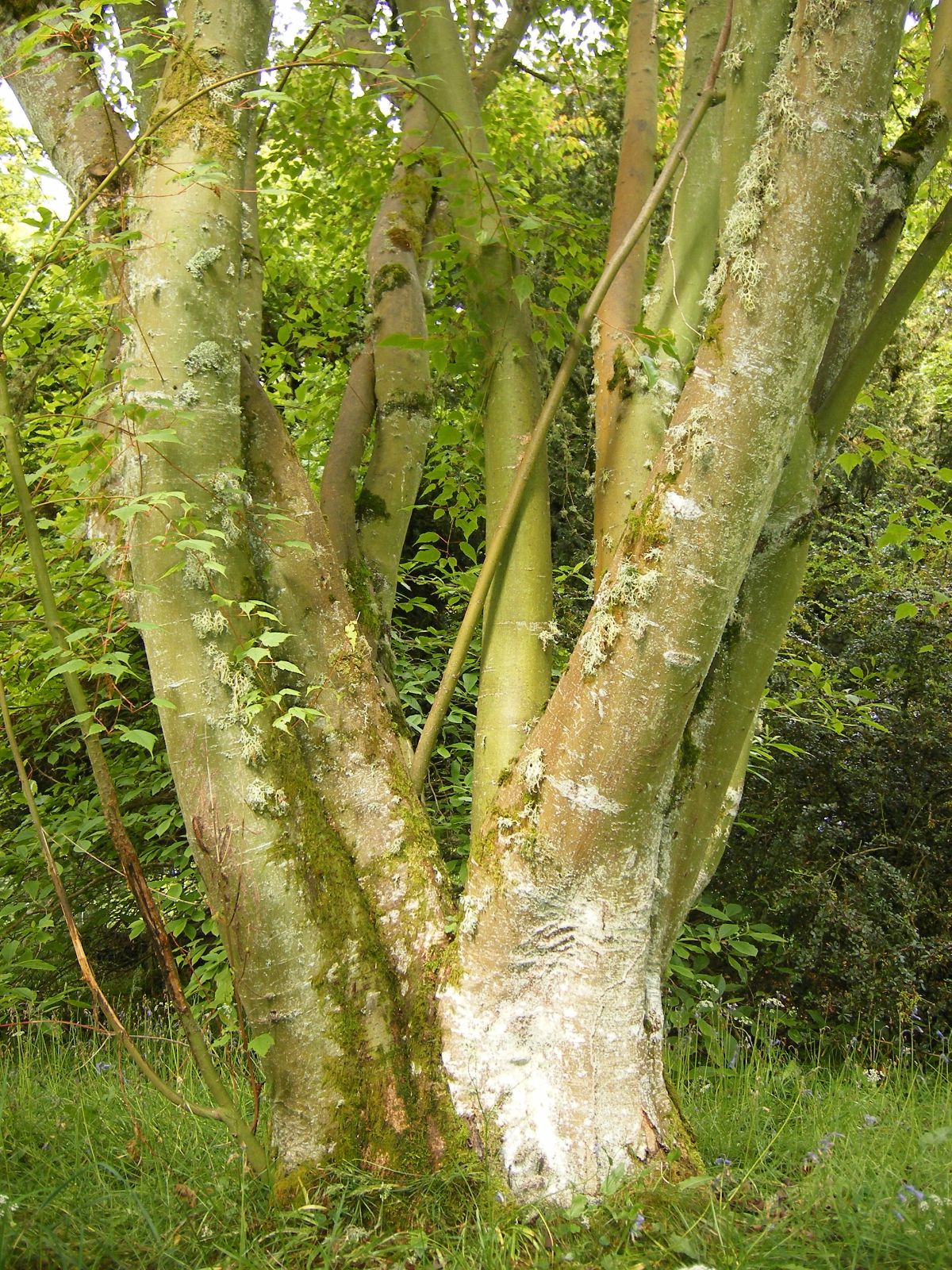
A. stachyophyllum Hiern – A small tree, closely related to the preceding, native of the E. Himalaya, Upper Burma, and parts of W. and S.W. China. Leaves ovate, with unlobed doubly serrate margins and a long, curving tip, downy beneath. Fruits larger than in A. tetramerum and the racemes often branched; in cultivation from Kingdon Ward 10965 and Forrest 11252. This species is rare in gardens but is quite hardy in woodland at Borde Hill, Sussex, and is represented at Edinburgh by four specimens, the tallest 25 ft high. In his Field Notes, Kingdon Ward records that in the Zayul region of the E. Himalaya ‘drinking cups are made from its wood – the most expensive kind’.
The boundary between this species and A. tetramerum appears to be rather uncertain.
From the Supplement (Vol. V)
specimens: Wakehurst Place, Sussex, 35 × 33⁄4 ft (1981); R.H.S. Garden, Wisley, Surrey, on Battleston Hill, 65 × 31⁄4 ft (1981); Westonbirt, Glos., a many-stemmed tree 48 ft high (1978); Edinburgh Botanic Garden, 31 × 31⁄2 ft (1981).
It is doubtful whether A. tetramerum is really distinct enough from A. stachyophyllum, named much earlier, to rank even as a subspecies.
subsp. betulifolium (Maxim.) P.C. de Jong
Common Names
Birch-leaf Maple
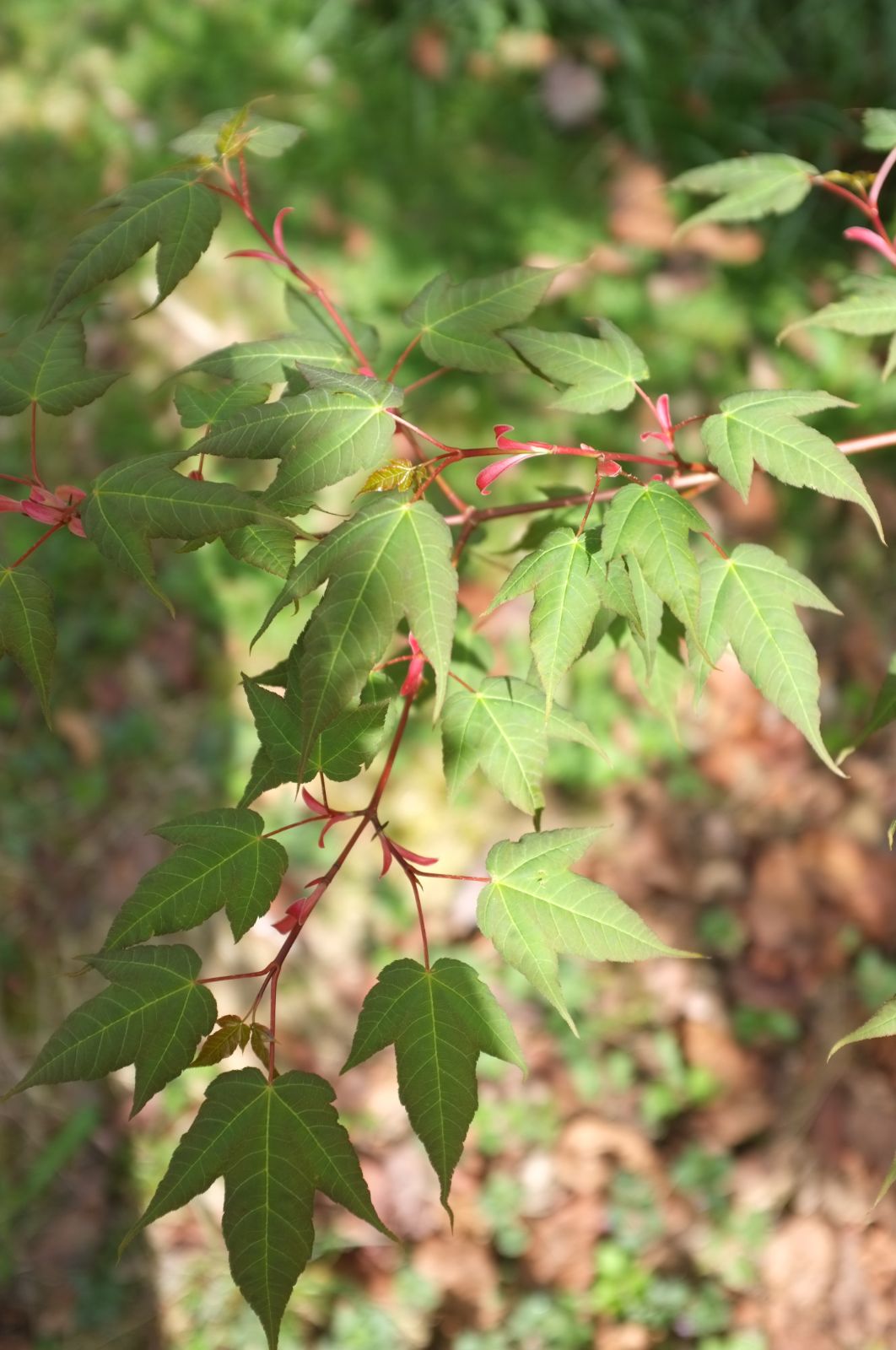
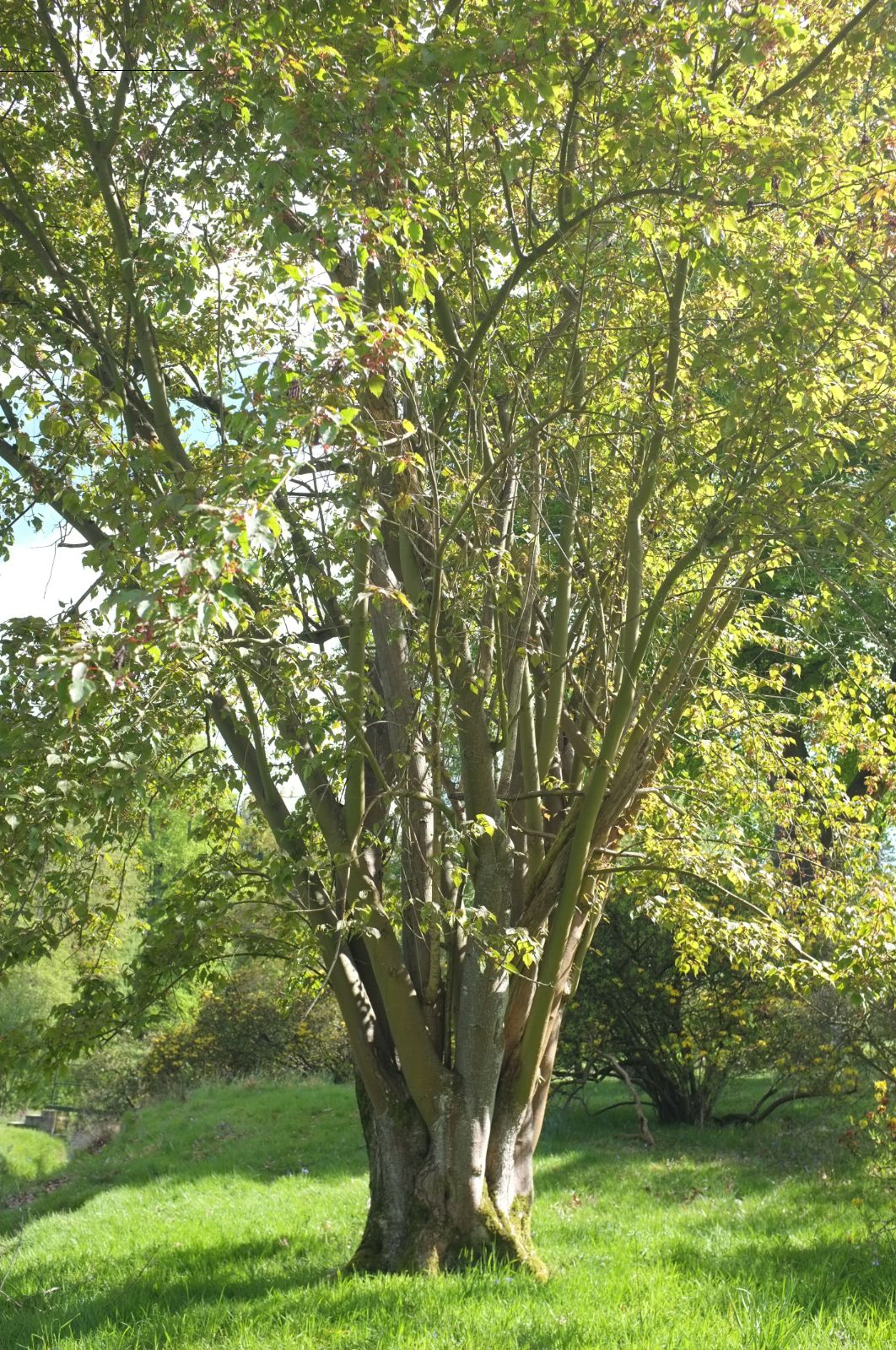
Subsp. betulifolium is said to be a multistemmed tree or shrub that suckers freely from the base once established, unlike subsp. stachyophyllum which, while multistemmed, does not produce suckers (van Gelderen et al. 1994, van Gelderen & van Gelderen 1999), but this seems not to be a very reliable distinction (P. Gregory, L. Banks, pers. comms. 2007). The leaves of subsp. betulifolium (3–5 × 2–3 cm) are somewhat smaller than those of subsp. stachyophyllum (4–8 × 3–5 cm). Van Gelderen et al. 1994, van Gelderen & van Gelderen 1999, Xu et al. 2008. Distribution CHINA: southern Gansu, western Henan, western Hubei, Ningxia, southern Shaanxi, Sichuan, Yunnan; MYANMAR. Habitat Alpine forests between 1400 and 3300 m asl. USDA Hardiness Zone 6–7. Conservation status Not evaluated.
Accounts of the early introductions of Acer stachyophyllum and its varieties are somewhat confused by the former use of the name A. tetramerum. It seems, however, that it was first introduced by Ernest Wilson (Wilson 4102) from Sichuan in 1910, with later collections by George Forrest (Bean 1976a). There are numerous mature specimens from these early collections in British and Irish arboreta, the largest recorded being 15.5 m at Hergest Croft in 1995 (TROBI), an old tree planted prior to 1930 and possibly an original Wilson collection (L. Banks, pers. comm. 2007). A large plant (perhaps best described as a thicket) of this taxon also grows in the Esveld Aceretum in Boskoop, from where it has been abundantly propagated and distributed. It has also been collected in Sichuan on several occasions through the SICH expeditions between 1988 and 2003 (for example, SICH 207, 1119, 1457, 1740, 2310), at altitudes between 1580 and 3050 m. It is frequently a component of regenerating or secondary forest. Although a snakebark, this is not one of the more attractive members of the group, and with its suckering habit needs ample space to develop. The mid-green leaves turn yellow in autumn.