Acer pinnatinervium

Sponsor
Kindly sponsored by
a member of the International Dendrology Society
Credits
Article from New Trees by John Grimshaw & Ross Bayton
Recommended citation
'Acer pinnatinervium' from the website Trees and Shrubs Online (treesandshrubsonline.
Genus
- Acer
- Sect. Hyptiocarpa
Synonyms
- A. jingdongense T.Z. Hsu
Other taxa in genus
- Acer acuminatum
- Acer amplum
- Acer argutum
- Acer barbinerve
- Acer buergerianum
- Acer caesium
- Acer calcaratum
- Acer campbellii
- Acer campestre
- Acer 'Candy Stripe'
- Acer capillipes
- Acer cappadocicum
- Acer carpinifolium
- Acer 'Cascade'
- Acer caudatum
- Acer ceriferum
- Acer chapaense
- Acer chienii
- Acer circinatum
- Acer cissifolium
- Acer × conspicuum
- Acer cordatum
- Acer coriaceifolium
- Acer × coriaceum
- Acer crataegifolium
- Acer davidii
- Acer diabolicum
- Acer distylum
- Acer divergens
- Acer duplicatoserratum
- Acer elegantulum
- Acer erianthum
- Acer 'Esk Flamingo'
- Acer fargesii
- Acer fenzelianum
- Acer flabellatum
- Acer forrestii
- Acer franchetii
- Acer × freemanii
- Acer fulvescens
- Acer 'Gimborn'
- Acer ginnala
- Acer glabrum
- Acer 'Gold Coin'
- Acer granatense
- Acer grandidentatum
- Acer griseum
- Acer heldreichii
- Acer henryi
- Acer × hillieri
- Acer hookeri
- Acer hyrcanum
- Acer japonicum
- Acer kawakamii
- Acer komarovii
- Acer laevigatum
- Acer laurinum
- Acer laxiflorum
- Acer lobelii
- Acer longipes
- Acer macrophyllum
- Acer mandshuricum
- Acer maximowiczianum
- Acer maximowiczii
- Acer metcalfii
- Acer miaotaiense
- Acer micranthum
- Acer 'Mindavi'
- Acer 'Minorient'
- Acer miyabei
- Acer miyabei × campestre
- Acer monspessulanum
- Acer morifolium
- Acer 'Mozart'
- Acer oblongum
- Acer obtusifolium
- Acer okamotoanum
- Acer oliverianum
- Acer opalus
- Acer orientale
- Acer palmatum
- Acer papilio
- Acer pauciflorum
- Acer pectinatum
- Acer pensylvanicum
- Acer pentaphyllum
- Acer pentapotamicum
- Acer pictum
- Acer pilosum
- Acer platanoides
- Acer platanoides × amplum
- Acer platanoides × truncatum
- Acer × pseudoheldreichii
- Acer pseudoplatanus
- Acer pseudosieboldianum
- Acer pubinerve
- Acer pycnanthum
- Acer rubescens
- Acer rubrum
- Acer rufinerve
- Acer saccharinum
- Acer saccharum
- Acer sempervirens
- Acer 'Serpentine'
- Acer serrulatum
- Acer shenkanense
- Acer sieboldianum
- Acer sikkimense
- Acer 'Silver Cardinal'
- Acer 'Silver Ghost'
- Acer sinense
- Acer sinopurpurascens
- Acer spicatum
- Acer stachyophyllum
- Acer taronense
- Acer tataricum
- Acer tegmentosum
- Acer tenellum
- Acer tetramerum
- Acer tibetense
- Acer tonkinense
- Acer triflorum
- Acer truncatum
- Acer tschonoskii
- Acer turkestanicum
- Acer tutcheri
- Acer ukurunduense
- Acer velutinum
- Acer wardii
- Acer 'White Tigress'
- Acer wilsonii
- Acer × zoeschense
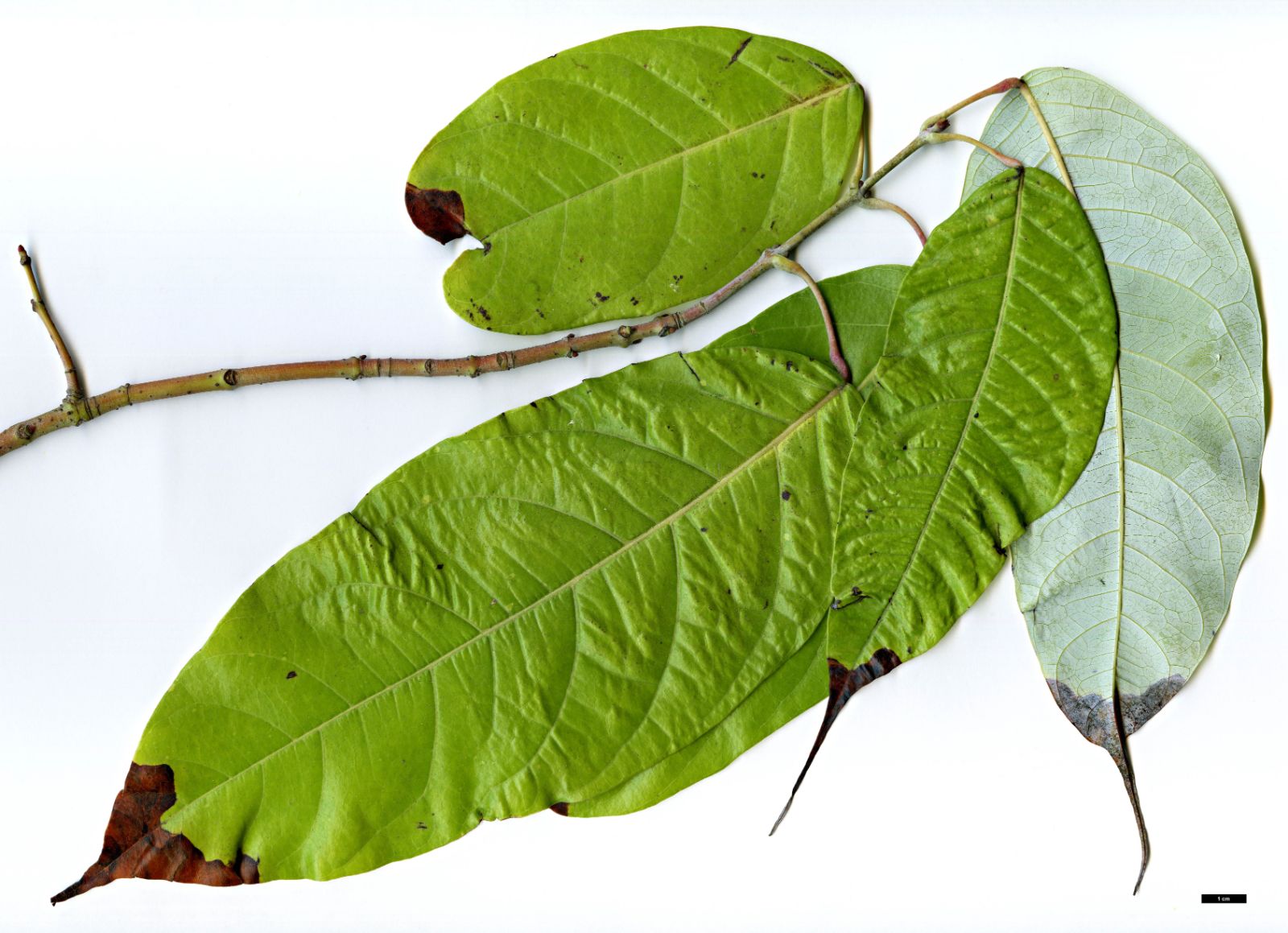
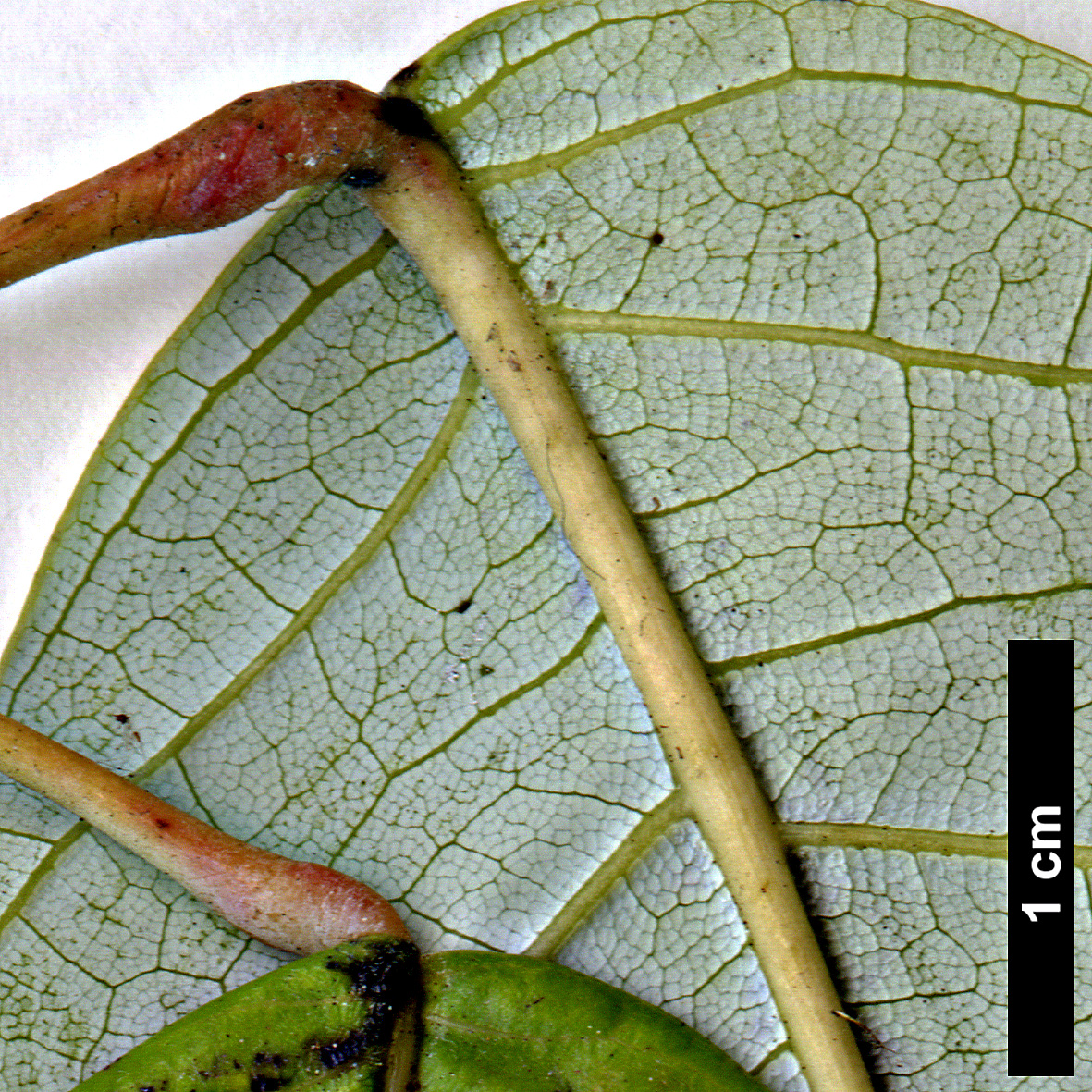
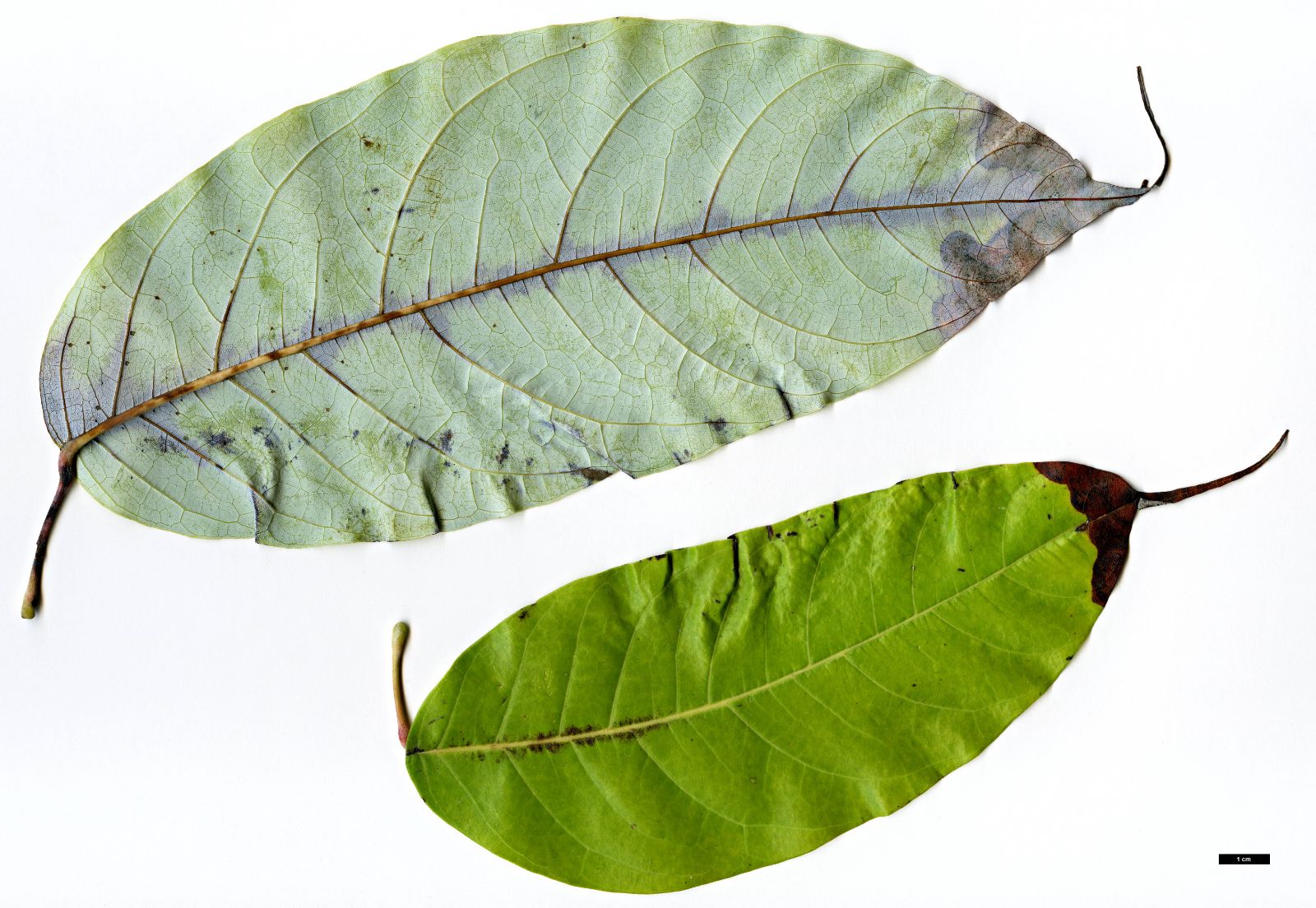
This species is considered by van Gelderen et al. (1994) to be synonymous with A. laurinum, but is recognised as distinct by Xu et al. 2008. It forms a tree to 10 m with rough, grey or greyish brown bark. It has glabrous, pinnatinerved leaves with 8–12 pairs of lateral veins, with purplish petioles 2–3.5 cm long, and samaras 2–4 cm long. In comparison, A. laurinum has trinerved leaves with five to six pairs of lateral veins, a pubescent underside, and samaras 4–7 cm long. Xu et al. 2008. Distribution CHINA: southwest Xizang, Yunnan; INDIA; THAILAND. Habitat Mixed forest between 500 and 2400 m asl. USDA Hardiness Zone 9–10. Conservation status Not evaluated. Illustration NT88.
One of the simple-leaved evergreen maples from the warmer parts of Asia, Acer pinnatinervium is potentially a large tree. It is known in cultivation only as a few young plants growing at Tregrehan, from a collection made in Yunnan, but these seem to be doing very well. The relationship to A. laurinum is evident, but this material differs in having reddish stems and petioles and larger leaves. The leaves are handsome, glossy green above, shining white below. As with all this group, it will need a mild, sheltered situation, or to be grown as a potted plant under cover.