Acer cissifolium

Sponsor
Kindly sponsored by
a member of the International Dendrology Society
Credits
Article from Bean's Trees and Shrubs Hardy in the British Isles
Recommended citation
'Acer cissifolium' from the website Trees and Shrubs Online (treesandshrubsonline.
Genus
Synonyms
- Negundo cissifolium Sieb. & Zucc.
Other taxa in genus
- Acer acuminatum
- Acer amplum
- Acer argutum
- Acer barbinerve
- Acer buergerianum
- Acer caesium
- Acer calcaratum
- Acer campbellii
- Acer campestre
- Acer 'Candy Stripe'
- Acer capillipes
- Acer cappadocicum
- Acer carpinifolium
- Acer 'Cascade'
- Acer caudatum
- Acer ceriferum
- Acer chapaense
- Acer chienii
- Acer circinatum
- Acer × conspicuum
- Acer cordatum
- Acer coriaceifolium
- Acer × coriaceum
- Acer crataegifolium
- Acer davidii
- Acer diabolicum
- Acer distylum
- Acer divergens
- Acer duplicatoserratum
- Acer elegantulum
- Acer erianthum
- Acer 'Esk Flamingo'
- Acer fargesii
- Acer fenzelianum
- Acer flabellatum
- Acer forrestii
- Acer franchetii
- Acer × freemanii
- Acer fulvescens
- Acer 'Gimborn'
- Acer ginnala
- Acer glabrum
- Acer 'Gold Coin'
- Acer granatense
- Acer grandidentatum
- Acer griseum
- Acer heldreichii
- Acer henryi
- Acer × hillieri
- Acer hookeri
- Acer hyrcanum
- Acer japonicum
- Acer kawakamii
- Acer komarovii
- Acer laevigatum
- Acer laurinum
- Acer laxiflorum
- Acer lobelii
- Acer longipes
- Acer macrophyllum
- Acer mandshuricum
- Acer maximowiczianum
- Acer maximowiczii
- Acer metcalfii
- Acer miaotaiense
- Acer micranthum
- Acer 'Mindavi'
- Acer 'Minorient'
- Acer miyabei
- Acer miyabei × campestre
- Acer monspessulanum
- Acer morifolium
- Acer 'Mozart'
- Acer oblongum
- Acer obtusifolium
- Acer okamotoanum
- Acer oliverianum
- Acer opalus
- Acer orientale
- Acer palmatum
- Acer papilio
- Acer pauciflorum
- Acer pectinatum
- Acer pensylvanicum
- Acer pentaphyllum
- Acer pentapotamicum
- Acer pictum
- Acer pilosum
- Acer pinnatinervium
- Acer platanoides
- Acer platanoides × amplum
- Acer platanoides × truncatum
- Acer × pseudoheldreichii
- Acer pseudoplatanus
- Acer pseudosieboldianum
- Acer pubinerve
- Acer pycnanthum
- Acer rubescens
- Acer rubrum
- Acer rufinerve
- Acer saccharinum
- Acer saccharum
- Acer sempervirens
- Acer 'Serpentine'
- Acer serrulatum
- Acer shenkanense
- Acer sieboldianum
- Acer sikkimense
- Acer 'Silver Cardinal'
- Acer 'Silver Ghost'
- Acer sinense
- Acer sinopurpurascens
- Acer spicatum
- Acer stachyophyllum
- Acer taronense
- Acer tataricum
- Acer tegmentosum
- Acer tenellum
- Acer tetramerum
- Acer tibetense
- Acer tonkinense
- Acer triflorum
- Acer truncatum
- Acer tschonoskii
- Acer turkestanicum
- Acer tutcheri
- Acer ukurunduense
- Acer velutinum
- Acer wardii
- Acer 'White Tigress'
- Acer wilsonii
- Acer × zoeschense
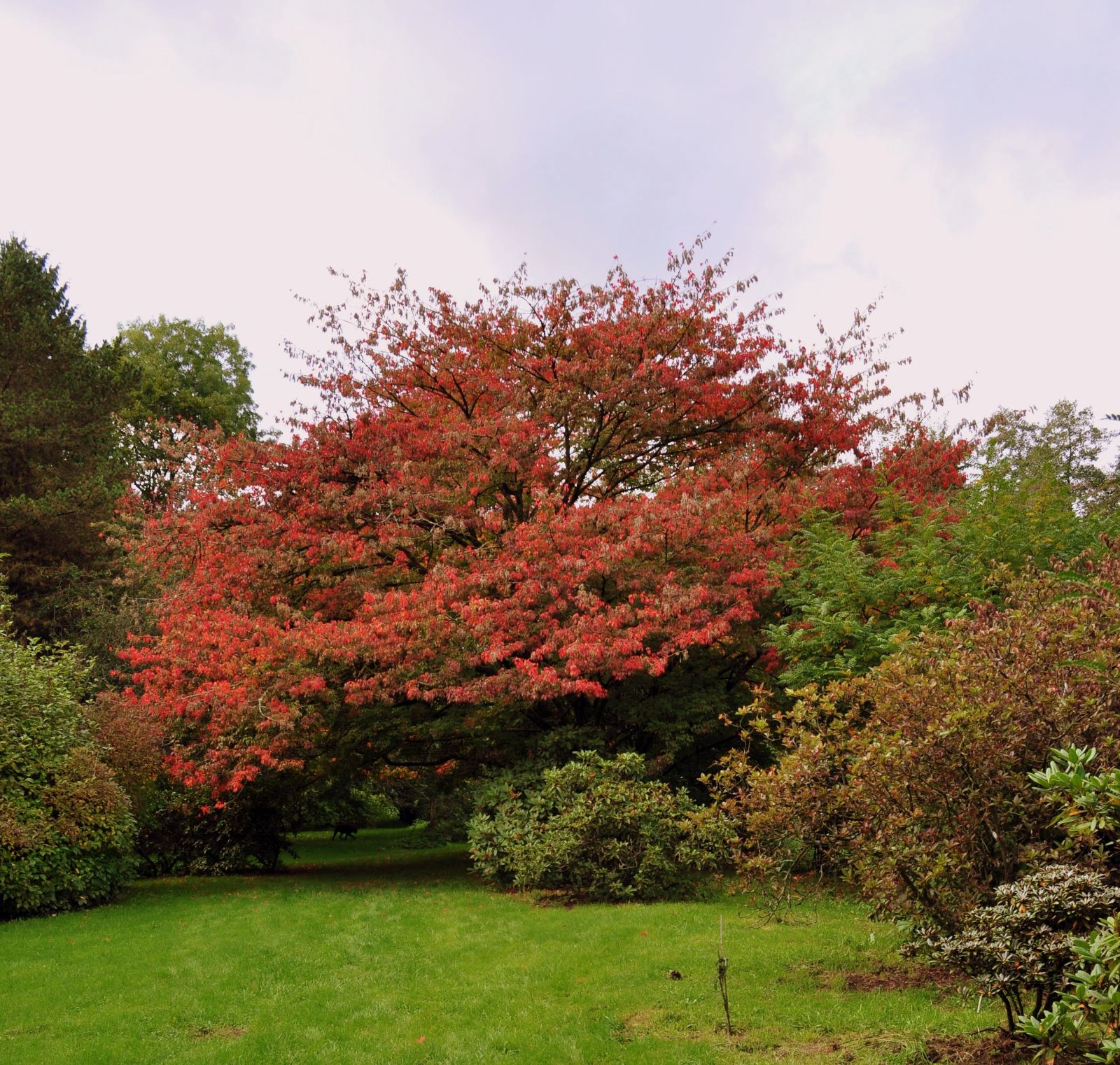
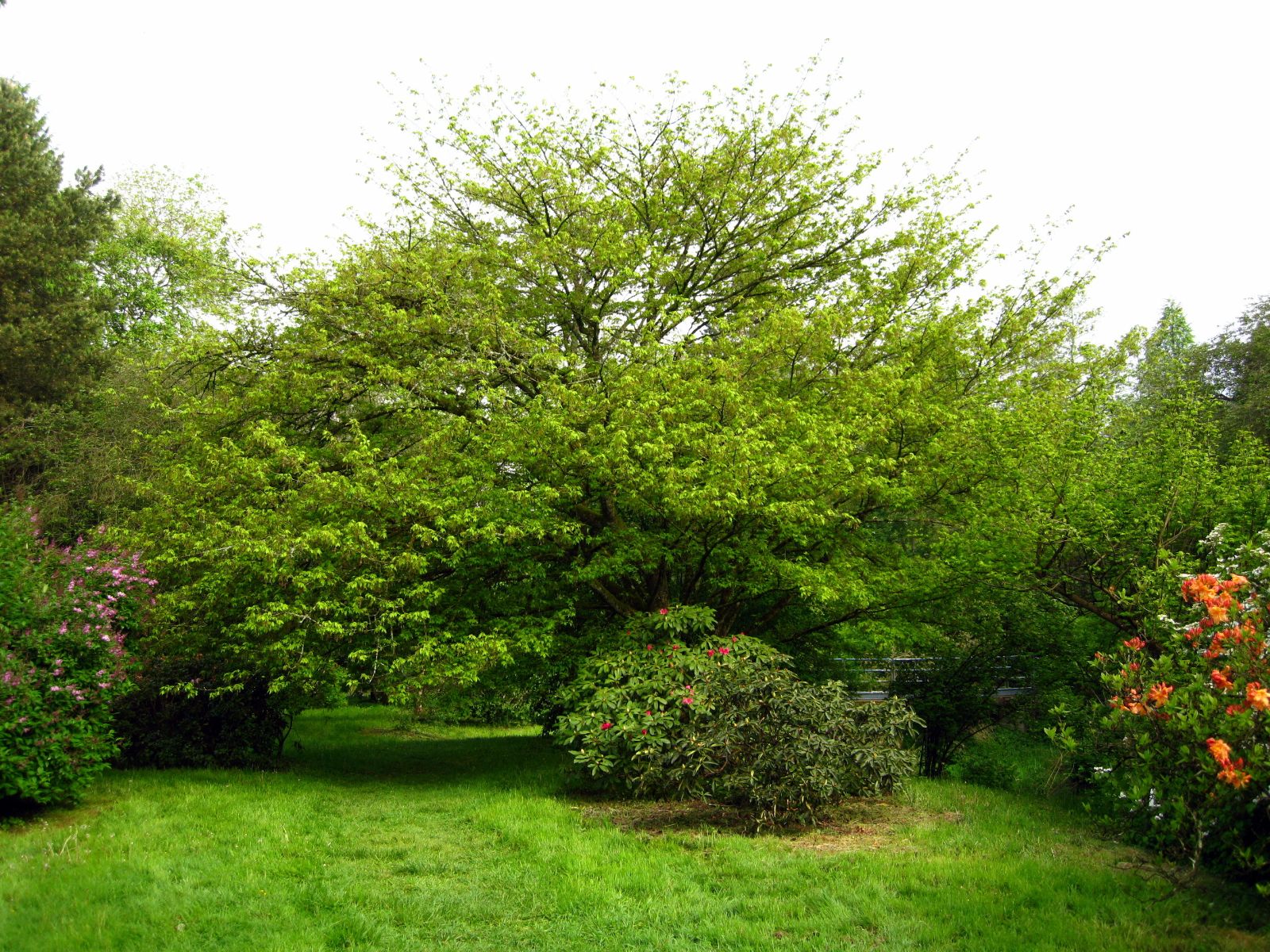
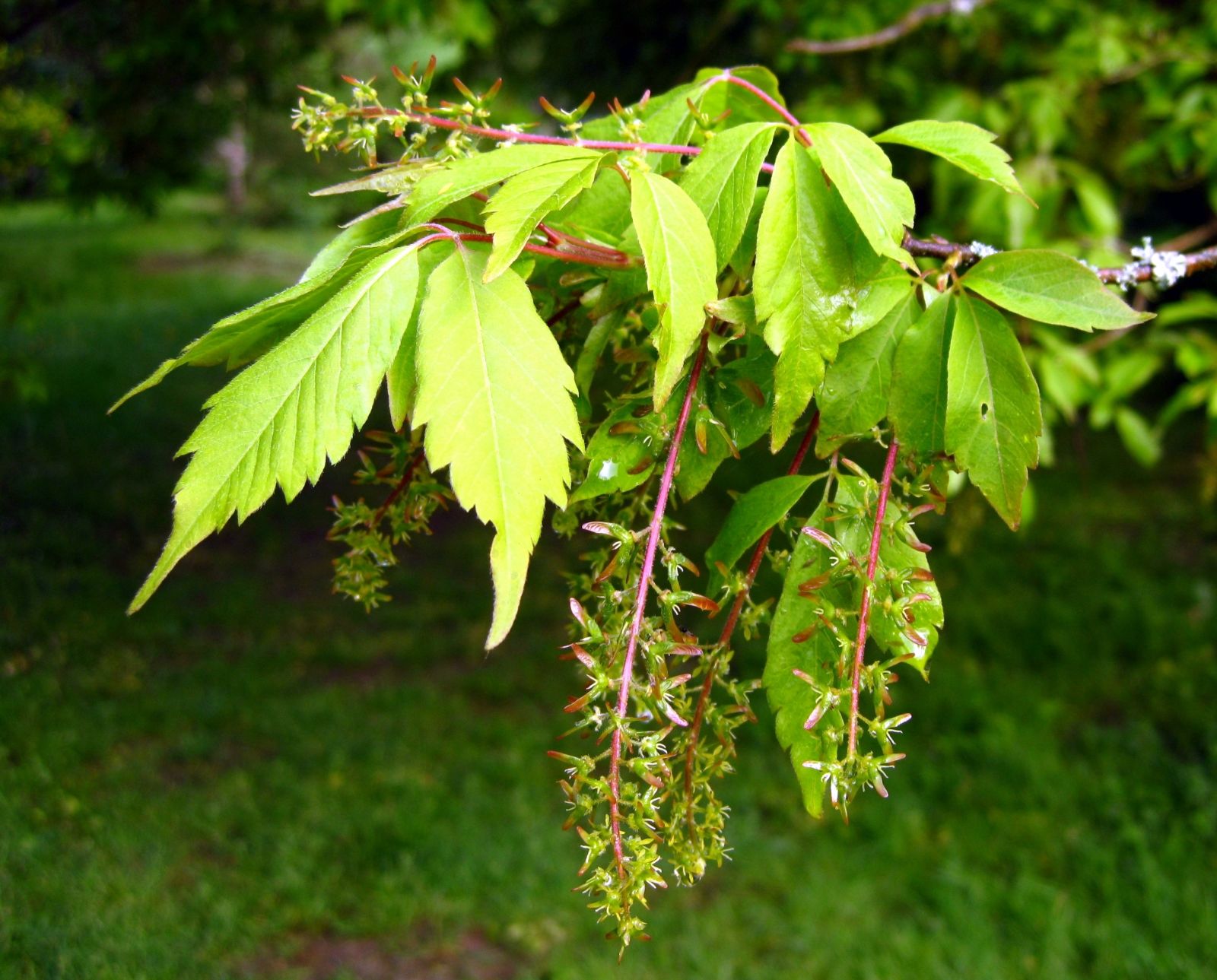
A deciduous tree of compact, rounded form, 30 ft or more high; branchlets downy. Leaf consisting of three leaflets borne on a slender common stalk 2 to 3 in. long, glabrous except for a few hairs at the junction of the stalks of the leaflets. Leaflets 2 to 31⁄2 in. long, obovate, oval or ovate, the terminal part of each one coarsely and irregularly toothed; they are glabrous except for small tufts of down in the axils of the veins. Flowers minute, each on a stalk 1⁄3 to 1⁄4 in. long, produced in May with the leaves, on very slender racemes 2 to 4 in. long, and downy. Fruit in long racemes; keys 1 in. long, glabrous; the wings obliquely ovate, 1⁄3 in. wide, diverging from each other at an angle of 60° or less.
Native of Japan; date of introduction uncertain, but before 1870. This interesting maple is one of the small number that bear compound leaves. Its nearest ally appears to be the American A. negundo but in that species the leaves are often composed of five leaflets, with the terminal one larger than the laterals, and the male flowers are borne in corymbs. A. nikoense, another Japanese species with compound leaves, is well distinguished from A. cissifolium by its upright habit, by the hairiness of the main leaf-stalk, of the undersides of the leaves and of the nutlets; flowers of both sexes are borne on the same tree, and in corymbs, not racemes.
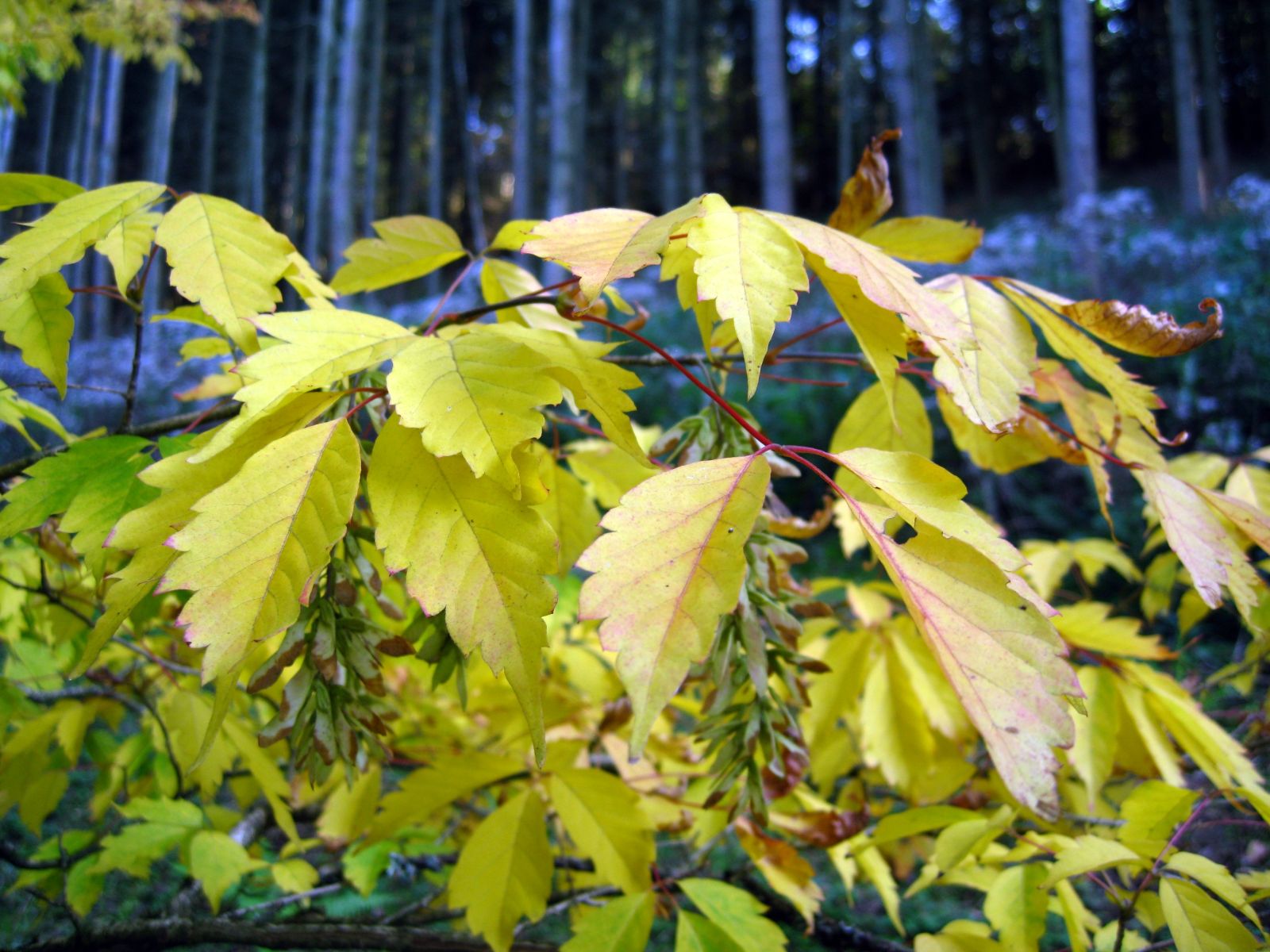
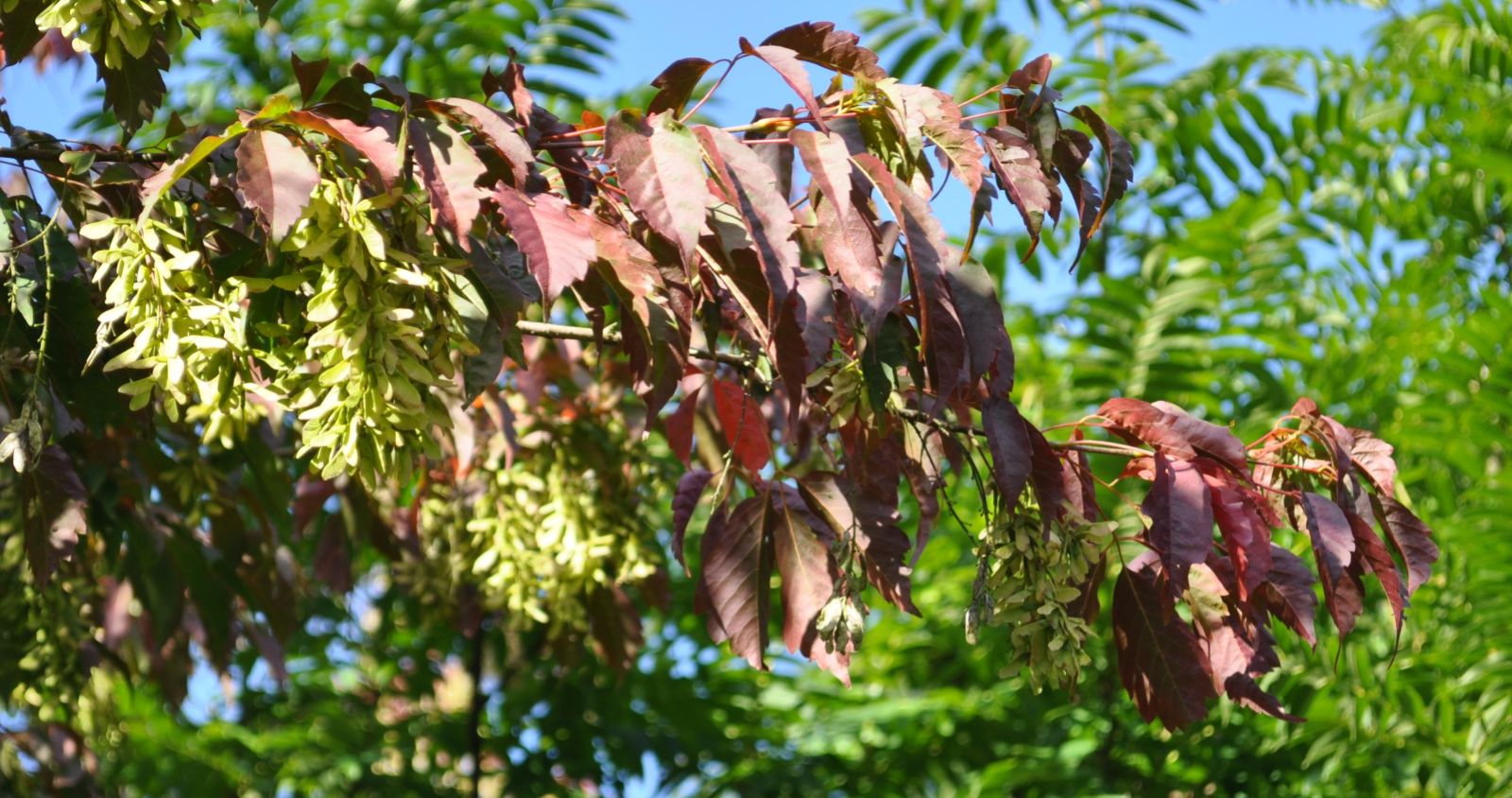
It is an elegant species of mushroom-like habit, and the foliage turns red and yellow in the autumn. A position shaded from the strongest sun should be chosen, especially if the soil is on the dry side. The best-known specimens in the British Isles are at Westonbirt, Glos., in Morley, Mitchell, and Holford Drives, ranging from 25 to 31 ft in height (1966). At East Bergholt Place, Suffolk, it is 25 ft high in woodland (1966).